How to Move Within the EU to Germany on a Blue Card
Navigating the bureaucracy of a cross-border move within Europe can feel like trying to solve a puzzle where the pieces keep changing shape. When I first packed my life into a van to move from another EU member state to Berlin, I mistakenly thought my existing EU Blue Card was a golden ticket that would bypass all the usual red tape. This guide breaks down the exact requirements and procedural steps for moving within the EU to Germany on a Blue Card without losing your sanity.
Disclosure: This post may contain affiliate links. We may earn a commission at no extra cost to you if you make a purchase through these links. Read full disclosure.
Understanding the Concept of Intra-EU Mobility
The EU Blue Card is often marketed as a unified European solution for high-skilled workers, but the reality is slightly more fragmented. While the overarching framework is dictated by EU directives, each member state—including Germany—retains the right to set its own salary thresholds, educational requirements, and processing timelines. The term you will hear most often during this transition is "Intra-EU Mobility." This refers to the legal right of a Blue Card holder to move to a second EU member state for the purpose of highly qualified employment.
In the past, the rules were quite rigid, requiring a minimum of 18 months of residence in the first EU country before you could even consider moving. However, recent legislative updates have made the process more flexible. Under the current rules, if you have held a Blue Card in another EU country for at least 12 months, you are eligible to move to Germany and apply for a German Blue Card using a simplified procedure. If you are moving from a country where you’ve only been for 6 months, the process looks much more like a fresh application, though your previous "highly qualified" status still carries weight.
One of the biggest misconceptions I encountered was the idea that my old card remained "active" for work in Germany. It does not. Your previous card allows you to enter Germany and stay for a short period while your new application is processed, but it does not automatically grant you the right to start working the moment you cross the border. You must still satisfy the specific German criteria, which are often stricter than those in neighboring countries like Poland or the Czech Republic.
Eligibility: Who Can Transfer Their Blue Card to Germany
Before you sign a lease on that airy Altbau apartment in Leipzig or a sleek flat in Munich, you need to be absolutely certain you meet the German-specific eligibility criteria. Just because you were a "high-skilled worker" in Madrid or Paris doesn't mean the German The Foreigners' Office (Ausländerbehörde): How to Deal With It will see it the same way. Germany has a very specific set of definitions for what constitutes "highly qualified."
The German Salary Thresholds
The most significant hurdle is the salary. Germany updates its Blue Card salary thresholds annually. There are generally two tiers: one for "bottleneck" professions (Mangelberufe) like IT, engineering, mathematics, and medicine, and a higher tier for all other professions. If your German job offer doesn't hit these specific numbers, you cannot get a Blue Card, even if you had one in your previous country.
When you are negotiating your contract, don't just look at the gross monthly pay. You need to ensure the annual gross salary is clearly stated and meets the current year's requirements. If you fall short by even a few hundred euros, the authorities will likely redirect you to a standard Germany’s Skilled Worker Visa: Requirements and How to Apply, which has different rules regarding permanent residency and family reunification. I’ve seen people lose their Blue Card status simply because they didn't account for the fact that German thresholds were significantly higher than where they were coming from.
Educational and Professional Qualifications
Germany is a land of certificates. You might have ten years of experience in software architecture, but if you don't have a recognized university degree, the Blue Card process becomes significantly more complex. To be eligible for a transfer, your degree must be comparable to a German higher education qualification.
This is where the Anabin database comes into play. You need to check if both your university (H+) and your specific degree are listed as recognized. If they aren't, you may need to apply for a Statement of Comparability from the ZAB (Zentralstelle für ausländisches Bildungswesen). This takes time—often months—so do this while you are still living in your current EU country. If you have documents in a language other than German or English, you will need a certified translation. For this, I highly recommend using Lingoking. They specialize in the types of certified translations that German bureaucrats demand, and having your degrees and previous work certificates ready in German will save you weeks of back-and-forth at the office.
The 12-Month vs 6-Month Rule
Timing is everything. If you have lived in your first EU country for at least 12 months on a Blue Card, you can enter Germany without a visa and apply for your German Blue Card within one month of arrival. You are essentially "transferring" your status.
However, if you have been in your current EU country for less than 12 months but more than 6, you can still move, but the scrutiny is higher. In some cases, depending on your nationality, you might still need to apply for a National Visa (D-Visa) at a German consulate in your current country before moving. Always check the specific treaty your home country has with Germany, but as a rule of thumb, the 12-month mark is the "magic number" that makes the Visa & Immigration process much smoother.
The Two Paths: How to Apply for Your New Card
Once you’ve confirmed you meet the criteria, you have two main routes to actually getting the permit. The "best" path usually depends on how quickly your new employer needs you to start and how much patience you have for the legendary German bureaucracy.
Option 1: Applying from Your Current EU Country
This is the "safe" route. You visit the German embassy or consulate in the city where you currently reside (e.g., the German Embassy in Brussels or the Consulate in Barcelona). You submit your German work contract and your current Blue Card. The advantage here is that you don't move your life across borders until you have a "pre-approval" or a visa in hand.
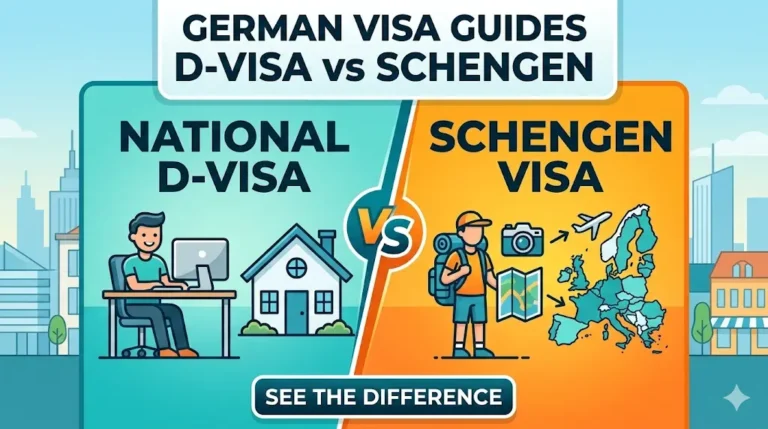
The downside? Embassies are often booked out for months. If your start date is in six weeks, this path might be impossible. However, if you have the luxury of time, getting your National Visa (D-Visa) vs Schengen Visa: Understanding the Difference sorted beforehand means you can start working in Germany almost immediately upon arrival, rather than waiting for a local appointment.
Option 2: The "Apply After Arrival" Method
Most people choose this because it feels more proactive. You pack your bags, move to Germany, do your The Anmeldung: Registering Your Address in Germany, and then apply at the local Ausländerbehörde. Under the mobility rules, you have 30 days to notify the authorities that you are there and intended to work on a Blue Card.
The stress of this method lies in the "Fiktionsbescheinigung." This is a temporary document that proves you’ve applied for a permit. While it legally allows you to stay, some HR departments are hesitant to let you start work until the actual Blue Card is approved, or at least until the "Fiktionsbescheinigung" explicitly states you are allowed to work. I remember sitting in a cold hallway in Berlin at 5:00 AM just to try and get an emergency appointment because my employer wouldn't let me onto the payroll without that specific stamp. To avoid this, try to get your employer to use the "accelerated procedure for skilled workers" (beschleunigtes Fachkräfteverfahren), which costs about €411 but speeds up the approval from the Federal Employment Agency significantly.
Essential Documentation Checklist
The German authorities love paper. Even if you showed these documents to the authorities in France or Italy a year ago, you will need to show them all over again to the Germans. Do not expect them to pull your file from a central EU database; for all intents and purposes, that database doesn't exist in the way you’d hope.
| Document | Requirement | Why it matters |
|---|---|---|
| Valid Passport | Must be valid for at least 6-12 months | Your permit is tied to your passport expiry. |
| Current EU Blue Card | Original and copy | Proves your current "highly qualified" status. |
| German Work Contract | Signed by both parties | Must meet the salary thresholds. |
| University Degree | Anabin printout or ZAB equivalency | Proves you are "highly qualified" by German standards. |
| Proof of Health Insurance | Must be German-compliant | You cannot start work without a membership certificate. |
| Biometric Photo | Must meet German "Passbild" standards | They are very strict about the "no smiling" rule. |
| Lease Agreement | Signed Wohnungsgeberbestätigung | Proof that you have a place to live. |
When it comes to health insurance, this is a major sticking point. Your insurance from your previous EU country will not suffice once you are a resident and employee in Germany. You will need to transition to either public (Gesetzliche Krankenkasse) or private insurance. For newcomers, Expatrio is an excellent resource. They offer a "Value Package" that includes the exact type of incoming health insurance required for the visa phase, as well as easy setup for public health insurance once your job begins. Having a digital certificate from a provider like Expatrio can satisfy the caseworker immediately, whereas trying to explain a foreign policy often leads to delays.
| Topic | Details |
|---|---|
| Certified Translations | Use Lingoking for non-German/English documents. |
| Health Insurance | Expatrio provides the necessary German-compliant coverage. |
| Degree Check | Check the Anabin database before applying. |
| Address Registration | Must be done within 14 days of moving into a flat. |
Dealing with the Ausländerbehörde
The "Foreigners' Office" is the final boss of your relocation journey. Depending on where you move, the experience can range from a polite, efficient 20-minute appointment to a year-long saga of unanswered emails. In cities like Berlin, Munich, and Hamburg, getting an appointment is notoriously difficult.
My advice? Start refreshing the appointment booking page at 7:00 AM every morning. Often, cancellations are put back into the system then. When you finally get an appointment, bring every piece of paper you own, even if it's not on the official list. Bring your Family Health Insurance: Adding Your Spouse and Kids to Your Plan documents if you are moving with a partner, and make sure your How to Get a Sick Note (Krankschreibung) in Germany process is understood if you happen to fall ill during this high-stress period.
If you don't speak German, try to bring a German-speaking friend or hire a professional "relocation scout." While the Blue Card is for high-skilled workers and many caseworkers do speak English, they are not legally required to, and some will insist on conducting the interview in German. Having someone there to translate ensures that no nuance is lost and that you don't accidentally agree to a shorter permit duration than you are entitled to.
Permanent Residency and Citizenship Advantages
One of the best reasons to stay on the Blue Card track when moving to Germany is the fast-track to permanent residency (Niederlassungserlaubnis). This is where the "Intra-EU Mobility" really pays off.
In Germany, Blue Card holders can apply for permanent residency after just 27 months of employment, or even just 21 months if they can prove B1-level German language skills. The best part? You can often count the time you spent on a Blue Card in another EU country toward this total, provided you have spent at least the last 12 months working in Germany.
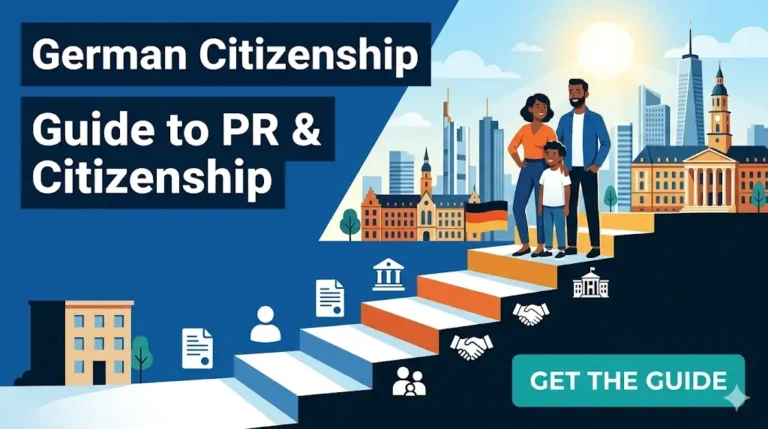
When I realized that my year in the Netherlands actually helped me get my German Permanent Residence Permit (Niederlassungserlaubnis): How to Qualify in Germany faster, the mountain of paperwork suddenly felt worth it. Furthermore, with the 2024 changes to German law, Dual Citizenship in Germany (2024 Law Update): What Expats Should Know is now much easier to achieve, and your time on a Blue Card is a direct pathway toward naturalization.
Family Reunification: Bringing Your Loved Ones
If you are moving within the EU to Germany on a Blue Card, your family members (spouse and children) usually have a much easier time than those on standard work visas. If they already had residence permits as your dependents in the previous EU country, they are generally entitled to move with you.
Crucially, spouses of Blue Card holders in Germany do not need to prove German language skills (the A1 certificate) before joining you. They also receive a residence permit that allows them to work in any capacity—even self-employment—immediately. This is a huge relief for families. However, you will still need to show that you have enough living space (usually 12-15 square meters per person) and sufficient income to support them without relying on state benefits. Make sure you've researched Finding a Kindergarten or Daycare in Germany: How to Enroll Your Child early, as spots in many cities are harder to find than the visa appointments themselves.
Final Thoughts for the Cross-Border Mover
Moving from one EU country to another should be simple, but Germany's federalist structure and penchant for "Dienstweg" (official channels) mean you need to be over-prepared. Treat the move as a fresh start while leveraging your previous history to shorten your path to permanent residency. Use the right tools—like Lingoking for your translations and Expatrio for your insurance—to eliminate the "easy" mistakes that often trip up even the most experienced expats.
Stay patient, keep your folders organized, and remember that once you have that plastic electronic residence title (eAT) in your hand, you'll have access to one of the most stable and rewarding labor markets in the world.
Disclaimer
The information provided in this guide is for informational purposes only and does not constitute legal advice. Immigration laws and salary thresholds in Germany are subject to frequent changes. Always consult with the official website of the Federal Office for Migration and Refugees (BAMF) or a qualified immigration lawyer before making significant relocation decisions. Ensure you are using the most current data for salary requirements and professional recognition.