Getting Around German Cities: U-Bahn, S-Bahn, Trams, and Buses
Stepping into a German city can be an exhilarating experience, but the public transport system, while incredibly efficient, can initially feel like an impenetrable maze of lines, zones, and ticket options. I remember my first time trying to decipher a tariff zone map in Berlin, feeling completely lost and worried about buying the wrong ticket and getting fined! This guide is here to untangle the U-Bahn, S-Bahn, trams, and buses, offering a comprehensive, friendly walkthrough to help you navigate Germany's urban landscapes like a seasoned local.
Disclosure: This post may contain affiliate links. We may earn a commission at no extra cost to you if you make a purchase through these links. Read full disclosure.
Understanding the German Public Transport System
Germany boasts one of the most highly developed and punctual public transportation networks in the world, renowned for its efficiency and widespread reach. However, what often trips up newcomers is the sheer diversity of transport types and the regional variations in how they're organized and managed. Unlike some countries where a single national body might oversee all urban transport, Germany operates with numerous regional transport associations (Verkehrsverbünde), each with its own tariff system, network maps, and operational quirks. This means a ticket you buy in Berlin won't work in Munich, and the types of passes available might differ significantly. But don't let this intimidate you; once you grasp the basics, you'll find it incredibly convenient.
The philosophy behind German urban transport is integration. The goal is to provide a seamless travel experience, often allowing you to combine different modes of transport – from the underground U-Bahn to a local bus – all on a single ticket within a specific zone. This comprehensive approach means that almost every corner of a city, and indeed its surrounding suburbs, is accessible without needing a car. For visitors and expats, understanding this integrated approach is crucial to making the most of your time and avoiding unnecessary stress.
The Integrated Network: Zones and Tariffs
The core of German urban public transport is the concept of integrated tariff zones (Tarifzonen). Each major city and its surrounding region is typically divided into several zones, often represented by letters (A, B, C) or numbers. Zone A usually covers the city center, B the outer city districts, and C the further suburbs or neighboring towns. The price of your ticket depends on how many zones you plan to travel through. For example, a short trip within Zone A will be cheaper than a journey spanning Zones A, B, and C.
Navigating these zones requires a quick glance at the transport map, usually prominently displayed at stations and stops. Most city maps will clearly delineate these zones, allowing you to determine which ticket you need. For most tourists focusing on city center attractions, a ticket covering Zone A (or A/B in some larger cities like Berlin) will suffice. If you're heading out to an airport or a further-flung attraction, you'll need to check if it falls into an outer zone. This zonal system, while initially complex, is designed to ensure fair pricing based on distance and reach, incentivizing longer-term passes like monthly or annual tickets for regular commuters who traverse multiple zones daily.
Types of Urban Transport: An Overview
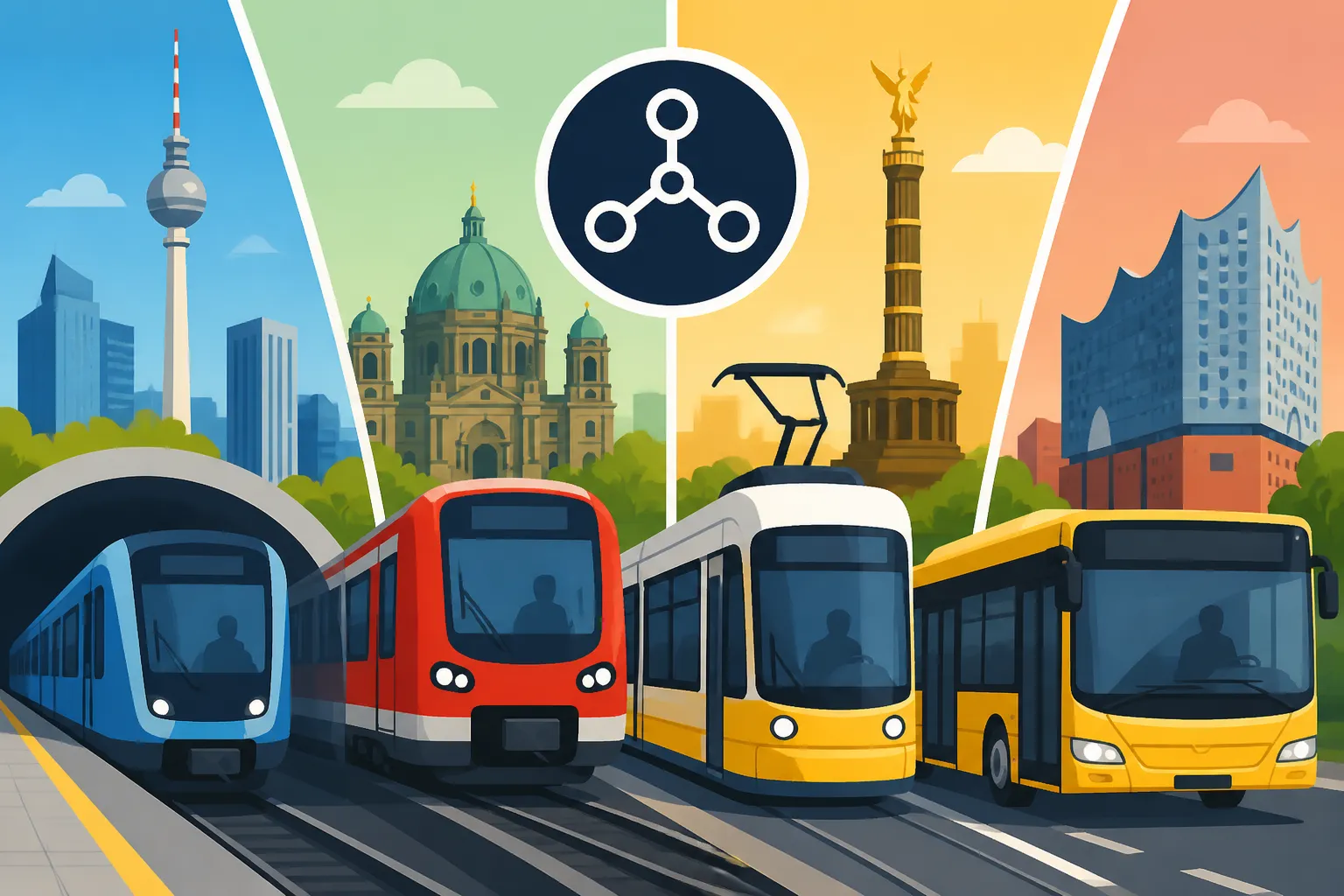
German cities utilize a blend of transport modes, each playing a vital role in the overall network. The main players you'll encounter are the U-Bahn (underground/subway), S-Bahn (suburban rail), Straßenbahn (tram), and Bus (bus). Each has its own characteristics and coverage, often complementing each other to create a dense, efficient web.
The U-Bahn and S-Bahn form the backbone of rapid transit, ideal for covering longer distances quickly. Trams offer a surface-level alternative, providing a balance of speed and scenic views, often serving areas not directly connected by underground or suburban lines. Buses, the most flexible of the bunch, reach into every nook and cranny, serving smaller streets and connecting residential areas to the main transport hubs. Understanding when to use each mode will make your journeys smoother and more enjoyable. While most cities have all four, the emphasis might vary; for instance, smaller cities might rely more heavily on trams and buses, while large metropolises like Berlin, Munich, or Hamburg have extensive U-Bahn and S-Bahn networks.
The U-Bahn and S-Bahn: Navigating the Rail Networks
The U-Bahn and S-Bahn systems are the veins and arteries of urban Germany, ensuring rapid, reliable transit across cities and into their broader metropolitan areas. They are often the fastest way to get from one major point to another, especially during peak traffic hours, as they operate independently of road congestion.
U-Bahn: The Underground Lifeline
The U-Bahn, short for Untergrundbahn (underground railway), is Germany's subway system. It operates primarily underground in city centers, making it immune to surface traffic. U-Bahn trains are characterized by their frequent service, usually running every 5-10 minutes during the day and less frequently at night or on weekends. They are perfect for quickly zipping between central districts, tourist attractions, and major transport hubs.
Each U-Bahn line is identified by a number (e.g., U1, U2) and a distinct color on maps, making it relatively easy to follow routes once you understand the direction of travel (usually indicated by the final station on the line). Stations are generally clean, well-lit, and equipped with clear signage, including digital displays showing the next train's arrival time. Many U-Bahn lines also venture above ground in less dense areas, offering brief glimpses of the city, but their primary strength lies in their subterranean speed.
S-Bahn: Connecting City and Suburbs
The S-Bahn, or Stadtschnellbahn (city rapid railway), is a hybrid system that bridges the gap between urban rapid transit and regional train services. While the U-Bahn mostly stays within city limits, the S-Bahn extends further, connecting city centers with surrounding suburbs, smaller towns, and often the airports. S-Bahn lines are also numbered (e.g., S1, S2) and color-coded, similar to the U-Bahn.
S-Bahn trains are usually larger and offer more seating than U-Bahn trains, reflecting their role in longer commutes. They often share tracks with regional and long-distance trains outside the city core, but within the city, they typically have their own dedicated routes. For expats living in the wider metropolitan area or travelers planning to visit nearby attractions just outside the immediate city, mastering the S-Bahn is essential. It's often your most direct route to places like Berlin Brandenburg Airport (BER) or Munich Airport. Just remember that during peak times, S-Bahn platforms can get very crowded, especially at major interchange stations.
Reading Maps and Understanding Lines
German public transport maps, while detailed, are incredibly logical once you get the hang of them. Key elements include:
- Line Colors and Numbers: Each U-Bahn and S-Bahn line has a unique color and number. This is your primary guide.
- Station Names: Clearly marked, often with interchange symbols (circles or squares) where different lines meet.
- Direction of Travel: Look for the final destination station of the line you intend to take. Platforms will often indicate "Richtung [Destination]" (Direction [Destination]).
- Tariff Zones: As mentioned, these are usually marked with concentric circles or shaded areas, indicating where one zone ends and another begins.
Many major cities, like Berlin, also use an "ring" system for their S-Bahn, where lines circulate the city center. The S-Bahn-Ring is a fantastic way to quickly get around the outer parts of the city without going through the congested center. For planning your journeys, I highly recommend using official transport apps like the BVG app for Berlin, the MVV app for Munich, or the HVV app for Hamburg, as they offer real-time information, journey planners, and often allow direct ticket purchases. The general Deutsche Bahn app, DB Navigator, is also excellent for combining urban and regional travel, even showing U-Bahn/S-Bahn connections for your long-distance train tickets.
Trams (Straßenbahn) and Buses (Bus): Surface Connections
While U-Bahn and S-Bahn whisk you through the city, trams and buses offer crucial surface-level transport, providing greater coverage and a more scenic way to see the cityscape. They are often the best choice for shorter trips, reaching destinations that aren't on the rail network, or simply enjoying the ride above ground.
Trams: A Scenic and Practical Choice
The Straßenbahn (tram or streetcar) is a beloved feature in many German cities, particularly in eastern Germany and some southern cities like Munich or Freiburg. Trams run on tracks embedded in the streets, sharing the road with cars in some sections and having dedicated lanes in others. They are known for their smooth ride, panoramic windows, and accessibility.
Trams are ideal for navigating historic city centers, lively neighborhoods, and connecting main arteries. They offer a good balance of speed and convenience, often stopping more frequently than U-Bahn or S-Bahn trains, but less so than buses. Like the rail systems, tram lines are numbered (e.g., M1, 12) and color-coded on maps. Many newer trams are low-floor, making them very accessible for passengers with strollers, wheelchairs, or heavy luggage. For tourists, a tram ride can often double as an impromptu city tour, allowing you to take in the sights while moving efficiently to your next destination.
Buses: Reaching Every Corner
The bus network (Bus) is arguably the most comprehensive mode of public transport in any German city, designed to reach virtually every street and neighborhood. Buses connect to U-Bahn, S-Bahn, and tram stops, extending the reach of the entire public transport system into residential areas, industrial zones, and even smaller, more remote districts.
Bus lines are also numbered, and major stops often feature digital displays showing arrival times. Inside the bus, screens and audio announcements will inform you of the next stop. Buses are particularly useful for:
- Short local trips: Getting from your apartment to the nearest supermarket or small park.
- Connecting between transport hubs: Bridging gaps where rail or tram lines don't directly intersect.
- Accessing less central areas: Reaching destinations off the main tourist routes.
Remember that bus schedules can be affected by traffic, especially during rush hour, so always factor in a little extra travel time if you have a tight schedule.
Night Buses and Special Services
German cities understand that life doesn't stop after the last U-Bahn or S-Bahn train pulls into the station. To cater to nightlife and late-night commuters, most urban transport systems offer extensive Nachtbus (night bus) or Nacht-Tram (night tram) services. These often run hourly or every half-hour on weekends, following modified routes that cover key areas of the city.
Look for lines prefixed with "N" (e.g., N1, N2) or identified by specific symbols on maps. These services are invaluable for safely getting home after an evening out, especially since taxi fares can be quite expensive. Some cities also offer specialized services, like express buses during peak commuter times or accessible shuttle services for people with reduced mobility. Always check the local transport provider's website or app for specific night service schedules and routes in your chosen city. For instance, in Munich, the MVV network runs extensive night lines, and in Berlin, the BVG ensures you're never truly stranded.
Tickets, Fares, and How to Pay: The All-Important Pricing Puzzle
This is often where expats and tourists get a bit overwhelmed, but it doesn't have to be. German ticketing systems, while varied by region, offer a logical range of options to suit different travel needs.
Single Tickets, Day Passes, and Group Tickets
For occasional travelers, several ticket types are available:
- Einzelfahrschein (Single Ticket): Valid for one journey in one direction, often allowing transfers within a certain time limit (e.g., 90 minutes). It's generally not valid for round trips or breaking your journey.
- Kurzstrecke (Short Trip Ticket): For very short distances, typically 2-3 stops on the U-Bahn/S-Bahn or 4-6 stops on a bus/tram. These are cheaper than a regular single ticket.
- Tageskarte (Day Ticket): Valid for unlimited travel within your selected zones for an entire calendar day (or 24 hours from validation). Ideal if you plan multiple journeys in a single day.
- Mehrtageskarte (Multi-Day Ticket): Similar to a day ticket but valid for 48 hours, 72 hours, or more, depending on the city. Great for weekend trips.
- Gruppenkarte (Group Ticket): A fantastic option for small groups (usually up to 5 people). It's a single ticket that allows all members to travel together for a set price, often significantly cheaper per person than individual day tickets. For families or friends exploring a city, this is a must-know.
- Wochenkarte/Monatskarte (Weekly/Monthly Ticket): For longer stays or regular commutes, these passes offer unlimited travel within chosen zones for a week or month.
Always consider your travel patterns. If you're making more than two or three single trips in a day, a day ticket will almost certainly be more economical. For those looking to explore extensively or over several days, consider a multi-day pass. When booking accommodation via platforms like Booking.com, it might be worth checking if your hotel offers any public transport passes as part of the stay or if it's conveniently located near a main station where you can easily buy tickets.
The Deutschland-Ticket: A Game Changer
The Deutschland-Ticket, also known as the 49-Euro-Ticket, introduced in 2023, has revolutionized public transport in Germany. For a flat monthly fee of €49, it allows unlimited travel on all local and regional public transport across the entire country. This includes U-Bahn, S-Bahn, trams, buses, and regional trains (RE, RB, S-Bahn) – basically everything except long-distance ICE, IC, and EC trains.
For expats, students, and long-term tourists, the Deutschland-Ticket is an incredible value proposition. It simplifies ticketing immensely, eliminating the need to worry about zones or different regional tariffs when traveling between cities on regional trains and then using local transport. Imagine using it for a weekend trip from Berlin to Hamburg using regional trains, and then navigating Hamburg's HVV network without a second thought, all on one ticket! This is detailed further in our guide on Regional Trains and the Deutschland-Ticket Explained.
It's a subscription-based ticket, meaning it automatically renews each month unless cancelled by the 10th of the preceding month. You can usually purchase it through the apps of major transport providers (like BVG, MVV, HVV) or Deutsche Bahn.
Purchasing Tickets: Machines, Apps, and More
Buying your ticket in Germany is generally straightforward, but there are a few key methods:
- Ticket Machines: Found at virtually all U-Bahn and S-Bahn stations, and often at major tram and bus stops. These machines usually have multiple language options (including English) and accept cash, debit cards (EC-Karte), and sometimes credit cards. Select your destination or ticket type, zones, and then pay.
- Mobile Apps: This is increasingly the most convenient way. Most regional transport providers have their own apps (e.g., BVG Fahrinfo for Berlin, MVG Fahrinfo for Munich, HVV App for Hamburg). The DB Navigator app also allows you to purchase tickets for local transport in many cities. These apps offer real-time schedules, journey planners, and allow you to buy and store tickets digitally on your phone.
- Drivers (Buses/Trams): You can often buy single tickets directly from the bus driver, or sometimes from a machine inside trams. Be aware that drivers typically only accept cash (small denominations are preferred) and might not sell all ticket types.
- Ticket Offices: Available at major train stations (e.g., Hauptbahnhof) for more complex queries or purchasing long-term passes.
Remember, always buy your ticket before boarding and ensure it is validated. This is a critical step, which we'll discuss next.
Essential Tips for Expats and Tourists: Mastering the System
Getting around German cities can be incredibly smooth once you know the ropes. Here are some essential tips to make your public transport experience hassle-free.
Validation is Key: Avoiding Fines
This is perhaps the single most important rule of German public transport, and one that trips up many newcomers. Buying a ticket is only half the battle; you must validate it before starting your journey.
- Paper Tickets: Look for small yellow or red boxes (Entwerter) on platforms (for U-Bahn/S-Bahn) or inside buses/trams. Insert your ticket into the slot, and it will stamp the date and time. This marks your ticket as active.
- Mobile Tickets: Tickets purchased via an app are usually pre-validated at the time of purchase or automatically activate when you board, so you just need to show your phone to an inspector. Always double-check the app's instructions.
If you are caught without a valid, validated ticket, you face a hefty fine, typically starting at €60. Inspectors (Fahrkartenkontrolleure) are often plainclothes and can appear anywhere on the network. They are not sympathetic to excuses about not knowing the rules. So, always validate your ticket!
Etiquette and Unwritten Rules
German public transport is very orderly, and following a few unwritten rules will make your experience more pleasant:
- Stand Right, Walk Left: On escalators, always stand on the right to allow people to walk on the left.
- Allow Passengers to Exit First: Before boarding, stand aside to let people get off the train/tram/bus.
- Don't Block Doors: Keep the areas around the doors clear, especially during busy times.
- Offer Seats: It's customary to offer your seat to elderly people, pregnant women, or those with disabilities.
- Keep Noise Levels Down: While conversations are fine, loud phone calls or music without headphones are generally frowned upon.
- No Eating or Drinking: While not strictly forbidden, consuming strong-smelling food or messy drinks is generally avoided, especially on crowded trains.
- Respect Quiet Zones: Some long-distance trains have designated quiet zones, but even on city transport, avoid excessive noise.
Adhering to these simple courtesies helps maintain the efficient and respectful atmosphere of German public transport.
Accessibility and Special Needs
German public transport systems are generally very good regarding accessibility, though older stations might still pose challenges.
- Wheelchair and Stroller Access: Newer trains, trams, and buses are often low-floor, allowing easy access. Many stations have ramps or elevators. Look for the international accessibility symbol (a wheelchair user) on maps and at stations.
- Visually Impaired Passengers: Platforms often have tactile paving, and audio announcements are standard on all modes of transport.
- Assistance Dogs: Service dogs are generally welcome on public transport.
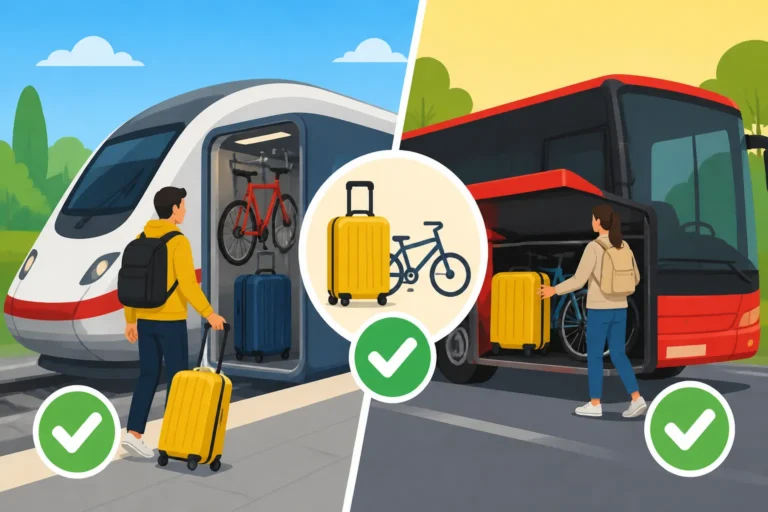
- Bike Transport: Bicycles are usually allowed on U-Bahn and S-Bahn outside of peak hours, often requiring an extra Fahrradticket (bike ticket). Always check the specific rules of the local transport authority, as restrictions vary. If you're exploring with a rented bike, like those you might find through a GetYourGuide city tour package, knowing these rules is crucial.
For detailed information on accessibility for specific routes or stations, check the respective transport provider's website or app, which usually provides station-by-station information.
City-Specific Nuances and Notable Systems
While the general principles apply, each major German city's public transport system has its own character and scale. Understanding these local variations can help you navigate more effectively.
Berlin's BVG: A Massive Network
Berlin, being Germany's sprawling capital, boasts one of the most extensive and busiest public transport networks, operated primarily by the BVG (Berliner Verkehrsbetriebe). The BVG system is famous for its bright yellow U-Bahn trains, its iconic double-decker buses, and a truly comprehensive network of S-Bahn, U-Bahn, tram, and bus lines that cover the entire city and extend into Brandenburg.
Key features of Berlin's BVG:
- U-Bahn & S-Bahn Ring: The S-Bahn Ring (S41/S42 lines) offers a circular route around the inner city, connecting all major U-Bahn and S-Bahn lines and making it incredibly easy to transfer.
- Tram Dominance in the East: Berlin's tram network is particularly well-developed in the former East Berlin, where it often complements or replaces the U-Bahn in certain areas.
- Night Services: Berlin's night bus and tram services are legendary, running extensive routes throughout the night, especially on weekends.
- Zones: Berlin uses A, B, and C zones. Most tourist attractions are within AB, but the airport (BER) is in Zone C.
Navigating Berlin can feel overwhelming due to its size, but the BVG's excellent signage, frequent services, and the BVG Fahrinfo app make it surprisingly manageable. It's often where new expats first learn about Public Transport Tickets and Passes: Navigating German Transit Systems because of the sheer variety of options.
Munich's MVV: Efficiency in Bavaria
Munich's public transport system, managed by the MVV (Münchner Verkehrs- und Tarifverbund), is renowned for its incredible efficiency and reliability. The network is seamlessly integrated, combining U-Bahn, S-Bahn, trams, and buses to serve the Bavarian capital and its picturesque surroundings.
Highlights of Munich's MVV:
- Clean and Modern: Munich's U-Bahn stations are often praised for their modern design and cleanliness.
- Airport Connection: The S1 and S8 S-Bahn lines provide direct, frequent connections to Munich Airport (MUC), making it very convenient for travelers.
- Strong S-Bahn Focus: The S-Bahn is a critical component, radiating out from the city center and serving a large commuter base.
- Zones: Munich's MVV also uses a zone system, with most central attractions within the core M zone or M-1, M-2 etc.
For visitors to Oktoberfest, understanding the MVV is crucial. For those planning further afield, the MVV also integrates with regional trains, making trips to the Bavarian Alps or other beautiful towns very straightforward.
Hamburg's HVV: Water and Land Connections
Hamburg, Germany's second-largest city and a major port, has a distinctive public transport system, the HVV (Hamburger Verkehrsverbund), which uniquely integrates ferry services with its U-Bahn, S-Bahn, bus, and regional train networks. This multimodal approach reflects the city's strong connection to its waterways.
Notable aspects of Hamburg's HVV:
- U-Bahn & S-Bahn: The U-Bahn (blue trains) and S-Bahn (red trains) form the core of the rapid transit network, efficiently connecting different parts of the city.
- Harbor Ferries: The HVV ticket is also valid on certain public ferry lines (Hadag ferries), offering a unique and scenic way to explore the harbor area, including popular spots like the Elbphilharmonie and the Landungsbrücken, all without paying extra.
- Extensive Bus Network: Hamburg boasts a very extensive bus network, crucial for reaching areas not served by rail or tram.
- Night Buses: Like other major cities, Hamburg offers comprehensive night bus services to ensure safe travel after dark.
The HVV app is particularly useful for navigating Hamburg, especially when incorporating ferry routes into your journey plans. For tourists, a ferry ride on your HVV ticket offers fantastic photo opportunities and a different perspective of the city. For a deeper dive into how trains work across the country, check out our guide on Deutsche Bahn Guide: Using Trains for City and Long-Distance Travel.
| Ticket Type | Typical Use Case | Key Benefits | Considerations |
|---|---|---|---|
| Einzelfahrschein | Single, one-way journey | Simple for infrequent travel, short distances. | Not cost-effective for multiple trips; strictly one direction. |
| Kurzstrecke | Very short trips (e.g., 2-3 U-Bahn stops) | Cheaper than a full single ticket for quick hops. | Limited distance, easy to exceed accidentally if unsure of stops. |
| Tageskarte | Multiple trips within a single day | Unlimited travel within chosen zones, great value for sightseeing. | Only valid for one calendar day (or 24 hours), must be validated. |
| Gruppenkarte | 2-5 people traveling together | Significant cost savings per person for small groups. | All members must travel together; usually day-ticket equivalent. |
| Wochen-/Monatskarte | Regular commuting, long-term stays | Unlimited travel for a week/month, ideal for expats or extended visitors. | Higher initial cost, requires commitment; better with the Deutschland-Ticket now. |
| Deutschland-Ticket | Unlimited travel on all local/regional transport | National coverage, simple monthly subscription, excellent value for explorers. | Excludes ICE/IC/EC trains; subscription-based (cancel by 10th). |
Navigating German cities via their impressive public transport networks is a rite of passage for any expat or tourist. While it might seem a bit daunting at first with all the different systems, zones, and ticket options, remember that millions of people use it every day, and it's designed to be efficient. With a little preparation, the right apps, and an understanding of the local etiquette, you'll be zipping around like a true local in no time. Whether you're planning a trip around the country with Omio or just exploring a city's hidden gems, German public transport makes it all possible.
Disclaimer
The information provided in this guide is for general informational purposes only and is subject to change. While we strive to keep the content up-to-date, public transport regulations, ticket prices, and system operations in Germany can be updated by local transport authorities (Verkehrsverbünde) at any time. Always refer to the official websites or mobile applications of the respective city's public transport provider (e.g., BVG, MVV, HVV) or Deutsche Bahn for the most current and accurate information before planning your journey or purchasing tickets. We do not assume any liability for decisions made based on the information presented herein.