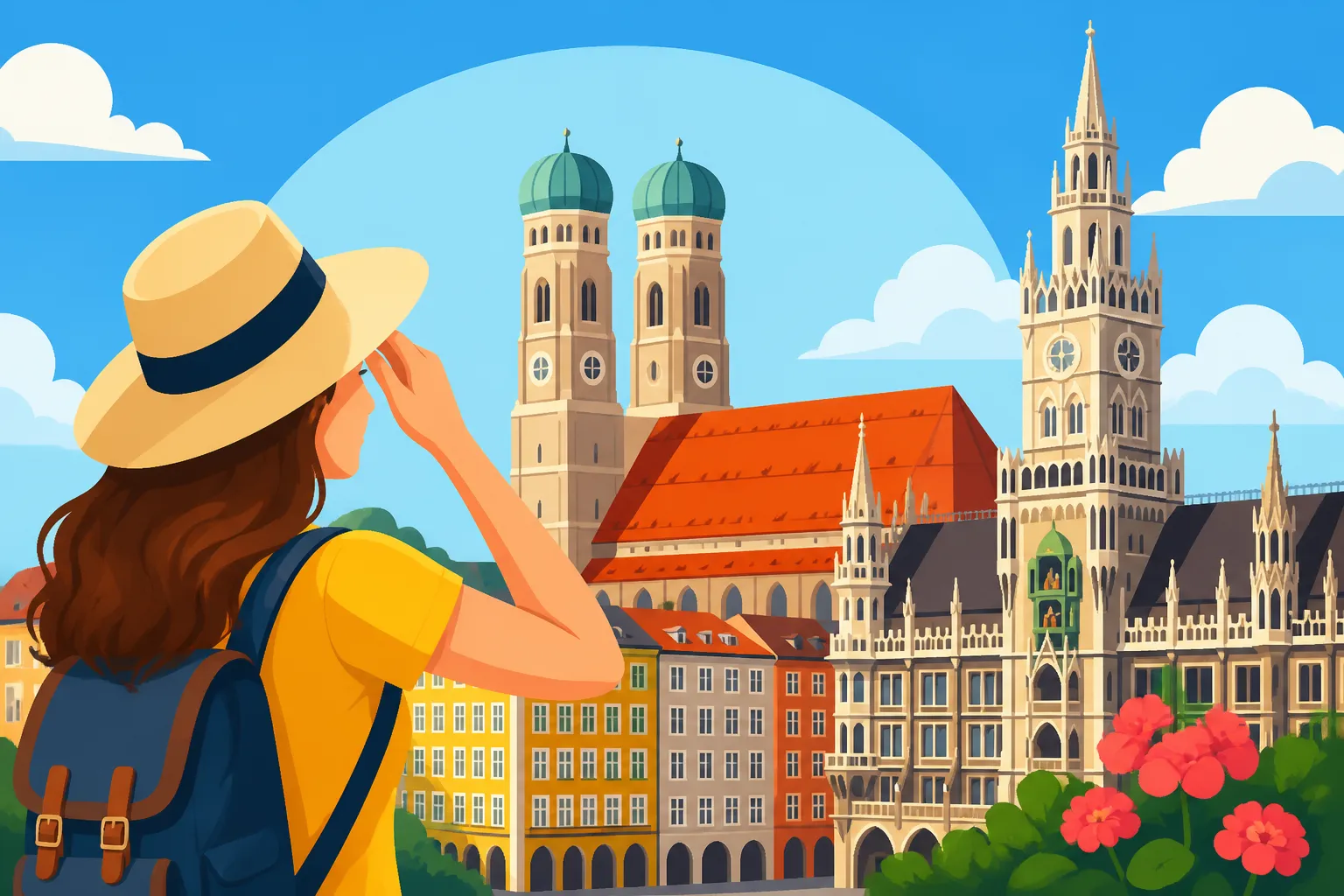
Munich for First-Time Visitors: What to See
Ah, Munich! The city of Lederhosen, glorious beer gardens, stunning palaces, and an almost baffling sense of calm for a major European metropolis. If you're planning your first visit, you might be feeling a mix of excitement and that familiar expat anxiety: "Where do I even begin?" Trust me, I've been there. Germany, with all its charm, can sometimes throw a curveball or two, especially when you're trying to figure out the must-sees amidst a sea of information. But don't you worry, this guide is here to cut through the noise and give you the real-deal scoop on making the most of your first Munich adventure.
Disclosure: This post may contain affiliate links. We may earn a commission at no extra cost to you if you make a purchase through these links. Read full disclosure.
Getting Your Bearings: Arrival and First Steps
Stepping off a plane or train in a new city, especially one as large and vibrant as Munich, can feel a bit disorienting. You're tired, maybe a bit hungry, and suddenly faced with signs in a foreign language. But breathe easy, Munich's transport system is remarkably efficient, designed to get you from point A to point B with minimal fuss, even for first-timers.
Arriving in Munich: Airport and Hauptbahnhof
Most international visitors will land at Munich Airport (Flughafen München Franz Josef Strauß, MUC), a modern and well-connected hub located about 35 kilometers northeast of the city center. It's a proper big-league airport, so expect all the amenities, but also a bit of a trek into town. The good news is, getting from the airport to downtown Munich is straightforward. You have two main options via the S-Bahn (suburban train): the S1 and S8 lines. Both will take you directly to the Hauptbahnhof (main train station) in about 40-45 minutes, with stops at key points like Marienplatz along the way. Seriously, don't overthink it; just follow the green S-Bahn signs. You'll need an Airport-City-Day Ticket (Erding/Munich zone M-5), which is a fantastic value if you plan on using public transport further that day. You can grab these tickets from vending machines at the airport (they usually have an English option, thankfully!).
If you're arriving by train from another German city or a neighboring country, you'll likely pull into the Hauptbahnhof, right in the heart of Munich. This is a bustling station, a gateway to almost everywhere in the city, with U-Bahn (subway), S-Bahn, tram, and bus connections galore. It can feel a bit overwhelming with the crowds, but it’s well-signposted. From here, your hotel or accommodation is usually just a short ride away. If you’ve planned your onward journey and need tickets, you can check out platforms like Omio for quick bookings, which can save you time fiddling with ticket machines after a long journey.
Getting Around the City: Public Transport and Tips
Once you're in Munich, public transport is absolutely your best friend. Seriously, resist the urge to drive. Parking is a nightmare, and the public system is just too good. The MVV (Münchner Verkehrs- und Tarifverbund) network is comprehensive, integrating U-Bahn, S-Bahn, trams, and buses seamlessly. It’s one of those systems where, once you get the hang of it, you wonder why every city can't be this efficient. You can find more detailed info in our guide to Getting Around German Cities: U-Bahn, S-Bahn, Trams, and Buses.
For first-time visitors, figuring out the zones can be a bit tricky. Munich is divided into zones (M-6 rings), but for most tourist activities, you'll primarily be in Zone M (the city center). A "day ticket" (Tageskarte) is usually the most economical option if you plan to make more than two or three journeys in a day. There are single day tickets, group day tickets (up to five people), and even 3-day tickets. A "CityTourCard" or "Munich Card" might also be worth considering, as they include public transport and discounts on attractions, which is a great way to save a few Euros if you're planning a lot of sightseeing. You can buy tickets from the red vending machines at U-Bahn and S-Bahn stations, and often on trams and buses themselves. Just remember to validate your ticket before your first journey by stamping it in one of the small blue or red machines at the entrance to platforms or on board trams/buses. Failure to do so can result in a hefty fine from plain-clothed ticket inspectors – and trust me, they show no mercy to bewildered tourists!
Getting around is generally quite safe, even at night. The U-Bahn and S-Bahn run regularly, though less frequently after midnight. Taxis are abundant, but costly. For those interested in exploring beyond Munich, checking out options for High-Speed Trains in Germany (ICE): Deutsche Bahn Routes and Savings can open up possibilities for easy day trips to other fantastic German cities.
Iconic Sights and Central Must-Sees
Munich's city center is a treasure trove of history, grand architecture, and vibrant street life. Many of the key attractions are within walking distance of each other, making it perfect for leisurely strolls and soaking in the atmosphere.
Marienplatz and the Glockenspiel: Heart of the City
Marienplatz is, without a doubt, the beating heart of Munich. It's been the city's main square since 1158, and today it's dominated by the magnificent Neues Rathaus (New Town Hall) with its towering Gothic facade. You absolutely must time your visit to catch the world-famous Glockenspiel, a whimsical mechanical clock show that plays daily at 11 AM, 12 PM, and 5 PM (March to October). Seriously, it's a spectacle! You'll see life-sized figures re-enacting historical events, including the Schäfflertanz (Coopers' Dance) which allegedly warded off the plague in the 16th century. Find a spot early, look up, and enjoy the show.
Around Marienplatz, you'll also find the Altes Rathaus (Old Town Hall) and the Fischbrunnen (Fish Fountain), a popular meeting point. Just a stone's throw away is St. Peter's Church (Alter Peter), Munich's oldest parish church. Climb its 300+ steps (yes, it's a workout!) for unparalleled panoramic views of the city, including Marienplatz and, on a clear day, even the Alps. It’s truly breathtaking and gives you a fantastic orientation to the city layout. Be prepared for queues, especially on sunny days.
The Residenz and Other Royal Splendours
If you appreciate history and opulent architecture, Munich will not disappoint. The Munich Residenz, the former royal palace of the Bavarian monarchs, is an absolute must-see. It's Germany's largest city palace and a sprawling complex of courtyards, state rooms, and chapels, reflecting centuries of Wittelsbach family history. Allow several hours to explore its various wings, including the Treasury, which houses incredible jewels and royal regalia, and the Cuvilliés Theatre, a stunning Rococo masterpiece. Walking through its halls, you can almost hear the rustle of silk gowns and the whispers of court intrigue. It's an immersive experience that transports you back to a time of immense power and artistry.
Just outside the Residenz, you'll find the Hofgarten (Court Garden), a lovely Baroque garden, perfect for a peaceful stroll. Another royal gem worth visiting is Schloss Nymphenburg (Nymphenburg Palace), the former summer residence of the Bavarian rulers, located a bit further out from the city center but easily reachable by tram. The palace itself is grand, but its extensive park with intricate gardens, canals, and charming smaller pavilions like the Amalienburg hunting lodge and the Badenburg bathing house are equally captivating. Many visitors use platforms like GetYourGuide to book guided tours of these palaces, which can really enhance the experience with expert insights into the history and hidden stories.
English Garden: Urban Oasis and Beer Gardens
Picture this: you're in a major city, yet you can wander through vast green meadows, past serene lakes, watch surfers ride a standing wave on a river, and then sit down for a massive beer in a traditional beer garden. Welcome to the Englischer Garten (English Garden), one of the world's largest urban parks, even bigger than New York's Central Park. This isn't just a park; it's a way of life in Munich.
Don't be shy about spending half a day here. Rent a paddleboat on Kleinhesseloher See, marvel at the Chinese Tower (Chinesischer Turm) and its bustling beer garden, or simply find a quiet spot by the Eisbach river to watch the famous river surfers. Yes, you read that right – river surfers! There's a permanent standing wave that draws surfers year-round, a truly unique sight. Our guide to Bavarian for Travelers: Munich, the Alps, and Beyond offers more insights into the region's unique charm, and the English Garden is a perfect example of it.
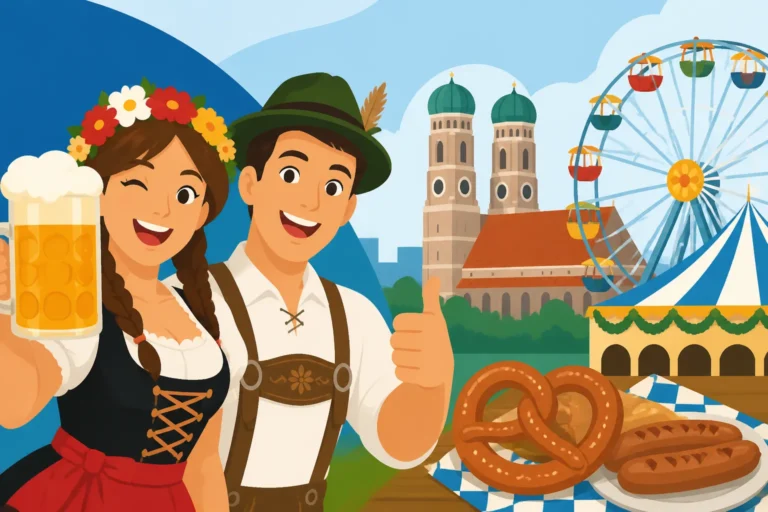
Speaking of beer gardens, the one at the Chinese Tower is iconic, but the Seehaus Biergarten by the lake is also fantastic, offering picturesque views. Grab a huge pretzel (Brezn), a hearty pork knuckle (Schweinshaxe), and, of course, a liter of local beer. This is German food culture at its most authentic and communal. You'll likely find yourself sharing a table with locals, and that's exactly part of the charm!
Diving Deeper: Culture, History, and Relaxation
Munich isn't just about pretty palaces and beer; it's a city with profound cultural depth and a complex history, offering experiences from world-class art to poignant reflections on the past.
Museums and Galleries: From Old Masters to Modern Art
Munich boasts an incredible array of museums and galleries, catering to every taste. The Kunstareal (Art District) is a concentrated hub of artistic excellence, making it easy to hop from one world-class institution to another. You've got the Alte Pinakothek, showcasing European masters from the 14th to 18th centuries, including works by Dürer, Rubens, and Rembrandt. Just across the street, the Neue Pinakothek picks up where the Old leaves off, featuring 19th and early 20th-century art, with impressive collections of Impressionist and Expressionist masterpieces.
For something more contemporary, the Pinakothek der Moderne houses modern and contemporary art, architecture, and design under one stunning roof. And then there's the Lenbachhaus, known for its exceptional collection of works by the Blue Rider artists, including Kandinsky and Marc. It’s a wonderful journey through artistic movements. If you’re more into science and technology, the Deutsches Museum, one of the oldest and largest science and technology museums in the world, is another fantastic option, especially if you're traveling with kids or have a curious mind. This kind of cultural immersion is what makes a visit to Germany truly special.
Bavarian Beer Culture: A Taste of Tradition
You can't come to Munich and not immerse yourself in its legendary beer culture. It's more than just drinking; it's a deeply ingrained social tradition, a source of local pride, and a pillar of Bavarian identity. You'll quickly discover that there are six major breweries in Munich that adhere to the Reinheitsgebot (German Beer Purity Law) of 1516, ensuring your brew is made with only water, barley, hops, and yeast.
The most famous of all beer halls is probably the Hofbräuhaus, which dates back to the 16th century. It's a bustling, boisterous, and often very touristy place, but for a first-timer, it’s an essential experience. Expect live Oompah bands, waitresses in traditional dirndls, and plenty of communal tables. For a slightly more local (but still welcoming) vibe, check out Augustinerkeller or Löwenbräukeller.
Beyond the beer halls, remember the beer gardens, especially in the English Garden as mentioned. They're usually open from spring to early autumn and are a fantastic way to enjoy the Bavarian sunshine and conviviality. Don't be surprised if locals bring their own food – that's totally allowed and part of the tradition in many beer gardens, as long as you buy your drinks there. For a deep dive into this delightful topic, make sure to read our guide on Beer, Wine, and German Drinking Culture.
Day Trips from Munich: Exploring Beyond the City
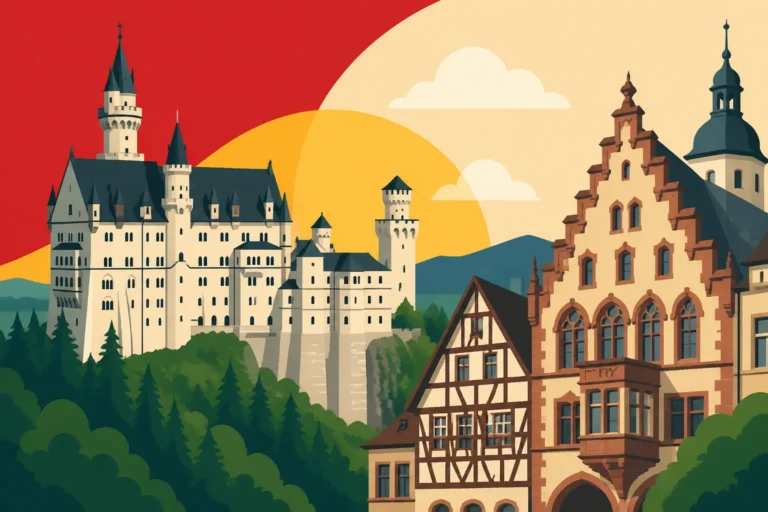
Munich is a fantastic base for exploring the breathtaking Bavarian region. One of the most popular and quintessential day trips is to Neuschwanstein Castle, King Ludwig II's fairytale castle nestled in the Alps. It looks exactly like something out of a storybook, or perhaps a Disney movie (it was, in fact, the inspiration for Cinderella's castle!). It's a bit of a journey (train to Füssen, then bus), but entirely worth it. Booking tickets well in advance is crucial, as it's incredibly popular. GetYourGuide offers various tours that include transport, making it a hassle-free experience.
Another excellent option is the charming medieval town of Rothenburg ob der Tauber, a postcard-perfect destination on the Romantic Road. It's like stepping back in time with its well-preserved walls, cobblestone streets, and half-timbered houses. Dachau Concentration Camp Memorial Site offers a stark and important historical experience for those seeking to understand Germany's past. It’s a somber visit, but a deeply significant one. For more ideas and practical advice, check out our comprehensive guide on Best Day Trips From Munich.
A table of popular day trip options:
| Destination | Main Attraction | Travel Time (approx. by train/bus from Munich) | Why Visit? | Booking Tip |
|---|---|---|---|---|
| Neuschwanstein Castle | "Fairytale" castle, stunning Alpine views | 2 hours | Iconic, picturesque, unique history | Book tickets online well in advance (official site or GetYourGuide tours) |
| Dachau Memorial Site | Former concentration camp memorial | 30-40 minutes | Important historical context, poignant and educational | Audio guide highly recommended, tours often include transport |
| Salzburg, Austria | Mozart's birthplace, UNESCO Old Town, 'Sound of Music' | 1.5 – 2 hours | Beautiful Baroque city, cultural richness, cross-border experience | Train tickets (Bayern Ticket is great value for groups!), walking tours via Booking.com |
| Rothenburg ob der Tauber | Medieval walled town, Christmas market all year | 2.5 – 3 hours | Perfectly preserved medieval charm, unique shopping | Best by train with a Bayern Ticket, allow a full day |
| Garmisch-Partenkirchen | Bavarian Alps, Zugspitze (Germany's highest peak) | 1.2 – 1.5 hours | Hiking, skiing, stunning mountain scenery, fresh air | Ideal for nature lovers and outdoor activities |
Practicalities for a Smooth Trip
Beyond the sights and sounds, a smooth trip often hinges on getting the practical details right. This is where a bit of local knowledge can really make a difference, helping you avoid common expat headaches.
Accommodation: Choosing Your Stay
Munich offers a wide range of accommodation options, from luxurious hotels to cozy guesthouses and budget-friendly hostels. When choosing where to stay, consider what kind of experience you're after and how much you want to rely on public transport. For first-time visitors, staying near the Hauptbahnhof or Marienplatz puts you right in the thick of things, with excellent access to public transport and many attractions within walking distance. However, these areas can be pricier and sometimes noisier.
If you prefer a slightly quieter, more residential feel but still want good connectivity, areas like Schwabing (known for its bohemian vibe, cafes, and boutiques) or Glockenbachviertel (trendy, lively, great for nightlife) are excellent choices. Haidhausen also offers a charming atmosphere with beautiful architecture and plenty of restaurants. Booking.com is usually my go-to for finding diverse options, allowing you to filter by location, price, and amenities. Just remember that during major events like Oktoberfest or Christmas markets, rooms book up incredibly fast and prices skyrocket, so plan well ahead! Our guide to Accommodation in Germany: Hotels, Pensionen, and Hostels offers more detailed advice.
Eating Like a Local: Bavarian Delights
Munich's food scene goes far beyond beer and pretzels (though those are certainly delicious!). Bavarian cuisine is hearty, flavorful, and incredibly satisfying. Don't be afraid to dive in! You’ll find classic dishes like Weißwurst (white sausage, traditionally eaten before noon with sweet mustard and a pretzel), Schweinshaxe (roasted pork knuckle with crispy skin), and Leberkäse (a type of meatloaf, often served in a roll). And for dessert, Apfelstrudel (apple strudel) or Kaiserschmarrn (shredded pancake with fruit compote) are absolute winners.
Restaurants often have a Mittagstisch (lunch menu) which offers great value during weekdays. Portion sizes can be generous, so don't be shy about asking for a doggy bag (Mitnahme, bitte!). Tipping in Germany is customary but not as generous as in some other countries; rounding up to the nearest euro or adding 5-10% for good service is generally appreciated. Many restaurants still prefer cash, especially in smaller, more traditional establishments, so it's always wise to have some on hand. To truly savor the culinary landscape, explore our comprehensive German Food Culture: Eating and Drinking as a Visitor.
Essential Tips: Money, Language, and Etiquette
Navigating a new country always comes with a few essential practicalities. When it comes to money, Germany is still surprisingly cash-reliant compared to some other European nations. While credit cards are widely accepted in larger stores and hotels, many smaller shops, bakeries, cafes, and beer gardens might prefer or even only accept cash (Bargeld). Always carry a mix of cash and card to be safe. ATMs (Geldautomat) are plentiful. For a more detailed look, check out our guide on Money for Travel in Germany: Cash, Cards, and ATMs.
Regarding language, while many Germans, especially in tourist areas and among younger generations, speak excellent English, it's always a good idea to learn a few basic German phrases. A friendly "Hallo," "Danke" (thank you), "Bitte" (please/you're welcome), and "Entschuldigung" (excuse me/sorry) will go a long way. Knowing how to ask for the bill ("Die Rechnung, bitte") or if someone speaks English ("Sprechen Sie Englisch?") is incredibly helpful. People genuinely appreciate the effort, even if your German is terrible (like mine was when I first moved here!). Our guide to German Language and Everyday Communication for Visitors is a great starting point.
Finally, a quick note on German etiquette. Punctuality is valued, so if you have a tour or reservation, try to be on time. Germans also appreciate directness, so don't be offended if someone seems blunt; it's usually not meant personally. Recycling is taken very seriously, so pay attention to the different bins for paper, plastic, glass, and organic waste. And remember the "Ruhezeit" (quiet hours), typically between 10 PM and 7 AM, and all day Sunday. Sundays are truly a day of rest here; most shops are closed, so plan your grocery shopping accordingly! Our guide on German Etiquette and Social Life for Visitors elaborates on these cultural nuances.
All in all, Munich is a fantastic city for a first-time visitor. It offers that perfect blend of historical grandeur, vibrant culture, delicious food, and easy accessibility. Don't let the initial bureaucracy or language barrier intimidate you. Embrace the adventure, arm yourself with a few key phrases, and prepare to fall in love with Bavaria's beautiful capital. Prost!
Disclaimer
Please note that while we strive to provide the most accurate and up-to-date information, rules, regulations, and prices in Germany can change. It's always a good idea to verify critical details like opening hours, ticket prices, and specific travel requirements closer to your travel date. Enjoy your trip!