How to Visit Dresden’s Striezelmarkt
Alright, my fellow expats and travel enthusiasts, gather 'round! When you first land in Germany, you'll quickly discover that come late November, the entire country transforms into a magical wonderland of Christmas markets. It's a rite of passage, really. But with so many to choose from, how do you pick the one that truly embodies that authentic German festive spirit without feeling like you're just at another generic fair?
Disclosure: This post may contain affiliate links. We may earn a commission at no extra cost to you if you make a purchase through these links. Read full disclosure.
Well, if you're chasing the real magic, the kind that whispers tales of centuries past, then Dresden's Striezelmarkt is where your heart needs to be. Forget those glossy brochures that make every market look the same; Dresden is a league of its own. This isn't just a guide, it's your personal roadmap to navigating the oldest Christmas market in Germany, ensuring you don't just see it, but truly experience it.
Why Dresden's Striezelmarkt is a Must-Visit
Let's be honest, you've probably seen pictures of various German Christmas markets, and they all look pretty enchanting, right? Fairy lights, wooden stalls, steaming mugs of Glühwein… But Dresden's Striezelmarkt isn't just a Christmas market; it's the blueprint, the original, dating back to 1434. That's nearly six centuries of tradition, friends, and you can feel it in every spiced aroma and every carefully carved wooden ornament.
A Deep Dive into History and Tradition
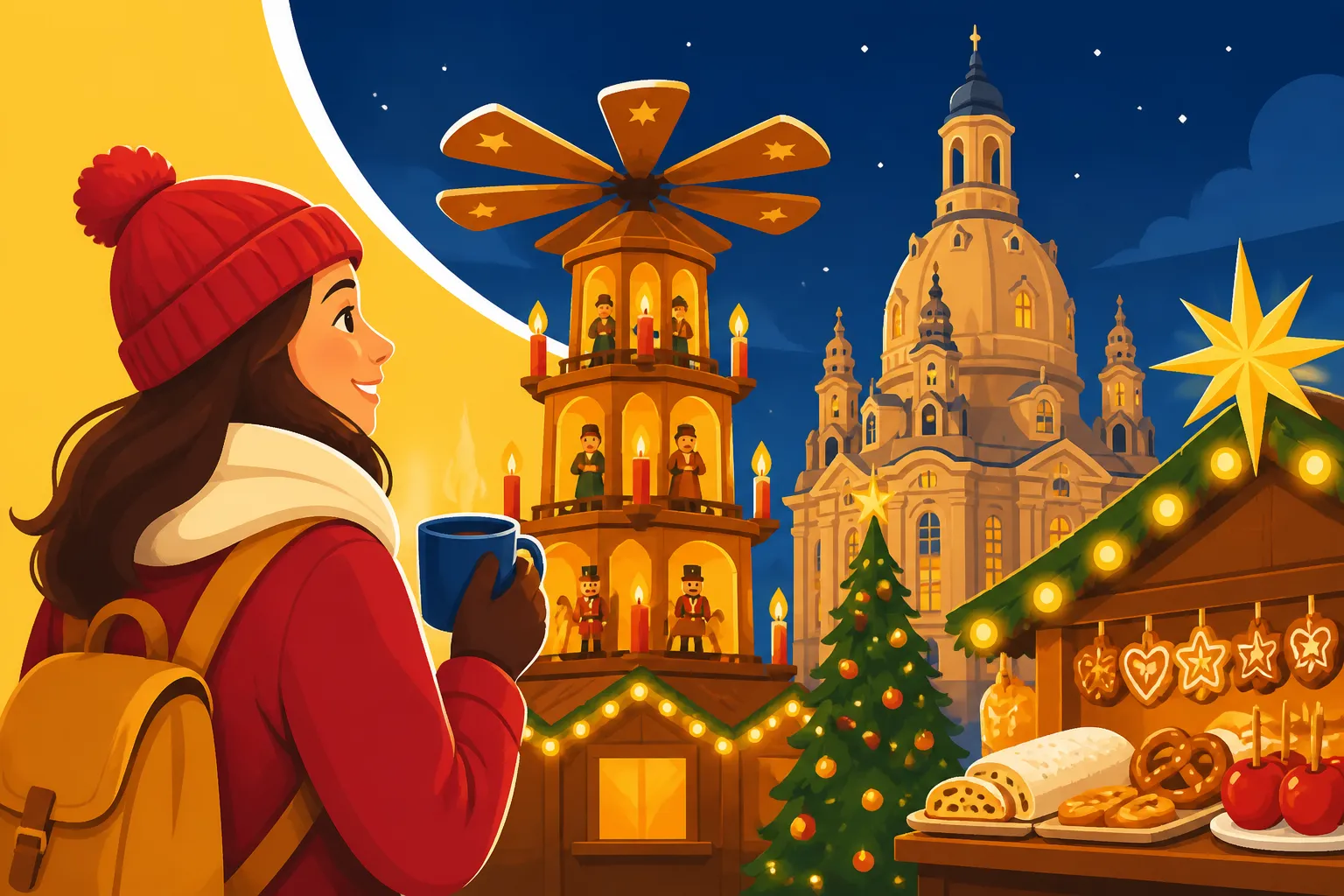
Imagine a market that predates Columbus sailing to America! The Striezelmarkt began as a simple one-day event where citizens could buy meat for their Christmas feast. Over the centuries, it grew, evolving into the grand spectacle it is today. Its name, "Striezelmarkt," comes from the famous Dresden Christstollen, originally a simple bread made for Advent, now a protected delicacy. This isn't just a piece of cake; it's a historical artifact you can eat, with a rich buttery taste and candied fruits that perfectly embody the spirit of the season. The market proudly champions local artisans, showcasing crafts that are deeply rooted in Saxon folklore. You'll find the charming Pflaumentoffel, little figures made from dried prunes, chimneysweeps thought to bring good luck. Then there are the intricate Räuchermännchen, smoking men figurines that puff incense, and the luminous Herrnhuter Sterne, paper or plastic stars that glow with an otherworldly light, a tradition originating from the Moravian Church community nearby. These aren't mass-produced trinkets; they are pieces of living history crafted with love, often by families who have passed down their skills for generations. This deep connection to heritage is what truly sets Striezelmarkt apart.
More Than Just a Market: The Dresden Christmas Experience
While the Striezelmarkt is undoubtedly the crown jewel, Dresden itself transforms into an entire "Christmas City." It's not just one big market square; the festive spirit spills out into various smaller, uniquely themed markets across the city, creating a walking tour of Yuletide cheer. For instance, you might stumble upon the medieval-themed Christmas market nestled near the Frauenkirche, with its torchlit stalls and historic vendors, or the modern, more chic Augustusmarkt along the Hauptstraße, offering a different vibe altogether. Each market has its own personality, its own special delights, and its own unique flair. This means you can spend days exploring, moving from the bustling main market to quieter, more intimate settings, discovering something new around every corner. It's a truly immersive experience that goes beyond mere shopping and drinking. You're not just visiting a market; you're stepping into a Christmas fairytale, a vibrant tableau of German traditions that have been carefully preserved for hundreds of years. This holistic approach to the festive season makes Dresden an unparalleled destination. If you want to learn more about the broader context of celebrations, check out our guide on Festivals, Holidays, and Traditions in Germany.
Planning Your Trip to Striezelmarkt: Logistics and Practicalities
Venturing to such a popular destination during peak season requires a little savvy planning. Trust me, showing up unprepared will only lead to stress and less Glühwein enjoyment. We’ve all been there, trying to figure out train schedules on the fly or scrambling for a last-minute hotel room. Don't be that expat!
Getting There: Travel Options to Dresden
Dresden is wonderfully accessible, whether you're coming from another German city or further afield in Europe. The German train system, Deutsche Bahn, is generally reliable, and Dresden Hauptbahnhof (main station) is well-connected. Booking train tickets in advance, especially during the busy Christmas season, is always a smart move to save some euros and secure your seat. You can easily compare routes and prices using platforms like Omio, which pulls up various options for trains and buses. Remember, if you're traveling frequently within Germany, consider getting the Deutschland-Ticket – it could save you a significant amount on regional travel.
For those on a tighter budget or with less time-sensitive travel plans, long-distance buses, such as those operated by FlixBus, offer an affordable alternative. They run frequently and connect Dresden to many major cities. If you prefer the flexibility of driving, you can Renting a Car and Driving on the Autobahn. However, be warned: parking in Dresden during the Striezelmarkt can be a nightmare. City center parking garages fill up quickly, and street parking is scarce and often restricted. It might be less stressful to park on the outskirts and use Dresden's excellent public transport system (trams and buses) to reach the market area. If you're flying into Germany, Dresden has its own small airport (DRS), but you might find better connections and prices flying into Leipzig/Halle (LEJ) or even Berlin Brandenburg (BER) and then taking a train or bus to Dresden.
Where to Stay: Accommodation Options
Booking your accommodation early for a Striezelmarkt visit is not just recommended; it's practically mandatory. Dresden becomes incredibly popular during Advent, and good places fill up fast. You'll find a wide range of options, from luxury hotels to quaint guesthouses and budget-friendly hostels. Websites like Booking.com are your best friend here, allowing you to filter by location, price, and amenities.
Think about what kind of experience you want. Staying right in the Altstadt (Old Town) puts you within walking distance of the Striezelmarkt and many other attractions, but it can be pricier and noisier. Areas like the Innere Neustadt, just across the Elbe River, offer a charming mix of historic architecture and lively streets with plenty of restaurants and cafes, still only a short walk or tram ride away. For a slightly more bohemian vibe, explore the Äußere Neustadt with its independent boutiques and alternative scene. No matter where you choose, ensure it's well-connected to public transport, because navigating the crowded streets around the markets on foot can be tiring, especially with chilly winter weather!
Navigating the Market and Opening Hours
The Striezelmarkt typically kicks off in the last week of November and runs until Christmas Eve, usually with daily hours from 10:00 AM to 9:00 PM. Check the official Dresden Striezelmarkt website closer to your travel dates for exact timings, as they can sometimes vary slightly for the opening and closing days.
The market itself is located on the Altmarkt square. It's not a sprawling labyrinth, but it can feel incredibly dense when packed with visitors. Give yourself ample time to wander through the alleys of stalls, take in the scents, and listen to the festive music. Weekdays, especially mornings, are generally less crowded than evenings and weekends. If you're hoping for a more relaxed browse, aim for those quieter times. However, the market truly comes alive after dark when the lights twinkle, and the atmosphere becomes even more magical. It's a trade-off, really – crowds for ambiance. Decide what's more important for your experience! To truly get a handle on the overall Christmas market landscape in Germany, take a peek at our guide on How German Christmas Markets Work: Food, Drinks, and Gifts.
Eating, Drinking, and Shopping at Striezelmarkt
This is where the real fun begins! German Christmas markets are a feast for the senses, and Striezelmarkt, with its deep historical roots, offers a particularly rich bounty.
Culinary Delights: What to Eat and Drink
You absolutely cannot visit the Striezelmarkt without trying the Dresdner Christstollen. This rich, buttery fruit bread, dusted with powdered sugar, is more than just a sweet treat; it's the market's namesake and a symbol of Dresden's culinary heritage. Its recipe is legally protected, meaning only bakeries in Dresden and its surrounding area that adhere to strict quality standards can call their product "Dresdner Stollen." The annual Stollenfest, where a colossal Stollen is paraded through the city, is a sight to behold if you happen to be there at the right time.
Beyond Stollen, your taste buds are in for a ride. Warm yourself up with a mug of Glühwein, the spiced mulled wine that is ubiquitous at German markets. Striezelmarkt will have several variations, from classic red to white Glühwein and even alcohol-free Kinderpunsch. Remember the Pfand system: you pay a small deposit for your mug, which you get back when you return it. Many people choose to keep the beautifully designed mugs as souvenirs! For a truly local flavor, try the Pulsnitzer Pfefferkuchen, a type of gingerbread unique to the nearby town of Pulsnitz, usually filled with jam or chocolate. And don't miss the Rahmklecks, a crispy flatbread topped with sour cream, spring onions, and bacon, cooked right in front of you. Seriously, what's not to love? If you're keen on the festive drinks, we've got a whole rundown on Glühwein and Festive Drinks in Germany.
Unique Crafts and Souvenirs
This is where Striezelmarkt shines above many other markets. It's not just about generic Christmas baubles here. The market prides itself on showcasing traditional craftsmanship from the Erzgebirge (Ore Mountains) region, a historical center of German folk art. Look out for the aforementioned Pflaumentoffel and Räuchermännchen. These are authentic, handcrafted pieces, often made by small family workshops. Another must-buy is the Herrnhuter Stern, originating from the Moravian Church community. These multi-pointed stars are stunning, whether as window decorations or hanging above your dining table.
You'll also find exquisite wooden toys, delicate glass ornaments, hand-knitted woolens, and beautiful pottery. Take your time at each stall, admire the artistry, and chat with the vendors if you can. They often have fascinating stories about their craft. These are the kinds of souvenirs that carry genuine meaning and will remind you of your authentic German Christmas experience for years to come. For more on what to look for, our guide on What to Eat and Drink at a German Christmas Market and Shopping in Germany: Department Stores, Markets, and Outlets have further insights.
Activities and Entertainment
Striezelmarkt isn't just for eating and shopping; it’s a full-on festive carnival, especially delightful for families. Children will adore the fairytale forest, where classic German fairy tales are brought to life through animated figures and interactive displays. There’s a beautiful Ferris wheel offering panoramic views of the market and the city, a miniature railway, and a daily puppet theatre that captivates young audiences.
The main stage in the center of the Altmarkt hosts a continuous program of Christmas music, with choirs, brass bands, and various performers adding to the festive atmosphere. You might even catch a traditional nativity play or a performance by local school children. It’s a vibrant hub of activity that truly brings the community together. To enhance your experience, consider looking for local tours or specialized experiences on platforms like GetYourGuide, which often offer guided walks that delve into the history and hidden gems of the market and Dresden.
Insider Tips for an Unforgettable Striezelmarkt Visit
So, you've got the basics down. Now, let's talk about those little nuggets of wisdom that only a seasoned expat can share. These are the things that elevate your trip from "good" to "unforgettable."
Beating the Crowds and Embracing the Atmosphere
Let's face it: Striezelmarkt is popular, and you're going to encounter crowds. Instead of fighting them, try to strategize. As mentioned, visiting on a weekday morning is your best bet for a more relaxed experience. However, don't shy away from the evening buzz entirely. The market at night, with all its lights and sounds, is a truly magical spectacle. If you brave the evening, try to visit stalls on the periphery first, then slowly work your way into the center.
Another strategy is to break up your visit. Spend a few hours at the Striezelmarkt, then perhaps retreat to one of Dresden's cozy cafes for a slice of cake and a hot drink to warm up. Afterward, you can venture out to explore one of the smaller, quieter Christmas markets in the city. The medieval market near the Frauenkirche, for example, offers a different, more subdued charm. Embracing the festive chaos as part of the experience, rather than something to be avoided, can truly transform your mindset. After all, what’s a bustling Christmas market without a bit of a friendly squeeze?
Practical Advice for Expats
Germany, despite its modern façade, can still be quite cash-dependent, especially at markets. Many smaller stalls at Striezelmarkt, particularly food and craft vendors, might be cash-only. While larger stalls might accept cards, always carry enough euros in cash to avoid disappointment. You don't want to miss out on that specific Räuchermännchen because you only have plastic.
Dressing for the German winter is crucial. It gets cold, especially in the evenings. Layer up! Think warm waterproof boots, a heavy winter coat, gloves, a hat, and a scarf. Nothing ruins a magical experience faster than freezing cold toes. Trust me, I've learned this the hard way more times than I care to admit.
While many vendors in tourist-heavy Dresden speak at least some English, making an effort with a few basic German phrases goes a long way. "Hallo" (hello), "Danke schön" (thank you very much), "Bitte" (please), and "Was kostet das?" (How much does that cost?) will be appreciated and can sometimes even get you a warmer smile. Don't worry about perfect pronunciation; the effort itself is what counts. And speaking of navigation, familiarizing yourself with Getting Around German Cities: U-Bahn, S-Bahn, Trams, and Buses will make your life much easier once you're on the ground. For more general advice on navigating cultural norms, our guide on German Etiquette and Social Life for Visitors can be quite helpful.
Here's a quick comparison of the Striezelmarkt to give you some perspective:
| Feature | Dresden Striezelmarkt | Other Major German Markets (e.g., Nuremberg, Cologne) | Smaller Local Markets |
|---|---|---|---|
| History | Oldest in Germany (since 1434) | Often centuries old, but typically younger | Newer, or small, historic village markets |
| Signature Items | Dresdner Stollen, Pflaumentoffel, Räuchermännchen, Herrnhuter Sterne | Nuremberg: Lebkuchen, Rostbratwürste; Cologne: Kölsch-Glühwein | Regional specialties, handmade crafts |
| Size & Crowds | Very large, extremely crowded, especially evenings/weekends | Large, can be very crowded | Smaller, more intimate, generally less crowded |
| Main Draw | Tradition, authentic Saxon crafts, Stollenfest | Iconic setting (e.g., Nuremberg's Hauptmarkt, Cologne Cathedral), unique food | Local community feel, unique village atmosphere |
| Family Friendliness | Excellent (fairytale forest, children's attractions) | Very good, often with carousels | Varies widely, some very child-focused, others not |
| Artisan Focus | High, strong emphasis on Erzgebirge craftsmanship | Good, but can have more generic stalls as well | Often very high, small local producers |
Disclaimer
Please note that while I strive to provide the most current and accurate information based on my experiences and available data, details regarding market dates, opening hours, prices, and specific vendor offerings can change. It is always advisable to check the official Dresden Striezelmarkt website or local tourism resources closer to your travel dates for the latest updates. Travel rules and regulations, especially concerning COVID-19 or other public health measures, can also change rapidly. Always verify current requirements before making travel plans.