Reaching the Frisian Islands: Combined Rail and Ferry Ticketing
Oh, the allure of Germany's Frisian Islands! Whether you’ve seen pictures of those iconic pastel-colored beach chairs or heard tales of the wild North Sea winds, planning a trip to these beautiful islands can feel like navigating a maze. Trying to coordinate trains to a small coastal town, then figure out which ferry goes where, and hoping the times actually line up? It's a classic expat headache. But don't you worry, because this guide is going to walk you through exactly how to reach those stunning islands, proving that it doesn't have to be a multi-website, multi-language nightmare.
Disclosure: This post may contain affiliate links. We may earn a commission at no extra cost to you if you make a purchase through these links. Read full disclosure.
The Frisian Islands – Your North Sea Escape Awaits
Germany’s Frisian Islands, stretching along the North Sea coast, are truly a gem. They offer everything from bustling resorts to serene, car-free havens, all characterized by the vast expanse of the Wadden Sea (Wattenmeer), a UNESCO World Heritage site. For many expats, these islands represent a quintessential German escape, a chance to breathe in that salty air and experience a different pace of life. But getting there? That’s where the adventure really begins, and often, the frustration.
A Glimpse into the East and North Frisian Islands
Let's talk about these islands for a moment, shall we? They’re split into two main groups: the East Frisian Islands (Ostfriesische Inseln) in Lower Saxony and the North Frisian Islands (Nordfriesische Inseln) in Schleswig-Holstein. Each island has its own distinct personality. You've got Sylt, often called the "Hamptons of Germany," known for its upscale vibe, stunning beaches, and vibrant nightlife. Then there's Norderney, a popular spa island with elegant architecture and plenty of activities. For something more tranquil, you might consider Spiekeroog or Wangerooge, both delightfully car-free, meaning your journey ends with a peaceful stroll or a horse-drawn carriage ride from the ferry terminal. Further north, Föhr and Amrum offer a more laid-back, family-friendly atmosphere with expansive beaches and charming villages. And don’t forget Borkum, the westernmost East Frisian island, easily accessible from Emden.
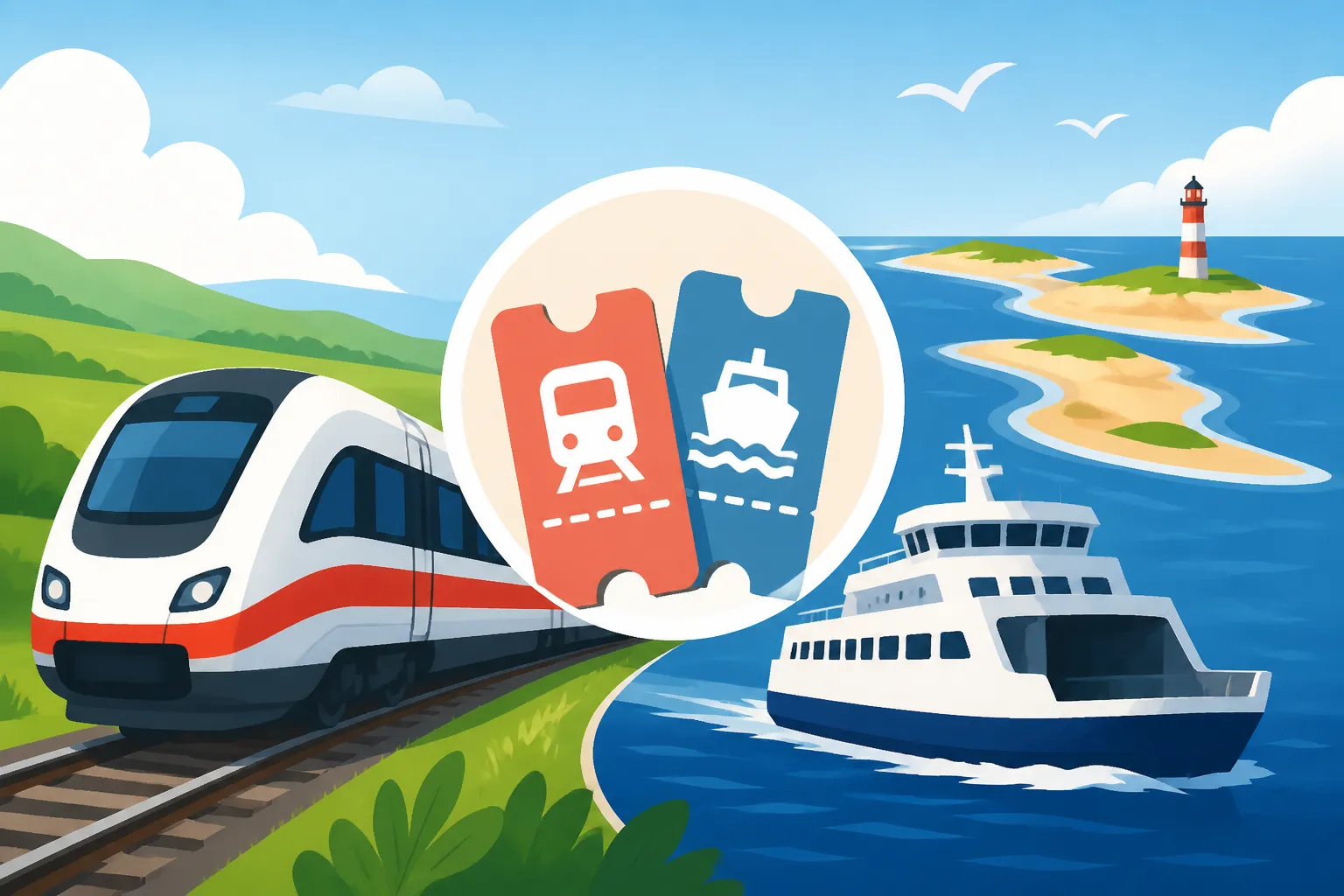
The common thread among all these beauties is their remote nature, requiring a combined travel approach. It’s not simply a matter of hopping on a direct train. You’re looking at a mainland train journey, often involving a regional connection, followed by a ferry ride across the Wadden Sea. This multi-modal requirement is precisely what makes planning so tricky if you're not a local who's grown up navigating these routes. Trying to piece together schedules from Deutsche Bahn, then a local bus operator, and finally a specific ferry company, all in different browser tabs and possibly in German? It's enough to make you want to stay home.
Why Combined Ticketing is a Game-Changer for Expats
As expats, we've all been there: staring at a German website, desperately trying to figure out if we're booking the right connection, praying that the train won't be delayed and cause us to miss the last ferry of the day. The language barrier, the intricate navigation of various transport company websites, and the sheer mental gymnastics of synchronizing multiple legs of a journey can really take the shine off an otherwise exciting travel plan. This is particularly true when dealing with the somewhat unique logistics of reaching Germany's islands, where tides and local operators add extra layers of complexity.
This is where the magic of combined ticketing truly shines. Imagine a world where you don't have to visit three different websites, translate terms, or cross-reference schedules yourself. A single ticket that covers your entire journey, from your starting point in, say, Berlin, all the way to the ferry terminal, and then includes your ferry passage to the island itself. It's not just about convenience; it's about peace of mind. A combined ticket dramatically reduces the potential for missed connections, minimizes the stress of juggling multiple booking confirmations, and simplifies changes if plans unexpectedly shift. For us foreigners, it transforms a potentially daunting administrative task into a straightforward booking experience, allowing you to focus on the joy of the upcoming trip rather than the anxiety of getting there.
Navigating the Journey: From Mainland to Island Paradise
The journey to the Frisian Islands is an experience in itself, offering glimpses of Germany's charming countryside before you reach the coast and embark on the final, scenic leg over the water. Understanding the key mainland gateways is crucial, as these are your primary connection points between the rail network and the ferry services.
The Mainland Gateway Ports and Their Connections
To reach these island paradises, you’ll first need to get yourself to one of the dedicated mainland ports. These ports serve as vital hubs where train lines often terminate right at the ferry docks, or at least very close by. For instance, if your heart is set on Norderney or Juist, your gateway will be Norddeich Mole. This is a fantastic example of integrated travel, as the regional trains pull right up to the ferry terminal, making the transfer incredibly smooth. Similarly, to access the popular Sylt, you’ll likely find yourself heading towards Niebüll (if coming from inland Germany by train) or Westerland (if you’re already on Sylt and returning to the mainland or arriving directly via the causeway).
For the charming Föhr and Amrum, the bustling port of Dagebüll is your starting point. From Dagebüll, several ferries depart daily, often accommodating vehicles, though many islanders prefer to leave their cars behind. If you're aiming for the serene car-free islands like Spiekeroog or Langeoog, you'll typically depart from smaller, picturesque ports like Neuharlingersiel or Bensersiel, respectively, often requiring a short bus connection from a larger train station like Esens or Norden.
Each port acts as a specific conduit to a handful of islands, so knowing your destination island dictates your mainland approach. The beauty is that Deutsche Bahn (DB) has integrated many of these coastal towns into its network, even if it means changing to a regional train for the final stretch. This intricate web of connections can be a blessing and a curse. A blessing because it means most places are reachable, but a curse because figuring out all the optimal transfers can be a real puzzle, especially if you're battling language differences or unfamiliar station layouts. This is precisely why a seamless booking platform becomes so invaluable. You can read more about how to navigate the broader German rail system in our guide on Getting Around Germany: Trains, Buses, Flights, and Car Hire.
Understanding Ferry Services and Timetables
Once you’ve successfully navigated the German rail network to your chosen mainland port, the next stage of your journey is the ferry. These aren't just simple boat rides; they are an integral part of the island experience, and their operations are deeply intertwined with the natural rhythm of the North Sea. For many of the East Frisian Islands, particularly those in the Wadden Sea National Park, ferry schedules are dictated by the tides. This means departures might not be at perfectly consistent times each day, but rather shift with high and low tides. Islands like Langeoog and Wangerooge, for example, are known for their tide-dependent connections, which adds another layer of complexity to planning. You can't just assume a ferry will be running every hour on the hour.
Major ferry operators like AG Reederei Norden-Frisia (serving Norderney and Juist), Reederei Cassen Eils (for Helgoland, Cuxhaven), and W.D.R. (for Föhr and Amrum) are reliable, but their websites and booking systems are separate from the national railway. While you might manage to book your train ticket through Deutsche Bahn, you'd then need to jump to a completely different website, potentially in German, to secure your ferry passage. Trying to manually synchronize these schedules, especially if you have tight connection windows, can be incredibly stressful. Imagine your train from Berlin is delayed by 30 minutes, and the ferry schedule is tide-dependent, with only two departures left for the day – you could easily miss your connection and be stranded.
This challenge highlights the critical need for a streamlined solution. Without one, you’re constantly checking separate timetables, worrying about potential delays, and perhaps even needing to call different customer service lines if something goes awry. The beauty of a service that combines these elements is that it takes this burden off your shoulders, presenting a unified itinerary and often handling the underlying coordination. It means you can board your train knowing that your ferry connection is part of the plan, rather than a separate gamble.
Your Seamless Solution: Omio for Frisian Island Travel
If you've been nodding along to the frustrations of piecing together trains and ferries, then let me introduce you to your new best friend for German island travel: Omio. This platform is a lifesaver, especially for those of us who weren't born speaking perfect German and don't have an encyclopedic knowledge of Germany's public transport system. Omio's biggest strength lies in its ability to combine different modes of transport, cutting through the red tape and simplifying what would otherwise be a multi-step, multi-website booking process. It truly shines when dealing with journeys like those to the Frisian Islands, where trains and ferries must seamlessly connect.
How Omio Simplifies Complex Multi-Modal Journeys
The magic of Omio is its comprehensive search engine. Instead of just searching for trains or just ferries, Omio integrates data from various transport providers – including Deutsche Bahn, regional train operators, and those essential ferry companies – to give you a complete, end-to-end journey plan. This means you can enter your departure city, say, Munich, and your destination island, like Norderney, and Omio will return itineraries that piece together the train journey to Norddeich Mole and the subsequent ferry crossing to the island. You won't have to guess which train connects to which ferry; Omio does the heavy lifting for you.
Let's walk through a hypothetical scenario. You're sitting in Berlin and want to spend a relaxing weekend on Spiekeroog, one of the car-free gems. Traditionally, you'd research trains to Neuharlingersiel or a nearby town, then find the specific ferry company, check its tide-dependent schedule, and hope for the best. With Omio, you simply type "Berlin Hauptbahnhof" as your origin and "Spiekeroog" as your destination, select your desired date, and hit search. Within seconds, Omio presents you with various options, clearly showing the rail segments (e.g., ICE train from Berlin to Bremen, regional train to Esens, and then perhaps a bus or taxi connection to Neuharlingersiel) and the corresponding ferry connections. The total travel time and price are all laid out in one clear view.
This level of integration is a huge boon for non-German speakers or anyone simply overwhelmed by bureaucracy. You avoid navigating potentially confusing German-only websites and the risk of booking a train that arrives too late for the last ferry. Omio streamlines the entire planning process into a single interface, making it incredibly straightforward to visualize and book your journey. It truly takes the guesswork out of complex routes, making your trip to the Frisian Islands feel much less like an expedition and more like a simple vacation.
Step-by-Step: Booking Your Combined Ticket with Omio
Ready to experience this simplified booking? It’s genuinely straightforward, and you'll wonder how you ever managed without it. Here’s how you can book your combined rail and ferry ticket to the German Frisian Islands using Omio:
- Head to the Omio Website or App: Open your browser to Omio's website or download their mobile app. Both are user-friendly and available in multiple languages, including English. This is already a huge advantage over trying to piece together local German websites.
- Enter Your Journey Details: In the search bar, type your departure city (e.g., "Hamburg Hauptbahnhof" or even just "Hamburg") and your destination island (e.g., "Sylt," "Borkum," "Norderney"). Be specific with the island name, and Omio's smart search will usually pinpoint the correct ferry terminal on the mainland.
- Select Your Dates: Choose your desired travel dates. If you have some flexibility, it's worth checking a few different days as prices and connection times can vary.
- Review the Search Results: This is where Omio really shines. The results page will display various itineraries, often combining different modes of transport. Look for the options that clearly show both a "Train" and a "Ferry" segment. Omio's interface makes it easy to see the different legs of your journey, their duration, and the total travel time. You'll instantly see combined routes, sometimes even suggesting local bus connections from the train station to the ferry terminal if it’s not directly adjacent.
- Choose Your Preferred Itinerary: Compare the prices, travel times, and number of transfers for the different options. Once you've found an itinerary that suits your schedule and budget, click on it.
- Proceed to Payment: Follow the prompts to enter passenger details and complete the payment. Omio accepts various payment methods, making it convenient for international users.
- Receive Your E-Tickets: Once your booking is confirmed, your e-tickets will typically be sent to your email address and accessible directly within the Omio app. You’ll have all the necessary booking references and QR codes on your phone, ready to show to train conductors and ferry staff.
While Omio masterfully handles the main rail and ferry connections, remember that for some car-free islands, the absolute 'last mile' on the island itself (e.g., a small island bus or horse-drawn carriage from the ferry port to your accommodation) might be a separate, local service not integrated into the initial Omio booking. However, getting the primary train and ferry sorted through Omio takes 90% of the stress out of the equation, making it an incredibly smart choice for expats and tourists alike. This seamless experience is why Omio truly stands out as the core solution for complex German travel.
Benefits Beyond Booking: Flexibility and Support
Booking your integrated journey through Omio offers more than just the convenience of a single transaction. It extends into aspects of flexibility and support that can be particularly reassuring when navigating foreign transport systems. One of the primary advantages is the digital nature of your tickets. Having all your e-tickets and booking confirmations neatly organized on your phone via the Omio app means no fumbling with paper printouts or losing crucial documents. This digital accessibility is a modern traveler's dream, especially when you're quickly switching between train platforms and ferry terminals.
Furthermore, Omio often provides support in English, which can be an absolute godsend if you encounter any issues or have questions about your booking. Imagine a train delay affecting your ferry connection. Instead of trying to explain your predicament in German to various customer service lines for different operators, you have one central point of contact. While the specific terms for rebooking or compensation in case of delays will ultimately depend on the carriers' individual policies, having Omio as an intermediary simplifies the initial communication and problem-solving process. This unified approach minimizes the stress that often accompanies travel hiccups, especially in a new country.
When you compare this to the alternative – booking your train via Deutsche Bahn's website, then separately reserving a ticket on a ferry operator's site like W.D.R. or AG Reederei Norden-Frisia – the value of Omio becomes even clearer. You're not just saving time; you're gaining a layer of insulation from the inherent complexities of multi-modal travel. Omio takes away the hard work of piecing together schedules, translating obscure German terms, and cross-referencing departure boards. It's about empowering you to travel with confidence, knowing that a significant portion of the logistical burden has been handled by a platform designed to simplify your journey. So, while it's always good to have a general understanding of how German trains work, letting Omio orchestrate your trip to the Frisian Islands ensures a much smoother and more enjoyable experience.
Practical Tips for a Smooth Frisian Island Trip
Even with your travel logistics smoothed out by Omio, a little local knowledge goes a long way in ensuring your Frisian Island adventure is as enjoyable and stress-free as possible. These islands have their own unique charm and practical considerations that are worth keeping in mind.
Packing Smart and Understanding Island Rules
The Frisian Islands, with their wild North Sea weather and often car-free environments, demand a specific approach to packing. Firstly, layers are your best friend! The North Sea climate can be famously unpredictable; you might experience sunshine, strong winds, and a sudden shower all within an hour. A waterproof and windproof jacket is an absolute must, even in summer. Comfortable walking shoes are also crucial, especially if you plan to explore the extensive beaches or partake in mudflat hiking (Wattenmeer walks). You'll be doing a lot of walking, and wet feet are no fun!
For those islands that are proudly car-free (like Wangerooge, Spiekeroog, Langeoog, or Juist), remember that your luggage will often need to be transported by hand, trolley, or horse-drawn carriage from the ferry terminal to your accommodation. So, pack lighter than you normally would for a mainland trip, and consider luggage with good wheels. Overpacking will only lead to unnecessary struggles. It's a fantastic opportunity to embrace minimalist travel and truly unwind without the clutter of excessive belongings. Understanding these unique island rules beforehand will prevent any unwelcome surprises upon arrival and allow you to fully immerse yourself in the tranquil island pace.
What to Do If Things Go Wrong Delays, Missed Connections
Let's be realistic: even the best-laid plans can hit a snag, especially when dealing with public transport. Train delays, though less common with high-speed connections, can happen, and they can be particularly anxiety-inducing when a ferry connection is involved. The first and foremost piece of advice is: don't panic. If you've booked your combined ticket through a platform like Omio, you're in a much better position than if you had booked each leg separately.
Firstly, if you experience a train delay, immediately check the Deutsche Bahn Navigator app on your phone. This app provides real-time updates on train movements and often suggests alternative connections. Many German train tickets, especially long-distance ones, allow for some flexibility in case of delays impacting connections, although the specifics can sometimes be complex. If you miss your onward ferry connection due to a train delay, immediately contact Omio's customer support. They might be able to assist with rebooking or advise on the next steps, leveraging their relationships with the various transport providers. If you had booked separately, you'd be calling the train company, then the ferry company, and explaining the situation twice over, likely in German. With Omio, you have a single point of contact, which is a significant relief. It’s also wise to note down any official delay confirmations from the train staff if possible, as these can be crucial for any potential claims or rebookings. While a combined ticket doesn't guarantee a completely seamless experience in every unexpected situation, it certainly centralizes your support and generally offers a more coherent pathway to resolving issues compared to separate bookings.
Making the Most of Your Island Stay
Once you've successfully navigated the journey and stepped onto the sandy shores of your chosen Frisian Island, it's time to let go and embrace the unique island life. These islands are perfect for disconnecting from the hustle and bustle of mainland life. Spend your days exploring the vast, windswept beaches, taking long walks, or cycling along the dunes. The Wadden Sea is a UNESCO World Heritage site, and a guided mudflat hike (Wattwanderung) is an absolute must-do experience, offering a fascinating glimpse into a unique ecosystem.
Indulge in the local cuisine, especially fresh seafood and regional specialties like "Ostfriesentee" (East Frisian tea) served with Kluntjes (rock candy) and cream. Each island often has charming cafes and restaurants, perfect for a leisurely meal or a Kaffee und Kuchen break. Make sure to book your accommodation well in advance, especially if you're traveling during peak season (summer holidays or school breaks), as popular islands can fill up quickly. Whether you're seeking active adventures, peaceful solitude, or family-friendly fun, the Frisian Islands offer a distinctive German experience. So, kick off your shoes, feel the sand between your toes, and let the North Sea breezes carry your worries away.
Disclaimer
Please note that the information provided in this guide is intended for general guidance only and may be subject to change. While we strive to provide accurate and up-to-date information, travel regulations, pricing, and service availability can vary. Always double-check official sources and booking platforms for the most current details before making any travel arrangements. This content is for informational purposes and does not constitute professional advice.