Where to Stay on the Rhine and Moselle: Riverside Towns Compared
Oh, the Rhine and Moselle rivers! Just uttering their names brings back so many memories of misty mornings, ancient castles perched on hillsides, and the gentle clinking of wine glasses in sun-drenched vineyards. If you're planning a trip to Germany and dreaming of a picturesque riverside escape, you've hit the jackpot. But let's be real, with so many enchanting towns along these legendary waterways, figuring out "where to stay" can feel like a quest in itself. This guide is here to cut through the confusion, helping you decide which charming spot perfectly matches your travel dreams and, more importantly, how to secure that ideal room, probably with the help of a fantastic resource like Booking.com.
Disclosure: This post may contain affiliate links. We may earn a commission at no extra cost to you if you make a purchase through these links. Read full disclosure.
The Majestic Rhine River Valley: A Blend of History and Grandeur
The Rhine River, particularly the Upper Middle Rhine Valley (a UNESCO World Heritage site), is Germany's poster child for dramatic landscapes and storied pasts. It's a place where every bend in the river reveals another fairytale castle, a quaint village clinging to a hillside, or terraced vineyards stretching as far as the eye can see. Choosing a base here depends on whether you crave bustling city vibes or serene, wine-focused tranquility.
Northern Rhine Gems: Cologne and Düsseldorf
If your idea of a riverside stay involves more cosmopolitan flair, vibrant nightlife, and a wider array of dining and shopping options, then looking further north on the Rhine towards cities like Cologne (Köln) and Düsseldorf is a smart move. These cities offer a completely different experience than the smaller, more traditional towns further south, serving as bustling hubs that blend historical significance with modern urban living.
Cologne, dominated by its awe-inspiring Kölner Dom, is a city that pulsates with energy. It's famous for its Roman heritage, its lively Altstadt (Old Town), and its distinctive Kölsch beer served in small, cylindrical glasses. Staying in Cologne gives you access to a huge variety of hotels, from luxury chains overlooking the river to cozy boutique hotels tucked away in charming side streets. You can easily spend days exploring its museums, strolling along the Rhine promenade, or delving into its culinary scene. For a truly extensive selection, especially if you’re looking for options that accommodate various budgets and preferences, checking platforms like Booking.com is your best bet. They have an incredible inventory in major cities, ensuring you find something that fits.
Just a short train ride north, Düsseldorf presents a sleek, fashionable counterpoint to Cologne's historical grit. Known for its Königsallee (a high-end shopping boulevard often simply called "Kö"), its thriving art scene, and a lively Old Town packed with bars (dubbed "the longest bar in the world"), Düsseldorf offers a more polished riverside experience. Accommodations here range from chic design hotels to business-oriented establishments, reflecting its status as a significant economic hub. Both cities are incredibly well-connected by Germany's efficient rail network, making them excellent springboards for day trips deeper into the Rhine Valley or even to other regions. You can easily hop on a train to explore other destinations listed in our guide on Getting Around Germany: Trains, Buses, Flights, and Car Hire.
The Middle Rhine: Castles, Wine, and Romance
Now, if you're picturing medieval castles, rolling vineyards, and charming villages that time forgot, the Middle Rhine Valley is precisely where you want to be. This stretch, roughly between Mainz and Koblenz, is the quintessential "Rhine experience." It’s where the river narrows, creating dramatic gorges, and where the most famous legends and lore come to life.
One of the absolute darlings of the Middle Rhine is Boppard. This picturesque town boasts a lovely riverside promenade, a chairlift offering panoramic views of the famous "Boppard Loop" (a dramatic bend in the river), and plenty of opportunities for river cruises. It’s a fantastic base for exploring the region's castles, like the Marksburg Castle, which is beautifully preserved. Boppard has a good selection of family-run hotels and guesthouses. Another gem is Bacharach, a ridiculously charming walled town with half-timbered houses, a ruined castle (Stahleck Castle), and a distinct medieval feel. It’s smaller, more intimate, and perfect for those who want to wander cobbled streets and feel immersed in history. Rüdesheim am Rhein, while a bit more touristy, is famous for its Drosselgasse, a narrow lane packed with wine taverns and live music. It’s a lively spot, particularly popular with day-trippers and those looking for a celebratory atmosphere.
When booking in these smaller towns, especially during peak season or wine festivals, availability can be tighter. It's highly advisable to book well in advance. Again, Booking.com proves invaluable here, as it aggregates options from small guesthouses to larger hotels, often showing real-time availability and guest reviews that are so helpful when choosing a place with character. For deeper insights into this specific region, you might find our guide on The Rhine Valley: Castles, Wine, and River Towns very useful for planning your activities.
Southern Rhine and Beyond: From Mainz to Freiburg
While the Middle Rhine often steals the show, the southern stretches of the Rhine also offer compelling reasons to stay. Mainz, for instance, is a vibrant city known for its Roman history, charming Old Town, and as one of Germany's major wine capitals, particularly famous for Riesling. It’s a bigger city than the Middle Rhine villages but has a very distinct character, offering a mix of history, culture, and a relaxed, wine-centric atmosphere. The accommodation options in Mainz are diverse, from modern hotels to more traditional inns, making it easy to find something suitable on Booking.com.
Further south, as the Rhine meanders towards Switzerland, cities like Freiburg im Breisgau, while not directly on the main Rhine tourist route in the same way as the middle section, are close enough to offer convenient access to parts of the Upper Rhine plain and the stunning Black Forest. Freiburg itself is a sunny, university city known for its beautiful medieval Old Town, charming canals (Bächle), and strong eco-friendly ethos. While you wouldn't typically choose Freiburg as a base for Rhine cruises, it’s a fantastic option if you want to combine a Rhine experience with exploring the unique beauty of southwestern Germany. The connection here is often about proximity and regional exploration, rather than a direct riverside focus.
The Serene Moselle River Valley: Vineyards and Quaint Charm
Switching gears from the grand, dramatic Rhine, we head to its more intimate and winding cousin, the Moselle River. The Moselle Valley offers a distinctly different, perhaps even more romantic, atmosphere. Picture steep, vineyard-covered slopes, sleepy villages, and a river that snakes its way through the landscape in graceful loops. This region is a paradise for wine lovers, cyclists, and anyone seeking a slower, more tranquil pace.
Cochem: The Fairytale Heart of the Moselle
When people imagine the Moselle, Cochem often comes to mind first. And for good reason! Dominating the town is the magnificent Reichsburg Cochem, a picture-perfect castle perched high above the river, straight out of a fairytale. The town itself is incredibly charming, with narrow lanes, half-timbered houses, and plenty of wine taverns where you can sample the local Mosel-Riesling.
Cochem is an ideal base for exploring the Moselle Valley. You can take scenic boat trips from its lively promenade, cycle along the riverside paths, or simply relax and soak in the views. It’s also relatively easy to reach by public transport, with a train station connecting to larger hubs like Koblenz. Accommodation in Cochem leans towards family-run hotels, guesthouses (Pensionen), and holiday apartments. These often fill up quickly, especially during the summer and autumn wine festival season. This is where Booking.com shines, allowing you to filter by guest rating, price, and even specific amenities like a balcony with a river view. Imagine sipping Moselle wine on your balcony as the sun sets over the vineyards – pure bliss!
Bernkastel-Kues: Wine Capital and Medieval Beauty
Further up the Moselle, you'll find Bernkastel-Kues, often lauded as one of the most beautiful towns in Germany, and definitely a key player in the German wine scene. This town is essentially two halves – Bernkastel and Kues – connected by a bridge over the Moselle, each with its own distinct charm. Bernkastel, with its stunning medieval market square, crooked half-timbered houses, and the impressive "Spitzhäuschen" (pointy house), is particularly enchanting.
Bernkastel-Kues is undeniably a wine lover's paradise. The surrounding hills are blanketed with vineyards, and countless wineries offer tastings and tours. It’s a wonderful place to walk or cycle through the vines, enjoying the serene landscape. Accommodation here includes elegant hotels, cozy guesthouses, and self-catering apartments, many with a strong focus on local wines and cuisine. Like Cochem, booking ahead is crucial, especially for the high season. For those eager to delve deeper into the region's viticulture, our guide on The Moselle and German Wine Country offers excellent insights into what makes this area so special for wine enthusiasts. You can even find specific recommendations for visiting German Breweries and Wineries there.
Trier: Germany's Oldest City and Roman Legacy
While Cochem and Bernkastel-Kues represent the quintessential Moselle village experience, Trier offers something entirely different: a profound journey through time. As Germany’s oldest city, Trier boasts an incredible array of UNESCO World Heritage Roman monuments, including the Porta Nigra (a massive Roman city gate), the Imperial Baths, the Basilica of Constantine, and the Amphitheater. It’s a city where history literally surrounds you at every turn.
Trier is a larger city than its Moselle counterparts, offering a more varied urban experience alongside its historical treasures. It serves as a fantastic base if you want to combine extensive sightseeing with visits to the Moselle vineyards, as the valley is easily accessible from here. The city itself has a bustling market square, charming pedestrian zones, and a good selection of restaurants and shops. When it comes to accommodation, Trier has a broader range of hotels, including larger chains, making it a good option if you prefer more modern amenities or are traveling for business alongside leisure. Finding suitable lodging, whether a hotel near the Porta Nigra or a quieter option on the outskirts, is simple with Booking.com’s diverse listings.
Deciding Between the Rhine and Moselle: What's Your Travel Style?
So, you're faced with a delightful dilemma: the grand Rhine or the serene Moselle? Both rivers offer unforgettable experiences, but they cater to slightly different tastes and travel styles. Making the right choice really boils down to what kind of atmosphere and activities you're seeking.
Vibe and Landscape Comparison
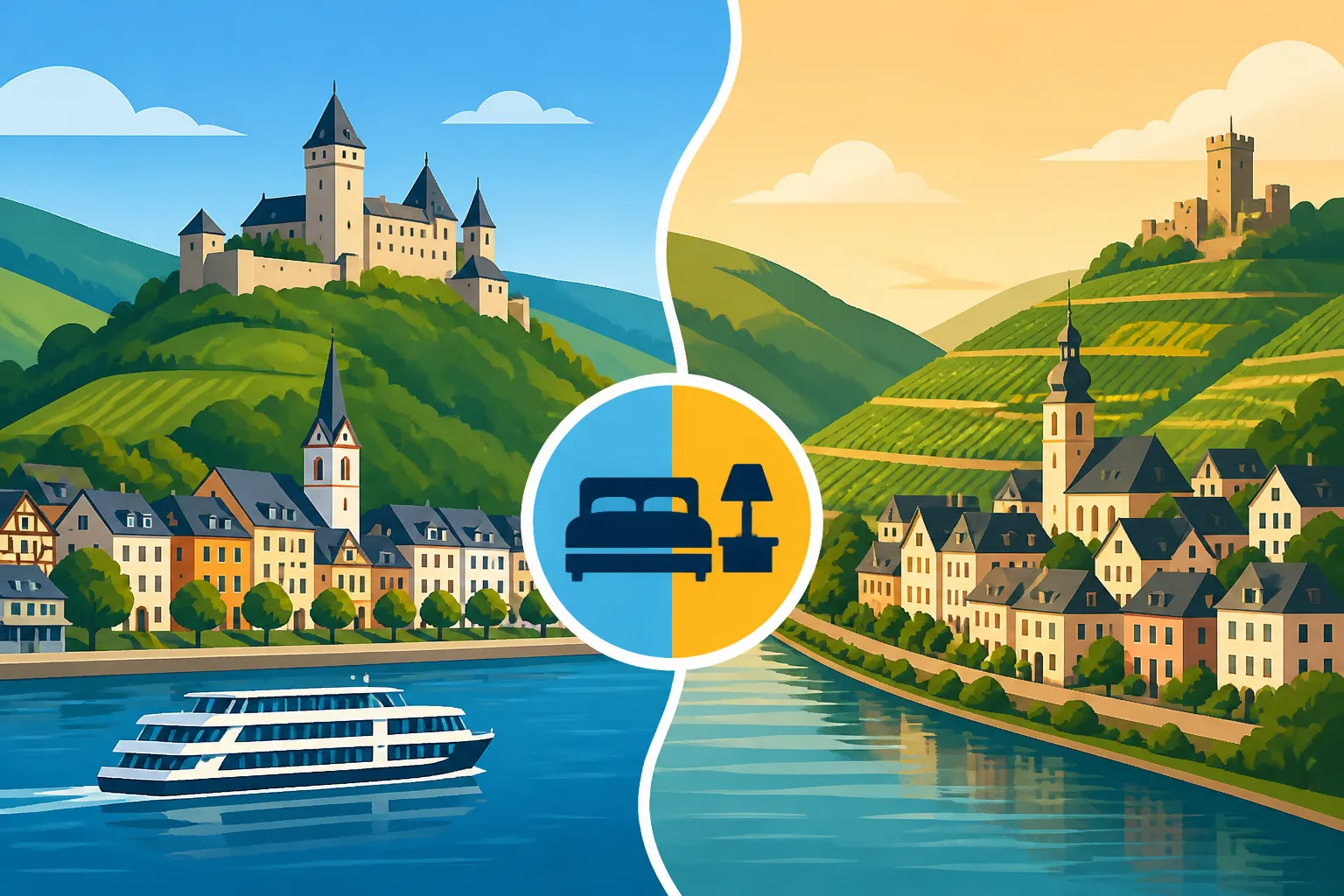
The Rhine, particularly the Middle Rhine section, often feels more dramatic and grand. The valley is wider in some parts, then narrows into spectacular gorges, with the river itself a busier artery for cargo ships and larger tourist boats. The castles here are more numerous and often perched dramatically high on cliff faces, creating truly iconic panoramas. The towns, while charming, can feel a bit more developed for tourism, especially places like Rüdesheim. It's a landscape of epic proportions, a stage for legends and historical grandeur.
The Moselle, on the other hand, is generally more intimate and serene. It’s a river that truly meanders, with countless loops (Schleifen) that slow the pace of travel and create secluded, almost hidden valleys. The landscape is dominated by incredibly steep, terraced vineyards that plunge down to the water’s edge, giving it a softer, more verdant feel. The castles are still present, but often feel more integrated into the landscape, like Cochem's Reichsburg. The towns are typically smaller, quainter, and feel more deeply rooted in wine culture and local life. If you're looking for a peaceful escape, a place where time seems to slow down, the Moselle's winding charm might just win your heart.
Activities and Interests
Your preferred activities will heavily influence your choice. If you're keen on cruises with grand vistas and frequent castle spotting, the Rhine is probably your best bet. A scenic boat trip from Bingen to Koblenz through the UNESCO World Heritage Upper Middle Rhine Valley is a classic German experience. For those interested in bustling cities, diverse museums, and vibrant nightlife, the larger Rhine cities like Cologne or Düsseldorf offer unparalleled options. History buffs will find endless medieval tales and fortresses along the Rhine.
Conversely, if wine tasting is high on your agenda, especially of the exquisite Mosel-Riesling, then the Moselle Valley is your promised land. The region is practically synonymous with wine, and you'll find countless opportunities to visit vineyards, sample wines directly from the producer, and attend charming wine festivals. For cycling and hiking, the Moselle's flatter riverside paths and vineyard trails offer a more gentle and immersive experience than some of the more rugged Rhine trails. And if you're a devout history buff with a penchant for Roman antiquity, Trier on the Moselle is an absolute must-see, providing a fascinating counterpoint to the Rhine's medieval focus.
Accommodation Styles and Availability
The type of accommodation you seek might also steer your decision. The Rhine, particularly in its larger cities, offers a vast spectrum of lodging, from major international hotel chains and luxury establishments to mid-range hotels, boutique options, and budget hostels. In the Middle Rhine's popular towns, you'll find a good mix of traditional guesthouses and hotels, though luxury options are less common. Because of the higher volume of tourism, availability can still be competitive.
The Moselle, being generally a less industrialized and more rural region, tends to feature more intimate, family-run establishments. Think charming guesthouses (Pensionen), small hotels, and plenty of holiday apartments (Ferienwohnungen), often directly linked to local wineries. True luxury hotels are rarer, but the charm and personal touch of smaller establishments often more than make up for it. However, the smaller capacity means these places can book up very quickly, especially during peak season or specific events like Weinfeste. For either river, using a comprehensive platform like Booking.com is a godsend. Their filtering options allow you to narrow down by price, star rating, guest reviews, and even specific amenities like "pet-friendly" or "free parking," which can be a huge consideration, especially if you're exploring by car (check out our guide on Renting a Car and Driving on the Autobahn).
Practicalities of Your Riverside Stay: Logistics and Booking Tips
Planning your stay along these beautiful rivers involves a few practical considerations to ensure a smooth and enjoyable trip. From choosing your type of lodging to understanding transportation, a little foresight goes a long way.
Navigating Accommodation Choices: Hotels, Guesthouses, and Apartments
When you're looking for a place to rest your head on the Rhine or Moselle, you'll encounter a few common types of accommodation, each with its own advantages.
Hotels are the most straightforward, offering a range of services from basic to luxurious. In larger cities like Cologne, Düsseldorf, or Trier, you'll find international chains and modern hotels with all the amenities. In smaller towns, hotels tend to be independently owned, often with a more traditional German flair and sometimes a focus on local cuisine.
Guesthouses (Pensionen/Gasthöfe) are particularly prevalent in the Moselle Valley and smaller Rhine towns. These are typically family-run, smaller establishments that offer a more personal, cozy experience. They often include breakfast and might have a restaurant serving regional specialties. Staying in a Gasthof can feel like staying with locals, offering a glimpse into authentic German hospitality.
Holiday Apartments (Ferienwohnungen) or self-catering units are excellent for longer stays, families, or those who prefer to cook some of their own meals. They offer more space and flexibility, and many come fully equipped with kitchens. These are abundant in both regions and can be a cost-effective option.
Regardless of your preference, a platform like Booking.com is incredibly powerful. You can filter by accommodation type, specific features, guest ratings, and even look at reviews that highlight aspects important to you, like quietness or proximity to attractions. This is especially helpful in Germany where customer service standards can vary, and past guest experiences provide valuable insights. Finding a place that feels just right is so much easier when you can compare so many options in one spot.
Transportation & Accessibility
How you plan to get around can also dictate your ideal base.
The Rhine Valley is incredibly well-served by trains. The regional MittelrheinBahn runs frequently along both sides of the river, connecting virtually every town from Mainz to Koblenz. This makes it incredibly easy to hop between villages, visit castles, and embark on boat cruises without needing a car. Major cities like Cologne, Düsseldorf, Mainz, and Koblenz are also on the mainline rail network, making them accessible by high-speed trains. If you're considering extensive train travel, definitely check out our guide on High-Speed Trains in Germany (ICE): Deutsche Bahn Routes and Savings.
The Moselle Valley, while equally beautiful, is less accessible by train. A train line exists between Koblenz and Cochem, but beyond that, particularly further upriver towards Bernkastel-Kues and Trier, you're looking at a more car-dependent region, or relying on regional buses and boat services. While car travel gives you ultimate flexibility to explore hidden viewpoints and vineyards, navigating winding roads can be slower. If you do plan to drive, be sure to familiarise yourself with the rules in our guide on Renting a Car and Driving on the Autobahn. River cruises are also a fantastic way to experience both valleys, offering unparalleled views from the water.
Best Time to Visit and Booking Strategy
The Rhine and Moselle regions are beautiful year-round, but each season offers a different charm.
Spring (April-May) sees the vineyards burst into green, fruit trees blossom, and temperatures become pleasant for hiking and cycling. It's less crowded than summer.
Summer (June-August) is peak season, with warm weather, long daylight hours, and plenty of outdoor activities. Expect more crowds and higher prices.
Autumn (September-October) is arguably the most magical time, especially for wine lovers. The grape harvest is in full swing, Weinfeste (wine festivals) abound in almost every village, and the vineyards turn stunning shades of gold and crimson. This is also a very popular time.
Winter (November-March) can be quiet, with fewer tourist services, but offers a peaceful, almost mystical atmosphere. Some towns host charming Christmas markets, especially in December.
Due to the popularity of both regions, particularly during summer and autumn wine festival season, booking your accommodation well in advance is highly recommended. For popular towns like Cochem, Boppard, or Bacharach, rooms can disappear months ahead. This is another area where Booking.com is a lifesaver. You can filter by "free cancellation" options, which provides flexibility if your plans change, and you can often find "early bird" discounts. Plus, their comprehensive listings mean you won't miss out on any hidden gems that might not have their own sophisticated websites.
Top Towns for Specific Interests: A Comparative Analysis
To help you narrow down your choice, let’s pit some of the most popular towns against each other based on specific interests.
For Wine Lovers: Moselle vs Middle Rhine
If your primary goal is to immerse yourself in Germany's wine culture, both regions offer incredible experiences, but with distinct flavors.
The Moselle Valley, with towns like Bernkastel-Kues and Cochem, is a true Riesling paradise. This region is famous for its steep, terraced vineyards and lighter, fruitier Rieslings. In Bernkastel-Kues, you'll find an almost overwhelming number of wineries, many offering tastings in cozy cellars or with panoramic views over the river. The smaller scale of the operations often leads to a more personal experience. Festivals here are frequent and genuinely celebrate the grape. The entire region is built around wine, making it a natural choice for aficionados. You can spend days cycling between vineyards and villages, stopping at a Straußwirtschaft (seasonal wine tavern) for a rustic meal and a glass of local wine.
The Middle Rhine, particularly around Rüdesheim am Rhein and Boppard, also boasts significant wine production, primarily Riesling as well, but also some Pinot Noir (Spätburgunder). Rüdesheim, with its Drosselgasse, is a hub of wine taverns and lively entertainment, making it a fun, albeit touristy, spot to sample wines. The vineyards here are equally dramatic, clinging to steep slopes. However, the Middle Rhine's appeal is more balanced between wine, castles, and river cruises, whereas on the Moselle, wine often takes center stage. If you want variety alongside your wine, the Rhine offers more. If you want pure, unadulterated wine immersion, the Moselle edges it out.
For History Buffs: Trier vs Rhine Castles
For those who crave a journey into the past, both rivers deliver, but with very different historical narratives.
Trier, situated on the Moselle, is an absolute treasure trove for Roman history enthusiasts. It proudly stands as Germany's oldest city, and its UNESCO World Heritage sites – the Porta Nigra, Imperial Baths, Basilica of Constantine, and Amphitheater – are incredibly well-preserved and give you a powerful sense of the Roman Empire's reach. Walking through Trier is like stepping back two millennia. You can spend days exploring these ancient ruins, visiting excellent museums, and still feel like you've only scratched the surface. It's an immersive experience for anyone fascinated by classical antiquity.
The Rhine Valley, specifically the Middle Rhine between Bingen and Koblenz, is the undisputed king of medieval castles. With over 40 castles and fortresses dotting this relatively short stretch, it's a living open-air museum of feudal history. Towns like Boppard, Bacharach, and St. Goar offer fantastic access to these architectural marvels. You can take a river cruise and simply gaze at them, or, even better, visit some of the well-preserved ones like Marksburg Castle or Burg Eltz (a short trip from the Moselle but often included in Rhine itineraries). These offer a glimpse into medieval life, knighthood, and the strategic importance of the river. If you dream of turreted towers and knightly tales, the Rhine castles are your calling.
For Relaxation and Scenery: Moselle vs Upper Middle Rhine
If your ideal vacation involves unwinding, soaking in beautiful vistas, and escaping the hustle and bustle, both rivers have their serene corners, but the overall feeling differs.
The Moselle Valley truly excels in relaxation and intimate scenery. Its winding river, gentle slopes covered in vineyards, and charming, unhurried villages create a wonderfully tranquil atmosphere. Towns like Beilstein, Zell, or even quieter corners of Bernkastel-Kues are perfect for those who want to disconnect. Imagine long, leisurely walks through vineyards, gentle bike rides along the river, and evenings spent enjoying local wine and regional cuisine in a quiet Weinstube. The pace of life here is noticeably slower, making it ideal for a true escape.
The Upper Middle Rhine Valley also offers breathtaking scenery, but it's often a more dramatic kind of beauty. The majestic gorges, the constant parade of castles, and the busy river create a more dynamic landscape. While there are quiet spots, the overall impression is one of grandeur and activity. Towns like Braubach or Lorch can offer a quieter base, but the main draws are often the panoramic views and the sheer density of historical sites. For sheer dramatic impact and a blend of scenery with historical exploration, the Rhine is superb. But for pure, unadulterated, peaceful scenic relaxation, the Moselle might just have the edge.
No matter your preference, finding that perfect hideaway is always possible. I've personally spent countless hours on Booking.com over the years, filtering through hundreds of options in these very regions, and it consistently delivers on finding those unique, memorable places. It really takes the stress out of the search so you can focus on the fun stuff – like what local delicacy to try first! You'll probably be interested in exploring some German Regional Dishes Every Visitor Should Try while you're there.
Disclaimer
Please note that while I strive to provide accurate and up-to-date information, circumstances in Germany, including local regulations, business hours, and specific offerings, can change. It's always a good idea to double-check details with official sources or directly with service providers before making definitive plans. This guide offers general advice and personal insights based on extensive experience in Germany and does not constitute official legal or professional counsel.