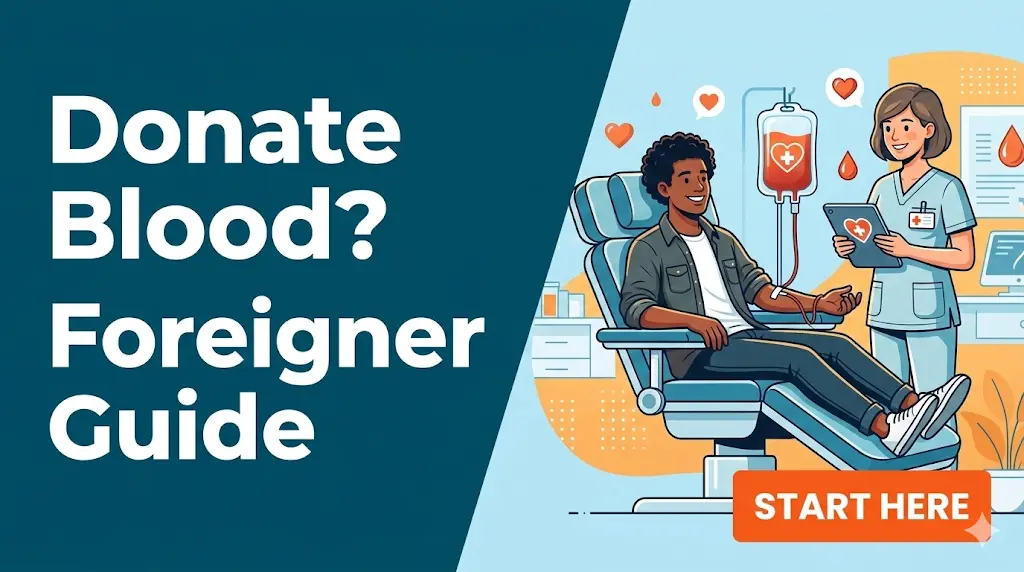
Blood Donation in Germany: Can Foreigners Donate and How?
Want to save lives in Germany? This guide explains the strict regulations for expats looking to donate blood. Discover the language requirements, physical eligibility criteria, what documents to bring, and the exact step-by-step process of donating at local clinics.
Disclosure: This post may contain affiliate links. We may earn a commission at no extra cost to you if you make a purchase through these links. Read full disclosure.
Understanding the Rules for Expats and Foreigners
The German Language Requirement
One of the most surprising and frequently debated hurdles for expats wanting to donate blood in Germany is the language barrier. German blood donation centers—including those operated by the German Red Cross (DRK)—strictly require donors to possess a functional, highly competent command of the German language. You must be able to independently read, understand, and fill out a highly complex medical questionnaire entirely in German. Furthermore, you must participate in a private consultation with a medical doctor prior to the donation, and you must be able to answer their specific health questions without the help of a translator.
This rule is not meant to be exclusionary; it exists strictly for medical liability, donor safety, and patient privacy reasons. A translator or bilingual friend cannot be in the consultation room because their presence breaches standard medical confidentiality laws. The doctor must be absolutely certain that you fully comprehend the risks of the procedure and have answered the infectious disease history questions accurately. If you are actively learning the language, scheduling a successful donation is a fantastic integration milestone.
Required ID and Proof of Residency
To donate blood in Germany, you must prove your identity and confirm your current German residential address. If you are an EU citizen possessing a standard national ID card (Personalausweis) that lists your current address, that single document is sufficient.
However, if you are a non-EU expat utilizing a passport for identification, your passport does not display your local German address. Therefore, you must bring your passport alongside a recent, official Meldebescheinigung (registration certificate) issued by your local Bürgeramt. Failing to bring this proof of address will result in you being turned away at the registration desk. The clinic must have a legally verified address to contact you by mail if they discover any severe abnormalities or infectious markers in your blood test results post-donation. Organizing these official documents is just one of the many bureaucratic steps of settling in; you can track the rest of your administration using our Moving to Germany Checklist.
Basic Medical and Physical Eligibility
Age, Weight, and General Health Limits
The physical requirements for blood donation (Blutspende) in Germany are standardized across all clinics and hospital networks. You must be between the ages of 18 and 65 if you are a first-time donor. Repeat donors who possess a healthy, documented track record can often continue donating up to age 72, subject to a doctor’s individual approval. You must also weigh a minimum of 50 kilograms (110 pounds).
On the exact day of your donation, you must feel completely healthy and robust. You cannot possess a sore throat, a lingering cold, or any active bacterial infection. If you recently recovered from a minor illness or took antibiotics, you must wait at least a week to a month (depending on the medication) after all symptoms have cleared before donating. Before your appointment, ensuring your daily wellness is optimized is key. Many expats order high-quality iron supplements, clean protein powders, and recovery vitamins through iHerb to keep their hemoglobin levels robust and prevent donation deferrals.
Travel History, Tattoos, and the “Mad Cow” Ban Reversal
Your recent travel and lifestyle choices heavily dictate your eligibility. If you recently received a new tattoo, permanent makeup, or a body piercing, you are strictly barred from donating blood for four months due to the elevated risk of bloodborne infections.
Travel history is scrutinized rigorously. If you recently visited a country with a high risk of malaria, Zika virus, or West Nile virus, you will face a mandatory waiting period ranging from four weeks to six months upon your return to Germany.
Crucially for British expats, there has been a massive recent change in the law. For decades, anyone who lived in the UK between 1980 and 1996 for more than six months was banned from donating blood in Germany due to the risk of variant Creutzfeldt-Jakob disease (vCJD), commonly known as Mad Cow disease. In 2023, Germany officially lifted this ban. British expats and those who resided in the UK during that era are now finally eligible to donate blood in Germany!
Certain long-term medications can also disqualify you. It is highly recommended to bring a written list of any prescriptions you take. If you have questions about your general health coverage for prescription medications, consulting digital brokers like Feather Insurance or expat-focused private providers like Ottonova can help clarify your medical benefits. For a broader look at navigating the local medical system, read Healthcare in Germany: A Comprehensive Guide for Expats.
The Blood Donation Process Step-by-Step
Registration and the Medical Questionnaire
When you arrive at the donation center, the first administrative step is registration. You will present your ID and Meldebescheinigung, and the staff will hand you a detailed medical questionnaire on a clipboard. This document asks extensive, highly personal questions about your sexual history, recent surgeries, travel, vaccinations, and chronic illnesses.
You must answer every single question truthfully. In Germany, the blood supply is protected by a brilliant concept of “self-exclusion.” If you know you engaged in high-risk behavior but felt pressured to attend a corporate blood drive with colleagues, there is a confidential barcode or sticker system attached to the form. You can discretely peel and attach a specific sticker that quietly tells the laboratory to safely dispose of your blood after the donation is complete. This protects the national blood supply without alerting your coworkers or forcing you to publicly disclose your private life.
The Doctor’s Consultation and the Donation
After submitting your questionnaire, you will proceed to a brief, private consultation with a resident physician. The doctor will review your answers in German, manually check your blood pressure, and prick your finger or earlobe to measure your hemoglobin (iron) levels. If your iron is too low, you will be deferred for your own safety. Maintaining an iron-rich diet and keeping holistic wellness supplies from iHerb stocked in your pantry can easily help prevent this frustrating deferral.
Once cleared by the physician, you proceed to the main donation room. The actual process of donating whole blood takes roughly 10 to 15 minutes, during which exactly 500 milliliters of blood is drawn. The phlebotomy nurses are highly trained, incredibly efficient, and ensure you are entirely comfortable throughout the procedure.
Recovery and Free Food
After the needle is removed and a pressure bandage is applied, you are strictly required to rest in the recovery area for at least 15 to 30 minutes. German blood donation centers are legendary for their generous post-donation buffets. You will be offered a massive spread of sandwiches, fresh fruit, cakes, coffee, and sugary juices to help rapidly stabilize your blood sugar.
You are heavily advised not to engage in heavy physical labor, lift heavy objects, or play strenuous sports for the remainder of the day. If you feel dizzy and cannot safely attend work, the donation center can provide an official note for your employer, though it is usually best to schedule donations after your shift ends.
| Step | Action Required | Time Estimate | Important Note |
| 1. Registration | Present ID and Meldebescheinigung | 5 Mins | Must have local address proof. |
| 2. Questionnaire | Fill out health history in German | 10 Mins | Translator assistance is forbidden. |
| 3. Medical Check | Doctor reviews form, checks iron/BP | 5 Mins | Iron levels must be robust. |
| 4. Donation | 500ml whole blood drawn | 10-15 Mins | Squeeze the provided stress ball. |
| 5. Recovery | Rest and eat the provided buffet | 20-30 Mins | Do not skip the snacks! |
Where to Donate Blood in Germany
German Red Cross (DRK) vs. University Hospitals
The German Red Cross (Deutsches Rotes Kreuz or DRK) is the absolute behemoth of the blood supply chain, collecting over 70% of all blood in Germany. They operate massive regional centers and organize mobile pop-up blood drives in community halls, university campuses, and corporate offices across the entire country. DRK drives are generally the most accessible and frequent way to donate.
Alternatively, you can donate directly at the transfusion medicine departments of major state and university hospitals (Unikliniken). These internal hospital blood banks supply their own trauma centers and surgical wards directly. Booking an appointment at a hospital is often easier if you live in the center of a major metropolis, and they frequently feature highly modern online scheduling portals. To understand the difference between local clinics and massive hospital networks, check out Finding a Doctor in Germany: How to Choose a Hausarzt.
Do You Get Paid to Donate?
In Germany, the DRK operates strictly on an unpaid, volunteer basis. You will receive free food, a small physical gift (like a coffee mug, a seasonal tote bag, or chocolate), and the profound satisfaction of saving lives, but you will not receive direct monetary compensation.
However, if you donate at a university hospital or a private commercial plasma donation center, you are frequently compensated with a flat “expense allowance” (Aufwandsentschädigung). This usually ranges from €20 to €30 for a whole blood donation and slightly more for a time-consuming blood plasma donation. If you are an international student utilizing this allowance to supplement your weekend budget, ensuring your finances are easily managed across borders with Wise is highly efficient. If you want to know how secondary income impacts your official earnings, read Understanding Your German Payslip: Gross vs Net Salary Explained.
Whether you choose to donate out of pure altruism or for a small compensation, having solid health coverage from specialized expat insurers like Feather Insurance or premium private providers like Ottonova ensures you are medically protected should any unforeseen health issues arise, giving you the complete peace of mind to help others in your new community. Utilizing agile financial tools like Wise makes handling the logistics of living abroad that much smoother.
References
Primary sources (official)
- German Red Cross (DRK) Blood Donation Service: The official portal for the DRK, providing the nationwide search tool for blood drives, regional eligibility criteria, and medical guidelines. https://www.drk-blutspende.de/
- Federal Centre for Health Education (BZgA): Official government health portal providing comprehensive, medically reviewed information on blood and plasma donation in Germany. https://www.blutspenden.de/
- Paul-Ehrlich-Institut (PEI): The Federal Institute for Vaccines and Biomedicines, which regulates the safety of blood products and mandates travel deferral guidelines in Germany. https://www.pei.de/EN/home/home-node.html
Other helpful sources
- Make it in Germany: The official government platform for international professionals, offering practical checklists on navigating healthcare and living comfortably in Germany. https://www.make-it-in-germany.com/en/
Disclaimer
The information provided in this article is for general informational and educational purposes only and does not constitute professional medical or legal advice. Blood donation eligibility criteria, travel deferral rules (including updates regarding vCJD), and specific language requirements are strictly enforced and subject to continuous updates by the German Medical Association and individual donation centers. The availability of an Aufwandsentschädigung (expense allowance) varies entirely by facility and region. Always consult directly with a licensed medical professional or the specific blood donation center regarding your unique eligibility to donate blood in Germany.