Working in Germany Without Knowing German: Tips and Realities
Scrolling through hundreds of “English-speaking” job postings only to find “fluent German required” buried at the bottom is an incredibly defeating cycle. I spent my first six months in Munich convinced I was unemployable because I couldn’t string a basic German sentence together. This guide decodes the reality of finding and surviving a job in Germany without local language skills.
Disclosure: This post may contain affiliate links. We may earn a commission at no extra cost to you if you make a purchase through these links. Read full disclosure.
The Reality of the English-Speaking Bubble
Startups and the Tech Industry
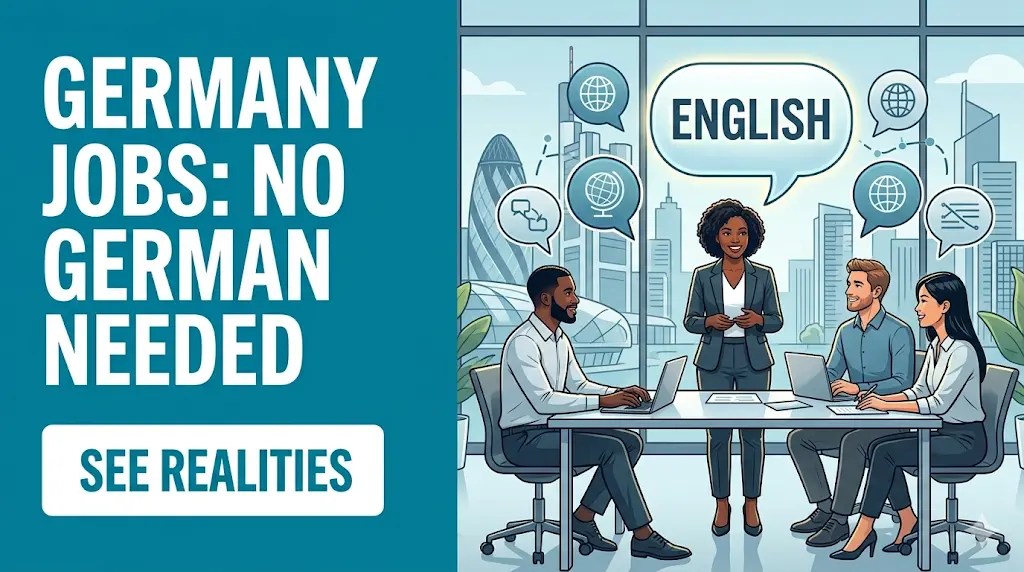
The narrative often sold to expats is that everyone in Germany speaks English, so finding an English-only job should be effortless. This is a massive oversimplification. The English-speaking job market in Germany exists almost exclusively within specific, hyper-concentrated “bubbles.” The most prominent of these is the startup ecosystem, heavily centered in Berlin, with secondary hubs in Munich and Hamburg.
Venture-backed tech startups actively cultivate international teams. In these environments, English is not just tolerated; it is the official operating language of the company. Slack channels, all-hands meetings, and engineering documentation are entirely in English. If you are a software developer, data scientist, or product manager, this bubble offers a phenomenal soft landing. You can seamlessly integrate into your role on day one without knowing a single word of German.
However, this bubble is fragile. Startups are notoriously susceptible to funding droughts and rapid restructuring. Furthermore, the salaries in early-stage Berlin startups often lag behind the traditional German corporate sector. Relying entirely on this ecosystem for your long-term survival limits your options if the tech sector experiences a downturn. To understand the exact dynamics of this specific industry, review Working in Tech in Germany: Opportunities for IT Professionals.
Multinational Corporations and Hubs
If the startup world feels too precarious, the secondary bubble exists within massive multinational corporations (MNCs). Companies like Siemens, Allianz, SAP, and Deutsche Bank have a massive global footprint. Consequently, specific departments within these titans—usually global sales, high-level IT infrastructure, and international marketing—operate in English to facilitate communication with foreign subsidiaries and clients.
Securing an English-speaking role in a German MNC offers incredible job security and excellent benefits. However, the culture within these massive entities remains deeply German. Even if your specific team operates in English, the broader corporate structure, the rigid hierarchical decision-making processes, and the overarching company policies are rooted in local tradition.
You will often find yourself as the sole non-German speaker in a wider department, which can create friction. When the global meeting ends, the local team will instantly switch back to German to discuss the actual execution of the project. If you cannot follow these informal conversations, you will miss crucial context.
The Hidden Career Ceiling
The most insidious aspect of working in Germany without local language skills is the hidden career ceiling. As an individual contributor—a senior programmer, a graphic designer, or a financial analyst—your lack of German is rarely an issue. Your output is your primary value metric.
However, the moment you attempt to transition into middle or upper management, the rules change. Leadership in Germany requires managing local stakeholders. You will need to negotiate budgets with German-speaking vendors, interact with external auditors, and critically, communicate with the Betriebsrat (Works Council). The Works Council is a powerful, legally mandated employee representation body, and its proceedings, legal documents, and negotiations are conducted strictly in German.
An inability to speak the local language instantly disqualifies you from these executive tracks. You will watch less experienced, bilingual colleagues get promoted past you simply because they can navigate the corporate politics that happen outside the English-speaking boardroom. To understand the profound impact of this hierarchy, read Work Culture in Germany: Etiquette, Hierarchy, and Office Norms.
Navigating the Job Hunt Without German
Decoding Job Descriptions and Requirements
When hunting for English-speaking roles, you must learn to decode the true intent behind German job descriptions. Often, a job will be advertised entirely in English, but the final bullet point under the “Requirements” section will subtly state: “Fließendes Deutsch in Wort und Schrift” (Fluent German in speech and writing).
If you see this requirement in a traditional industry like logistics, healthcare, or civil engineering, do not waste your time applying. In these sectors, German is a hard legal and operational requirement. However, if you see this in a tech startup or a digital marketing role, it is often just a “nice to have” inserted by a generic HR template. If your technical skills are a perfect match, you should still apply, explicitly stating in your cover letter that you are actively learning the language.
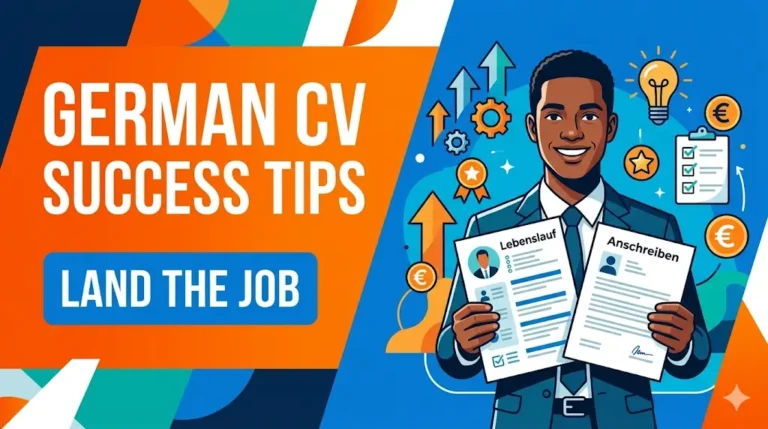
Conversely, if an ad states “German is a plus,” this is an open invitation for international applicants. To ensure your application format does not immediately alienate the recruiter before they even assess your language skills, you must adapt your documents to local expectations. Submitting a flashy American-style resume instead of a structured Lebenslauf is a fast track to rejection. You can find exact formatting rules in English-Speaking Jobs in Germany: Finding Work When You Don’t Speak German.
Utilizing Niche Job Portals
Applying for jobs on generic, massive German job boards like StepStone or the Federal Employment Agency’s official portal is a demoralizing exercise for non-German speakers. These platforms cater to the traditional Mittelstand economy, and filtering out the German-mandatory roles is nearly impossible.
Instead, you must focus your energy entirely on niche, international-focused portals. Platforms like EnglishJobs.de, Berlin Startup Jobs, and The Local’s job board are curated specifically for expats. Every role listed on these sites is guaranteed to be accessible to English speakers.
For tech professionals, utilizing “reverse recruiting” platforms like Honeypot or Talent.io is incredibly effective. You build a profile, pass a technical screening, and companies apply to you. Because these platforms cater to the international tech market, the companies reaching out are already prepared to accommodate English speakers and handle visa sponsorships. For a comprehensive strategy on managing this dual-ecosystem approach, consult Job Hunting in Germany: A Guide to Finding Employment for Expats.
The Power of Targeted Networking
When you lack the “perfect” paper qualifications (like fluent German), you must bypass the automated HR filters through strategic networking. In Germany, this requires understanding the cultural divide between the two major professional networks: LinkedIn and Xing.
Xing is the dominant network for traditional German companies and the Mittelstand. It is fiercely localized and operates almost exclusively in German. If you do not speak the language, spending hours optimizing a Xing profile is a poor use of your time. Your target audience—international startups, expat recruiters, and global tech giants—resides on LinkedIn.
Optimize your LinkedIn profile to clearly state your international experience and your target German cities. Engage with content from English-speaking employees at your target companies. Offline, attend international trade fairs (Messen) and expat industry meetups. An informal chat over coffee with an engineering lead can often bypass a strict HR language requirement.
| Platform / Strategy | Primary Audience | Language Tolerance | Best Used For |
| International Hubs, Tech, MNCs | High (English heavily used) | Active networking, startup jobs, global corporate roles | |
| DACH Region, Mittelstand, Traditional | Low (German strictly required) | Traditional engineering, local finance, regional manufacturing | |
| Honeypot / Talent.io | Software Developers, IT Professionals | Very High (English default) | Reverse-recruiting in the tech bubble |
| StepStone | General German Labor Market | Low (German heavily preferred) | Mid-to-senior level roles in traditional domestic companies |
Surviving the German Workplace Culture
The Bilingual Office Dynamic
If you successfully land an English-speaking role, you will quickly encounter the “bilingual office dynamic.” The official company policy might dictate that all documentation, formal meetings, and Slack channels are in English to accommodate the international team. However, human nature gravitates toward comfort.
Before the official meeting starts, the local staff will chat in German. The moment the meeting concludes, they will revert to German to discuss their weekend plans. If you are the only non-German speaker in the room, colleagues will often politely switch to English when addressing you directly, but the ambient noise of the office will remain German.
This dynamic can be incredibly draining. You will constantly feel like you are missing out on crucial subtext or office politics. To combat this, you must begin tuning your ear to the casual phrasing used in these environments. Listening to the conversational audio tracks on GermanPod101 during your commute is a highly effective way to passively absorb the casual idioms, greetings, and office slang that your colleagues use when the formal English meetings end.
Bureaucracy and HR Documents
The most dangerous reality of working in Germany without speaking the language is the administrative trap. Even if your daily job involves writing code in English for an American client, the infrastructure of your employment is bound by German law.
Your official employment contract (Arbeitsvertrag) will almost certainly be written in formal legal German. While HR might provide a “courtesy” English translation, the contract will explicitly state that only the German version is legally binding in a labor court. If there is a dispute regarding your probationary period, your notice period, or unpaid overtime, you are bound by the German text.
Furthermore, your monthly payslips (Gehaltsabrechnung), your annual tax documents, and critical HR policy updates will be issued in German. Relying on Google Translate for binding legal documents is a massive risk. You need to build a foundational understanding of corporate vocabulary. Enrolling in structured business communication tracks via Lingoda will provide you with the exact terminology needed to read a contract safely and understand your tax deductions without constantly begging bilingual colleagues for help.
Social Isolation at the Water Cooler
The language barrier creates a profound sense of social isolation. Germans strictly separate their private and professional lives, meaning forced corporate fun is kept to a minimum. Friendships at work are built slowly through casual interactions in the communal kitchen or the canteen.
If you cannot participate in these casual interactions, you will inevitably remain an outsider. You do not need to discuss complex macroeconomic policy in German, but you do need to know how to ask a colleague how their weekend was or comment on the weather. These small social lubrications demonstrate respect for the local culture.
When you fail to engage, you run the risk of being perceived as arrogant or disinterested in integration. To combat this isolation and build a network both inside and outside the office, you must proactively seek out social opportunities.
Practical Steps to Break the Language Barrier
Strategic Integration Over Immediate Fluency
The biggest mistake expats make is setting an unrealistic goal of achieving C1 (fluent) German within their first year while working a stressful full-time job. When they inevitably fail to reach this impossible standard, they abandon the language entirely.
You must prioritize strategic integration over immediate fluency. Your goal for the first year should simply be “survival German” (A2 to B1 level). You need enough vocabulary to navigate the supermarket, understand an HR email, and exchange pleasantries with your manager. You do not need to write poetry.
Consistency is far more important than intensity. Instead of burning out with four-hour weekend grammar binges, integrate the language into your daily routine. Replacing your morning music playlist with the structured podcast lessons from GermanPod101 allows you to absorb sentence structures and vocabulary while you are sitting on the U-Bahn, transforming dead commute time into productive learning.
Balancing Full-Time Work with Language Learning
Balancing a 40-hour workweek with the exhaustion of navigating a new culture leaves very little energy for traditional language schools. Evening classes at the local Volkshochschule (adult education center) are cheap, but they are rigid. If you have to work late on a Tuesday, you miss the class, fall behind, and eventually drop out.
To actually succeed, you need ultimate flexibility. This is why many successful expats turn to digital platforms. Utilizing Lingoda is highly strategic because it allows you to book live, small-group classes with native teachers 24/7. If your project schedule is chaotic, you can take a class at 7:00 AM before the office wakes up, or at 9:00 PM after the kids are asleep. This flexibility ensures that a busy work week does not derail your integration efforts.
Employer-Sponsored Language Support
Before you spend a single euro of your own money on language classes, you must check your company’s internal policies. Because the German government and corporate sector are acutely aware of the skilled labor shortage, retaining international talent is a massive priority.
Many modern companies offer generous professional development budgets that explicitly cover language acquisition. They know that an employee who integrates socially is far less likely to quit and move back to their home country. Schedule a meeting with your HR manager and ask if they offer language stipends or partnerships with digital learning platforms.
If they do not have a formal policy, pitch it to them. Explain that taking a structured business German course through Lingoda will allow you to communicate more effectively with local vendors, thereby increasing your value to the team. Often, managers will eagerly approve this expense because it demonstrates long-term commitment to the company.
Visa and Legal Implications for Non-German Speakers
The EU Blue Card Advantage
For non-EU citizens, the language barrier directly dictates your immigration status. However, there is a massive legal loophole for highly skilled workers: the EU Blue Card (Blaue Karte EU).
The EU Blue Card is the gold standard of German work visas. To obtain it, you must have a recognized university degree and a job offer that meets a specific minimum salary threshold (which sits around €45,300 for general professions and €41,041 for shortage occupations as of current updates). The greatest advantage of the Blue Card is that it generally has absolutely zero German language requirement for the initial issuance.
You can land at Frankfurt airport speaking only English, secure your Blue Card, and begin working immediately. The German government intentionally designed this visa to aggressively recruit global talent without the friction of preliminary language tests.
Permanent Residency Language Traps
While the Blue Card gets you into the country without German, the lack of language skills becomes a massive trap when you attempt to secure your long-term future. A work visa is temporary; it ties your right to live in Germany directly to your employer. If you are laid off, the clock starts ticking on your deportation.
The ultimate goal for most expats is the Niederlassungserlaubnis (Permanent Settlement Permit). If you hold an EU Blue Card, you are eligible to apply for permanent residency after 33 months of working and paying into the pension system, provided you have basic A1 German.
However, if you can prove a B1 level of German proficiency, this waiting period is drastically slashed to just 21 months. Cutting a full year off your visa anxiety is a massive psychological relief. You cannot fake a B1 level; you must pass a certified exam (like Goethe or TELC). Relying on English at work will not prepare you for this exam. You must actively study the required grammar frameworks. Utilizing the structured curriculum of Lingoda specifically designed to prepare students for CEFR certification exams is the most efficient way to guarantee you secure your permanent residency on the accelerated 21-month timeline.
Dealing with the Auslaenderbehoerde
The final, most terrifying reality of moving to Germany without speaking the language is interacting with the Ausländerbehörde (Immigration Office). You will inevitably have to visit this office to register your biometric data, renew your visa, or apply for permanent residency.
By internal administrative policy, the officials at the Ausländerbehörde are often instructed to speak strictly in German. This is not necessarily out of malice; it is a legal safeguard to ensure that binding immigration directives are not lost in translation. If you walk into this high-stakes environment without a translator and cannot understand a basic question about your health insurance or employment contract, your application can be delayed or rejected.
References
Primary sources (official)
- Make it in Germany – Looking for a job: The official multilingual portal of the German government detailing job search strategies, visa requirements, and the realities of language skills in the labor market.https://www.make-it-in-germany.com/en/working-in-germany/job/looking-for-job
- Federal Office for Migration and Refugees (BAMF) – EU Blue Card: Detailed official guidelines on the salary thresholds and the specific language requirements for accelerating permanent residency to 21 months.https://www.bamf.de/EN/Themen/MigrationAufenthalt/ZuwandererDrittstaaten/Arbeit/BlaueKarteEU/blauekarteeu-node.html
Other helpful sources
- Federal Employment Agency (Bundesagentur für Arbeit): The central state authority providing official data on shortage occupations and international placement services for English-speaking professionals.https://www.arbeitsagentur.de/en/working-in-germany
Disclaimer
The information provided in this article is for general informational and educational purposes only and does not constitute professional career counseling, legal, or immigration advice. German employment laws, corporate HR policies, and visa requirements—specifically regarding the EU Blue Card and language mandates for permanent residency—are highly complex and subject to continuous updates by the federal government and local immigration offices (Ausländerbehörden). While utilizing language learning platforms can significantly improve your employability, integration, and ability to meet visa language requirements, your success in securing an English-speaking job and subsequent visa approval depends entirely on your individual qualifications and the discretionary approval of state authorities. Always consult a certified German immigration lawyer (Fachanwalt für Migrationsrecht) to verify your specific visa eligibility.