Graduating in Germany: Ceremony, Documents, and Official Steps
After surviving the gauntlet of German exams and the grueling thesis phase, you probably expect a grand finish. I remember thinking that once I handed in my master's thesis, the hard part was over. I was wrong. The administrative aftermath of graduating in Germany is its own special kind of endurance test, and this guide is here to help you navigate the bureaucracy and celebrations without losing your mind.
Disclosure: This post may contain affiliate links. We may earn a commission at no extra cost to you if you make a purchase through these links. Read full disclosure.
The Final Countdown: Submitting Your Thesis and Defense
The end of your academic journey in Germany usually culminates in two major milestones: the submission of your final paper and the oral defense. Unlike some countries where the process is purely digital, Germany still has a deep love for the physical paper trail. Even if your department allows digital uploads, the "Prüfungsamt" (Examination Office) will almost certainly require multiple bound copies of your thesis. I remember running to a copy shop in Berlin at 4:00 PM, sweating because they closed at 5:00 PM and my deadline was the next morning. Always give yourself a forty-eight-hour buffer for printing and binding errors.
Once the paper is in, the "Kolloquium" or thesis defense follows. This is a formal meeting where you present your findings to your supervisor and a second examiner. It sounds intimidating, but in my experience, it is more of a professional discussion than a hostile interrogation. Professors in Germany generally want to see you succeed at this stage. They are looking for your ability to defend your methodology and place your work within the broader context of your field. It is a good idea to use resources like GermanPod101 to polish your academic vocabulary before the big day, as the formal "Sie" form and specific academic terminology are non-negotiable during the defense.
After the defense, there is often a period of "waiting for the grade." This can take anywhere from a few weeks to several months depending on your professors' workloads. During this limbo, you are technically still a student, but the finish line is in sight. It is a strange, quiet time where you feel both finished and unfinished. Use this time to start gathering the documents you will need for your next steps, as the German system moves slowly and requires precision.
Understanding the German Graduation Ceremony
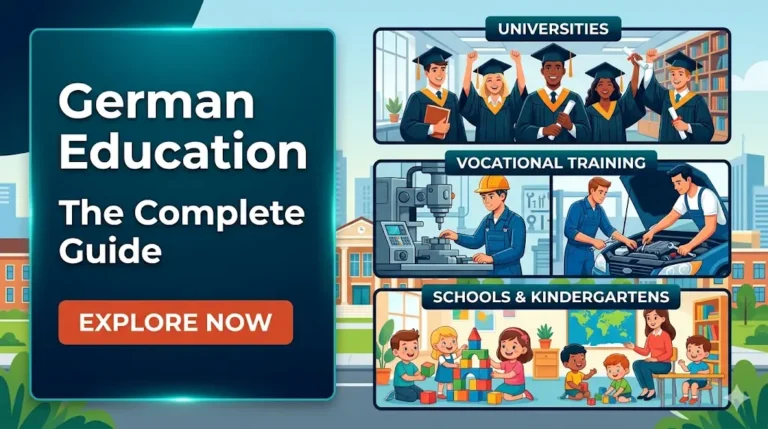
If you are expecting a massive, stadium-sized graduation like those in the US or UK, you might be in for a surprise. In Germany, the German Higher Education System: Universities, Vocational Training, and More Explained usually favors smaller, department-level ceremonies known as the "Abschlussfeier." These events are often more intimate and formal. You might not see the traditional cap and gown unless your specific university has adopted international traditions; instead, many students wear business-formal attire.
The ceremony itself usually involves speeches from the Dean, a keynote speaker, and perhaps a musical performance by a student group. The highlight is the "Zeugnisübergabe," where you are called up to receive your preliminary documents. It is a moment of genuine pride, but keep in mind that the guest list is often quite limited. Due to the smaller venues, you might only be allowed to bring two or three guests. If you have a large family traveling from abroad, you will need to check the seating capacity months in advance.
Logistics for these events are handled by the "Fachschaft" (student representative body) or the department office. There is often a champagne reception (Sektempfang) afterward, which is the perfect time to network with professors and fellow graduates. If your German is still a bit shaky, taking a few lessons with Lingoda before the ceremony can give you the confidence to navigate these social interactions with grace. It’s the last time you’ll see many of these people, and leaving a professional impression can actually help with future references.
Crucial Post-Graduation Documents and Paperwork
The most important piece of paper you will receive is not actually the diploma you hang on the wall, but the "Zeugnis" (Transcript of Records). In Germany, your Zeugnis is the definitive proof of your academic achievement and contains your final grade, the title of your thesis, and a breakdown of all your modules. It can take three to six months for the official, final version to be issued because it requires multiple signatures and official seals. You should request a "vorläufige Bescheinigung" (provisional certificate) as soon as your final grade is entered into the system so you can start applying for jobs.
Next on the list is the "Exmatrikulationsbescheinigung" or the certificate of deregistration. This is a vital document that you will need for your health insurance, the pension office, and the immigration office. You are usually "exmatrikuliert" automatically at the end of the semester in which you pass your last exam, but you can also request to be deregistered earlier. I once made the mistake of deregistering too early and lost my student discount on health insurance immediately, which was a costly lesson. Check your timeline carefully before you sign that form.
If you plan to use your degree outside of Germany, you will likely need to get your documents notarized and potentially get an "Apostille." This is a form of international legalization that confirms the authenticity of the signatures on your degree. The process involves taking your original documents to the local administrative office (often the "Bezirksregierung") to have them stamped. It is a tedious, multi-step process that can take weeks, so don't leave it until the day before you fly home. For those staying, ensure you have multiple certified copies (beglaubigte Kopien) of your transcript, as many German employers still prefer paper applications or certified PDFs.
Navigating the Visa Transition after Graduation
For non-EU students, graduation triggers a major change in residency status. The moment you receive your final results, your student visa is effectively on borrowed time. Fortunately, Germany is very keen on keeping its international graduates. You are eligible for a Post-Graduation: Options to Stay in Germany After Studying (Job Search Visa), which allows you to stay in the country for up to 18 months to find a job related to your degree. This is one of the most generous post-study work visas in the world, and it gives you full access to the labor market.
To apply for this visa, you will need to head to the "Ausländerbehörde" (Immigration Office) with your provisional graduation certificate, proof of health insurance, and proof of "Finanzierung" (financial means). The financial requirement is often the biggest hurdle; you must prove you have enough money to support yourself without relying on social benefits. I remember the stress of making sure my bank balance hit the exact required amount down to the cent. If you have already found a job, you can skip this step and go straight for an EU Blue Card Germany: Eligibility, Benefits, and Application Process or a standard work permit.
While on the 18-month job seeker visa, you are allowed to work any job to support yourself—you can wait tables, work in a warehouse, or continue a student job—while you look for a professional role. This flexibility is a lifesaver. However, the clock starts ticking the moment you finish your last exam, not when you receive your physical diploma. Many students lose months of their visa because they wait too long to go to the immigration office. Be proactive and book your appointment as soon as you have your thesis grade.
Financial and Administrative To-Dos Before You Transition
As you move from student life to the "real world," your financial obligations in Germany will shift significantly. The first thing that changes is your health insurance. Once you are no longer a student, you can no longer stay on the affordable student rate. You must inform your "Krankenkasse" (health insurance provider) of your graduation immediately. If you have a job, your employer will cover half of your premiums. If you are on a job seeker visa, you will have to pay the full voluntary rate, which can be quite expensive. Exploring Health Insurance for Students in Germany: Affordable Options and Requirements can give you a baseline, but be prepared for the jump in cost once that student status expires.
Another administrative task that expats often forget is the "Rentenversicherung" (Pension Insurance). Every month you worked in Germany, even as a student, a small portion of your salary went into the state pension fund. If you decide to leave Germany after graduation and move to a non-EU country, you may be eligible for Claiming Pension Refunds: Getting Your Retirement Contributions Back When Leaving Germany, but only after a two-year waiting period. If you stay, those student years actually count toward your total years of contribution, which is important for long-term residency and retirement.
Finally, don't forget the "Rundfunkbeitrag" (TV and Radio license fee). Whether you are a student or a CEO, every household in Germany must pay this fee. If you are moving to a new flat after graduation, you must update your address with the contribution service. If you are leaving Germany for good, you must "abmelden" (deregister) your address at the Bürgeramt and then use that confirmation to cancel your Rundfunkbeitrag and your internet contract. Failing to do this can lead to debt collectors chasing you across borders.
| Document Name | Purpose | Issued By |
|---|---|---|
| Zeugnis | Official transcript of grades and final score | University Examination Office (Prüfungsamt) |
| Urkunde | The formal degree certificate (the diploma) | University Examination Office |
| Exmatrikulationsbescheinigung | Proof you are no longer a student | Student Secretariat (Studierendensekretariat) |
| Rentenversicherungsnummer | Your social security/pension number | Deutsche Rentenversicherung |
| Diploma Supplement | Description of the degree for international use | University Examination Office |
Career Steps and Professional Integration
Finding a job in Germany as a fresh graduate requires a specific strategy. German employers place a high value on "Praxiserfahrung" (practical experience). If you did an internship or worked as a "Werkstudent" (working student) during your studies, make those roles the centerpiece of your CV. The Writing a German-Style CV and Cover Letter: Tips for Success is a science in itself; it needs to be chronological, factual, and include a professional photo. Unlike in some cultures, being humble in a German cover letter can be seen as a lack of confidence. Be direct about what you can do.
Language remains the biggest "gatekeeper" in the German job market. While tech and startup hubs like Berlin or Munich have many English-speaking roles, the vast majority of the "Mittelstand" (the small-to-medium-sized companies that drive the economy) operate in German. Even if the office language is English, the coffee machine talk is German. I found that using Lingoda for intensive evening classes helped me bridge the gap between "classroom German" and "office German." It makes a huge difference when you can understand the nuances of a contract or a meeting.
Don't overlook your university’s "Career Service." Most German universities have an office dedicated to helping students transition into work. They offer free CV checks, mock interviews, and job fairs where you can meet recruiters face-to-face. These services are often underutilized by international students. When I was looking for my first role, the career office helped me realize that my foreign volunteer work was actually highly valued by German NGOs. They know the local market better than any generic job board, so use them while you still have access.
Staying Connected and Building a Life
Graduating is a major life transition, and it can be surprisingly lonely once the structure of university disappears. Many of your international friends might move away, and the sudden shift to a 9-to-5 life can be jarring. This is the time to lean into your community. Whether it's joining a local "Verein" (club) or attending expat meetups, staying socially active is crucial for your mental health. I’ve found that the friends I made in those first few months after graduation are the ones who became my "German family."
If you decide to settle down, you'll start looking into things like Opening a Bank Account in Germany: Step-by-Step for Newcomers for your first "real" paycheck or even Finding an Apartment in Germany: Best Websites and Tips for Expats once you can afford to move out of your student WG (flatshare). The transition from student to professional is also the best time to dive deeper into the culture. Now that you aren't studying for exams, you can finally enjoy the German Culture & Etiquette: A Guide to Social Life and Customs without the guilt of unfinished homework hanging over your head.
Remember that graduating in Germany is an achievement that carries a lot of weight globally. The "Made in Germany" label applies to its graduates too. It is a rigorous system that tests your discipline as much as your knowledge. Whether you choose to stay and build a career in the heart of Europe or take your skills elsewhere, the resilience you developed while navigating the German "Amt" and writing a hundred-page thesis in a foreign language will serve you for the rest of your life. Congratulations on making it through—now go get those stamps and signatures!
Disclaimer
The information provided in this guide is for informational purposes only and does not constitute legal or professional advice. Immigration laws and university regulations in Germany are subject to frequent changes. Always verify requirements with your university's Prüfungsamt and the local Ausländerbehörde to ensure you are following the most current procedures.