Health Insurance for Students in Germany: Affordable Options and Requirements
Securing proper health insurance is a vital, legally mandated step for any student moving to Germany. This comprehensive guide breaks down the affordable statutory tariffs, private coverage alternatives, and strict university requirements to ensure a seamless academic transition.
Disclosure: This post may contain affiliate links. We may earn a commission at no extra cost to you if you make a purchase through these links. Read full disclosure.
The Mandatory Nature of Student Health Insurance
Visa Requirements and University Enrollment
In Germany, health insurance is not merely an optional safety net; it is an absolute legal requirement for all residents, including international students. The German healthcare system is built upon the principle of solidarity, ensuring that everyone has access to medical care when needed. For incoming international students, this mandate becomes immediately apparent during two critical administrative phases: applying for a student visa and matriculating at a German university. Without proof of adequate health insurance, neither of these processes can be successfully completed.
When you apply for a student visa at a German consulate or embassy in your home country, you must present a valid health insurance certificate. This policy must cover you from the exact day you enter Germany. Often, students purchase a temporary travel or “incoming” expat insurance policy just to secure the visa and cover their initial arrival period. However, the immigration authorities (Ausländerbehörde) will scrutinize your long-term insurance plan when you eventually apply to convert your entry visa into a standard residence permit for studying.
The strictness of this requirement is further enforced by the universities themselves. You cannot officially enroll (matriculate) at a state-recognized German higher education institution until a statutory German health insurance provider has electronically transmitted your insurance status directly to the university’s registrar. This digital notification system ensures there are no gaps in coverage and no forged documents. Navigating this initial bureaucratic hurdle can be daunting, but utilizing digital-first brokers like Feather Insurance can help you secure the necessary certificates quickly and entirely in English, a process further outlined in How to Get Health Insurance in Germany: Step-by-Step for Newcomers.
The European Health Insurance Card Exemption
For students hailing from within the European Union (EU), the European Economic Area (EEA), or Switzerland, the bureaucratic burden is significantly lighter. Thanks to comprehensive social security agreements between these nations, your home country’s public health insurance is generally recognized as valid in Germany. The key to unlocking this seamless cross-border coverage is the European Health Insurance Card (EHIC).
If you possess a valid EHIC, you are legally entitled to receive medically necessary treatment in Germany without having to purchase a separate German health insurance policy. This covers everything from visiting a general practitioner for the flu to emergency hospital admissions. When you visit a German clinic, you simply present your EHIC to the receptionist, and the medical facility will bill your home country’s health insurance provider through a centralized European clearing system.
However, even with an EHIC, you cannot completely ignore the German university bureaucracy. Before you can matriculate, you must still contact a German statutory sickness fund (Krankenkasse). You will present your EHIC to them, and they will issue a formal “certificate of exemption from compulsory insurance” (Befreiung von der Versicherungspflicht). The Krankenkasse will then electronically notify your chosen university that you are adequately covered by a foreign European entity, allowing your enrollment to proceed smoothly.
Navigating the System as an International Student
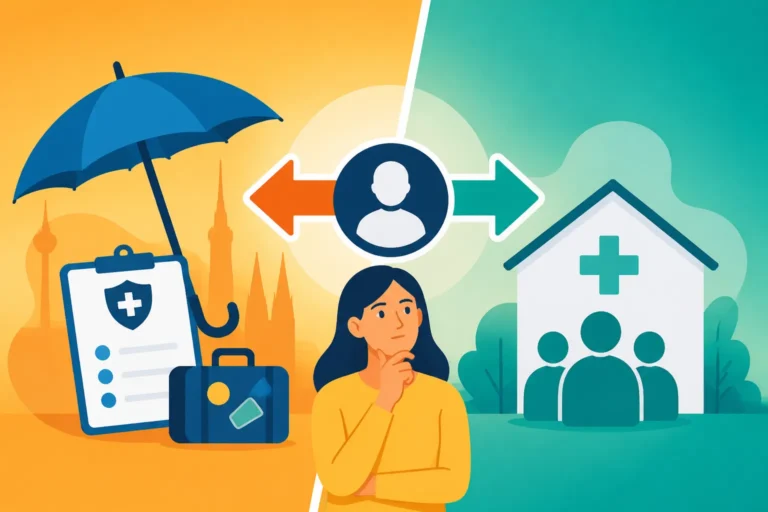
For students arriving from non-EU countries—such as the United States, India, China, or Brazil—the EHIC exemption does not apply. Unless your specific home country maintains a rare, bilateral social security agreement with Germany, you must integrate directly into the German health insurance system. This typically involves choosing between a subsidized public student tariff or a specialized private health insurance policy designed specifically for academics.
The choice you make at the beginning of your studies is critical because it carries long-term consequences. If you choose to enroll in a private health insurance policy right at the start of your degree, you must apply for an official exemption from the public system. Once this exemption is granted, it is generally irrevocable for the entire duration of your studies. You cannot easily switch back to the cheaper public system if your private premiums increase or your financial situation changes down the line.
To avoid costly mistakes, international students must evaluate their health needs, age, and future career plans carefully. Understanding the broader context of the German medical landscape is essential before signing any contracts. Reading through comprehensive overviews like Healthcare in Germany: A Comprehensive Guide for Expats will provide you with the foundational knowledge needed to distinguish between statutory funds and private insurers, ensuring you make an informed decision that protects both your health and your student budget.
Public Health Insurance for Students
Eligibility for the Subsidized Student Tariff
The German government actively supports access to higher education by offering heavily subsidized health insurance rates for young academics. This specific tariff is known as the Krankenversicherung der Studenten (KVdS). It is offered by all statutory sickness funds (such as TK, AOK, Barmer, and DAK) and provides the exact same world-class medical coverage as a standard employee policy, but at a fraction of the cost.
To be eligible for the KVdS, you must be officially enrolled in a degree-seeking program (Bachelor’s or Master’s) at a state-recognized higher education institution in Germany. Students attending preparatory colleges (Studienkollegs) or language schools that do not lead directly to a degree are generally excluded from this subsidized public tariff and must look toward private alternatives. As of 2024, the total monthly cost for the KVdS—which includes both mandatory health insurance and mandatory long-term care insurance (Pflegeversicherung)—typically hovers around €120 to €130, depending slightly on the specific supplemental fee of the chosen sickness fund.
Enrolling in the KVdS is the most common and arguably the safest route for the vast majority of international students. It completely eliminates the fear of medical underwriting, meaning you cannot be denied coverage or charged higher premiums due to pre-existing conditions like diabetes or asthma.
Age Limits and the Thirty Year Cutoff
While the KVdS is an incredible financial lifeline, it is not an infinite benefit. The German government enforces strict age limits on this subsidized tariff to ensure it serves its intended demographic: young students in their primary educational phase. The most critical milestone every student must be aware of is their 30th birthday. Once a student turns 30, their eligibility for the KVdS student tariff automatically expires, regardless of how far along they are in their degree program.
When you age out of the student tariff, you are not kicked out of the public health insurance system entirely, but your status changes to a “voluntary member” (freiwilliges Mitglied). This transition triggers a massive, immediate increase in your monthly premium. Instead of paying €130, your public insurance cost will jump to approximately €210 to €220 per month, as the premium is now calculated based on a statutory minimum hypothetical income rather than the subsidized student rate. For a student living on a tight budget, this sudden price hike can be financially devastating.
There are highly specific, rare exceptions that allow a student to extend their KVdS eligibility past the age of 30. These exceptions usually involve severe, prolonged illness, the birth and care of a child during studies, or acquiring a university entrance qualification via a “second educational path” later in life. However, these extensions require rigorous documentation and approval from the sickness fund. For mature students or those pursuing lengthy PhDs, planning for this financial cliff is paramount.
Coverage Benefits and Standard Co-payments
The medical coverage provided by the public student tariff is astoundingly comprehensive. Under the GKV, visits to general practitioners and specialists, essential dental care, and inpatient hospital treatments are fully covered. You simply present your electronic health card at the clinic’s reception desk, and the billing is handled directly between the doctor and your sickness fund. You will virtually never see a medical invoice for standard treatments, which is a core tenet explored in Public Health Insurance (gesetzliche Krankenkasse): What It Covers and Costs.
However, it is crucial to understand the concept of statutory co-payments (Zuzahlungen) that apply even to publicly insured students. While the medical services are covered, you are required to pay small out-of-pocket fees to keep the system financially viable. For prescription medications (those prescribed on a pink slip), you must pay 10% of the drug’s cost, capped between a minimum of €5 and a maximum of €10 per medication at the pharmacy. Similarly, if you are admitted to a hospital, there is a legally mandated co-payment of €10 per day, capped at a maximum of 28 days per calendar year.
Over-the-counter medications, routine vision care (like glasses or contact lenses for adults), and advanced dental prosthetics (like premium ceramic crowns) are generally not fully covered by the public system. For students managing chronic stress or wanting to optimize their preventative health without breaking the bank at expensive local pharmacies, utilizing global platforms like iHerb to order daily multivitamins and specialized holistic supplements is a highly effective, budget-friendly strategy that perfectly complements the robust acute care provided by the public system.
Private Health Insurance for International Students
When Private Coverage Becomes Necessary
While the public KVdS tariff is the default choice for most, there are several scenarios where international students are either forced into or actively choose the private health insurance (PKV) sector. The most common scenario involves mature students who begin their studies in Germany after their 30th birthday. Because they are completely ineligible for the €130 public student tariff, the €220 voluntary public premium often pushes them to seek cheaper alternatives. In these cases, specific private student tariffs can sometimes offer lower monthly premiums tailored to their age and health status.
Another major group that relies heavily on private insurance includes individuals attending intensive language schools (Sprachschüler) or university preparatory courses (Studienkollegs). Because these individuals are not yet fully matriculated in a degree-seeking program, statutory public sickness funds often refuse to insure them. Consequently, they must secure a private health insurance policy to satisfy the immigration authorities and maintain their temporary residence permits until they pass their language exams and officially enter the university system.
Finally, PhD students often fall into a grey area. Depending on how their research is funded—whether via a tax-free scholarship, a standard employment contract, or personal savings—their eligibility for public student tariffs can fluctuate wildly. Many grant-funded doctoral candidates find that specialized private tariffs are their only viable option.
Specialized Student Tariffs versus Expat Insurance
If you determine that private health insurance is the right path, it is absolutely critical to distinguish between a proper, comprehensive German private policy and a cheap “incoming” travel insurance plan. Many international students fall into the trap of buying incredibly cheap, limited-duration travel policies (often costing €30 to €50 a month) from foreign providers just to get their visa approved. These policies are highly dangerous for long-term stays. They routinely exclude coverage for pre-existing conditions, do not cover routine medical check-ups, and can be abruptly canceled by the provider if you develop a severe, expensive illness.
To maintain a valid student residence permit, the German immigration authorities (Ausländerbehörde) strictly require your private insurance to mirror the comprehensive coverage of the public system. It must cover outpatient care, inpatient hospital treatment, and prescription drugs without imposing unreasonable annual maximum payout limits. Providers like Ottonova offer dedicated, BaFin-regulated private student tariffs that meet all legal visa requirements while providing their services entirely in English via an intuitive app, drastically simplifying the expat experience.
Choosing a specialized private student tariff also means dealing with medical underwriting. Before the private insurer accepts you, you must fill out a detailed health questionnaire. If you are young and healthy, your premium will be low. However, if you have chronic health issues, the private insurer may add severe risk surcharges to your monthly premium or deny your application entirely. This risk assessment fundamentally separates the private system from the solidarity-based public system, a dynamic thoroughly explored in Private Health Insurance in Germany: Benefits, Costs, and Eligibility.
Understanding Out-of-Pocket Payments and Reimbursements
The day-to-day reality of utilizing private health insurance is completely different from the public system. Private patients do not have a universally accepted electronic health card that guarantees direct, cashless billing at every clinic. When a privately insured student visits a general practitioner or specialist, they are treated as a private client. Following the appointment, the doctor’s office will mail a detailed, itemized invoice directly to the student’s home address.
The student is legally responsible for paying this invoice out of their own pocket, typically via a standard bank transfer, within a specified timeframe (usually 14 to 30 days). Once the invoice is paid, the student submits the receipt to their private insurance company—often by scanning it through the provider’s mobile app—and waits for the insurer to reimburse the funds directly to their bank account according to the terms of their specific tariff.
This reimbursement model requires privately insured students to maintain a degree of liquid cash flow to float their medical bills. While a standard doctor’s visit might only cost €50, a complex MRI or emergency procedure can generate invoices running into thousands of euros. For international students whose primary savings are held in foreign bank accounts, transferring large sums quickly to cover urgent medical bills can incur massive traditional banking fees. Utilizing efficient, transparent currency exchange platforms like Wise is an essential strategy for privately insured students to manage these cross-border medical payments without bleeding money on poor exchange rates.
Financial Planning and Managing Insurance Costs
Paying Premiums via Direct Debit
Whether you choose a public sickness fund or a private insurer, you must ensure that your monthly insurance premiums are paid flawlessly and on time. A lapse in payment can lead to the suspension of your medical coverage and, far more critically, jeopardize your student visa status. The standard and most secure method for paying recurring bills in Germany is through a SEPA Direct Debit mandate (SEPA-Lastschriftmandat).
When you sign up for health insurance, the provider will ask for your International Bank Account Number (IBAN). By signing a SEPA mandate, you authorize the insurance company to automatically withdraw the exact premium amount from your bank account on the 15th of every month. This completely eliminates the risk of forgetting to manually transfer the funds while studying for final exams. It is highly advisable to open a German or European bank account immediately upon arrival to facilitate this process smoothly.
For students who have just arrived and are still waiting for their German bank account to be fully activated, bridging the financial gap can be stressful. If you need to pay your initial insurance premiums using funds from your home country, services like Wise provide local European account details that can be used to set up SEPA direct debits immediately, allowing you to bypass the agonizing wait times of traditional brick-and-mortar German banks.
Working as a Working Student and Income Limits
Germany offers an incredibly robust job market for international students, but mixing employment with student health insurance requires careful navigation of the “working student privilege” (Werkstudentenprivileg). To maintain your highly subsidized public student health insurance (KVdS) rate of €130 per month, you must legally remain a “student first and an employee second.”
The golden rule of the working student privilege is the 20-hour limit. During the official university lecture period (Vorlesungszeit), you are strictly prohibited from working more than 20 hours per week across all your employment contracts. If you exceed this 20-hour limit, the statutory sickness fund will reclassify your primary status from “student” to “employee.” This reclassification means you immediately lose the subsidized KVdS tariff, and your health insurance premium will be recalculated as a percentage of your total gross income, which is significantly more expensive.
There are exceptions during the official semester breaks (vorlesungsfreie Zeit), where students are permitted to work full-time up to 40 hours a week without losing their student insurance status, provided the full-time work does not exceed 26 weeks within a year. Understanding these exact employment constraints is vital for maintaining your budget.
Wellness and Managing Daily Health Expenses
Living on a student budget requires proactive health management. Because the German public health insurance system heavily prioritizes evidence-based acute care, it generally refuses to cover holistic remedies, alternative medicine (like Heilpraktikers), or daily wellness supplements. If you catch a standard winter cold and visit the local pharmacy for over-the-counter cough syrup and throat lozenges, you must pay for those entirely out of pocket.
To mitigate these routine expenses, international students should focus on preventative care. Germany offers excellent outdoor infrastructure for cycling and running, and universities possess their own dedicated sports departments (Hochschulsport) offering incredibly cheap fitness classes for enrolled students. Staying physically active and maintaining a robust immune system is the single best way to avoid incidental, out-of-pocket medical expenses.
Furthermore, smart shopping for health items can save hundreds of euros a year. Because traditional German pharmacies maintain a strict monopoly on dispensing even basic vitamins and skincare, their retail prices are exceptionally high. Savvy expat students utilize global health e-commerce sites like iHerb to bulk-order high-quality protein powders, preventative herbal teas, and daily nutritional supplements.
Public vs. Private Student Insurance Comparison
To help you visualize the core differences between the two primary pathways, consult the following comparison table:
| Feature / Metric | Public Student Insurance (KVdS) | Private Student Insurance (PKV) |
| Eligibility | Enrolled degree-seeking students under 30. | Students over 30, language students, or by choice. |
| Monthly Premium | ~€120 – €130 (varies slightly by fund). | Variable (based on age, health, and specific tariff). |
| Medical Underwriting | None. Pre-existing conditions fully covered. | Required. May involve surcharges or exclusions. |
| Family Coverage | Free co-insurance for non-working spouse & kids. | Separate paid policy required per family member. |
| Billing Process | Direct billing via electronic chip card. | Pay upfront and submit invoice for reimbursement. |
Conclusion
Navigating health insurance as an international student in Germany does not have to be an overwhelming bureaucratic nightmare. By understanding the strict legal mandates required for university enrollment and visa approval, you can confidently choose the coverage that fits your academic journey. For the vast majority of degree-seeking individuals under thirty, the subsidized public student tariff (KVdS) offers unbeatable, solidarity-based medical security.
For mature students, language learners, or those seeking specialized premium care, the private sector provides tailored solutions. Regardless of the path you choose, securing comprehensive health insurance ensures that your primary focus in Germany remains exactly where it should be: on your studies, your career growth, and enjoying your vibrant new expat life.
References
Primary sources (official)
- Federal Ministry of Health (Bundesministerium für Gesundheit): https://www.bundesgesundheitsministerium.de/en/
- DAAD (German Academic Exchange Service) – Health Insurance: https://www.daad.de/en/studying-in-germany/living-in-germany/health-insurance/
Other helpful sources
- Make it in Germany (Official Portal for Qualified Professionals): https://www.make-it-in-germany.com/en/living-in-germany/money-insurance/health-insurance
- Study in Germany – Requirements: https://www.study-in-germany.com/en/plan-your-studies/requirements/health-insurance/
Disclaimer
The information provided in this article is for general informational and educational purposes only and does not constitute professional medical, legal, or financial advice. While every effort has been made to ensure the accuracy of the information regarding German student health insurance, policies, age limits, and statutory contribution rates are subject to annual legislative changes. Always consult directly with a qualified healthcare professional, your university’s International Office, or a certified independent insurance broker regarding your specific academic status and legal insurance obligations in Germany.