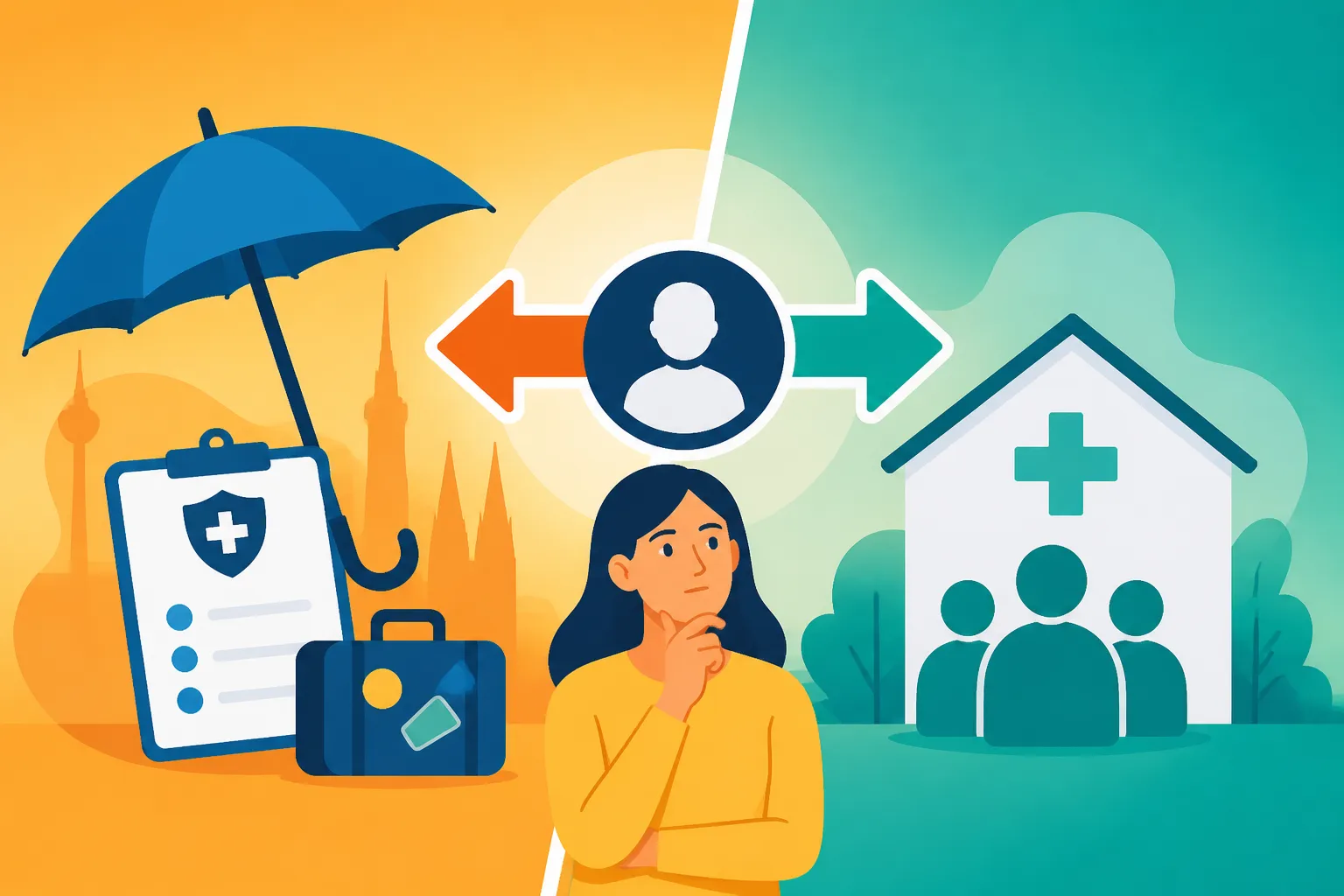
Incoming Cover vs Joining a Krankenkasse: When Each One Applies
Oh, the joys of German bureaucracy, right? When you first land in this amazing country, one of the biggest headaches, apart from deciphering your first grocery receipt, is figuring out your health insurance. You’ve probably heard terms like "incoming cover" and "Krankenkasse" thrown around, and believe me, the difference isn't always clear-cut. It can feel like walking through a dense German forest blindfolded, especially when you're trying to prove to the Ausländerbehörde or your university that you're adequately insured. But don't you worry, my friend. This guide is here to untangle that knot, helping you understand precisely when each type of insurance applies, saving you from potential financial pitfalls and administrative nightmares.
Disclosure: This post may contain affiliate links. We may earn a commission at no extra cost to you if you make a purchase through these links. Read full disclosure.
Understanding Incoming Cover: Your Short-Term German Safety Net
Let's start with "incoming cover" or Einreiseversicherung as it's sometimes called in German. This isn't a permanent solution, and that's crucial to grasp. Think of it as a temporary bandage, a bridge that gets you from your home country to a more stable, long-term health insurance solution in Germany. It’s designed for those initial stages of your move or for specific short-term stays, ensuring you meet basic visa requirements without committing to the full German healthcare system immediately.
What Exactly Is Incoming Insurance?
Incoming insurance is essentially travel health insurance, but specifically tailored for individuals entering Germany or the Schengen Area with the intention of a somewhat longer, though still temporary, stay. It provides coverage for unforeseen medical emergencies, accidents, and acute illnesses that might occur during your initial period in Germany. The key here is "unforeseen" and "acute." It’s not meant for pre-existing conditions (though some plans might offer limited coverage for acute exacerbations) or routine check-ups and preventative care that a full German Krankenkasse would provide.
Providers like SafetyWing specialize in this type of flexible, travel-style insurance. They understand the unique needs of digital nomads, remote workers, and expats in transition, offering policies that can be purchased and managed online, often with rolling monthly subscriptions. This kind of flexibility is a godsend when you're still figuring out your long-term plans and don't want to be tied down to a lengthy contract. It's built for those who aren't quite ready for the full German plunge but still need reliable coverage.
Who Is Incoming Cover For?
Incoming cover is specifically designed for a few common expat scenarios where you're not yet fully integrated into the German system:
- Tourists and Short-Term Visitors: If you're coming for less than 90 days, especially if you need a Schengen Visa, adequate travel insurance is mandatory. Incoming cover fits this bill perfectly.
- Job Seekers on a Visa: You've landed a Job Seeker Visa, congratulations! But you don't have an employment contract yet. You need insurance to get that visa and stay legally. Incoming cover can be your best friend during this period, providing the necessary proof of insurance for a German visa while you hunt for work.
- Language Course Students: If you're here solely for a German language course that doesn't count as full-time university study, incoming cover is often sufficient and required for your visa application.
- New Arrivals Awaiting Formal Employment: You might have a job offer, but your actual employment contract (and thus your public health insurance enrollment) only kicks in a month or two after you arrive. Incoming cover fills this critical gap, ensuring you're covered from day one of your physical presence in Germany until your Krankenkasse takes over.
- Digital Nomads/Remote Workers: If your long-term plan is less fixed, and you're moving between countries, solutions like SafetyWing provide the agility you need, ensuring you're covered while respecting visa regulations.
Coverage Realities: What to Expect and What Not To
It’s crucial to understand the limitations of incoming cover so you don't get caught off guard. While it provides a vital safety net, it's not the same as being part of the comprehensive German health system.
Typically, incoming cover will cover:
- Emergency Medical Treatment: Think sudden illness (like a nasty flu or appendicitis) or an accident (a broken bone from a cycling mishap).
- Hospitalization: If you need to be admitted to a hospital due to an emergency, this will generally be covered. You can learn more about what to expect with Hospitals in Germany: What to Expect for Inpatient and Emergency Care.
- Medically Necessary Repatriation: If you become severely ill or injured and need to be transported back to your home country for ongoing care, this is usually included.
What it generally does not cover, or covers with significant limitations, includes:
- Routine Check-ups and Preventive Care: Annual physicals, cancer screenings, or regular visits to the dentist for cleaning are typically not covered. For these, you'll eventually need full German health insurance.
- Pre-existing Conditions: Most policies will exclude or severely limit coverage for conditions you had before you purchased the insurance. Always read the fine print!
- Long-Term Illnesses: Incoming cover is not designed for chronic conditions requiring ongoing treatment or rehabilitation.
- Maternity Care: If you're planning to have a baby in Germany, incoming cover is definitely not enough. You'll need full Krankenkasse coverage well in advance. Check out Pregnancy and Childbirth in Germany: Prenatal Care to Delivery for details on what's involved.
- Optics or Dental Beyond Emergency: While an emergency tooth extraction might be covered, regular dental check-ups, fillings, or glasses will not be. For more on this, see Dental Insurance in Germany: Do You Need Extra Coverage for Teeth?.
So, while incoming cover from providers like SafetyWing is an excellent, flexible, and often required solution for your initial phase in Germany, it's always a temporary measure. Don't expect it to be your long-term healthcare solution.
The Krankenkasse System: Germany's Mandatory Healthcare Cornerstone
Now, let's talk about the Krankenkasse. This is the heart of the German healthcare system, a complex but incredibly robust and comprehensive structure that you will almost certainly become a part of if you plan to live and work in Germany long-term. Unlike incoming cover, joining a Krankenkasse is a commitment to the German social security system, providing a vast array of benefits and, importantly, fulfilling a legal mandate for residents.
Public vs. Private Krankenkasse: A Quick Overview
Germany operates a dual system for health insurance, often causing confusion for newcomers. When people say "Krankenkasse," they usually refer to the public health insurance funds (gesetzliche Krankenkassen or GKV). These include well-known names like TK, AOK, and Barmer. However, there's also private health insurance (private Krankenversicherung or PKV).
- Public Health Insurance (GKV): This is the default for most employees earning below a certain income threshold, as well as many students and dependents. Contributions are based on your income (a percentage of your gross salary, split between you and your employer) and cover a standardized set of benefits regardless of your income. Families can often be included at no extra cost. This is the bedrock of Healthcare in Germany: A Comprehensive Guide for Expats.
- Private Health Insurance (PKV): This is typically for high-earning employees (above the Jahresarbeitsentgeltgrenze or JAEG, which is the annual income threshold), freelancers, and civil servants. Premiums are based on your age, health status, and desired level of coverage, not your income. It often offers benefits like faster specialist appointments, private rooms in hospitals, and a wider choice of doctors. You can dive deeper into this with Private Health Insurance in Germany: Benefits, Costs, and Eligibility.
Regardless of whether it's public or private, a Krankenkasse means full integration into the German health system, which is a significant step beyond temporary incoming cover.
Who Must Join a Krankenkasse?
If you're planning to make Germany your home and integrate into its society and workforce, joining a Krankenkasse is almost always mandatory. The German state is pretty clear on this: everyone residing here must have health insurance.
Here are the scenarios where a Krankenkasse becomes your non-negotiable reality:
- Employees (with a contract): If you're employed in Germany and your gross salary is below the Jahresarbeitsentgeltgrenze (JAEG), you must be insured by a public Krankenkasse. Your employer will typically register you and deduct contributions directly from your salary. This is often the case for most new expats.
- Long-Term Residents and Permanent Relocation: Once you've established residency (done your Anmeldung!) and are planning to stay long-term, you're expected to be part of the official healthcare system. This includes those aiming for permanent residency (Niederlassungserlaubnis).
- University Students: While you might start with incoming cover for your visa application, most students enrolled in a German university will need to join a public Krankenkasse. There are specific student rates, which are thankfully much lower than for employees. Learn more about your options with Health Insurance for Students in Germany: Affordable Options and Requirements.
- Freelancers and Self-Employed: This group has more choice. If your income is low, you might be able to voluntarily join a public Krankenkasse. Otherwise, private health insurance is often the route, but the key is that some form of long-term German health insurance is required. You'll want to read up on Health Insurance for Freelancers and Self-Employed: Navigating the System.
- Family Reunification: If you're bringing your spouse or children to Germany under family reunification rules, they will also need to be adequately insured, typically through your Krankenkasse if you're publicly insured.
Comprehensive Coverage: The Benefits of Being Fully Integrated
The real upside of joining a Krankenkasse is the peace of mind that comes with comprehensive, long-term coverage. It's not just about emergencies; it's about being fully supported through all stages of life in Germany.
A Krankenkasse typically covers:
- Doctor's Visits: General practitioners (Hausarzt) and specialists, including referrals. This includes Finding a Doctor (Hausarzt) in Germany and Specialists and Referrals: How to See a Specialist Doctor in Germany.
- Hospital Stays: Both emergency and planned, including most medical procedures and treatments.
- Prescription Medications: You generally pay a small co-payment (Zuzahlung) for prescribed drugs. More details can be found in German Pharmacies (Apotheke): Prescriptions and Advice.
- Preventive Care: Annual check-ups, vaccinations, certain screenings (e.g., cancer screenings for specific age groups), and dental check-ups.
- Maternity and Childbirth: Comprehensive prenatal care, childbirth, and postnatal care are fully covered. Take a look at Women’s Health in Germany: Gynecologists, Maternity Care, and More.
- Dental Care: Basic dental care, including routine check-ups, cleanings, and necessary fillings, is covered. However, advanced treatments or orthodontics might require supplemental dental insurance.
- Rehabilitation and Therapy: Physical therapy, occupational therapy, and in many cases, mental health therapy (with a referral). Mental Health Care in Germany: Finding Therapists and Psychologists is a great resource here.
- Sick Pay (Krankengeld): If you're unable to work due to illness for an extended period, your Krankenkasse will pay a percentage of your salary after the initial six weeks, which your employer covers. You'll want to understand Sick Leave in Germany: How to Get a Sick Note (Krankmeldung) and Your Rights.
The German healthcare system is designed to provide high-quality care to all its residents, and being part of a Krankenkasse is your ticket to that. It's a fundamental part of living here.
Deciphering the Differences: Incoming Cover vs. Krankenkasse at a Glance
Alright, let’s get down to brass tacks. You’ve seen what each type of insurance is about. Now, how do they really stack up against each other? This isn’t a battle of good versus bad; it’s a matter of suitability for different stages of your expat journey in Germany. The wrong choice can lead to visa rejection, financial strain, or legal issues down the line.
Purpose and Duration: Temporary Solution vs. Permanent Integration
This is the most fundamental difference, and frankly, the one that causes the most confusion.
- Incoming Cover: Its sole purpose is to provide short-term, emergency medical coverage for a specified, limited period. It’s designed to bridge a gap, fulfill immediate visa requirements, or provide a safety net for travelers and those who aren't yet committed to long-term residency. It’s flexible, often month-to-month, and you can cancel it relatively easily. Think of it as a rental car for your health needs – great for a temporary journey, but not for building a life. For instance, SafetyWing is specifically tailored for this flexibility, allowing you to get immediate coverage without long-term commitment.
- Krankenkasse: This is about permanent integration. The moment you become a resident, start working, or enroll in a university (with few exceptions), the German state expects you to be part of its comprehensive social security system. A Krankenkasse provides ongoing, extensive care, contributes to your overall social safety net, and is intrinsically linked to your legal status as a resident. It's like buying a home – a long-term investment in your well-being in Germany.
Scope of Coverage and Costs: Basic Protection vs. Extensive Benefits
The level of care you receive is vastly different, reflecting their distinct purposes.
- Incoming Cover: Offers basic, acute, emergency-focused coverage. Its primary aim is to protect you from catastrophic medical bills due to unexpected illness or injury. It’s not about maintaining your health proactively. Premiums are generally lower than Krankenkasse contributions because the scope is much narrower. For example, a SafetyWing policy offers essential travel health coverage, making it suitable for emergencies but not for routine check-ups or pre-existing conditions.
- Krankenkasse: Provides extensive, comprehensive coverage. It’s designed to cover virtually all medically necessary treatments, preventive care, rehabilitation, mental health services, and more. It often includes benefits like sick pay and family coverage. The costs are higher, reflecting this breadth. Public Krankenkasse premiums are a percentage of your income (up to a ceiling), while private Krankenkasse premiums are based on age, health, and desired benefits. These contributions also help fund the overall German healthcare infrastructure.
Eligibility and Legal Standing: Meeting Visa Requirements vs. Fulfilling Residency Mandates
This is where the rubber meets the road with German bureaucracy.
- Incoming Cover: Your eligibility is usually based on your travel plans, age, and health status. It's primarily used to fulfill initial visa application requirements (e.g., for a Schengen, Job Seeker, or language course visa). The Ausländerbehörde will accept it as proof of insurance for these temporary stays, but they will eventually demand a full Krankenkasse once your status changes to long-term residency or employment.
- Krankenkasse: Eligibility is tied to your residency status, employment status, and income. If you're a standard employee, student, or long-term resident, it’s not just an option; it's a legal obligation. Without a valid Krankenkasse enrollment, your residence permit can be denied or revoked, and you could face significant fines. The authorities will scrutinize your insurance choice to ensure it meets Germany’s strict requirements for residents.
Here’s a quick summary table to help keep things straight:
| Feature | Incoming Cover (e.g., SafetyWing) | Krankenkasse (Public or Private) |
|---|---|---|
| Primary Purpose | Emergency travel & short-term medical care; visa compliance (initial) | Comprehensive, long-term healthcare for residents; legal mandate |
| Duration | Temporary (days, weeks, months) | Permanent (as long as you reside in Germany) |
| Coverage Scope | Acute illnesses, accidents, emergencies, repatriation | All medically necessary treatments, preventive care, sick pay, rehab, etc. |
| Eligibility | Travelers, short-term visitors, job seekers, language students | Employees, long-term students, freelancers, permanent residents |
| Cost Basis | Fixed premium (age, duration, coverage level) | % of income (public) or age/health/benefits (private) |
| Bureaucracy | Simple online application, flexible terms | More complex enrollment, tied to social security, strict legal requirements |
| Visa Acceptance | Accepted for short-term visas (Schengen, job seeker, language) | Required for work visas, student visas (long-term), residence permits (long-term) |
When Incoming Cover Is Your Go-To Solution
There are very specific periods in your German journey where incoming cover isn't just an option, but often the most practical, flexible, and sometimes only viable choice. These are typically transitional phases where your long-term status isn't yet cemented.
Initial Visa Applications and Short Stays
Before you even step foot in Germany, incoming cover plays a pivotal role in securing your entry.
- Schengen Visa: If you're visiting Germany and other Schengen countries for a period of up to 90 days, getting a Schengen Visa for Germany requires proof of travel medical insurance with a minimum coverage of €30,000, valid for the entire duration of your stay. Incoming cover from a provider like SafetyWing is perfectly suited for this, as it's designed to meet these specific international travel requirements.
- Job Seeker Visa: Landing a Job Seeker Visa can be incredibly exciting, but remember, it’s a temporary permit. While on this visa, you're not yet employed in Germany, so you can't join a public Krankenkasse. You'll need valid health insurance for the entire duration of your job search, typically up to six months. Incoming cover provides exactly what the Ausländerbehörde needs for this visa type. Our guide on Germany’s Job Seeker Visa Explained offers more insights.
- Language Course Visa: Similar to the job seeker visa, if you're coming to Germany specifically for a language course that isn't connected to university enrollment, you'll need incoming cover for the duration of your visa. This is typically for courses exceeding 90 days but not leading to a degree.
In these initial scenarios, German authorities simply want assurance that if something goes wrong, you won't become a burden on their healthcare system. They don't expect you to be fully integrated yet.
Bridging Gaps Before Permanent Enrollment
The move to Germany often involves a frustrating dance with timing. Your work contract might start on the 1st of the month, but you arrive on the 15th of the previous month. Or, you're waiting for your Anmeldung (address registration) to process before your public Krankenkasse can fully activate your membership. These are prime examples of "gaps" where incoming cover shines.
- Pre-Employment Buffer: You have a job offer, your visa is approved, and you're moving. But your Krankenkasse enrollment officially begins on your first day of work. What about the week or two before that, when you're busy setting up your apartment, getting your phone, and generally getting settled? Incoming cover ensures you're protected during this crucial transitional period. It's a lifesaver for those moments when you're officially in Germany but not yet officially employed and insured.
- Waiting for Bureaucracy: German bureaucracy can be slow. Sometimes, even with a job contract, the full activation of your public health insurance can take a few weeks. Having incoming cover, like a flexible SafetyWing policy, means you're never uninsured during these unavoidable administrative delays. This is especially true for those trying to get How to Get Health Insurance in Germany: Step-by-Step for Newcomers.
The Role of Flexible Providers
This is where specific brands tailored for the expat journey become invaluable. SafetyWing, for example, has carved out a niche for itself by understanding these expat realities. Their Nomad Insurance is perfect for individuals who need that interim coverage because:
- Flexibility: You can purchase it for a specific duration or have it renew monthly, which is ideal when you’re not sure exactly when your long-term insurance will kick in.
- Ease of Use: The online application process is straightforward, cutting through much of the red tape associated with traditional insurance, which is a huge relief when you’re already swamped with other relocation tasks.
- Visa Compliance: Their policies are designed to meet the minimum requirements for many short-term German visas, including the Schengen and Job Seeker visas. This means less stress at the consulate or Ausländerbehörde.
So, if you're in one of these transitional phases, don't rush into a Krankenkasse. Incoming cover is purpose-built for you, offering essential protection while you get your German ducks in a row.
When a Krankenkasse Becomes Non-Negotiable
While incoming cover is fantastic for temporary situations, there comes a point where it's simply no longer sufficient or legally permissible. This is the moment a full Krankenkasse enrollment becomes not just an option, but a mandatory requirement for your continued legal residency in Germany. Ignore this, and you're inviting serious trouble with the authorities.
Starting Employment or Long-Term Residency
This is the big one. The moment you sign that employment contract and begin working in Germany, your health insurance situation fundamentally changes.
- Mandatory for Employees: If you're a regular employee with a gross salary below the Jahresarbeitsentgeltgrenze (JAEG – the income threshold for mandatory public health insurance), you must join a public Krankenkasse. Your employer is legally obliged to register you and deduct your contributions. This is not optional; it’s a cornerstone of the German social security system. Even if you could technically stay on private incoming cover, it won't be accepted for a long-term work visa or residence permit. This is explained thoroughly in our guide on Public Health Insurance (gesetzliche Krankenkasse): What It Covers and Costs.
- Work Visas and Residence Permits: For any long-term work visa or residence permit (like the EU Blue Card or Skilled Worker Visa), the Ausländerbehörde will demand proof of comprehensive German health insurance. Incoming cover, by its very nature, is seen as temporary and will not suffice for these long-term permits. You need to show that you are properly integrated into the German system. Our Germany Work Visa & Immigration Guide for Professionals has all the details.
- Long-Term Stay Intention: Beyond specific visa types, if your intention is clear – you're moving to Germany to live and integrate for the foreseeable future – then a Krankenkasse is your necessary next step.
Students Beyond Short-Term Programs
For many international students, the journey often starts with incoming cover, but it quickly transitions to a Krankenkasse.
- University Enrollment: If you are enrolling in a German university for a full-time degree program, you will almost certainly need to join a public Krankenkasse. Universities will require proof of this enrollment, and the student Krankenkasse rates are significantly more affordable than employee rates.
- Visa Requirements for Students: Your student visa will mandate comprehensive coverage. While a temporary incoming cover might get you the initial entry visa, for your long-term residence permit as a student, the Ausländerbehörde will expect you to be enrolled in a German Krankenkasse. Our guide on Health Insurance for Students in Germany: Affordable Options and Requirements explains this in detail.
- Post-Study Options: Even after graduation, if you use the job seeker period or transition to a work visa, you'll remain in the Krankenkasse system.
Family Reunification and Permanent Relocation
If you’re moving your entire life, and your family, to Germany, then Krankenkasse enrollment is central to that process.
- Bringing Dependents: If you are bringing your spouse and/or children to Germany under family reunification visas, they will need to be insured. If you are in the public Krankenkasse system, your non-working spouse and children can usually be covered under your family insurance plan for free. This is an enormous benefit of the German system.
- Settling In: Once your family is here, getting them enrolled is part of the process of truly settling down. The comprehensive nature of the Krankenkasse ensures everyone has access to the healthcare they need.
In essence, when your presence in Germany shifts from temporary exploration to established residency, so too must your health insurance shift from incoming cover to a full-fledged Krankenkasse. There's no getting around it, and frankly, you wouldn't want to. The benefits of the German system are well worth the investment.
The Transition: Moving from Incoming Cover to a Krankenkasse
The transition from temporary incoming cover to a permanent Krankenkasse is a critical step for many expats in Germany. It’s not just a change in insurance type; it's a formal integration into the German social welfare system. Navigating this can feel like yet another bureaucratic hurdle, but it's entirely manageable with the right information.
The Inevitable Switch: Why You Can't Stay on Incoming Cover Forever
As we've discussed, incoming cover, even from flexible providers like SafetyWing, is by definition temporary. It's designed for short-term stays, travel, and bridging those initial gaps when you first arrive. It simply doesn't meet the legal requirements for long-term residency in Germany.
- Legal Mandate: Once you establish residency in Germany (by getting your Anmeldung) and especially once you start formal employment, you are legally obliged to have comprehensive German health insurance. Incoming cover does not qualify as "comprehensive" for this purpose. The Ausländerbehörde will explicitly ask for proof of Krankenkasse membership when you apply for or extend your long-term residence permit or work visa. They will not accept incoming cover indefinitely.
- Insufficient Coverage: Beyond the legal aspect, incoming cover just isn't designed for the full scope of healthcare needs you'll have as a resident. You'll miss out on preventive care, routine check-ups, and potentially critical long-term treatment options. It's like trying to run a marathon in flip-flops – technically possible for a short sprint, but ill-suited for the long haul.
So, while SafetyWing is an amazing temporary solution, remember it’s part of your initial journey, not your final destination for health insurance in Germany.
Navigating the Application Process: Documentation and Timelines
Making the switch requires a bit of paperwork and careful timing. The process generally involves:
- Choosing a Krankenkasse: If you're eligible for public health insurance (most employees, students, and low-income freelancers), you have a choice of several Krankenkassen (e.g., TK, AOK, Barmer, DAK). Research their supplementary services, English support, and any additional benefits they offer. Our guide on Choosing a Krankenkasse in Germany: TK, AOK, Barmer, and Others Compared can help with this.
- Gathering Documents: You'll typically need:
- Your passport and visa/residence permit.
- Proof of address (Meldebescheinigung from your Anmeldung).
- Your German tax ID (Steuer-ID).
- Your employment contract (if applicable).
- University enrollment certificate (if a student).
- Proof of your previous incoming cover to ensure no gaps.
- Application: Contact your chosen Krankenkasse directly. Many have English-speaking helplines or online application portals. They will guide you through the process. For employees, your employer often initiates the process.
- Confirmation: Once accepted, you'll receive confirmation of your membership, usually with a temporary certificate, followed by your physical German Health Insurance Card (Gesundheitskarte). You'll learn more about The German Health Insurance Card (Gesundheitskarte): Uses and How to Get One.
It's usually best to initiate this process as soon as your long-term status (e.g., employment start date or university enrollment) is confirmed, to avoid any gaps in coverage.
Potential Pitfalls: Avoiding Gaps in Coverage or Unnecessary Costs
Despite your best efforts, sometimes things can go awry during the switch.
- Gaps in Coverage: The biggest pitfall is having a period where you are uninsured. This can happen if your incoming cover expires before your Krankenkasse membership officially begins. Not only is this illegal, but a medical emergency during an uninsured period could lead to massive out-of-pocket expenses. Always ensure there's an overlap or that your temporary insurance, like SafetyWing, can extend to cover the transition.
- Retroactive Payments: If you delay joining a Krankenkasse when you should have, you might be forced to pay contributions retroactively, often from the date you became legally obliged to be insured. This can be a hefty bill you don't want.
- Choosing the Wrong Insurance: Some expats, particularly freelancers, might mistakenly choose private incoming cover instead of a German private health insurance that meets residency requirements. This can lead to rejection of your visa/residence permit extension. If you're a freelancer, make sure you understand the specific requirements for your situation. Our guide on Health Insurance for Freelancers and Self-Employed: Navigating the System is vital reading.
- Bureaucracy Overwhelm: Don't underestimate the paperwork. Start early, keep copies of everything, and don't hesitate to ask for help from your employer, university international office, or even expat forums. Dealing with the Ausländerbehörde: Tips for Dealing with German Immigration Offices can be stressful enough, so get your insurance ducks in a row.
The transition from incoming cover to a Krankenkasse marks a significant milestone in your expat life in Germany. It signifies your journey from a temporary visitor to an integrated resident, and getting it right is fundamental to your health and legal status.
Disclaimer
The information provided in this article is for general guidance only and does not constitute legal, financial, or medical advice. Regulations and requirements in Germany can change, and individual circumstances vary. Always consult with official sources, insurance providers (like SafetyWing for incoming cover or specific Krankenkassen for long-term plans), legal professionals, or the relevant German authorities (such as the Ausländerbehörde) for advice tailored to your personal situation.