How to Get Health Insurance in Germany: Step-by-Step for Newcomers
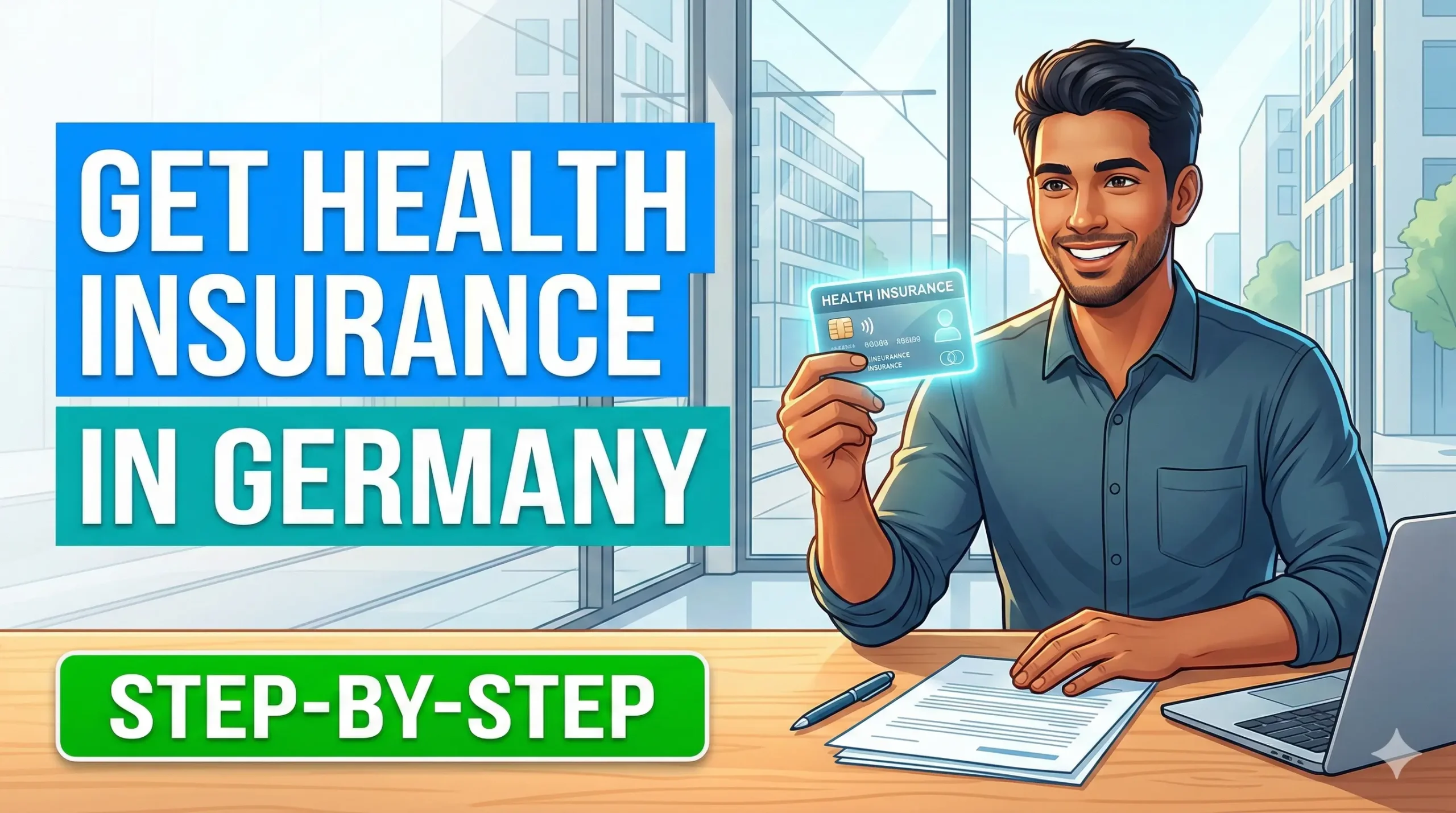
Securing health insurance in Germany is a strict legal requirement for all arriving expats and newcomers. This step-by-step guide breaks down the complex application process, explains the necessary documentation, and helps you navigate between public and private coverage options successfully.
Disclosure: This post may contain affiliate links. We may earn a commission at no extra cost to you if you make a purchase through these links. Read full disclosure.
The Basics of the German Health Insurance System
The Legal Mandate for All Residents
Germany strictly enforces a universal healthcare mandate that applies to absolutely everyone residing within its borders. From the moment you complete your official address registration at the local citizen’s office, you are legally bound to hold valid, comprehensive health insurance. This is not merely a recommendation; it is a rigid statutory requirement embedded in German residency law. Arriving in the country without a clear plan to secure immediate coverage is a common misstep that can lead to severe bureaucratic hurdles down the line.
The consequences of ignoring this mandate are substantial. If you delay signing up for an approved insurance policy, the system is designed to catch up with you eventually. When you do finally register, the insurance provider will backdate your enrollment to your exact date of entry or registration, charging you retroactively for all the months you were technically uninsured. For an expat who waits six months to sort out their paperwork, this can result in a sudden, crippling financial penalty running into thousands of euros.
Furthermore, health insurance is intrinsically tied to your legal right to remain in the country. Immigration authorities require undeniable proof of adequate coverage before they will even process an application for a residence permit or work visa. Providing a foreign travel insurance policy that does not meet the strict German statutory minimums will result in an immediate visa rejection. Therefore, understanding this system must be your absolute top priority before you even pack your bags. If you want a broad overview before diving into the application steps, Healthcare in Germany: A Comprehensive Guide for Expats is a vital prerequisite read.
Differentiating Public and Private Systems
The German healthcare landscape is defined by a unique dual system: the public statutory health insurance and the private health insurance sector. Understanding the dividing line between these two frameworks is the foundational step in getting insured. The public system is heavily regulated by the government, operates on the principle of solidarity, and covers roughly ninety percent of the population.
In the public system, your monthly premiums are calculated strictly as a percentage of your gross income, regardless of your age, medical history, or lifestyle choices. This means a young, healthy high-earner pays significantly more into the system than an elderly person with a lower income, effectively subsidizing the care of others. The benefits are standardized across the board, ensuring that everyone receives the exact same high level of necessary medical treatment without discrimination.
Conversely, the private system operates on an entirely different set of rules. Private premiums are risk-based, calculated according to your age and health status at the exact moment you apply, as well as the specific level of luxury and coverage you select for your policy. While the private sector can offer perks like single-room hospital stays and preferential appointment booking, it requires a thorough medical background check and operates on a pay-and-reimburse model that demands more financial liquidity from the patient.
Key Deadlines for Arriving Expats
Timing is everything when navigating German bureaucracy, and health insurance is no exception. As a general rule, you have a strictly defined window of fourteen days after completing your official city registration to enroll in a health insurance plan. Missing this narrow two-week window complicates your onboarding process significantly and triggers the retroactive billing clauses mentioned earlier.
For expats arriving on a job-seeker visa or a temporary entry visa, the timeline is slightly different but equally urgent. You must have adequate incoming travel insurance that is explicitly accepted by the German state on the very day you cross the border. Once you secure employment and transition to a standard work permit, you are generally required to switch from your temporary incoming insurance to a comprehensive local policy immediately upon signing your work contract.
Coordinating these deadlines requires meticulous planning. You cannot simply walk into an insurance office on your first day and walk out with a policy. The application requires specific documents that take time to gather, meaning you must initiate the process while simultaneously hunting for an apartment and opening a bank account. Failing to synchronize these bureaucratic milestones is a major source of anxiety for new arrivals.
Determining Your Eligibility and Status
Assessing Requirements for Employees
For the vast majority of expats moving to Germany for a traditional job, the path is relatively straightforward because the government dictates your status based on your salary. If your gross annual income falls below the compulsory insurance threshold, you are legally obligated to be insured in the public system. You do not have the option to choose a full private policy. Your employer handles a significant portion of the administrative burden, automatically deducting your half of the premium from your monthly paycheck and transferring it, along with the employer’s matching contribution, directly to your chosen sickness fund.
However, if your salary exceeds this legally defined threshold, you suddenly gain the right to choose. You can either remain in the public system as a voluntary member, or you can opt out entirely and purchase a private health insurance policy. This high-income threshold is adjusted slightly upward every year to account for inflation and wage growth.
Making the jump to private insurance as an employee is a major, long-term commitment. While young, healthy high-earners are often tempted by the lower initial premiums of the private sector, they must consider the trajectory of those premiums over their lifetime. Returning to the public system if you later regret your choice is exceptionally difficult and strictly regulated to prevent people from draining the private system in their youth and burdening the public system in their old age. For a deeper comparative analysis, reading Health Insurance in Germany: Understanding Public vs Private Coverage is highly recommended.
Navigating Options as a Freelancer or Self Employed
Freelancers and self-employed expats face a completely different set of rules and a much steeper learning curve. Unlike standard employees, freelancers are generally exempt from the compulsory public insurance mandate, regardless of how little or how much they earn. From day one, a self-employed individual has the freedom to choose between applying for a private policy or entering the public system as a voluntary member.
If a freelancer chooses the public system, they face a heavy financial reality: there is no employer to split the bill. The freelancer is responsible for paying the entire statutory percentage of their income out of pocket every single month. Because freelance income fluctuates, the sickness fund will estimate your premium based on your projected earnings, and then perform a retroactive adjustment at the end of the year once your official tax assessment is finalized. This can lead to unexpected back-payments if you earned more than you estimated.
Alternatively, private insurance is incredibly popular among young expat freelancers because the risk-based premiums are often substantially cheaper than the income-based public premiums during the early stages of a career. However, freelancers must carefully assess the long-term viability of this choice. If your business experiences a downturn, your private premiums will not decrease; they are fixed. Setting up international financial infrastructure is also key here, and many self-employed expats use platforms like Wise to efficiently receive payments from international clients to cover these substantial local insurance premiums. For a thorough breakdown of this demographic, refer to Health Insurance for Freelancers and Self-Employed: Navigating the System.
Specific Rules for International Students
Germany is a massively popular destination for international students, and the state provides heavily subsidized pathways for this demographic. If you are enrolled in an official degree program at a recognized German university and are under the age of thirty, you are eligible for the incredibly affordable student public health insurance tariff. This subsidized rate provides full, uncompromised access to the healthcare system for a fraction of the cost paid by working adults.
The situation changes drastically once a student celebrates their thirtieth birthday. On this day, the state subsidy evaporates. The student must then either transition to a much more expensive voluntary public membership or seek out specialized private tariffs designed for older students. This age cliff is a critical planning milestone for expats pursuing long-term doctoral studies or arriving for a master’s degree later in life. You can find detailed strategies for navigating this in Health Insurance for Students in Germany: Affordable Options and Requirements.
Furthermore, expats arriving solely for preparatory language courses or non-degree programs are usually excluded from the public student tariff entirely. They must rely on specialized private educational insurance until they formally matriculate into a university degree program. These private educational tariffs are cheap but often provide very limited, bare-bones coverage, making it crucial to upgrade to a comprehensive policy the moment eligibility changes.
Step One Choosing the Right Provider
Evaluating Public Sickness Funds
If you fall into the category of mandatory or voluntary public insurance, your first active step is to select a specific sickness fund. There are over ninety different non-profit public providers operating in Germany. Because federal law dictates that all public funds must cover the exact same core medical treatments, you do not need to worry about one fund denying you a necessary surgery while another approves it. The medical baseline is identical across the board.
The differences between the providers lie in their customer service, their digital infrastructure, and their supplemental contribution rates. Every fund charges a base percentage of your income, plus a small, fund-specific supplemental rate that varies from provider to provider. While the difference is usually only fractions of a percent, it can add up over a year for high earners. Therefore, comparing these supplemental rates is a standard part of the selection process.
Additionally, funds compete by offering minor perks and bonus programs. Some might offer subsidies for professional dental cleanings, stipends for joining a gym, or coverage for alternative medicines like homeopathy. Others might have excellent, user-friendly smartphone apps for uploading sick notes. For expats who prefer self-medicating with specific international wellness products, using iHerb is a great way to source supplements that German public insurance simply will not cover, allowing you to maintain your wellness routine independently. For newcomers entirely baffled by the German language, digital-first brokers like Feather Insurance have revolutionized the process by offering seamless, entirely English-language sign-ups for major public funds.
Comparing Private Health Insurance Tariffs
Selecting a private health insurance provider is an infinitely more complex process because the products vary wildly in scope, quality, and price. When evaluating private tariffs, you are essentially building a custom medical safety net. You must decide whether you want a basic tariff that closely mimics the standard care of the public system, or a premium tariff that guarantees treatment by chief physicians, single hospital rooms, and extensive dental reconstruction coverage.
A critical factor in this comparison is the deductible. This is the annual out-of-pocket amount you agree to pay for your medical bills before your insurance company starts issuing reimbursements. Choosing a high deductible will drastically lower your monthly premium, making it an attractive option for young, healthy expats who rarely visit a clinic. However, this strategy requires having enough emergency savings to cover the deductible if a sudden illness strikes.
The application process for private insurance also involves a rigorous health questionnaire. Pre-existing conditions, past surgeries, and even ongoing therapies will be heavily scrutinized. Based on this assessment, the insurer may impose risk surcharges, significantly increasing your premium, or they may permanently exclude specific conditions from your coverage altogether. To navigate this highly individualized market without getting lost in complex German medical terminology, expats frequently turn to digital-first private insurers like Ottonova, which cater specifically to the international community with transparent, English-language tariff building tools.
Factoring in English Language Support
For a newcomer, the ability to communicate with your insurance provider in English is not a luxury; it is a vital necessity. The German healthcare bureaucracy is notorious for its dense, highly technical language. Receiving a multi-page letter regarding a billing discrepancy or a change in statutory policy can induce immense stress if you cannot read a word of it.
Historically, traditional German sickness funds offered zero support in English, requiring expats to rely on bilingual friends or paid translators for every interaction. Today, the landscape is shifting. Several of the larger, tech-forward public funds have established dedicated English-speaking hotlines and translated their web portals. When comparing options, explicitly verifying the extent of a provider’s English support should be a top priority.
If you choose a provider that communicates exclusively in German, you must be prepared to handle complex phone calls regarding hospital approvals or sick pay entirely in the local language. Using an English-centric broker like Feather Insurance completely circumvents this issue, as they act as a permanent, bilingual buffer between you and the traditional German insurance apparatus, ensuring you always fully understand your rights and coverage limits.
Step Two Gathering Required Documentation
Personal Identification and Registration Documents
Before you can officially apply for any health insurance policy, you must assemble a specific portfolio of bureaucratic documents. The most fundamental requirement is proof of your identity and your legal right to be in Germany. This means providing a valid passport and, if applicable, your current visa or residence permit. Insurers must verify that they are legally allowed to offer you a domestic contract.
The second, and arguably most critical, document is your official proof of address registration. This single piece of paper proves that you are legally residing at a specific German address, which is the prerequisite for entering the local healthcare system. You cannot apply for standard German health insurance using a foreign address or a temporary hotel booking.
It is absolutely vital that your name is spelled identically across all these documents. German bureaucracy operates with zero tolerance for discrepancies. If your passport includes a middle name, but your address registration omits it, the insurance company’s automated systems may flag your application, causing weeks of delays while you manually resolve the mismatch. Consistency is the golden rule of German paperwork.
Employment Contracts and Income Proof
To place you in the correct insurance category and calculate your premiums accurately, providers require undeniable proof of your economic status. If you are an employee, you must submit a copy of your signed employment contract. This document verifies your starting date, which will become the exact date your insurance coverage begins, and it states your gross annual salary, which determines whether you fall above or below the compulsory insurance threshold.
For expats venturing into the freelance or self-employed space, proving your income is more complex because you do not have a fixed salary. When applying, you must provide a detailed estimate of your expected annual profit. If you have been freelancing in your home country, providing previous tax assessments or a comprehensive business plan can help the insurer calculate a realistic provisional premium. Accurately managing these financial projections and handling international start-up capital is often facilitated by multi-currency platforms like Wise, which provide the clean financial tracking necessary for self-employed expats.
Students face their own unique documentation requirements. To qualify for the heavily subsidized student tariff, you must provide an official certificate of enrollment from a recognized German higher education institution. A simple letter of acceptance is often not enough; the insurer needs the formal document proving you have actively matriculated for the current semester.
Previous Medical History for Private Applicants
If you are applying for private health insurance, the documentation phase includes a deep dive into your medical past. You will be required to fill out an exhaustive health questionnaire detailing every doctor’s visit, surgery, chronic illness, and therapy you have undergone in the past three to ten years, depending on the insurer’s specific look-back period.
It is highly advisable to gather your medical records from your home country before you arrive in Germany to ensure you answer these questions with absolute accuracy. Attempting to remember the exact dates and specific medical diagnoses of past treatments from memory is risky. If you require specialized medications, translating those prescriptions into their European equivalents beforehand will streamline your application.
Absolute honesty on this questionnaire is non-negotiable. If you omit a pre-existing condition—whether intentionally or accidentally—and later file a massive claim related to that condition, the private insurer has the legal right to launch an investigation. If they discover you withheld information, they can instantly void your policy, deny your claim, and leave you personally responsible for catastrophic medical debt. Transparency is the only safe approach.
Step Three The Application and Approval Process
Submitting Your Application Online or in Person
The actual submission of your health insurance application has modernized significantly over the last decade. Most major public funds and virtually all private insurers now offer entirely digital application portals. You can fill out the necessary forms, upload high-resolution scans of your supporting documents, and sign the contract electronically from your laptop. This digital shift has been a massive relief for expats who previously had to navigate dense paper forms.
If you are using an expat-focused broker, the process is even more streamlined. You typically answer a series of plain-English questions on their platform, and their software automatically populates the complex German bureaucratic forms on your behalf, transmitting the application directly to the chosen fund’s database. This minimizes the risk of filling out a vital field incorrectly due to a translation error.
However, if you prefer face-to-face interaction or have an incredibly complex residency situation that a web form cannot accommodate, you can still visit the physical branch of a public sickness fund. Most mid-sized to large German cities have dozens of these branches. While you might need to bring a German-speaking friend to help translate, speaking directly to an agent ensures your specific edge case is understood and processed manually.
Dealing with Waiting Periods and Processing Times
Once you hit submit, the waiting game begins. The processing time for a health insurance application can vary from a few days to several weeks, depending heavily on the time of year and the complexity of your file. Late summer and early autumn are notoriously slow periods, as tens of thousands of new university students flood the system with applications simultaneously.
During this processing window, you are in a state of bureaucratic limbo. To bridge this gap, your chosen provider can issue a provisional certificate of coverage. This is a temporary, digitally generated document that serves as legal proof of insurance for your employer or the immigration office while your physical card is being manufactured. You must proactively request this document; do not assume it will be sent automatically.
If a medical emergency strikes while your application is still pending but after your official start date, you are fully covered. However, because you do not yet have a physical insurance card to swipe at the doctor’s office, you may have to pay the doctor’s bill out of pocket and submit the paper invoice to your new insurance company for a retroactive reimbursement once your account is fully activated.
Receiving Your Official Health Insurance Card
The culmination of the application process in the public system is the arrival of your electronic health card. Before the card can be printed, the insurance company will prompt you to upload a recent, biometric passport-style photograph through their secure online portal. This photo is printed directly onto the front of the card to prevent identity fraud within the medical system.
Once the photo is approved, the card is manufactured and mailed to your registered German address. This physical piece of plastic is your golden ticket to the healthcare system. It contains an encrypted microchip holding your name, date of birth, address, and insurance number. You must carry this card with you to every single medical appointment, pharmacy visit, and hospital admission.
When you arrive at a clinic, the receptionist will insert this card into a specialized terminal, instantly verifying your active status and downloading your billing details. In the public system, this seamless digital handshake entirely eliminates the need for you to handle invoices or worry about transferring money for standard treatments. The doctor bills the sickness fund directly behind the scenes.
Managing Your Health Insurance After Registration
Setting Up Monthly Premium Payments
Securing the policy is only half the battle; ensuring the premiums are paid consistently is crucial for maintaining your coverage. If you are a standard employee in the public system, you do not need to take any action. Your employer’s payroll department handles the complex calculations and transfers the money directly to the sickness fund before your net salary ever reaches your bank account.
However, if you are a freelancer, a student, or a voluntarily insured individual, you are personally responsible for these payments. The absolute best practice is to set up a direct debit mandate. By signing this mandate, you authorize the insurance company to automatically pull the exact premium amount from your German bank account on the fifteenth of every month. This eliminates the risk of missing a manual transfer due to forgetfulness or travel.
If you are newly arrived and do not yet have a fully functioning European bank account, managing these initial premium payments can be stressful. Transferring large sums from a non-EU bank account directly to a German insurance provider often incurs massive currency conversion fees and delays that can trigger late payment warnings. Utilizing a dedicated international transfer service like Wise allows you to generate local European account details instantly, ensuring your premiums are paid on time and without exorbitant banking markups.
Adding Dependents to Your Policy
One of the most celebrated features of the German public health insurance system is the concept of family co-insurance. If you are enrolled in a public sickness fund, your non-working spouse and your children can be added to your policy at absolutely no additional monthly cost. A family of five pays the exact same premium as a single individual earning the same salary.
To activate this benefit, you must formally apply to add your dependents. This requires submitting marriage certificates, birth certificates, and proof that the dependents reside with you in Germany and do not exceed a very low maximum income threshold themselves. If your spouse gets a job that pays above a certain mini-job limit, they immediately lose this free co-insurance status and must start paying their own separate premiums based on their new income.
In stark contrast, the private health insurance system operates on a strict per-person billing model. There is no free family co-insurance. If you have a private policy and you have a child, you must purchase a brand new, separate private tariff for that infant, adding a substantial permanent increase to your monthly household expenses.
Transitioning Between Providers or Statuses
Your first health insurance choice is not a lifetime sentence. The German system allows for mobility, provided you follow the strict statutory notice periods. If you are unhappy with the customer service or supplemental rates of your current public sickness fund, you have the legal right to switch to a different public provider after you have been a member of your current fund for a minimum of twelve months.
To switch, you must submit a formal cancellation letter giving exactly two full months’ notice. For example, if you submit the cancellation in January, your old coverage ends on March 31st, and your new coverage begins on April 1st. The new provider will handle the background communication to ensure there is no dangerous gap in your coverage during the transition.
Transitioning statuses—such as moving from a student tariff to an employee tariff after graduation, or dropping out of the public system entirely to go freelance and private—requires immediate communication with your provider. You must proactively inform them of any change in your employment or visa status, providing the new contracts or deregistration forms, so they can correctly reclassify you and adjust your billing without imposing retroactive penalties.
Table Comparison and Temporary Solutions
Bridging the Gap Upon Immediate Arrival
For expats who have not secured a local job contract before flying to Germany, the bureaucratic timeline presents a dangerous gap. You cannot officially register your address or apply for standard local insurance until you actually arrive, but your visa often requires proof of insurance to even cross the border. The solution is specialized incoming travel insurance.
These policies are designed specifically for expats, job seekers, and language students arriving in Germany. They satisfy the immediate legal requirements of the immigration authorities for the first few weeks or months of your stay. However, they are temporary bridges, not long-term solutions.
Incoming insurance policies often have strict limitations. They typically only cover acute, sudden emergencies and accidents. They usually do not cover routine checkups, pre-existing conditions, or complex ongoing therapies. Because of these massive coverage gaps, it is legally and medically imperative that you transition from this temporary incoming policy to a comprehensive local public or private policy the moment your residency and employment status allow it.
European Health Insurance Card Limitations
Citizens of other European Union countries moving to Germany often fall into a trap of false security provided by the European Health Insurance Card. While the EHIC is a phenomenal tool for tourists, granting access to emergency state-provided healthcare while on a short vacation, it is legally invalid for permanent relocation.
The moment you register your address in Germany with the intention of living and working there long-term, you cease to be a tourist. The German authorities, and your home country’s healthcare system, expect you to integrate into the local German insurance infrastructure immediately.
If you attempt to live in Germany permanently while relying solely on your foreign EHIC, you will face severe complications. Local doctors may eventually refuse to treat non-emergency conditions, and your home country may legally cut off your coverage once they realize you have emigrated. Do not rely on the EHIC as a permanent solution; treat it only as a safety net for your first few days in the country.
| Feature | Public Statutory Insurance (GKV) | Private Health Insurance (PKV) |
| Eligibility Requirement | Mandatory for employees earning below the threshold; open to students. | Open to high-earners, freelancers, self-employed, and civil servants. |
| Application Complexity | Low. Standardized forms, largely handled by employers for standard workers. | High. Requires extensive medical history checks and tariff customization. |
| Income Proof Needed | Yes. Employment contract or freelance profit estimations. | Only needed to prove you exceed the employee threshold, if applicable. |
| Family Co-insurance | Yes. Non-working spouses and children are covered for free. | No. Every single family member requires a separate, paid policy. |
| Medical Check Required | No. Acceptance is guaranteed regardless of pre-existing conditions. | Yes. Pre-existing conditions can lead to rejections or massive surcharges. |
References
Primary sources (official)
- Federal Ministry of Health (Bundesministerium für Gesundheit) – Statutory health insurance (SHI) overview and regulations:https://www.bundesgesundheitsministerium.de/en/themen/krankenversicherung/online-ratgeber-krankenversicherung/krankenversicherung/statutory-health-insurance-shi
- Make it in Germany – Official Federal Government portal guide on health insurance for incoming professionals and students:https://www.make-it-in-germany.com/en/living-in-germany/money-insurance/health-insurance
Other helpful sources
- Expatica – Expat health insurance in Germany: costs, coverage, and how to choose a plan:https://www.expatica.com/global/healthcare/healthcare-basics/expat-health-insurance-628191/
- How to Germany – Comprehensive breakdown of statutory and private health insurance options for expats:https://www.how-to-germany.com/health-insurance/statutory-health-insurance/
Disclaimer
The information provided in this guide is for general informational and educational purposes only and does not constitute professional medical, legal, financial, or immigration advice. While every effort has been made to ensure the accuracy of the content regarding the German healthcare system and application processes, insurance regulations, statutory thresholds, and bureaucratic policies are subject to frequent changes by the German government. Always consult directly with a certified insurance broker, a legal professional, or the relevant German authorities regarding your specific personal circumstances before making legally binding decisions.