Health Insurance in Germany: Understanding Public vs Private Coverage
Choosing the right health insurance in Germany is one of the most critical decisions expats must make. This comprehensive guide explores the intricate details, eligibility criteria, and financial implications of both the statutory public system and the private healthcare sector to help you decide.
Disclosure: This post may contain affiliate links. We may earn a commission at no extra cost to you if you make a purchase through these links. Read full disclosure.
The Foundations of the German Healthcare System
The Principle of Solidarity and Mandatory Coverage
The German healthcare system is universally renowned for its high standards, rapid access to specialists, and comprehensive medical coverage. At the very core of this highly functioning infrastructure is the principle of solidarity. This underlying philosophy dictates that every resident, regardless of their income level, age, or underlying health conditions, is legally entitled to robust medical care. The system ensures that the young subsidize the old, the healthy subsidize the sick, and higher earners subsidize lower earners, creating a stable and equitable medical safety net across the entire population.
Since 2009, having adequate health insurance has been a strict legal mandate for every single person residing in Germany. Whether you are a full-time employee, a university student, a self-employed freelancer, or a retiree, you cannot legally live in the country without an approved health insurance policy. This mandate is enforced rigorously. If you attempt to register your address or apply for a residence permit without proof of comprehensive coverage, your application will be immediately rejected by the local authorities. There are no exceptions to this rule, making it the very first administrative hurdle any expat must clear.
For newcomers, understanding this mandate is crucial because failing to secure insurance upon arrival can lead to severe financial penalties. If you delay your registration, you may be required to pay back-premiums for the months you were uninsured, even if you did not utilize any medical services during that time. This strict enforcement ensures that the risk pool remains massive and financially solvent, which in turn allows the medical infrastructure to continually invest in cutting-edge treatments and maintain a high density of hospitals and clinics nationwide.
A Dual System Overview Public versus Private
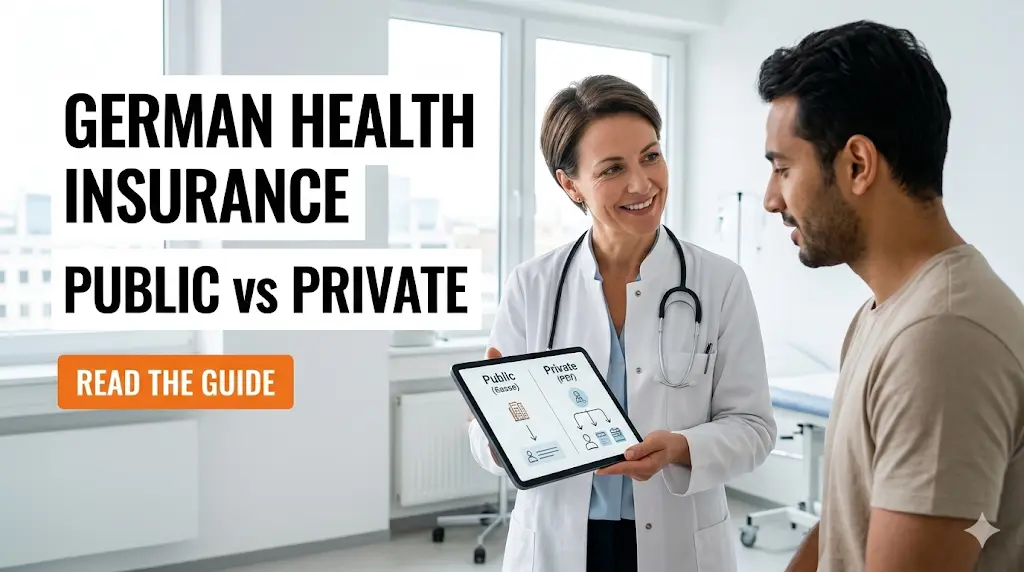
Unlike countries with a single-payer, centralized national health service, Germany operates on a unique dual-track system. The landscape is distinctly divided into two parallel structures: the statutory public health insurance system (Gesetzliche Krankenversicherung, or GKV) and the private health insurance system (Private Krankenversicherung, or PKV). Understanding the profound differences between these two tracks is the most important step in navigating Healthcare in Germany: A Comprehensive Guide for Expats.
The public system is the dominant track, covering roughly ninety percent of the German population. It is composed of around one hundred non-profit sickness funds (Krankenkassen), such as TK, AOK, and Barmer. These funds are heavily regulated by the government, ensuring that they all offer a nearly identical, legally mandated catalogue of medical benefits. In the public system, your monthly premium is calculated strictly as a percentage of your gross income, completely ignoring your current health status or medical history.
In stark contrast, the private system operates on a fundamentally different financial and philosophical model. It is available only to specific groups of people, including high-earning employees, civil servants, and the self-employed. Instead of income-based contributions, private insurance premiums are calculated based on individual risk factors. The insurance company evaluates your age at entry, your pre-existing medical conditions, and the specific level of coverage you desire. This allows for highly customized medical tariffs, but it also introduces an element of long-term financial unpredictability that does not exist in the public sphere.
The Role of the Employer in Health Contributions
One of the most supportive features of the German system for standard employees is the concept of shared financial responsibility between the employer and the employee. If you are employed in Germany and enrolled in the public health insurance system, you do not bear the full cost of your monthly premiums alone. By law, your employer is required to pay exactly fifty percent of your health insurance contributions, while you pay the remaining fifty percent. This matching system significantly reduces the financial burden on the individual worker.
The administrative process of paying these premiums is remarkably seamless. You do not need to manually transfer funds to your chosen Krankenkasse every month. Instead, your employer’s payroll department automatically calculates the required amount, deducts your portion directly from your gross salary, adds their matching contribution, and forwards the total sum directly to the health insurance provider. This ensures that your coverage never lapses due to a missed payment and vastly simplifies your personal monthly budgeting.
This 50/50 split also applies to those who are eligible for and choose to enroll in a private health insurance policy, up to a certain maximum legal limit. Your employer will subsidize your private premium just as they would a public one, provided your private tariff meets the standard legal requirements for comprehensive care. However, if you become unemployed, the dynamics change. If you receive statutory unemployment benefits, the employment agency generally takes over your public health insurance contributions, highlighting the deep social safety net embedded within the system.
Deep Dive into Public Health Insurance Gesetzliche Krankenversicherung
Eligibility Rules and Who Must Enroll
The statutory public health insurance system (GKV) is not just an option for many; it is a mandatory requirement. If you are an employee in Germany earning less than the annual income threshold (Jahresarbeitsentgeltgrenze), you are legally obliged to be insured under the public system. You do not have the option to choose private insurance. This mandatory enrollment ensures that the public system maintains a massive, diverse pool of contributors, which is essential for sustaining the solidarity principle and keeping the system financially viable for everyone.
This mandatory enrollment encompasses a vast array of individuals beyond standard employees. Apprentices undergoing vocational training, students enrolled at state-recognized universities (up to a certain age), and individuals receiving unemployment benefits are all typically required to be part of the statutory system. When an expat secures a standard employment contract that falls below the income threshold, their HR department will usually ask them which public sickness fund they wish to join, seamlessly initiating their enrollment into the GKV.
Even if you do not fall into a category of mandatory enrollment, you may still be eligible for voluntary membership in the public system. For example, freelancers and individuals earning above the income threshold can often choose to remain in or join the public system as “voluntary” members (freiwillig versichert).
Premium Calculations and Income Thresholds
The financial mechanics of the public system are entirely transparent and strictly regulated. Your monthly premium is calculated as a fixed percentage of your gross salary. Currently, the baseline statutory contribution rate is set at 14.6 percent of your gross income. On top of this baseline, each sickness fund is permitted to charge an additional supplemental rate (Zusatzbeitrag), which averages around 1.6 to 1.7 percent depending on the specific provider. This brings the total average contribution to just over 16 percent, which is then split equally between you and your employer.
However, there is a crucial cap to these contributions known as the Beitragsbemessungsgrenze, or the contribution assessment ceiling. This is the maximum income level upon which your health insurance premiums can be calculated. If your salary exceeds this ceiling, any income earned above it is entirely ignored for the purposes of health insurance deductions. This means that there is an absolute maximum monthly premium that a publicly insured person will ever pay, protecting high earners from paying disproportionately exorbitant fees into the public system.
For expats transitioning into the German workforce, calculating your exact net income can be complex due to these variable health insurance deductions, alongside mandatory pension and unemployment insurance contributions. When evaluating a job offer, it is vital to use a German gross-net wage calculator to understand exactly how much of your salary will be diverted to the Krankenkasse. Because the premium is strictly income-based, if you decide to reduce your working hours to part-time, your health insurance premiums will automatically decrease proportionally.
Comprehensive Benefits What is Actually Covered
The coverage provided by the statutory health insurance system is exceptionally broad and robust. The government dictates a comprehensive catalogue of benefits that every public sickness fund must adhere to, ensuring a universally high standard of care. Under the GKV, visits to general practitioners and specialists are fully covered. You simply present your electronic health card (eGK) at the reception desk, and the clinic bills the insurance directly. There are no deductibles to meet before your standard medical care kicks in, and you will almost never see a medical invoice for standard treatments.
Hospital stays are similarly covered with incredible depth. If you require emergency surgery, cancer treatments, or prolonged inpatient rehabilitative care, the public system bears the massive financial brunt of these interventions. You are only required to pay a nominal statutory co-payment of ten euros per day for a maximum of twenty-eight days per year when admitted to a hospital. Furthermore, prescription medications are heavily subsidized; patients typically pay only a small co-payment (between five and ten euros) for essential drugs prescribed by a doctor at the local pharmacy.
Beyond acute medical care, the public system covers a wide array of preventative services. This includes regular dental check-ups, basic dental fillings, comprehensive prenatal and maternity care, and childhood vaccination schedules. Many sickness funds also offer bonus programs that incentivize healthy living, providing cash rewards or subsidized gym memberships for attending regular screenings. For those focused on preventative health, utilizing services like iHerb for daily vitamins and wellness supplements can be a great way to maintain your health alongside the preventative check-ups covered by your public fund.
Exploring Private Health Insurance Private Krankenversicherung
Income Thresholds and Eligibility Criteria for Private Care
Access to the private health insurance system (PKV) is heavily restricted by the German government to protect the financial stability of the public system. The primary gateway into the private sector for standard employees is the Jahresarbeitsentgeltgrenze (JAEG), also known as the compulsory insurance threshold. To be eligible to opt out of the public system and purchase a private policy, your gross annual salary must exceed this specific threshold, which the government adjusts slightly upward almost every single year to account for inflation and wage growth.
If your salary crosses this critical line, you are no longer legally mandated to remain in the public system. You become a “voluntary member” of the GKV and gain the right to transition to a private health insurance provider. This is a monumental decision point for many high-earning expats. It requires carefully evaluating quotes from private insurers and understanding that choosing the private route is often a lifelong commitment. For those navigating this transition, utilizing digital-first, expat-focused brokers like Feather Insurance can demystify the complex eligibility rules and ensure a smooth application process.
Aside from high-earning employees, two other main groups have immediate access to the private system regardless of their income level: civil servants (Beamte) and self-employed individuals (freelancers and business owners). Because freelancers do not have an employer to pay half of their public premiums, the income-based public system can sometimes become overwhelmingly expensive for them. Thus, many self-employed expats immediately look toward the private sector, a dynamic thoroughly explored in Health Insurance for Freelancers and Self-Employed: Navigating the System.
Risk Based Premiums and Medical Underwriting
The most profound difference between public and private insurance lies in how your monthly premiums are calculated. While the public system cares only about your income, the private system cares entirely about your risk profile. When you apply for a private health insurance policy, the insurer will conduct a thorough process known as medical underwriting (Gesundheitsprüfung). You will be required to fill out an extensive questionnaire detailing your medical history, current health status, lifestyle habits, and any previous surgeries or chronic conditions.
Based on this health assessment and your age at the time of entry, the insurer calculates your individual premium. If you are young, healthy, and have no pre-existing conditions, private insurance can actually be significantly cheaper than the maximum public health insurance premium. However, if you have a history of severe illness, chronic conditions like diabetes, or are entering the system at an older age, the insurer may impose hefty risk surcharges (Risikozuschläge) on your premium, exclude certain conditions from coverage entirely, or deny your application altogether.
Because premiums are locked in based on your entry age and health status, the earlier you join the private system, the better. Your premiums will not increase just because you receive a massive promotion and your salary doubles, which is highly appealing to career-driven expats. However, it is crucial to answer the medical questionnaire with absolute honesty. Failing to disclose a pre-existing condition can lead to the insurer retroactively canceling your policy or refusing to pay for related medical treatments years down the line.
Premium Medical Services and Upgraded Hospital Stays
The primary allure of private health insurance goes beyond potential cost savings; it centers heavily on the elevated level of medical service and comfort it provides. Private tariffs are highly customizable, allowing you to build a policy that fits your exact desires. One of the most sought-after benefits is the Chefarztbehandlung, which guarantees that you will be treated by the chief physician or the head of the department when admitted to a hospital, rather than the resident doctor on duty.
Inpatient comfort is another major draw for the privately insured. While public patients are typically placed in multi-bed hospital rooms, a comprehensive private policy usually guarantees accommodation in a private single or double room. This offers a significantly quieter, more restful environment during recovery, often accompanied by upgraded catering and hotel-like amenities. For expats anticipating maternity care or complex surgeries, this level of comfort and privacy during a vulnerable hospital stay is often the deciding factor in choosing a private tariff.
Furthermore, private insurance often provides far superior coverage for dental care and vision. While the public system covers only basic amalgam fillings and standard extractions, private policies frequently cover a high percentage of the costs for advanced dental work, such as high-quality ceramic implants, inlays, and complex orthodontics. They also routinely cover the costs of prescription glasses, contact lenses, and sometimes even corrective laser eye surgery, whereas public coverage for vision correction for adults is virtually non-existent.
Key Differences Between Public and Private Systems
To truly grasp the dynamics of the German healthcare landscape, it is helpful to see a direct comparison of the two systems across several critical metrics.
| Feature / System | Public Insurance (GKV) | Private Insurance (PKV) |
| Premium Calculation | Based strictly on a % of gross income. | Based on entry age, health status, and chosen tariff. |
| Family Coverage | Non-working spouse and children covered for free. | Each family member requires their own paid policy. |
| Billing Process | Direct billing via chip card. No upfront payments. | Patient pays invoice upfront, then requests reimbursement. |
| Hospital Stays | Standard multi-bed rooms, resident doctors. | Single/double rooms, chief physician treatment available. |
| Doctor Access | Standard wait times for specialists. | Faster access, specific private-only practices available. |
Family Coverage and Dependent Regulations
Perhaps the greatest advantage of the public healthcare system is the concept of Familienversicherung, or free family insurance. If you are enrolled in the statutory system, your non-working spouse and your children can be co-insured under your policy at absolutely no additional cost. This means that a family of four, where one parent is the sole earner, pays the exact same monthly premium as a single individual earning the same salary. This profound demonstration of the solidarity principle makes the public system highly attractive for expats planning to build a family.
In the private system, this concept does not exist. Every single individual must be underwritten and insured separately. If an expat with private insurance has a child, they must purchase a distinct private policy for the newborn from day one. If they have a non-working spouse, they must also pay a separate monthly premium for them. For a large family, the cumulative cost of multiple private policies can quickly eclipse the maximum contribution cap of the public system, turning what initially seemed like a cheaper option into a severe financial burden.
Complications also arise in “mixed” marriages, where one spouse is privately insured and the other is publicly insured. The rules dictating where the children must be insured in these scenarios are highly complex and depend strictly on which spouse earns more money. If the higher-earning spouse is privately insured, the children generally cannot be insured for free in the public system and must also be privately insured. Navigating these family planning nuances is critical and is a key topic for expats transitioning into long-term residency.
Billing Methods and Out of Pocket Reimbursements
The day-to-day experience of interacting with doctors and pharmacies differs drastically depending on your insurance type. As a public patient, the process is entirely frictionless. You receive an electronic health card (eGK) with a microchip containing your insurance details. You hand this card to the receptionist at any medical clinic, they swipe it, and the doctor bills the statutory sickness fund directly. You leave the clinic without ever seeing an invoice, handling any paperwork, or worrying about whether a specific blood test will be covered.
Private patients face a significantly more administrative burden. When a privately insured expat visits a doctor, they are treated as a private client. Following the consultation or treatment, the doctor’s office will mail a detailed, itemized invoice to the patient’s home address. The patient is legally responsible for paying this invoice directly to the doctor’s bank account out of their own pocket. Once paid, the patient submits the invoice via an app or mail to their private insurance company, which then reimburses the cost according to their specific tariff.
This reimbursement model requires private patients to maintain a degree of liquid cash flow to float medical bills. While a standard consultation might only cost fifty euros, a complex MRI or a minor outpatient surgery can generate invoices running into the thousands. For expats who receive large medical bills while traveling or who need to transfer funds internationally to cover immediate health costs before reimbursement clears, utilizing efficient currency exchange platforms like Wise ensures they aren’t hit with exorbitant bank fees during a stressful medical event.
Doctor Availability and Specialist Wait Times
A frequent point of discussion among expats in Germany is the discrepancy in wait times for medical appointments between the two systems. Because the public system operates on strict budgets, clinics are allocated a specific quota of public funds they can bill per quarter. Once this quota is exhausted, they have little financial incentive to take on non-urgent public cases. Consequently, publicly insured patients seeking non-emergency specialist appointments—such as a routine dermatologist check or a non-acute orthopedic consult—can sometimes wait weeks or even months.
Private patients, however, represent uncapped, highly lucrative revenue for medical practices. Doctors are permitted to bill private insurers at higher multiplier rates than statutory funds allow. As a result, clinics frequently reserve specific, expedited appointment slots exclusively for private patients. A privately insured expat can often secure an appointment with an in-demand specialist within a matter of days, bypassing the lengthy queues of the public system. Some highly specialized practices even operate as “Privatpraxen,” meaning they refuse public patients entirely and only accept private insurance or self-paying individuals.
For expats who prioritize immediate access to healthcare and rapid specialist referrals, this two-tier wait time dynamic is often the strongest argument for choosing a private policy. Digital-forward health insurance companies like Ottonova capitalize on this by offering concierge services within their apps, helping expats locate English-speaking specialists and booking these expedited appointments on their behalf, further smoothing out the friction of navigating a foreign medical landscape.
Special Considerations for Expats and Foreign Workers
Navigating the System as a New Arrival
Arriving in Germany as an expat involves navigating a notoriously rigid bureaucratic sequence, and health insurance sits at the very center of this web. When you first arrive, you cannot open a bank account without a registered address (Anmeldung), you cannot get an address without a lease, and you often cannot finalize a job contract or a residence permit without proof of health insurance. This creates a stressful Catch-22 for many newcomers who are trying to organize their lives simultaneously on multiple fronts.
The most effective way to break this cycle is to secure your health insurance before you even board your flight to Germany. Whether you are opting for a public sickness fund or evaluating your eligibility for private care, initiating the application process digitally is crucial. Many traditional German sickness funds have cumbersome, paper-heavy application processes completely in German. This is where modern digital brokers have revolutionized the expat experience. By using platforms like Feather Insurance, expats can apply for public or private insurance entirely online, in English, and receive a digital certificate of coverage immediately to present to the immigration authorities.
It is also vital to understand the concept of “incoming” or “expat” health insurance. These are temporary, severely limited private policies designed solely to bridge the gap between your arrival and the activation of your proper, comprehensive German health insurance. While they are incredibly cheap and can satisfy the initial visa requirements for a brief period, they are not long-term solutions. They do not build aging reserves, they heavily exclude pre-existing conditions, and relying on them for too long can leave you dangerously exposed to financial ruin if a serious medical event occurs.
Health Insurance Requirements for Residence Permits
The Ausländerbehörde (Foreigners’ Registration Office) is the ultimate arbiter of your legal status in Germany, and their scrutiny of your health insurance coverage is intense. When you apply for or renew a residence permit, such as the EU Blue Card or a standard work visa, the caseworker will demand absolute proof that your health insurance policy meets all statutory German requirements. If you are enrolled in a public sickness fund, providing a simple membership certificate (Mitgliedsbescheinigung) is usually sufficient, as all public funds are universally recognized.
If you have opted for private health insurance, the scrutiny increases dramatically. The Ausländerbehörde must verify that your private policy is not a cheap travel insurance plan masquerading as real coverage. Your private policy must cover outpatient care, inpatient hospital care, and prescription drugs without imposing unreasonable annual coverage limits or massive deductibles that could force you to rely on state welfare in an emergency. The insurer must provide a specific legal certificate proving the tariff complies with Section 257 of the German Social Code (SGB V).
This strict requirement is why expats must be incredibly cautious when purchasing international health insurance policies from foreign providers. While a global policy might seem convenient, the German authorities frequently reject them because they do not align perfectly with the local legal standards regarding long-term care insurance (Pflegeversicherung) and cancellation clauses.
Dealing with the Language Barrier in Medical Settings
Beyond the bureaucracy, the practical reality of being sick in a foreign country involves a significant language barrier. While many German doctors—especially younger ones or those in major cities like Berlin, Munich, or Frankfurt—speak excellent English, the administrative staff (Arzthelferinnen) at the reception desk often do not. Navigating appointment bookings, explaining symptoms over the phone, and understanding the complex German terminology on a medical intake form can be highly intimidating for a newly arrived expat.
The public system does not actively cater to the language needs of expats; you are expected to navigate the local infrastructure. However, you can leverage digital booking platforms like Doctolib, which allow you to filter doctors by the languages they speak and book appointments online without making a single phone call. Furthermore, asking a German-speaking friend or colleague to accompany you to complex specialist appointments or hospital admissions is a highly recommended strategy to ensure nothing is lost in translation during critical medical discussions.
In the private sector, several modern insurance companies have recognized this pain point and built their entire business model around serving the international community. Providers like Ottonova offer their entire service ecosystem—from the policy documents and the mobile app to the customer support and medical concierge team—completely in English. They can translate medical bills, explain doctor’s findings, and even provide 24/7 access to English-speaking doctors via telemedicine, drastically reducing the anxiety of managing your health in a foreign language.
Health Insurance Options for Students and Freelancers
Subsidized Rates for University Students
Germany is a global magnet for international students, largely due to its tuition-free public universities. To support this demographic, the healthcare system offers incredibly generous, heavily subsidized tariffs for enrolled students. If you are under the age of 30 and enrolled in a recognized degree program at a German university, you are eligible for the Krankenversicherung der Studenten (KVdS). This public student tariff provides the exact same comprehensive medical coverage as a standard working adult but at a fraction of the cost, typically around 120 to 130 euros per month.
Enrolling in this student tariff is a prerequisite for university matriculation; the university will not allow you to officially register for classes until a public sickness fund electronically transmits proof of your coverage to the registrar’s office. This subsidized rate is an incredible financial lifeline for students managing tight budgets in expensive cities.
However, these subsidized rates are not infinite. Once a student reaches their 30th birthday, they generally age out of the KVdS student tariff. At this point, if they have not yet graduated and secured a job, they must transition to a standard voluntary public membership or seek a private policy, which immediately doubles or triples their monthly premium. Planning for this financial cliff is crucial for mature students or those undertaking lengthy PhD programs to ensure they are not caught off guard by a sudden spike in living costs.
Voluntary Public Enrollment for Freelancers
Germany boasts a thriving freelance economy, attracting thousands of self-employed artists, consultants, and tech professionals from around the globe. Because freelancers are not standard employees, they are explicitly exempt from the mandatory public health insurance requirement. However, the vast majority of freelancers still choose to utilize the public system through a process called “voluntary enrollment” (freiwillige Versicherung). This allows them to access the solidarity-based safety net without undergoing the strict medical underwriting of the private sector.
For a freelancer in the public system, premiums are calculated based on their total taxable income, not a fixed salary. Because freelance income fluctuates wildly, the sickness fund will initially base your premiums on an estimation of your projected earnings. At the end of the fiscal year, once you file your official tax return (Steuererklärung), the sickness fund will recalculate your actual earnings. If you earned more than estimated, you will be hit with a massive back-payment demand; if you earned less, you will receive a refund. This requires meticulous financial discipline and cash reserves.
The major drawback for freelancers in the public system is the lack of an employer contribution. A freelancer must pay the full 14.6 percent plus the supplemental rate entirely out of their own pocket. For highly successful freelancers earning above the contribution ceiling, this means paying the absolute maximum public premium every single month, which can easily exceed 900 euros. This steep financial burden is exactly what drives many self-employed expats to look closely at transitioning into the private sector.
Private Options and Tailored Tariffs for the Self Employed
For healthy, high-earning freelancers, the private health insurance system offers a highly attractive alternative. Because private premiums are based on health and age rather than income, a young, successful freelance software developer might pay only half the amount for a premium private policy compared to what they would be forced to pay as a voluntary member in the public system. This immediate boost to their monthly cash flow is a powerful incentive, allowing them to reinvest capital back into their growing business.
Furthermore, private insurance allows freelancers to tailor their coverage to their specific risk tolerance. They can opt for policies with high annual deductibles (Selbstbeteiligung). By agreeing to pay the first 500 or 1,000 euros of medical expenses out of pocket each year, the freelancer can drastically lower their fixed monthly premium. This is highly cost-effective for individuals who rarely visit the doctor and only need the insurance as a catastrophic safety net for major emergencies or hospitalizations.
However, freelancers must approach this choice with intense long-term strategic foresight. If their business eventually struggles and their income drops, their private health insurance premium will not decrease; they are legally bound to pay it regardless of their revenue. If a freelancer falls into severe financial distress, they cannot simply jump back into the cheaper public system to save money. The commitment to private insurance is designed to be permanent, protecting the public system from individuals who only want to utilize it when they are broke or sick.
Switching Between Public and Private Insurance
Upgrading from Public to Private Requirements
The transition from the public healthcare system to the private sector is a celebrated milestone for many professionals, often signaling a significant leap in salary and career progression. If you are a standard employee, this upgrade becomes legally possible only when your gross annual salary crosses the compulsory insurance threshold (JAEG) for a sustained period, typically confirmed at the beginning of a new calendar year. Once you cross this threshold, your status automatically changes from a mandatory public member to a voluntary public member.
At this juncture, you have the legal right to cancel your public insurance and sign a contract with a private provider. The cancellation process requires specific notice periods, usually two full months to the end of a calendar month. It is imperative that you do not cancel your public coverage until your private application has completely passed medical underwriting and you hold a signed, binding contract from the private insurer. An accidental lapse in coverage is not only illegal but can result in massive financial liabilities.
When making this upgrade, it is vital to utilize independent brokers who can compare multiple private tariffs on your behalf. Every private insurer evaluates medical history differently; a minor pre-existing condition that triggers a huge surcharge with one company might be accepted at standard rates by another. Brokers who specialize in the expat market, such as Feather Insurance, can navigate these underwriting nuances seamlessly, ensuring you secure the most comprehensive coverage without overpaying for unnecessary add-ons.
The Challenges of Returning to the Public System
While upgrading to private insurance is a matter of meeting income thresholds and passing health checks, returning to the public system is intentionally designed to be exceedingly difficult. The German government strictly regulates this pathway to prevent “cherry-picking”—where an individual enjoys cheap private premiums while they are young and healthy, and then attempts to flee back to the heavily subsidized public system when they get older, sicker, and their private premiums become too expensive.
To force a return to the statutory public system (GKV), a privately insured employee must engineer a scenario where their gross salary drops permanently below the compulsory income threshold (JAEG). This legally triggers mandatory public insurance status once again. Expats often achieve this by negotiating a reduction in their working hours to part-time, taking a lower-paying job, or taking a sabbatical. Once the salary officially drops, the HR department registers the change, and the employee is swept back into the public system, allowing them to cancel their private policy.
For freelancers, the return path is even more restricted. Because freelancers do not have a salary threshold dictating mandatory enrollment, a drop in their business revenue does not automatically grant them access to the public system. A privately insured freelancer wanting to return to the GKV must usually give up their freelance status entirely and take on a standard, socially insured employment contract that pays below the JAEG threshold. This represents a massive career shift that requires significant pre-planning.
The Age Fifty Five Barrier and Long Term Implications
The single most critical regulation expats must understand regarding the German healthcare system is the age 55 barrier. Once an individual celebrates their 55th birthday, the door to returning to the public health insurance system is slammed permanently shut. The government enforces this absolute cutoff to protect the financial integrity of the public system from older individuals who have not contributed to the solidarity pool during their high-earning, healthy years.
If you are over 55 and privately insured, you cannot return to the public system even if your salary drops below the threshold, even if you become unemployed, and even if your business goes bankrupt. You are locked into the private sector for the remainder of your life. This is why choosing private insurance is a monumental decision that requires projecting your career and financial stability decades into the future. If you plan to retire in Germany, you must be absolutely certain that you can afford private premiums on a fixed retirement pension.
There are incredibly limited, highly specific legal loopholes for those over 55 in extreme financial distress, such as transitioning into a stripped-down “Basistarif” within the private system, which offers public-level care at a capped cost. However, this is a scenario of last resort. Understanding this long-term implication is crucial, and reading comprehensive guides like Private Health Insurance in Germany: Benefits, Costs, and Eligibility is essential before signing any private contract that locks you into this trajectory.
Making the Final Decision Which System is Right for You
Assessing Your Long Term Career and Family Goals
Deciding between the public and private healthcare systems is not merely a financial calculation; it is a profound reflection of your long-term life strategy in Germany. The most significant factor for many expats is their family planning timeline. If you envision getting married and having multiple children while living in Germany, the public system’s free family coverage (Familienversicherung) is an almost unbeatable financial advantage. A single public premium covering a spouse and three children provides a level of economic security that the private system simply cannot match.
Conversely, if you are a single, career-focused individual who intends to stay in Germany for only five to ten years before moving to another country, the private system might be highly advantageous. You can capitalize on the cheap entry premiums while you are young, enjoy superior medical service, expedited specialist access, and avoid paying the maximum public contributions. Because you plan to leave before old age, you avoid the long-term risk of skyrocketing private premiums during retirement.
Your career trajectory also plays a vital role. If you anticipate a volatile career path with periods of freelancing, sabbaticals, or potential unemployment, the public system offers a forgiving, income-based safety net. If you are on a highly stable, lucrative corporate path and value premium amenities and privacy above all else, the private sector is designed exactly for your demographic.
Financial Planning and Old Age Premium Increases
A major concern regarding private health insurance is the trajectory of premiums as you age. Unlike the public system, where costs decrease if your income drops in retirement, private premiums generally rise over time due to medical inflation and the increased health risks associated with aging. To combat this, German private insurers are legally required to invest a portion of your monthly premium into an “aging reserve” (Altersrückstellungen). This financial buffer is designed to subsidize and stabilize your premiums when you enter your senior years.
However, these reserves are tied to the specific insurance company. If you decide to switch private providers after ten years because you are unhappy with their service, you will lose a significant portion of these accumulated aging reserves, making the new policy exorbitantly expensive. Therefore, selecting a highly reputable, financially stable private insurer from the very beginning is paramount. You are not just buying a health policy; you are entering a lifelong financial partnership.
To further manage long-term costs, maintaining excellent physical health is your best defense against premium hikes and medical out-of-pocket expenses. Preventative care, a balanced diet, and an active lifestyle reduce the likelihood of developing chronic conditions that trigger expensive medical interventions. Expats can take proactive control of their wellness by integrating high-quality nutritional support into their routines, using global platforms like iHerb to access specialized supplements, vitamins, and holistic wellness products that support long-term vitality.
Utilizing Expat Friendly Brokers and Digital Tools
The complexity of the German healthcare system can be paralyzing, but expats no longer have to navigate it alone or rely on dense, German-only legal texts. The rise of digital-first insurtech companies and specialized expat brokers has fundamentally transformed the onboarding experience. Seeking independent, professional advice before making your final decision is not just recommended; it is essential to ensure you are not missing critical nuances regarding your specific visa type or employment status.
When engaging a broker, ensure they are legally certified and operate independently, meaning they can offer you unbiased comparisons across the entire market of both public sickness funds and private insurers. They will conduct the complex medical underwriting pre-checks anonymously, ensuring that a rejected application does not negatively impact your permanent record in the central insurance database.
Conclusion
These services are typically entirely free for the expat, as the broker receives a standard commission directly from the chosen insurance provider.
Ultimately, your choice will dictate your medical experience in Germany for years to come. Whether you choose the powerful, solidarity-based safety net of the public system or the tailored, premium-service environment of the private sector, leveraging modern tools and expert advice ensures your transition is smooth. By understanding the rules outlined in this guide and utilizing the right digital platforms, you can secure the perfect coverage and focus on enjoying your new life in Germany with absolute peace of mind.
References
Primary sources (official)
- Federal Ministry of Health (Bundesministerium für Gesundheit): https://www.bundesgesundheitsministerium.de/en/
- National Association of Statutory Health Insurance Physicians: https://www.kbv.de/html/
Other helpful sources
- Make it in Germany (Official Portal for Qualified Professionals): https://www.make-it-in-germany.com/en/
- European Health Insurance Card (EHIC) Official Directives: https://ec.europa.eu/social/main.jsp?catId=559
Disclaimer
The information provided in this article is for general informational and educational purposes only and does not constitute professional medical, legal, or financial advice. While every effort has been made to ensure the accuracy of the information regarding the German healthcare system, policies and regulations are subject to change. Always consult directly with a qualified healthcare professional, an independent insurance broker, or a certified legal expert regarding your specific medical needs and insurance obligations in Germany.