Allergies in Germany: Pollen Seasons and Getting Allergy Medicine
Navigating allergy season in Germany requires understanding local pollen calendars, strict pharmacy rules, and your health insurance coverage. This guide explains how expats can track pollen counts, access over-the-counter antihistamines, consult specialists, and effectively manage their hay fever symptoms year-round.
Disclosure: This post may contain affiliate links. We may earn a commission at no extra cost to you if you make a purchase through these links. Read full disclosure.
The German Pollen Season Explained
Early Spring Tree Pollen
For expats suffering from seasonal allergies, also known as hay fever or Heuschnupfen, the German allergy season begins surprisingly early. Depending on how mild the winter is, the first tree pollens can begin circulating as early as late January or February. The earliest offenders are typically hazel (Hasel) and alder (Erle).
However, the most notorious and aggressive spring allergen in Germany is birch pollen (Birke). Birch trees are incredibly common in German cities, parks, and forests. The birch pollen season usually peaks in April, causing severe symptoms such as itchy eyes, sneezing fits, and respiratory distress for a massive percentage of the population. Because the climate is shifting, these early blooming periods are increasingly overlapping, creating a highly intense “pollen shock” for expats who might not have experienced such heavy tree pollen concentrations in their home countries.
Summer Grasses and Late Season Weeds
As the heavy tree pollens subside in late May, the grass pollen (Gräser) season takes over. Grasses are the most common trigger for hay fever in Germany, affecting millions of residents throughout June and July. Because Germany is filled with lush public parks, agricultural fields, and green spaces, escaping grass pollen during the peak summer months is nearly impossible without medical intervention.
By late summer and early autumn, the allergy landscape shifts toward weeds. Mugwort (Beifuß) is a highly prevalent native weed that peaks in August. Additionally, Germany is currently battling the rapid spread of ragweed (Ambrosia). An invasive species native to North America, ragweed produces highly aggressive pollen that can trigger severe asthma and allergic reactions late into September and October. Expats moving from North America might already be sensitized to ragweed, making autumn unexpectedly challenging.
Tracking Pollen Counts Locally
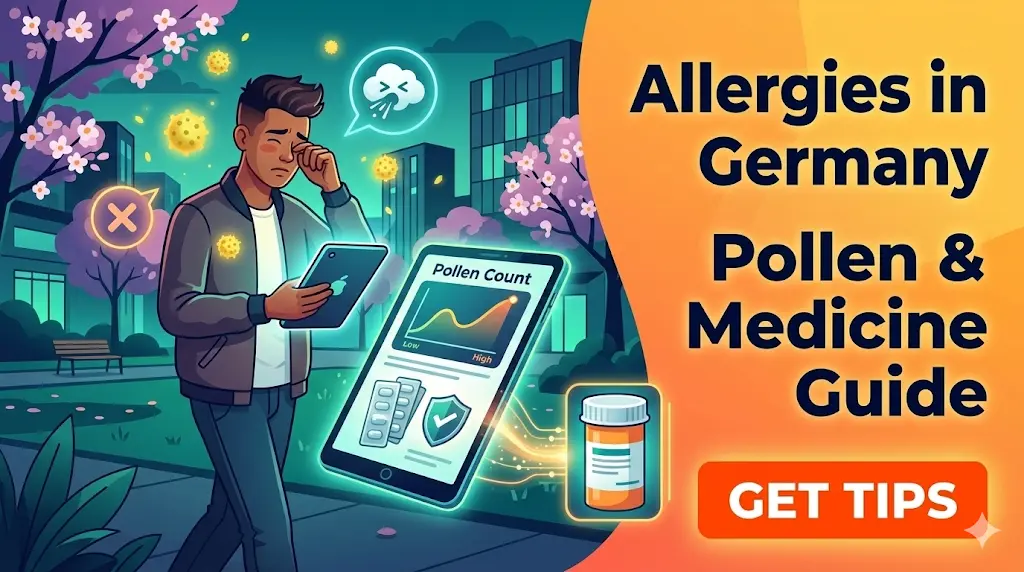
To manage your symptoms effectively, you must stay informed about daily pollen concentrations in your specific region. The German Weather Service (Deutscher Wetterdienst or DWD) provides highly accurate, localized pollen forecasts. They operate a dedicated platform and mobile app called the Pollenflug-Gefahrenindex, which offers real-time data and early warnings for all major allergens across different federal states.
Another vital resource is the German Pollen Information Service Foundation (Stiftung Deutscher Polleninformationsdienst or PID). They manage a vast network of pollen traps across the country and provide extremely detailed forecasts and interactive pollen calendars. By routinely checking these apps before planning outdoor activities, hiking trips, or even just opening your apartment windows for ventilation (Lüften), you can drastically reduce your environmental exposure during peak days.
Navigating German Pharmacies for Allergy Relief
Over the Counter Antihistamines
A major culture shock for many expats is discovering that you cannot buy any form of medication—not even basic allergy pills—at a standard German grocery store or drugstore (like dm or Rossmann). All medications are strictly regulated and must be purchased at a licensed pharmacy. To understand this structural retail difference, read our comprehensive guide on Pharmacies in Germany: Apotheke vs Drogerie Explained.
Fortunately, the most effective second-generation antihistamines are available over the counter (OTC) without a prescription. You can walk into any pharmacy and ask for Cetirizine (Cetirizin) or Loratadine (Loratadin). These generic medications are highly affordable, typically costing between €3 and €6 for a pack of 20 to 50 tablets. If those make you drowsy, newer antihistamines like Levocetirizine or Desloratadine are also available, though they sometimes require a prescription or come at a slightly higher premium.
Prescription Allergy Medications
If standard OTC pills are not strong enough to control your hay fever, you will need to consult a physician for stronger interventions. General practitioners can prescribe high-dose corticosteroid nasal sprays, powerful antihistamine eye drops, or combination asthma inhalers if your allergies trigger respiratory distress.
Recently, some effective corticosteroid nasal sprays containing mometasone or fluticasone have been reclassified and can now be purchased OTC in small doses for seasonal use. However, if you require them long-term, getting a prescription is safer and ensures proper medical oversight. If your allergies become so severe that you cannot work, your doctor can officially excuse you.
Natural Remedies and Alternative Options
Many Germans prefer to manage mild allergies using holistic or natural remedies before turning to chemical antihistamines. Pharmacies sell a wide variety of saline nasal sprays (Meerwasserspray) to flush pollen from the nasal cavity, as well as specialized eye drops containing ectoine to soothe irritation. Neti pots (Nasendusche) are also highly popular and widely available.
However, expats often struggle to find their preferred international herbal supplements, specific homeopathic remedies, or familiar wellness brands in local German apothecaries. For these specialized items, many internationals prefer to use borderless platforms. By ordering through iHerb, you can access a massive catalog of global vitamins, quercetin supplements, and natural allergy-relief products, having them delivered directly to your German address. Keeping your home stocked with preventative care items from iHerb is a smart strategy to manage baseline wellness before the heavy pollen drops.
Consulting an Allergist and Immunotherapy
When to See a Specialist
If your allergies are severely impacting your quality of life, causing asthma symptoms, or failing to respond to standard pharmacy medication, it is time to see a specialist. In Germany, you should look for an Allergologe (allergist). This is usually an Ear, Nose, and Throat doctor (HNO-Arzt), a dermatologist (Hautarzt), or a pulmonologist (Pneumologe) who has completed additional specialized training in allergology.
You generally do not need a referral from a general practitioner to book an appointment with a specialist, though having one can sometimes expedite the process. Before booking your first consultation, you should familiarize yourself with the German clinical system by reading Finding a Doctor in Germany: How to Choose a Hausarzt.
Allergy Testing Procedures
When you visit an allergist in Germany, they will typically begin with a comprehensive diagnostic process. The most common diagnostic tool is the Prick Test (Pricktest). The doctor or nurse places tiny drops of various allergen extracts (such as birch, grass, mugwort, dust mites, and pet dander) on your forearm and lightly pricks the skin underneath. Within 15 to 20 minutes, allergic reactions manifest as raised, itchy bumps.
If the Prick Test is inconclusive, or if you are taking medications that suppress skin reactions, the doctor will order a specific blood test to measure the IgE antibodies in your system. This provides a highly accurate, quantifiable map of your exact allergic triggers, allowing the doctor to tailor a highly specific treatment plan.
Hyposensitization Treatments
For expats planning to stay in Germany long-term, doctors frequently recommend specific immunotherapy, known in Germany as Hyposensibilisierung or Desensibilisierung. This is the only medical treatment designed to alter the underlying disease rather than just treating the symptoms.
The treatment involves introducing tiny, gradually increasing amounts of the specific allergen into your body to train your immune system to tolerate it. This is typically done via subcutaneous injections (allergy shots) administered by the doctor every few weeks, or via sublingual immunotherapy (drops or tablets placed under the tongue daily at home). The entire process usually takes three years to complete, but it offers a profound, long-lasting reduction in symptoms and significantly lowers the risk of developing allergic asthma.
Health Insurance Coverage for Allergy Treatments
Public vs Private Insurance Benefits
Understanding how your health insurance handles allergy treatments is critical for your budget. If you are enrolled in statutory public health insurance (Gesetzliche Krankenversicherung or GKV), your doctor visits, allergy testing, and the expensive three-year hyposensitization treatments are fully covered. However, public insurance generally does not cover OTC medications. If your doctor recommends standard cetirizine or a basic nasal spray, they will give you a “Green Prescription” (Grünes Rezept), which acts as a medical recommendation but means you must pay the full retail price out of pocket. For a deeper dive into these benefits, review Public Health Insurance gesetzliche Krankenkasse: What It Covers and Costs.
If you hold private health insurance (Private Krankenversicherung or PKV), your coverage is dictated entirely by your specific tariff. Comprehensive private plans often cover both prescription medications and OTC allergy drugs if they are officially prescribed by a physician. Premium expat-focused providers like Ottonova offer intuitive digital platforms where you can instantly upload your pharmacy receipts for rapid reimbursement. If you are currently debating which system fits your lifestyle, consulting unbiased digital brokers like Feather Insurance can help you find a plan that covers your specific medical needs seamlessly.
Managing Out of Pocket Expenses
Even with excellent insurance, expats might encounter out-of-pocket expenses when dealing with specialized treatments, holistic therapies, or private clinics.
If you must pay for a high-end private allergy consultation or specialized lab diagnostics out of pocket, and you are transferring funds from a foreign bank account to cover the medical invoice, traditional banks will severely penalize you with hidden exchange rate markups. Utilizing a borderless financial platform like Wise allows you to pay your German medical bills using the real mid-market exchange rate. This guarantees your healthcare budget is spent entirely on your wellbeing, rather than on archaic banking fees.
References
Primary sources (official)
- Deutscher Wetterdienst (DWD): The official German Weather Service providing the national Pollenflug-Gefahrenindex (Pollen Danger Index) and real-time atmospheric data. https://www.dwd.de/pollenflug
- Stiftung Deutscher Polleninformationsdienst (PID): The official foundation operating the national pollen database and managing precise regional forecasting tools and mobile applications. https://www.pollenstiftung.de/
Other helpful sources
- Allergieinformationsdienst: An independent, state-funded health portal operated by the Helmholtz Zentrum München, offering comprehensive, scientifically backed information on allergy diagnostics and therapies. https://www.allergieinformationsdienst.de/
- Make it in Germany: The official portal of the German government for international professionals, offering broad overviews of the healthcare system and finding medical specialists. https://www.make-it-in-germany.com/en/
Disclaimer
The information provided in this article is for general informational and educational purposes only and does not constitute professional medical, legal, or financial advice. Allergy severity, cross-reactivities, and appropriate medical treatments vary significantly from person to person. Health insurance regulations, medication availability, and the exact terms of specific coverage plans vary between providers. Always consult directly with a qualified medical professional, an Allergologe, or a certified insurance broker regarding your unique health conditions and coverage options in Germany.