Pharmacies in Germany (Apotheke): How to Get Medication and Advice
Navigating a German pharmacy (Apotheke) is a unique experience that combines high-level medical consultation with a strictly regulated retail environment. This guide explains how to identify a legitimate pharmacy, understand the digital e-prescription system, and access emergency medication after hours.
Disclosure: This post may contain affiliate links. We may earn a commission at no extra cost to you if you make a purchase through these links. Read full disclosure.
The Role and Structure of the German Apotheke
Why the Apotheke is Different from a Drugstore
In many countries, you can pick up painkillers or allergy meds alongside your groceries. In Germany, the system is strictly bifurcated. You will find two types of stores: the Drogerie (like Rossmann or dm) and the Apotheke. A Drogerie sells toiletries, cosmetics, and very mild supplements, but they are legally prohibited from selling any actual medication—even low-dose ibuprofen or paracetamol. For those, you must visit an Apotheke.
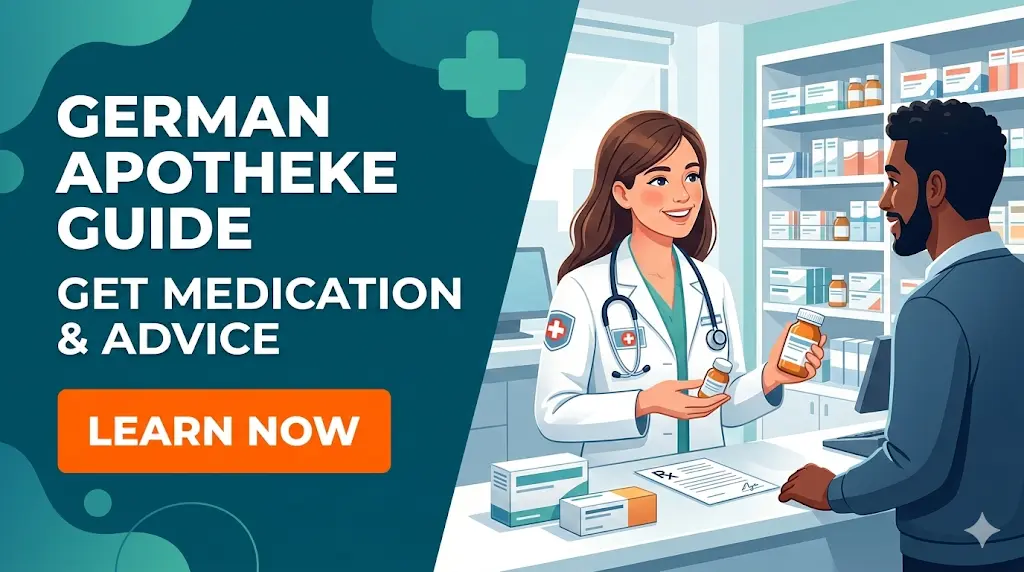
Pharmacies in Germany, known as Apotheken, play an important role in healthcare by dispensing medications and providing professional advice. Prescription medicines must be obtained with a doctor’s prescription, which pharmacists verify before dispensing. Many pharmacies also supply over the counter treatments for common conditions such as colds, allergies, or minor pain. Pharmacists are trained healthcare professionals who can explain dosage, possible side effects, and drug interactions. When one pharmacy is closed, a nearby Notdienst (emergency pharmacy) remains available. Opening hours vary, but emergency rotation systems ensure access to medication at night and during holidays.
The Apotheke is a highly regulated medical institution. By law, every pharmacy in Germany must be owned and operated by a licensed pharmacist; there are no corporate “chains” in the traditional sense. This ensuring that every time you walk into a pharmacy, you are entering a space overseen by a medical professional. This focus on expertise is a key part of the broader system described in Navigating Medical Care in Germany: Doctors, Hospitals, and Pharmacies.
Because of this medical focus, you cannot simply grab a box of aspirin off a shelf. Almost all medications, including over-the-counter (OTC) ones, are kept behind the counter. You must speak to a pharmacist or a trained assistant who is legally required to offer you advice on dosage and potential side effects before handing over the product. If you’re looking for specialized wellness products or international brands, many expats supplement their local pharmacy visits by ordering through iHerb.
Identifying a Legitimate Pharmacy
Recognizing a pharmacy in Germany is effortless thanks to a universal symbol: a large, stylized red “A” (for Apotheke), often accompanied by a white chalice and a snake (the Bowl of Hygieia). You will see this glowing neon sign on almost every major street corner in German cities. If a shop does not display this specific red “A,” it is likely a Drogerie and cannot provide you with medicine.
Inside, the layout is clinical and organized. You will usually find a small front-of-house area with high-end skincare (like Vichy or La Roche-Posay) and homeopathic remedies, but the medicine itself is always behind the counter. For expats still navigating How to Get Health Insurance in Germany: Step-by-Step for Newcomers, knowing how to find a pharmacy is as vital as finding a doctor.
The pharmacist’s role extends beyond just selling pills. They can check for drug interactions, advise on basic wound care, and even provide certain diagnostic services like blood pressure monitoring. If you are a freelancer managing your own health, the pharmacist is a great first resource before booking a formal appointment with a Hausarzt, as discussed in Health Insurance for Freelancers and Self-Employed: Navigating the System.
Language Support and Communication Tips
While many pharmacists in metropolitan areas like Berlin or Munich speak excellent English, the technical nature of medical discussions can still be a barrier. If your German is limited, it is helpful to bring the original packaging of any medication you currently take or a list of active ingredients (International Nonproprietary Names) rather than brand names, as German brand names often differ from those in the US or UK.
If you are struggling to describe symptoms, pointing or using a translation app is perfectly acceptable. Most pharmacists are used to helping the expat community and are patient. However, if you need deep psychological support or complex therapy advice, you should consult a doctor, a process outlined in the Healthy Living in Germany: Wellness, Fitness, and Mental Health Guide.
| English Phrase | German Translation | Context |
| “I have a prescription.” | “Ich habe ein Rezept.” | Handing over your paper or card. |
| “Does this have side effects?” | “Hat das Nebenwirkungen?” | Asking about the drug. |
| “How often should I take this?” | “Wie oft soll ich das einnehmen?” | Clarifying dosage. |
| “Do you have something for…?” | “Haben Sie etwas gegen…?” | Asking for an OTC remedy. |
Understanding the Prescription System in Germany
The Transition to the E-Rezept (Electronic Prescription)
As of January 2024, Germany has fully transitioned to the E-Rezept (electronic prescription) for patients with public health insurance. The old pink paper slips have largely been replaced by a digital system. When your doctor prescribes medication, the data is encrypted and stored in a central telematics infrastructure.
To redeem your E-Rezept, you have three main options. The most common is using your Electronic Health Card (eGK). You simply hand your card to the pharmacist; they insert it into their reader, and your pending prescriptions appear on their screen. Alternatively, you can use the official “Das E-Rezept” app or ask your doctor for a paper printout of the QR code if you prefer a physical copy. This digital shift is part of the modernization of Public Health Insurance (gesetzliche Krankenkasse): What It Covers and Costs.
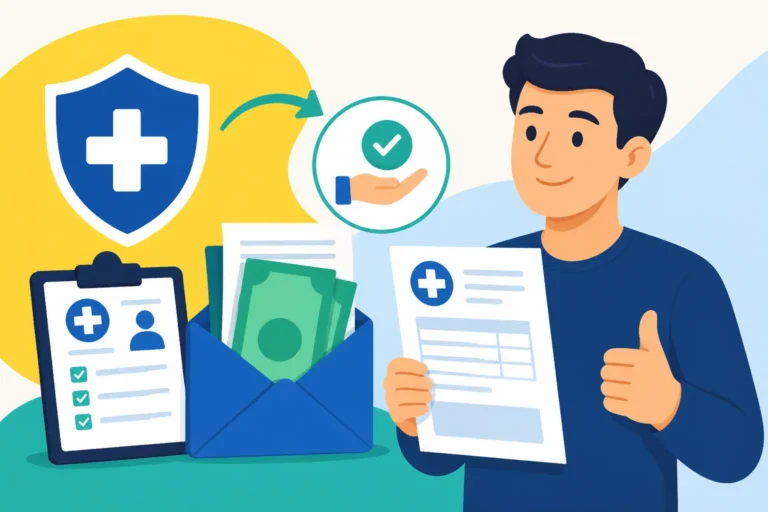
For private patients, paper prescriptions are still the standard. These are usually printed on blue slips (Blaues Rezept). Unlike public patients, private patients must pay the full cost of the medication at the pharmacy and then submit the receipt to their insurance for reimbursement. This distinction is a major factor in the Private Health Insurance in Germany: Benefits, Costs, and Eligibility debate.
Prescription Colors and What They Mean
Even with the digital transition, you might still encounter colored paper prescriptions, especially for specific types of medication. The color of the slip (or the digital category) determines who pays and how long the prescription is valid.
- Pink/Red (or e-Rezept): Issued to public insurance patients. The insurance covers most of the cost, and the patient pays a small co-payment. Valid for 28 days.
- Blue: Issued to private patients or for non-covered meds for public patients. You pay full price upfront. Valid for 3 months.
- Green: Not a “real” prescription but a formal recommendation for an OTC drug. You pay full price. Valid indefinitely.
- Yellow: For strictly regulated narcotics (strong painkillers, ADHD meds). These have very strict security requirements and are only valid for 7 days.
Understanding these colors is essential to avoid surprises at the checkout. For those managing complex international lives, using Wise to handle currency transfers for medical expenses can be a lifesaver if you are still waiting for your first German paycheck.
Mandatory Co-payments (Zuzahlung)
For public insurance patients, medication is not “free,” but it is heavily subsidized. You are required to pay a statutory co-payment (Zuzahlung) for every prescription medication. This fee is generally 10% of the drug’s price, with a minimum of €5 and a maximum of €10 per package. You will never pay more than the actual cost of the drug.
Children and teenagers under 18 are entirely exempt from these co-payments. Additionally, there is an annual “burden limit” (Belastungsgrenze)—once your total medical co-payments (including hospital stays) exceed 2% of your gross annual income (or 1% for the chronically ill), you can apply for an exemption for the rest of the year. This financial safety net is a pillar of the system, often compared to the student-specific rules in Health Insurance for Students in Germany: Affordable Options and Requirements.
Over-the-Counter (OTC) Medication and Advice
Self-Medication and “Apothekenpflichtig”
In Germany, even non-prescription drugs are often labeled as apothekenpflichtig, meaning they can only be sold in a pharmacy. This includes common items like higher-dose ibuprofen (400mg+), certain cough syrups, and medicated creams. The logic is that even “safe” drugs can be dangerous if misused, so a pharmacist’s oversight is required.
Because you have to ask for these items at the counter, it can feel intimidating. However, this is your chance to get professional advice. If you have a minor ailment like a cold or a localized skin rash, the pharmacist can recommend an effective OTC solution. This is particularly helpful for families who need quick advice for children, a topic further explored in Family Health Insurance: Adding Your Spouse and Kids to Your Plan.
Homeopathy and Herbal Remedies
Germany has a deep cultural affinity for herbal medicine (Phytotherapie) and homeopathy. Do not be surprised if a pharmacist recommends a plant-based tea or a homeopathic tincture alongside (or instead of) a chemical pharmaceutical for minor issues. If you have a strong preference for “school medicine” (Western conventional medicine), you should state this clearly.
If you prefer to stock up on specific international wellness brands or supplements that aren’t available in a local Apotheke, platforms like iHerb are a popular alternative. They allow you to find familiar products from your home country that might be classified differently or be more expensive in Germany.
Prices and Discounts on OTC Meds
Unlike prescription drugs, which have fixed prices set by the government, pharmacies are free to set their own prices for OTC products. This means that a pack of aspirin might cost €4 in one pharmacy and €6 in another just two blocks away.
For significant savings on non-urgent OTC items, many residents use online pharmacies (Online-Apotheken like DocMorris or Shop Apotheke). These often offer discounts of 20-50% compared to brick-and-mortar stores. However, for an acute illness, the convenience and immediate advice of your local “neighborhood” pharmacy are worth the extra couple of euros.
Emergency Pharmacies (Notdienst)
Finding a Pharmacy at Night or on Sundays
Standard retail hours in Germany are strict; most pharmacies close by 6:30 PM or 8:00 PM and are closed all day Sunday. However, to ensure 24/7 medical coverage, pharmacies take turns participating in an emergency rotation system called the Notdienst.
Every pharmacy will have a sign in its window (usually a small glowing digital screen or a printed list) indicating the nearest Notdienst-Apotheke currently on duty. You can also find the current list for your area on the official website aponet.de. This ensures that even at 3:00 AM on a public holiday, you can get the life-saving medication you need.
The Emergency Service Fee
When you visit a pharmacy during Notdienst hours (usually 8:00 PM to 6:00 AM, on Sundays, or on public holidays), you will be charged a small, flat-rate “emergency fee” (Notdienstgebühr), which is currently €2.50. This fee applies per visit, not per item.
If you have a prescription marked “emergency” by a doctor, your insurance might cover this fee, but in most cases, you simply pay it out of pocket. For travelers or those on short-term visits, knowing where the nearest Notdienst is located is as important as having Travel Health Insurance: What Expats Need for Schengen Visa & Short Trips.
Security and Access During Notdienst
When you visit an emergency pharmacy at night, you won’t usually walk into the shop. Instead, you will ring a bell at a small service window (Notdienstklappe). You speak to the pharmacist through the window, hand over your prescription or request your OTC item, and they bring it to you. This is a security measure and is standard across the country.
If you find yourself in a medical crisis and are unsure which number to call for a doctor versus a pharmacy, remember that 116 117 is for urgent non-emergency medical advice. For actual life-threatening emergencies, always dial 112.
Online Pharmacies and Delivery Services
How to Use Online Pharmacies in Germany
Online pharmacies have become a mainstay for many Germans, especially for recurring prescriptions and bulk-buying OTC health products. To use them for an E-Rezept, you can often scan the QR code from your doctor’s printout using the pharmacy’s app or use a specialized NFC reader for your health card.
The primary benefit is cost and convenience. Most online pharmacies offer free shipping for prescriptions and significantly lower prices on supplements. However, the downside is the wait; it usually takes 1-3 business days for your medication to arrive. For acute infections, the local pharmacy is still the better choice. If you are a student on a budget, these savings can be substantial, as noted in Health Insurance for Students in Germany: Affordable Options and Requirements.
Local Delivery Apps
In major cities, a new middle ground has emerged: rapid delivery services like MAYD or Kurando. These apps partner with local pharmacies to deliver OTC meds and prescriptions to your door in under 60 minutes. This is a godsend if you are home alone with a high fever and cannot walk to the nearest pharmacy.
These apps typically charge a delivery fee, but for the sheer convenience of not leaving your bed when you’re ill, it’s often worth it.
Managing International Prescriptions
If you are moving to Germany with a prescription from your home country, be aware that German pharmacies generally cannot accept foreign prescriptions from outside the EU/EEA. You will need to take your foreign documents to a local German Hausarzt (GP), who will then issue a valid German prescription.
If you need to settle bills from your home country or transfer funds to cover your initial medical costs in Germany, Wise provides a transparent way to handle these international transactions. Proactive expats often stock up on their non-prescription essentials via iHerb before their move to ensure they have familiar products during the transition phase.
Conclusion
The German Apotheke is far more than a simple retail store; it is an essential component of the national healthcare safety net. By understanding the difference between a drugstore and a pharmacy, mastering the new digital E-Rezept system, and knowing how to find an emergency Notdienst at night, you can ensure that you always have access to the medication and professional advice you need.
Whether you are picking up a routine prescription with your public insurance card or seeking a natural remedy for a cold, the German pharmacist is a trusted partner in your health journey.
References
Primary sources (official)
- ABDA – Federal Union of German Associations of Pharmacists: https://www.abda.de/en/
- Aponet.de – Official Pharmacy and Emergency Search: https://www.aponet.de/apotheke/notdienstsuche
Other helpful sources
- Federal Ministry of Health (BMG) – Medicinal Products: https://www.bundesgesundheitsministerium.de/en/topics/medicinal-products.html
- Make it in Germany – Healthcare & Pharmacies: https://www.make-it-in-germany.com/en/living-in-germany/money-insurance/healthcare
Disclaimer
The information provided in this article is for general informational and educational purposes only and does not constitute professional medical, legal, or financial advice. German pharmacy regulations and prescription laws are subject to change. Always consult directly with a qualified healthcare professional or a licensed pharmacist regarding your specific medication needs and health obligations in Germany.