Blood Tests and Labs: How to Get Tests Done and Read Results in Germany
Navigating the German medical system for blood tests involves understanding specific clinical protocols, decoding localized lab results, and managing distinct insurance billing structures. This guide provides expats with everything needed to confidently handle diagnostic testing and preventative healthcare in Germany.
Disclosure: This post may contain affiliate links. We may earn a commission at no extra cost to you if you make a purchase through these links. Read full disclosure.
Navigating the German Blood Testing System
The Role of the Hausarzt and Referrals
In Germany, the approach to diagnostic blood testing is highly centralized around the general practitioner, known as the Hausarzt. Unlike in some countries where patients can independently walk into commercial diagnostic centers and order their own blood panels, the German system generally requires a physician’s oversight. Your Hausarzt acts as the primary gatekeeper for your health. If you are feeling unwell, fatigued, or require chronic disease monitoring, your first step must always be to book a consultation with your general practitioner. They will assess your symptoms and determine exactly which biomarkers need to be tested.
If your medical situation requires specialized diagnostics—for example, complex autoimmune panels or intricate hormonal mapping—your GP will issue a referral slip (Überweisung). This slip directs you to a specialist, such as an endocrinologist or rheumatologist, who will then conduct the targeted blood work. It is crucial to establish a relationship with a local doctor early on to ensure seamless access to these diagnostic pathways. If you have not yet found a primary care physician, reviewing our guide on Finding a Doctor Hausarzt in Germany: How to Choose and Register will help you secure this foundational medical relationship.
Once the doctor determines which tests are necessary, the actual blood draw typically occurs directly within the doctor’s clinic rather than at a separate facility. The clinic staff collects the samples and coordinates with large, centralized medical laboratories (Medizinische Labore) via dedicated couriers who transport the vials multiple times a day. The laboratory analyzes the samples and sends the results back to the prescribing doctor, who is then responsible for interpreting the data and discussing the findings with you.
Statutory vs Private Health Insurance Coverage
Understanding who pays for your blood tests depends entirely on the type of insurance you hold. For patients enrolled in statutory public health insurance (Gesetzliche Krankenversicherung or GKV), any blood test deemed “medically necessary” by a doctor is fully covered. If you present with symptoms like sudden weight loss, unexplained joint pain, or chronic fatigue, the doctor will order a Complete Blood Count (CBC), iron panels, or thyroid tests, and the costs will be billed directly to your sickness fund. You simply present your electronic health card at the clinic, and you will not see an invoice. However, public insurance strictly limits preventative or “curiosity” testing without presenting symptoms.
For expats who have opted for private health insurance (Private Krankenversicherung or PKV), the coverage is generally much broader, but the billing process operates differently. Private patients are billed directly by the medical laboratory according to the official medical fee schedule (Gebührenordnung für Ärzte or GOÄ). You will receive an invoice in the mail, which you must pay upfront and then submit to your insurer for reimbursement. Modern digital-first private insurers like Ottonova make this process incredibly seamless by allowing you to simply photograph the invoice using their app for rapid reimbursement.
Private insurance often covers a wider array of preventative screenings, allowing you to proactively monitor biomarkers like comprehensive vitamin profiles or advanced lipid panels without needing to prove medical necessity first. For those utilizing expat-focused brokers like Feather Insurance, verifying your specific policy limits regarding elective laboratory testing is highly recommended.
Elective Testing and IGeL Services
If you are publicly insured but wish to have specific blood tests that your doctor does not consider medically necessary—such as checking your Vitamin D levels at the end of winter or requesting a comprehensive hormone panel for athletic performance—you can still have these tests done through Individuelle Gesundheitsleistungen (IGeL). IGeL translates to “Individual Health Services,” which are elective medical procedures that patients must pay for out of pocket.
When you request an elective test, the doctor will provide you with an IGeL contract detailing the exact costs according to the GOÄ fee schedule. You must sign this agreement before the blood is drawn. Prices for individual biomarkers can vary significantly; a simple Vitamin D test might cost around €30, while a comprehensive hormonal panel could exceed €100. The clinic will draw the blood, send it to the lab, and you will receive a private invoice a few weeks later.
While IGeL services offer public patients the flexibility to monitor their health proactively, consumer protection agencies frequently advise patients to carefully consider the clinical value of these tests. If you are utilizing these self-pay options to track your nutritional intake, you can strategically pair these insights with high-quality supplements. Many health-conscious expats manage their localized deficiencies by ordering specialized wellness products and vitamins from global platforms like iHerb, which often provide a wider variety of targeted supplements than standard local pharmacies.
The Logistics of Getting Your Blood Drawn
Booking the Appointment and Fasting Rules
Securing an appointment for a blood draw (Blutabnahme) in Germany usually requires planning ahead. Unless you are presenting with an acute medical emergency, clinics typically schedule routine blood tests several days or weeks in advance. Because German clinics value extreme punctuality and efficiency, blood draw appointments are often scheduled in quick succession during the early morning hours, typically between 7:30 AM and 9:30 AM.
This early scheduling is primarily due to fasting requirements. For many standard diagnostic tests, including comprehensive metabolic panels, lipid profiles (cholesterol), and fasting blood glucose, the doctor will require you to arrive nüchtern (fasting). In the German medical context, being nüchtern means you must not consume any food, caloric beverages, or caffeine for 8 to 12 hours prior to the blood draw. You are generally allowed—and encouraged—to drink plain water to ensure your veins are properly hydrated and easy to access.
If you are taking daily prescription medications, it is vital to ask your doctor whether you should take them before or after the blood test. For instance, if you are having your thyroid hormones checked, the doctor usually advises against taking your daily thyroxine pill until after the sample has been collected. Understanding these specific protocols is essential for accurate lab results and is a crucial aspect of Healthcare in Germany: A Comprehensive Guide for Expats.
The Lab Experience What Happens in the Clinic
When you arrive at the clinic for your blood draw, you will check in at the front desk (Anmeldung) by presenting your health insurance card. Once called, you will typically be directed to a dedicated treatment room rather than the main doctor’s office. In Germany, routine blood draws are almost exclusively performed by a Medical Technical Assistant (MTA) or a Medical Expert Assistant (MFA), rather than by the doctor themselves.
The procedure itself is identical to international standards. The MTA will ask you to roll up your sleeve, apply a tourniquet (Stauschlauch) to your upper arm, and disinfect the puncture site. German clinics primarily use the modern closed vacuum system (like the Monovette or Vacutainer systems), which draws the exact required volume of blood directly into color-coded tubes. You might notice that the tubes look different from those in your home country, as the color-coding standards can vary between European and American manufacturers.
Once the required vials are filled, the MTA will remove the needle, apply a sterile cotton swab, and ask you to apply pressure for a few minutes. They will then place a small bandage (Pflaster) over the site. The entire physical process rarely takes more than five minutes. If you have a history of fainting or severe needle anxiety, it is highly advisable to inform the MTA immediately upon entering the room. They will accommodate you by allowing you to lie down on a medical cot during the procedure rather than sitting upright in the standard phlebotomy chair.
Finding English-Speaking Clinics and Labs
One of the most daunting aspects of navigating medical logistics in a foreign country is the language barrier. Discussing complex symptoms and understanding fasting protocols requires clear, unambiguous communication. Fortunately, in major German metropolitan areas such as Berlin, Munich, Frankfurt, and Hamburg, finding English-speaking medical professionals is increasingly common.
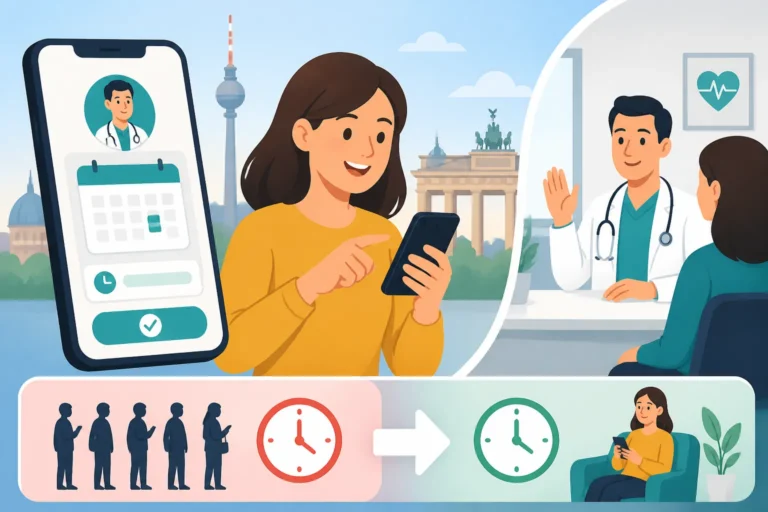
When searching for a clinic, digital booking platforms like Doctolib allow patients to explicitly filter doctors by the languages spoken in the practice. This is an invaluable tool for expats. However, it is important to remember that while the head physician may be fluent in English, the front desk staff and the MTAs performing the blood draw might only speak German. Learning a few key phrases, such as “Ich bin nüchtern” (I am fasting) or “Ich habe Angst vor Nadeln” (I am afraid of needles), can significantly smooth the process.
If you require highly specialized laboratory testing that must be done at a dedicated diagnostic center or a hospital outpatient lab, you can utilize the resources outlined in Specialists and Referrals: How to See a Specialist Doctor in Germany. Many of these larger clinical institutions have international patient offices that can assist with translation and ensure that your medical records are handled accurately across language divides.
Decoding Your German Lab Results
Understanding German Medical Terminology and Abbreviations
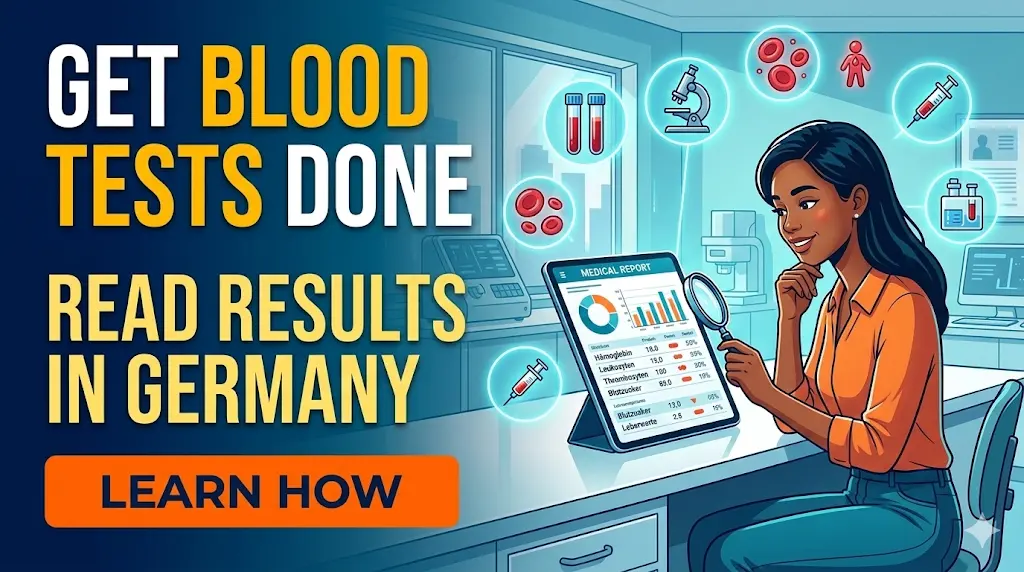
When your lab results (Laborwerte or Blutbild) finally arrive, they will be entirely in German and filled with clinical abbreviations. The standard German blood test is divided into the Kleines Blutbild (Small Blood Count) and the Großes Blutbild (Large Blood Count/Complete Blood Count). Understanding the basic terminology empowers you to have a much more productive follow-up conversation with your physician.
For example, Red Blood Cells are listed as Erythrozyten (Erys), White Blood Cells are Leukozyten (Leukos), and Platelets are Thrombozyten (Thr). When assessing iron levels, it is crucial to look at Ferritin (the body’s stored iron) rather than just the serum iron (Eisen), as Ferritin provides a much more accurate picture of deficiency. Liver enzymes, which are frequently tested, are commonly listed under the abbreviations GOT (AST), GPT (ALT), and Gamma-GT (GGT).
To help you decode the most common markers on your German lab report, refer to the following translation table:
| German Abbreviation / Term | English Equivalent | Primary Function / Indication |
| Erythrozyten (Erys) | Red Blood Cells (RBC) | Oxygen transport; indicates anemia if low. |
| Leukozyten (Leukos) | White Blood Cells (WBC) | Immune response; indicates infection if high. |
| Thrombozyten (Thr) | Platelets | Blood clotting function. |
| Hämoglobin (Hb) | Hemoglobin | Oxygen-carrying protein in red blood cells. |
| Nüchternblutzucker | Fasting Blood Glucose | Screening for diabetes and insulin resistance. |
| Schilddrüsenwerte (TSH) | Thyroid Stimulating Hormone | Evaluates overall thyroid gland function. |
| Cholesterin (HDL/LDL) | Cholesterol | Lipid profile for cardiovascular risk assessment. |
| Harnsäure | Uric Acid | Indicator for gout or kidney function. |
Reference Ranges and Units of Measurement
Another significant hurdle for expats reviewing their German lab results is the difference in units of measurement. Germany adheres strictly to the metric system and predominantly utilizes the International System of Units (SI units) in medical laboratories. If you are moving from the United States or the United Kingdom, the numbers on your page might look alarmingly high or low until you realize the unit of measurement is completely different.
For example, in the US, blood glucose is typically measured in milligrams per deciliter (mg/dL). While some German labs still use mg/dL, many have transitioned to millimoles per liter (mmol/L). A fasting blood sugar of 90 mg/dL translates to roughly 5.0 mmol/L in the newer system. Similarly, cholesterol is often measured in mg/dL in Germany (like the US), but thyroid hormones (fT3, fT4) might use picomoles per liter (pmol/L) or picograms per milliliter (pg/mL) depending on the specific laboratory’s calibration.
Because these units and calibration standards vary even between different German laboratories, every printed lab report will explicitly list the “Reference Range” (Referenzbereich or Normwert) right next to your personal result. Values falling outside this norm are usually highlighted in bold, marked with an asterisk (*), or flagged with a “+” (too high) or “-” (too low). Always rely on the printed reference range provided by the specific lab that processed your blood, rather than Googling generic international ranges.
Digital Patient Portals and Receiving Results
The method by which you receive your lab results has modernized significantly. Historically, patients had to wait for a follow-up appointment or call the clinic during designated telephone hours to have a doctor read the results over the phone. While a follow-up consultation is still mandatory for discussing abnormal results, accessing the raw data is now much easier.
Many modern clinics and diagnostic laboratories now utilize secure digital patient portals or encrypted smartphone applications. When you have your blood drawn, the clinic may provide you with a printed QR code or a secure PIN. Once the laboratory finalizes the analysis, you can log into the portal and download a full PDF of your Laborbericht. This is incredibly empowering for patients who actively track their long-term health metrics.
Furthermore, with the nationwide rollout of the electronic patient record (elektronische Patientenakte or ePA), these digital lab results are automatically integrated into your centralized health profile. This ensures that any specialist you visit in the future has immediate access to your historical blood data, avoiding unnecessary and expensive repeat testing.
Common Blood Tests for Expats in Germany
Vitamin D and Winter Deficiencies
One of the most frequently requested elective blood tests by expats in Germany is the 25-hydroxy Vitamin D test (Vitamin D-Spiegel). Germany’s geographical location means that from October through March, the angle of the sun is too low to stimulate adequate natural Vitamin D synthesis in the skin. Consequently, a massive portion of the population, particularly expats arriving from sunnier climates, experiences severe Vitamin D deficiency during the winter months.
Symptoms of this deficiency often manifest as profound fatigue, weakened immune response, bone aches, and an exacerbation of Seasonal Affective Disorder (SAD). When you request this test as an IGeL service, the lab will measure your serum concentration, typically aiming for an optimal level between 30 and 50 ng/mL. If your results come back alarmingly low, your doctor will prescribe a targeted, high-dose supplementation protocol to restore your baseline.
Because high-quality, high-dose Vitamin D combined with Vitamin K2 (which is essential for proper calcium absorption) can be relatively expensive when purchased locally at a standard Apotheke, many expats choose to optimize their winter wellness budget.
Thyroid Panels and Hormonal Health
Thyroid disorders are incredibly common in Germany, partly due to historical iodine deficiencies in the Central European soil and diet. For expats experiencing sudden weight fluctuations, chronic fatigue, hair loss, or temperature sensitivity, doctors will almost certainly order a basic thyroid panel. This initial screening always starts with the TSH (Thyroid Stimulating Hormone) test, known in Germany as the TSH-Basalwert.
If the TSH value falls outside the reference range—indicating either hypothyroidism (underactive) or hyperthyroidism (overactive)—the lab will automatically perform reflex testing to measure the free circulating thyroid hormones, fT3 and fT4. In more complex cases, such as suspected Hashimoto’s thyroiditis, the doctor will order specific autoimmune antibody tests (TPO-AK or TRAK).
Navigating a new chronic diagnosis like a thyroid condition requires diligent, ongoing medical supervision. Because you will need blood tests every few months to adjust your medication dosage (like L-Thyroxin), having a highly responsive health insurance plan is vital. Providers brokered through Feather Insurance often provide excellent English-language support to help you understand your coverage for chronic disease management and the associated laboratory monitoring required over the long term.
The Check-Up 35 Preventative Screening
The pinnacle of preventative blood testing in the German public health system is the Gesundheits-Check-up, commonly referred to as the Check-Up 35. This comprehensive screening is fully covered by statutory health insurance once between the ages of 18 and 34, and subsequently every three years for patients aged 35 and older. It is designed specifically for the early detection of cardiovascular diseases, kidney dysfunction, and diabetes.
The Check-Up 35 includes a fasting blood test that fundamentally focuses on a complete lipid profile (Total Cholesterol, HDL, LDL, and Triglycerides) and fasting blood glucose levels. It also includes a urine analysis to check for early signs of kidney distress, alongside a full physical examination and blood pressure monitoring. It is a fantastic, free tool for expats to establish a medical baseline in their new country.
If your check-up reveals elevated cholesterol or pre-diabetic glucose levels, your doctor will initiate a discussion about lifestyle modifications, dietary changes, and potentially prescribe medication.
Managing the Financials of Lab Tests
Private Invoices and the GOÄ Fee Schedule
For expats navigating the private health insurance sector, understanding how laboratory tests are billed is crucial for financial management. When your blood is sent to an external medical laboratory, the laboratory functions as an independent medical entity. Therefore, you will receive a separate private invoice directly from the lab (often managed by a central billing agency), which is completely distinct from the invoice you receive from your treating physician.
These laboratory invoices are strictly governed by the Gebührenordnung für Ärzte (GOÄ), the official fee schedule for physicians in Germany. Every single biomarker tested—whether it is a simple Vitamin B12 check or a complex viral titer—has a specific GOÄ code (Ziffer) and a legally mandated base price. The lab applies a multiplier to this base price, though for standard laboratory services, the multiplier is legally capped lower than standard clinical treatments (usually at 1.15x for routine labs).
Receiving a dense, multi-page invoice filled with chemical acronyms and GOÄ codes can be intimidating. However, because the prices are standardized by federal law, you are protected from arbitrary price gouging.
Reimbursement Processes for Expats
Once you receive the private laboratory invoice, the standard protocol is to pay the laboratory directly within the specified timeframe (usually 14 to 30 days) and subsequently submit the bill to your private health insurance for reimbursement. The speed and ease of this reimbursement process depend entirely on the modernization of your chosen insurance provider.
Legacy insurance companies often require you to mail physical copies of the invoices or navigate clunky online portals. In contrast, modern InsurTech companies have revolutionized this experience. If you are insured with Ottonova, for example, you simply open their mobile app, use the built-in scanner to capture the QR code on the laboratory invoice, and submit the claim digitally in seconds. The funds are typically reimbursed into your account within a few business days, often before the actual invoice deadline expires.
If you are utilizing an expat-focused broker like Feather Insurance, you benefit from having an English-speaking customer success team acting as your advocate. If a laboratory claim is ever disputed or delayed, your broker can interface directly with the insurance provider on your behalf, ensuring you are not left stranded navigating complex medical billing bureaucracies in a foreign language.
Paying International Bills Without High Fees
A common logistical challenge for newly arrived expats is managing the payment of these private medical and laboratory invoices before their local German banking infrastructure is fully established. German medical laboratories require payment via a standard SEPA bank transfer (Überweisung). You cannot log onto a lab’s website and pay a medical bill with a foreign credit card.
If you attempt to execute an international wire transfer from a US, UK, or Australian bank account to a German laboratory’s IBAN, you will be hit with terrible currency conversion rates and exorbitant hidden banking fees. This can make an already expensive advanced blood panel financially punishing.
To circumvent this, savvy expats utilize modern borderless financial platforms like Wise. Using Wise allows you to convert your home currency to Euros at the real mid-market exchange rate and execute a rapid, local SEPA transfer directly to the laboratory’s account. This ensures your medical bills are settled accurately, promptly, and without bleeding money on invisible exchange rate markups, allowing you to focus entirely on your health rather than administrative friction.
Conclusion
Understanding how to navigate blood tests and laboratory diagnostics in Germany empowers expats to take proactive control of their health. By establishing a strong relationship with a local Hausarzt, familiarizing yourself with the fasting rules, and decoding the clinical metrics of your results, you can seamlessly integrate into the German preventative healthcare culture.
Whether you are leveraging the robust coverage of the statutory system for a Check-Up 35 or utilizing the flexibility of private insurance through modern providers like Ottonova and Feather Insurance for advanced diagnostic screening, the system is designed to offer world-class medical oversight. Armed with this knowledge, and supported by efficient financial tools like Wise, you can approach your next clinical appointment with total confidence.
References
Primary sources (official)
- Federal Ministry of Health (BMG) – Information on the Health Check-Up: https://www.bundesgesundheitsministerium.de/themen/praevention/gesundheitsuntersuchungen/gesundheits-check-up
- National Association of Statutory Health Insurance Physicians (KBV) – Laboratory Examinations: https://www.kbv.de/html/labor.php
Other helpful sources
- Independent Patient Counseling Germany (UPD) – Patient Rights and IGeL Services: https://www.patientenberatung.de/
- Apotheken Umschau – Understanding Blood Values: https://www.apotheken-umschau.de/diagnose/laborwerte/
Disclaimer
The information provided in this article is for general informational and educational purposes only and does not constitute professional medical, diagnostic, legal, or financial advice. The German healthcare system, laboratory billing codes (GOÄ), and statutory insurance regulations are highly complex and subject to continuous legislative and clinical updates. Always consult directly with a qualified healthcare professional, your specific sickness fund, or a certified independent insurance broker regarding your unique medical history, required diagnostic testing, and legal insurance obligations in Germany. In a medical emergency, always dial 112.