Taking Kids to the Doctor: How Pediatric Care Differs in Germany
Relocating your family means adapting to a new medical culture. This guide explains how the German pediatric system operates, from mandatory preventative checkups to securing pediatric sick notes, ensuring your children receive the best possible healthcare in their new home.
Disclosure: This post may contain affiliate links. We may earn a commission at no extra cost to you if you make a purchase through these links. Read full disclosure.
The Role of the Kinderarzt in Germany
Finding a Pediatrician as an Expat
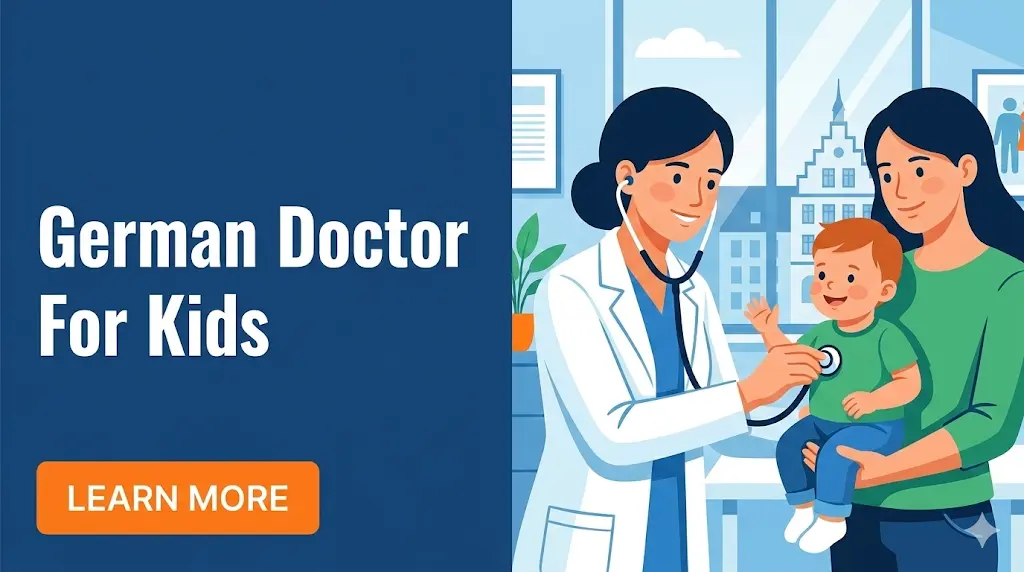
In many countries, children are treated by the same general practitioner as their parents. In Germany, the system is strictly segmented. Children and adolescents from birth until their eighteenth birthday are exclusively treated by a specialized pediatrician, known as a Kinderarzt (or Kinder- und Jugendarzt). This dedicated focus ensures that clinical environments are child-friendly and medical staff are acutely trained in pediatric development.
Germany is currently experiencing a massive shortage of pediatricians, particularly in major urban centers like Berlin, Munich, and Cologne. Clinics frequently institute admission freezes (Aufnahmestopp), meaning they simply will not accept new patients unless it is a newborn sibling of an already registered child.
To secure a spot, expats must be proactive. Call multiple clinics in your neighborhood before you actually need them. When calling, politely ask if they speak English, as translating complex medical symptoms while managing a sick toddler is incredibly stressful. If you are struggling to navigate the medical bureaucracy as a new arrival, specialized expat insurance brokers like Feather Insurance can often guide you toward family-friendly clinics that are open to accepting international patients. This process mirrors the adult system, which you can learn about in Finding a Doctor in Germany: How to Choose a Hausarzt.
Making Appointments and Walk in Hours
Once you have successfully registered your child at a pediatric practice, you must learn how their scheduling system operates. Routine preventative checkups and standard vaccinations require an appointment (Termin), which must often be booked several months in advance.
However, children rarely get sick on a convenient schedule. For acute illnesses like sudden high fevers, ear infections, or stomach bugs, pediatricians offer daily walk-in hours specifically for sick children, known as the Akutsprechstunde. You must call the clinic as soon as they open in the morning (usually at 8:00 AM) to announce that your child is ill. The receptionist will then assign you a specific time slot to come in that same day.
Be prepared for a crowded waiting room during the winter flu season. German clinics frequently separate their waiting areas into two distinct rooms: one for healthy children attending routine checkups and another for sick, potentially contagious children. Always ask the receptionist which room you should sit in.
The U Heft and Preventative Checkups
What is the Gelbes Heft
The absolute cornerstone of German pediatric care is the Kinder-Untersuchungsheft, universally referred to as the U-Heft or the Gelbes Heft (yellow booklet). If your child is born in Germany, you will be handed this bright yellow book at the hospital mere hours after birth. If you relocate to Germany with a young child, your new Kinderarzt will issue one to you during your first visit.
This booklet is a highly structured, state-mandated medical passport that tracks your child’s physical, motor, and cognitive development from birth through adolescence. You must bring the U-Heft to every single routine doctor’s appointment. The pediatrician will record weight, height, reflex tests, and vaccination dates directly into the booklet. It serves as your official proof that your child is receiving the required medical oversight in Germany. Guard this booklet carefully, as replacing a lost U-Heft and reconstructing the medical timeline is an administrative nightmare.
Mandatory Examinations from Birth to Adolescence
The U-Heft outlines a rigorous schedule of eleven distinct preventative checkups, simply labeled U1 through U9 (with additional adolescent checks later on). These U-Untersuchungen are tied to very specific age windows. For example, the U3 must take place between the 4th and 5th week of life, while the U7a occurs around the age of three.
These checkups are not optional. In many German federal states, participation is tracked by the local health authority (Gesundheitsamt). If you miss a scheduled U-examination, the authorities will send you an official reminder letter. If you repeatedly ignore these reminders, the health department may alert child protective services (Jugendamt) to investigate potential medical neglect.
Furthermore, having an up-to-date U-Heft with a complete vaccination record is mandatory for enrolling your child in a German daycare (Kita) or primary school. Germany enforces strict vaccination laws, particularly regarding measles. The school will scrutinize the yellow booklet before admission is granted.
| Checkup Stage | Typical Age Window | Primary Focus of Examination |
| U1 & U2 | Birth to 10 days | Vital signs, newborn reflexes, jaundice check |
| U3 | 4 to 5 weeks | Hip ultrasound, hearing reflex, motor skills |
| U4 to U6 | 3 to 12 months | Vaccination initiation, physical growth, mobility |
| U7 to U9 | 2 to 5 years | Speech development, vision testing, school readiness |
| J1 | 12 to 14 years | Puberty development, mental health, posture |
Medical Philosophy and Common Treatments
The Preference for Gentle Medicine
Expats coming from North America or the UK often experience severe culture shock regarding the German medical philosophy for treating children. In many countries, doctors aggressively prescribe antibiotics or strong multi-symptom chemical syrups at the first sign of a chesty cough. German pediatricians operate on a fundamentally different, highly conservative framework.
The prevailing medical philosophy here is that a child’s immune system must be allowed to fight off minor viral infections naturally to build lifelong resilience. If you take your child to the Kinderarzt with a standard cold, a mild fever, or a runny nose, do not expect a bag full of prescriptions. The doctor will likely listen to their lungs, check their ears, and then officially “prescribe” fresh air (Lüften), rest, chamomile tea, and perhaps a mild saline nasal spray.
Antibiotics are heavily restricted and only prescribed if a blood prick test or throat swab confirms a bacterial infection, such as strep throat. This reliance on gentle, natural remedies (Hausmittel) can feel dismissive to an anxious expat parent, but it is the standard of care. If you prefer your child to have specific, international brand-name fever reducers, holistic immunity syrups, or specialized pediatric vitamins that German doctors rarely recommend, proactive expats frequently order them through borderless platforms. Utilizing iHerb allows you to maintain a stash of your preferred global pediatric wellness products, ensuring your bathroom cabinet is fully stocked before the winter flu season arrives.
Getting Prescriptions for Your Child
When a German pediatrician does prescribe medication, the process at the pharmacy (Apotheke) is highly beneficial for families. Children under the age of 12 (and adolescents up to 18 with developmental issues) receive prescription medications almost entirely for free.
The doctor will hand you a pink or red prescription slip. When you take this slip to the Apotheke, the statutory health insurance covers the full cost, meaning you bypass the standard co-payment (Zuzahlung) that adults face. However, this only applies to actual medicine. If the doctor recommends a basic preventative lotion or an over-the-counter herbal cough syrup, they might write it on a green prescription slip. This means it is medically recommended, but you must pay the full retail price out of pocket. To understand how retail medical distribution works, consult our deep dive on Pharmacies in Germany: Apotheke vs Drogerie Explained.
Health Insurance and Pediatric Costs
Public versus Private Insurance for Families
How your child’s healthcare is funded depends entirely on how the primary earners in your household are insured. The German statutory public health insurance system (Gesetzliche Krankenversicherung or GKV) is exceptionally family-friendly. If one parent pays into the public system, all non-earning dependents—including the spouse and all children—are automatically covered under the exact same policy for free through a mechanism called Familienversicherung (family insurance).
Conversely, if you opt out of the public system and enter the Private Health Insurance (Private Krankenversicherung or PKV) market, family insurance does not exist. You must pay a separate, additional monthly premium for every single child you add to your policy. While this makes private insurance vastly more expensive for large families, the pediatric care benefits are premium. Privately insured children often experience zero wait times for appointments, gain access to cutting-edge therapies, and receive head-physician treatment in pediatric hospitals.
Premium expat-centric providers like Ottonova offer comprehensive digital portals where you can upload your child’s private medical invoices for rapid reimbursement, simplifying the administrative burden. If you are struggling to calculate which tier makes the most financial sense for your growing family, consulting with the English-speaking advisors at Feather Insurance is highly strategic. For a complete financial breakdown of these two systems, read Public vs Private Health Insurance: Which One Should You Choose?.
Handling Sick Notes for Parents Kinderkrankenschein
One of the most profound benefits of working and raising a family in Germany is the legal protection afforded to parents when a child falls ill. If your child wakes up sick, they cannot attend daycare or school. German labor law explicitly recognizes that a parent must stay home to provide care.
If you are publicly insured, you are entitled to claim Kinderkrankengeld (child sickness benefit). To do this, you must take your child to the Kinderarzt on the very first day of their illness. The doctor will issue a specific medical certificate called a Kinderkrankenschein (officially the “Ärztliche Bescheinigung für den Bezug von Krankengeld bei Erkrankung eines Kindes”).
You submit this certificate to your employer and your public health insurance provider. Your employer excuses your absence without forcing you to use your vacation days, and your health insurance steps in to pay approximately 90% of your lost net income for the days you missed. Each parent is legally entitled to a set number of these subsidized child-sick days per year (currently up to 15 days per child, per parent).
If you are a privately insured family, you typically do not have an automatic statutory right to this state-funded Kinderkrankengeld. You must carefully check your private policy or your specific employment contract to see if your employer continues to pay your salary when you stay home with a sick child. Finally, if you incur high out-of-pocket costs at a private pediatric clinic and need to transfer funds from an international account to cover the invoice, using a platform like Wise ensures you secure the real exchange rate, preventing legacy banks from draining your family’s healthcare budget with hidden fees.
By understanding the vital role of the Kinderarzt, maintaining the U-Heft diligently, and knowing your legal rights when illness strikes, raising healthy children in Germany becomes a secure and highly supported experience. For a broader look at managing your entire household’s medical administration, explore Healthcare in Germany: A Comprehensive Guide for Expats.
References
Primary sources official
- Federal Ministry of Health (BMG): Official governmental guidelines detailing the statutory requirements for the U-Untersuchungen (early detection examinations) and childhood vaccination schedules. https://www.bundesgesundheitsministerium.de/en/en.html
- Federal Centre for Health Education (BZgA): The state authority providing the comprehensive “kindergesundheit-info” portal, which outlines the exact developmental milestones tracked in the Gelbes Heft. https://www.kindergesundheit-info.de/
Other helpful sources
- Berufsverband der Kinder- und Jugendärzte (BVKJ): The Professional Association of Pediatricians and Adolescent Doctors in Germany, offering parents resources on finding local clinics and understanding conservative medical treatments. https://www.bvkj.de/
Disclaimer
The information provided in this article is for general informational and educational purposes only and does not constitute professional medical, legal, or financial advice. German healthcare regulations, the specific timelines for the U-Untersuchungen, and the legal allocations for child sickness benefit (Kinderkrankengeld) are highly complex and subject to continuous legislative updates. Always consult directly with a licensed Kinderarzt for medical diagnoses, and speak with a certified insurance broker regarding your unique family coverage entitlements in Germany.