Do International Students Need Public or Private Insurance in Germany?
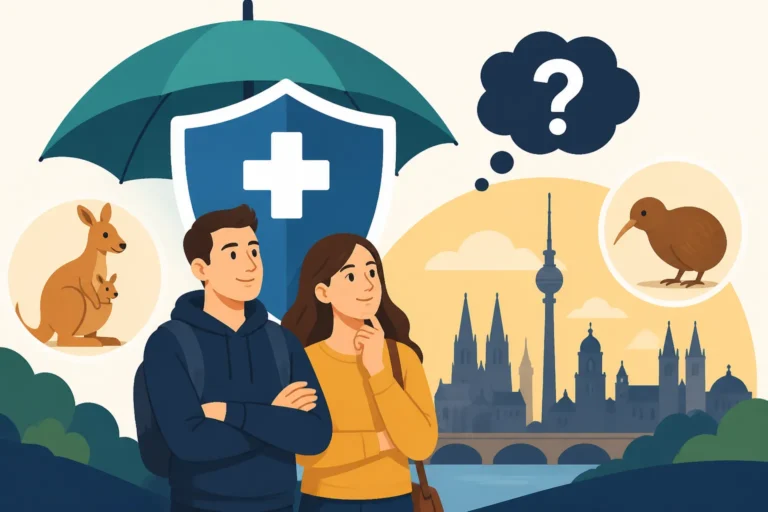
I remember sitting in my cramped Berlin sublet, staring at a university enrollment form that demanded proof of health insurance before I’d even found a proper pillow. It is the first real hurdle that feels unnecessarily complicated, especially when you are balancing a move across the world. This guide clarifies the confusing choice between public and private insurance for your student journey.
Disclosure: This post may contain affiliate links. We may earn a commission at no extra cost to you if you make a purchase through these links. Read full disclosure.
The Mandatory Nature of German Health Insurance
In Germany, health insurance is not a suggestion; it is a legal requirement called Versicherungspflicht. If you are under the age of 30 and enrolling in a degree program at a state-recognized university, the system automatically expects you to be part of the public health insurance scheme. You cannot even complete your university registration (Immatrikulation) or receive your residence permit without a digital notification from an insurance provider sent directly to your school.
The reason this feels so high-pressure is that the German authorities view health coverage as a social pillar. Unlike in some countries where you might risk a "pay-as-you-go" approach for a year, the German university will literally block your enrollment if your insurance status is not verified. If you are just starting to look at your options, you should check out Health Insurance for Students in Germany: Affordable Options and Requirements to see the baseline of what is expected for your specific visa type.
For most students, this means choosing a Gesetzliche Krankenkasse (GKV). These are the public providers like TK, AOK, or Barmer. They all offer a specialized student rate that is significantly cheaper than what a working professional pays. However, even within this "default" choice, there are nuances about when you might want to look elsewhere or how to handle the transition if you are arriving from a non-EU country.
Public Health Insurance Why It Is the Standard Choice
The public system operates on the principle of solidarity. This means your premium is not based on your health history or "pre-existing conditions," which is a massive relief for many. If you have asthma, diabetes, or a history of knee surgeries, a public provider cannot charge you more or deny you coverage. For students under 30, the monthly cost is usually around 120 to 130 Euros, which includes both health and long-term care insurance (Pflegeversicherung).
One of the biggest perks of the public system is the "card" system. You get a plastic card with a chip, and when you visit a doctor, you simply hand it over. There is no paperwork, no filing for reimbursement, and no large bills arriving in your mailbox weeks later. The doctor bills the insurance company directly. This is a lifesaver for students on a budget who don't have a few hundred Euros sitting around to "front" the cost of a specialist visit. If you want a deep dive into the specifics of what these plans pay for, read Public Health Insurance (gesetzliche Krankenkasse): What It Covers and Costs.
However, the public system does have its drawbacks. Wait times for specialists like dermatologists or therapists can be several weeks, if not months. Furthermore, the basic public plan might not cover everything you are used to. For instance, high-end dental work or professional teeth cleanings often require an out-of-pocket payment or a supplemental plan. If you are worried about your pearly whites, you might want to look into Dental Insurance in Germany: Do You Need Extra Coverage for Teeth?. To navigate these public options in English, many students use services like Feather Insurance, which helps bridge the language gap when dealing with the heavy bureaucracy of the Krankenkassen.
Private Health Insurance and the Permanent Waiver
There is a way to opt out of the public system, but it comes with a major "proceed with caution" sign. You can apply for a "Befreiung von der Versicherungspflicht" (exemption from mandatory insurance). This allows you to sign up for private health insurance (Private Krankenversicherung or PKV) instead. But here is the catch: once you do this at the start of your studies, you generally cannot switch back to public insurance for the entire duration of your degree.
Why would a student choose private? For those under 30, it is usually because they want faster access to specialists or a more tailored plan. Some digital-first providers like ottonova offer private student plans that are incredibly easy to manage via an app, often with features like video consultations with doctors. This can be very attractive if you are tech-savvy and want to avoid the "old-school" paper-heavy feel of some public offices.
Private insurance follows a "reimbursement" model. You pay the doctor's bill first, then upload the invoice to your insurer to get your money back. For a student, this requires a bit more financial discipline. If you are considering this path, make sure you understand the nuances by reading Private Health Insurance in Germany: Benefits, Costs, and Eligibility. You should also prepare for the different types of mail you will receive; Understanding German Medical Bills: Decoding Private Invoices and Co-Pays can help you make sense of the high-cost line items.
| Feature | Public Insurance (GKV) | Private Insurance (PKV) |
|---|---|---|
| Cost Basis | Fixed student rate (~€125) | Based on age, health, and plan |
| Pre-existing Conditions | Always covered | May increase price or be excluded |
| Payment Process | Card-based (Direct billing) | Pay first, then get reimbursed |
| Specialist Access | Can have long wait times | Usually much faster access |
| Switching Back | Easy to stay in | Very difficult to switch to public |
| Family Coverage | Spouse/kids covered for free | Each person pays a separate premium |
The Over 30 Transition and PhD Candidates
Once you hit your 30th birthday, the "student discount" in the public system expires. Suddenly, your premiums can jump from 125 Euros to over 200 Euros because you are now considered a "voluntary member." For many international students in this age bracket, the public system becomes a significant financial burden.
This is the point where many students look to private options. Providers like ottonova become very competitive here because they can often offer lower premiums for healthy individuals over 30 than the "voluntary" public rate. It is a strange quirk of the system where being "older" makes the private market more attractive. However, if you have a family, public might still be better because it allows for "family insurance," where your spouse and children are covered at no extra cost. To understand how that works, see Family Health Insurance: Adding Your Spouse and Kids to Your Plan.
PhD students also find themselves in a unique gray area. If you are a PhD student with a work contract at the university, you are an employee and must be in the public system (unless you earn above a very high threshold). If you are on a scholarship, the public system might view you as "voluntarily insured," which is expensive. In these cases, looking into specialized expat or private plans is common. You can find more advice on this at Health Insurance for Freelancers and Self-Employed: Navigating the System, as the rules for scholars often mirror those for the self-employed.
Language Students and Preparatory Courses
If you are coming to Germany for a language course (Sprachkurs) or a Studienkolleg (preparatory college), you are not actually considered a "regular student" yet in the eyes of the public insurance providers. This means you are generally not eligible for the public student rate. Most people in this situation use "incoming insurance" or "travel-style" insurance to get their visa and cover their first few months.
For this bridging period, SafetyWing is a frequent choice for many expats and long-term travelers because it meets the basic requirements for a Schengen visa and is highly flexible. It covers emergencies and unexpected illnesses while you are getting settled. However, once you pass your exams and officially enroll in a university degree program, you should switch to a proper German public or private plan to ensure long-term coverage. For more on these "bridge" options, look at Travel Health Insurance: What Expats Need for Schengen Visa & Short Trips.
Using a service like Feather Insurance during this transitional phase can be helpful because they offer plans specifically designed for those on a language-seeker visa who eventually plan to transition into the university system. It prevents you from having a "gap" in coverage, which the Ausländerbehörde (Immigration Office) hates to see.
Making the Final Decision Step by Step
Choosing your insurance shouldn't just be about the monthly price. You need to consider your long-term plans in Germany. If you intend to stay here after graduation and work, starting in the public system is generally the "safest" bet because it makes the transition to an employee's health insurance seamless. You just give your new employer your insurance number, and you are done.
If you are still undecided, start by following the steps in How to Get Health Insurance in Germany: Step-by-Step for Newcomers. It will walk you through the timeline of when to apply so that your university has the confirmation in time for your first day of class. Don't leave this until the last minute—German bureaucracy moves at its own pace, and a missing insurance certificate is the number one reason for delayed enrollments.
Remember that you also need to think about the "hidden" costs. Even in the public system, there are co-payments (Zuzahlungen) for hospital stays and medications. To get an idea of the total monthly impact on your wallet, check out How Much Does Public Health Insurance Cost in Germany?. Whether you choose the digital ease of ottonova or the solid reliability of a public fund with the help of Feather Insurance, the goal is to get that digital "M10" notification sent to your university so you can stop worrying about paperwork and start worrying about your first lecture.
Important Disclaimer
The information provided in this guide is for educational and informational purposes only. Health insurance laws and university requirements in Germany are subject to change and can vary based on individual circumstances, such as age, employment status, and nationality. This article does not constitute legal or professional financial advice. Always consult with an official insurance representative or a qualified legal advisor before making decisions regarding your health coverage in Germany. For the most current rates and regulations, refer to official government resources or your specific university's international office.