Accessible Healthcare: Services for People with Disabilities in Germany
Trying to find a wheelchair-accessible clinic in a city full of historic, elevator-less buildings is an exhausting reality for disabled expats. I remember staring at three steep flights of stairs outside a Berlin specialist’s office, completely stranded despite having a confirmed appointment. This guide explains how to secure your disability rights, find accessible care, and navigate the German healthcare bureaucracy.
Disclosure: This post may contain affiliate links. We may earn a commission at no extra cost to you if you make a purchase through these links. Read full disclosure.
Navigating the German Bureaucracy for Disability Rights
The Schwerbehindertenausweis Explained
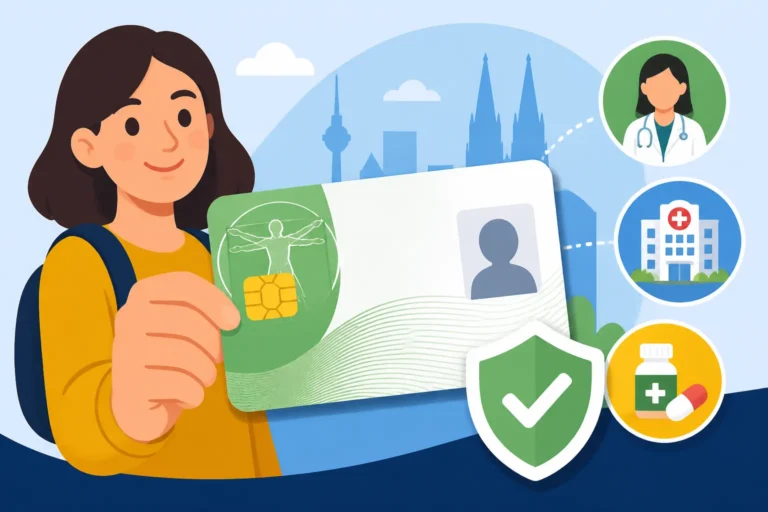
When you move to Germany with a chronic illness or physical disability, your medical records from your home country unfortunately do not automatically grant you legal protections here. To access workplace protections, additional vacation days, tax allowances, and free or discounted public transit, you must obtain a severely disabled person’s pass, known as the Schwerbehindertenausweis.
This little green and orange plastic card is your golden ticket to accessibility rights in Germany. However, it is not handed out lightly. The state assesses your health based on a metric called the Grad der Behinderung or degree of disability. To qualify for the official pass, your degree of disability must be assessed at 50 or higher out of 100. Understanding this system is the foundational step to thriving as a disabled expat here.
How to Apply and Get Your Degree of Disability
Applying for this status is an administrative marathon. You must submit a massive application to your local Versorgungsamt (pension and supply office). This application requires you to list every single medical condition you have, accompanied by verified medical reports, hospital discharge papers, and doctors’ letters.
The catch? All of this documentation usually needs to be in German. The officials reviewing your case will not translate your American or British medical files for you. I highly recommend having your local German general practitioner help you fill out the forms, as they know exactly what medical phrasing the Versorgungsamt is looking for. If you haven’t established a relationship with a local doctor yet, review our guide on Finding a Doctor in Germany: How to Choose a Hausarzt.
Finding Accessible Clinics and Medical Professionals
The Reality of Historic Altbau Clinics
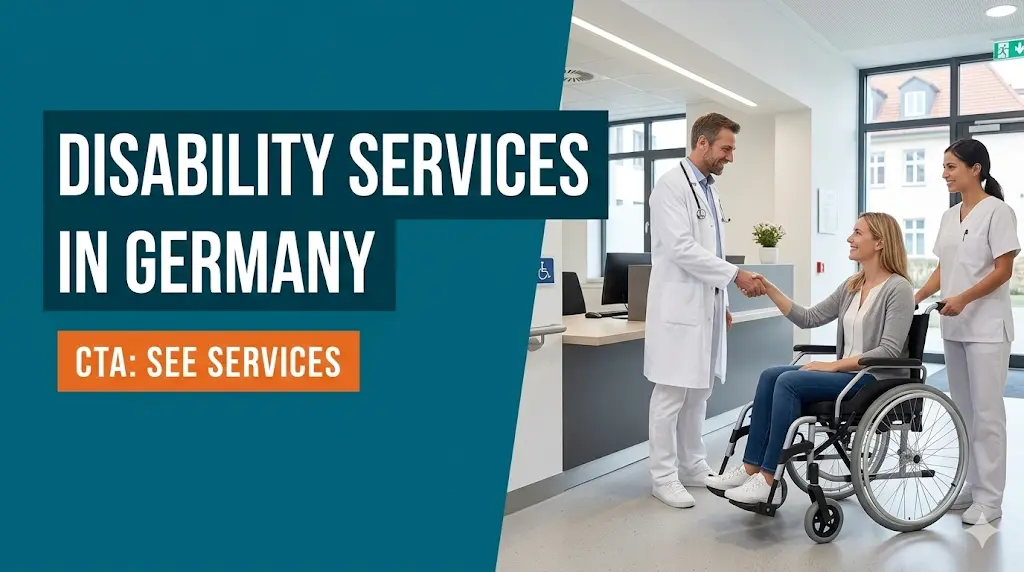
One of the most jarring cultural shocks for disabled expats is the sheer lack of physical accessibility in German cities. Laws regarding the retrofitting of historic buildings (Altbau) are incredibly lenient. Consequently, hundreds of excellent doctors’ offices, dental clinics, and physiotherapy centers are located on the second or third floors of buildings that do not have elevators.
When you book an appointment, you cannot assume the clinic is barrier-free (barrierefrei). You must actively verify it. Thankfully, major digital booking platforms like Doctolib have implemented “wheelchair accessible” filters. Always call ahead to confirm if the elevator is actually working that day—a painful lesson I learned after taking an expensive accessible taxi across town only to find an “Out of Order” sign on the lift. If you face an urgent health issue and cannot physically reach a doctor, you must rely on home-call services.
Digital Tools and Telemedicine to the Rescue
For expats dealing with severe mobility impairments or energy-limiting chronic illnesses like ME/CFS, leaving the apartment for a simple prescription refill is sometimes physically impossible. This is where telemedicine becomes an absolute lifesaver.
While the public system is slowly adopting video consultations, the private sector is lightyears ahead. Premium digital-first insurers like Ottonova offer comprehensive, English-language tele-doctor services directly through their app. If you wake up in immense pain or cannot navigate the stairs, you can simply open the Ottonova app, speak to an English-speaking doctor via video, and have your sick note or prescription digitally issued within minutes. If your disability requires you to miss work, ensuring your administrative paperwork is handled correctly from your bed is vital. Brush up on these labor protections by reading Sick Leave in Germany: How to Get a Sick Note Krankmeldung and Your Rights.
Securing Medical Aids and Prescription Coverage
Getting Your Mobility Aids and Devices
In Germany, a standard pharmacy will not sell you a wheelchair, a complex knee brace, or custom orthotics. There is a strict retail divide. Medical aids and physical devices are known as Hilfsmittel, and they are dispensed by specialized medical supply stores called Sanitätshäuser.
To get a mobility aid covered by your health insurance, you first need a specific red or pink prescription slip (Rezept) from your doctor. You then take this slip to the Sanitätshaus, where technicians will fit you for the device. If you are publicly insured, your insurance covers the bulk of the cost, leaving you with a small statutory co-payment (usually between 5 and 10 euros). To understand the broader differences between local retail health shops, take a look at Pharmacies in Germany: Apotheke vs Drogerie Explained.
Managing Daily Care and Wellness at Home
Beyond heavy medical equipment, managing a chronic disability often requires a highly specific daily routine of holistic wellness items, joint supplements, or ergonomic supports. German pharmacies are notoriously expensive for preventative care and rarely stock familiar international brands. When your mobility is limited, carrying heavy bags of Epsom salts or specific dietary supplements home from a local drugstore is an unnecessary physical burden.
This is why so many disabled expats rely on global platforms. By utilizing iHerb, you can source the exact clinical-grade vitamins, pain-relief balms, and familiar holistic remedies you used back home, and have them delivered directly to your doorstep. Bypassing the local pharmacy gatekeepers by ordering your wellness essentials through iHerb saves you physical energy, money, and the frustration of navigating a foreign retail environment. For a complete blueprint on managing your health administration as an immigrant, read Healthcare in Germany: A Comprehensive Guide for Expats.
Insurance Dynamics for Disabled Expats
Public System Benefits and Long Term Care
If you are moving to Germany with a pre-existing disability, the statutory public health insurance system (Gesetzliche Krankenversicherung or GKV) is your greatest ally. By law, public insurers cannot deny you coverage or charge you higher premiums based on your medical history. If you are employed and earn under the mandatory threshold, you are automatically enrolled.
Crucially, public insurance automatically includes mandatory long-term care insurance (Pflegeversicherung). If your disability progresses to the point where you need daily nursing assistance at home to bathe or eat, this fund pays for professional care services or provides a financial allowance to family members who care for you. Navigating the signup process and applying for these care grades (Pflegegrad) in German is daunting. Utilizing an expat-centric broker like Feather Insurance ensures you have dedicated English-language support to guide you through the dense public insurance enrollment forms. To understand the baseline coverage limits, read Public Health Insurance gesetzliche Krankenkasse: What It Covers and Costs.
Private Health Insurance Realities
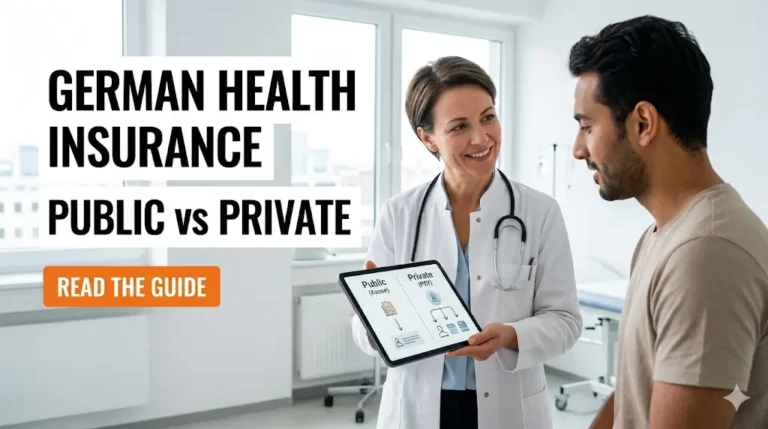
The reality of private health insurance (Private Krankenversicherung or PKV) for people with disabilities is harsh. Private insurers operate on a risk-based model. If you have a severe pre-existing condition, a private insurer is legally allowed to reject your application outright, or accept you with a massive risk surcharge (Risikozuschlag) that makes the monthly premium unaffordable. They may also permanently exclude your specific disability from coverage.
Before you attempt to navigate the private market, you absolutely must speak with an unbiased broker. The experts at Feather Insurance can anonymously query private insurers on your behalf to see if you would even be accepted, protecting you from having a formal rejection on your medical record.
| Insurance Feature | Public Insurance (GKV) | Private Insurance (PKV) |
| Acceptance | Guaranteed (no health checks) | Subject to strict medical history reviews |
| Pre-existing Conditions | Fully covered by law | Often excluded or result in premium hikes |
| Premiums Based On | Your income | Your age and medical risk profile |
| Accessibility Perks | Standard waiting times for specialists | VIP scheduling, robust telemedicine apps |
| Family Coverage | Non-working dependents covered free | Every family member needs a separate paid policy |
Living in Germany with a disability requires immense self-advocacy. But by securing your legal status, finding digitally forward providers like Ottonova, having your daily comforts delivered by iHerb, and leaning on the English support of brokers like Feather Insurance, you can build an accessible and highly protected life abroad.
References
Primary sources (official)
- Federal Ministry of Health (BMG): Official government documentation outlining the structure, mandatory nature, and benefit payout systems of German long-term care insurance (Pflegeversicherung).https://www.bundesgesundheitsministerium.de/themen/pflege/online-ratgeber-pflege/die-pflegeversicherung
- Federal Ministry of Labour and Social Affairs (BMAS): Comprehensive federal guidelines regarding the application processes, rights, and legal protections granted by the severely disabled person’s pass (Schwerbehindertenausweis).https://www.bmas.de/DE/Soziales/Teilhabe-und-Inklusion/teilhabe-und-inklusion.html
Other helpful sources
- Make it in Germany: The federal government’s official information portal for international professionals, providing practical English overviews of the social security framework for people with disabilities.https://www.make-it-in-germany.com/en/
Disclaimer
The information provided in this article is for general informational and educational purposes only and does not constitute professional medical, legal, or financial advice. The processes for obtaining a Schwerbehindertenausweis, being assigned a long-term care grade (Pflegegrad), and the exact medical underwriting terms of private insurers are highly complex and subject to continuous legislative updates. Always consult directly with your local Versorgungsamt, a qualified medical physician, or a certified insurance broker regarding your unique disability rights and coverage entitlements in Germany.