Expat Health Checklist: Medical To-Dos When You Move to Germany
Getting hit with a sudden fever your second week in Germany and realizing you do not have a doctor, an insurance card, or even basic ibuprofen is a terrifying rite of passage. I spent my first winter here completely unprepared and paid for it dearly. This checklist covers the exact medical to-dos you must tackle when relocating to Germany.
Disclosure: This post may contain affiliate links. We may earn a commission at no extra cost to you if you make a purchase through these links. Read full disclosure.
Securing Your German Health Insurance Krankenversicherung
Before you even unpack your suitcases or register your address, your health insurance needs to be sorted. In Germany, health insurance is legally mandatory from day one of your residency. You cannot rely on your domestic travel insurance from back home once you officially move.
Choosing Between Public and Private Systems
The most intimidating administrative hurdle you will face as a new arrival is deciding between the statutory public health insurance system and the private system. If you earn under a specific income threshold, you are legally mandated to join the public system. This system is fantastic because it covers pre-existing conditions and automatically covers non-working spouses and children at no extra cost. However, the bureaucracy is entirely in German, and navigating the signup forms can bring you to tears.
To bypass the stress of translating dense German legalese, many expats use Feather Insurance. They act as a digital broker and can sign you up for a public health fund entirely in English. If you ever have a dispute or need to understand a hospital bill, you simply message the Feather Insurance support team instead of waiting on hold with a German call center. If you are still trying to figure out which system makes sense for your salary, I highly recommend reading Public vs Private Health Insurance: Which One Should You Choose?.
If your salary is above the mandatory threshold or you are a freelancer, you have the right to opt into the private system. Private insurance offers significantly shorter wait times for specialists and premium hospital rooms. For tech-savvy professionals, Ottonova is a highly popular digital-first private insurer. With Ottonova, your entire policy, claims processing, and customer support are managed via an English smartphone app. You can even use their digital concierge to book doctor appointments. For a deep dive into whether you qualify for this route, review Private Health Insurance in Germany: Benefits, Costs, and Eligibility.
Getting Your Electronic Health Card eGK
Once your insurance is approved, your provider will mail you a small plastic card called the Gesundheitskarte (electronic health card).
This card is your golden ticket. You must carry it in your wallet at all times. Every time you visit a clinic or a hospital, the receptionist will ask for this card before they even ask for your name. They scan the microchip on the front, which verifies your insurance status and automatically handles the billing behind the scenes. If you are publicly insured, you almost never see a medical bill for standard visits.
If you lose this card, or if it has not arrived yet in the mail and you need to see a doctor urgently, you can ask your provider (or your broker at Feather Insurance) to email you a temporary digital certificate. Do not wait until you are sick to track down your card. For a broader overview of how the administrative side of the system works, check out Healthcare in Germany: A Comprehensive Guide for Expats.
Finding Your Essential Medical Providers
The biggest mistake you can make is waiting until you have a sinus infection to start calling doctors. Germany is currently facing a shortage of medical practitioners, particularly in major expat hubs like Berlin and Munich, and finding a clinic that is accepting new patients takes dedicated effort.
Registering with a General Practitioner Hausarzt
Your absolute first medical to-do is finding a Hausarzt (general practitioner). This doctor acts as your medical gatekeeper. They hold your medical history, manage your chronic prescriptions, and issue the critical sick notes you need for your employer.
Finding one requires patience because many clinics have an Aufnahmestopp (admission freeze) for new patients. You need to call several clinics in your neighborhood or use booking apps like Doctolib to find an initial opening. When you call, do not be surprised if the receptionist is abrupt or refuses to speak English.
Booking Specialists and Dentists
Unlike your Hausarzt, you do not need a referral to see a dentist (Zahnarzt) in Germany. You can book an appointment directly. However, for specialized medical fields like dermatology, neurology, or orthopedics, you usually need an Überweisung (referral slip) from your general practitioner if you are publicly insured.
Wait times for specialists in the public system can be agonizingly long, sometimes stretching for months. If you are experiencing this bottleneck, read Long Wait Times for Specialists: Tips for Getting Faster Healthcare Appointments. Conversely, if you chose a private insurer like Ottonova, you can often bypass the referral system entirely and secure specialist appointments within a few days, as private doctors have dedicated schedule blocks for premium patients.
| Medical Facility | German Term | Best Used For | Appointment Needed? |
| General Practitioner | Hausarzt | Common illnesses, sick notes, basic bloodwork, referrals. | Yes (except during acute walk-in hours) |
| Specialist | Facharzt | Specific conditions (e.g., dermatologist, cardiologist). | Yes (often requires months of waiting) |
| Emergency Room | Notaufnahme | Life-threatening emergencies, severe trauma, heart attacks. | No (walk-in or ambulance only) |
| On-Call Doctor | Bereitschaftsdienst | Non-life-threatening acute illnesses on weekends or nights. | Call 116117 to be directed |
Navigating Pharmacies and Emergency Preparedness
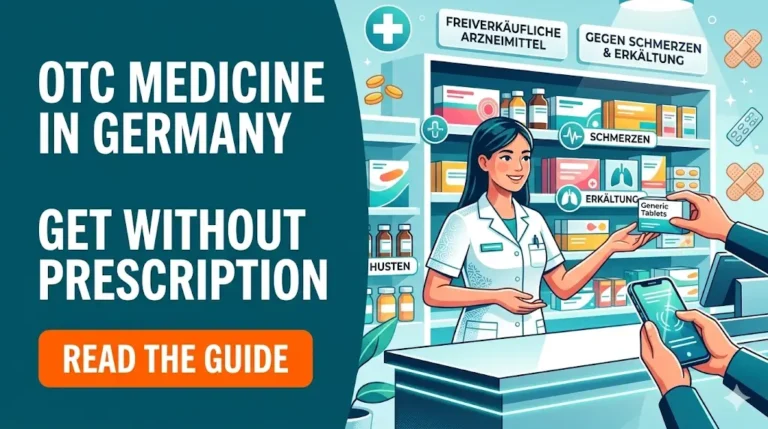
German retail laws surrounding medication are incredibly strict. You will not find cold medicine, allergy pills, or painkillers at the local supermarket or even at massive drugstores like dm or Rossmann.
The Apotheke System and Stocking Your Cabinet
Any product containing an active pharmaceutical ingredient is restricted exclusively to an Apotheke (licensed pharmacy), identifiable by a large, red “A” above the door.
When you walk into an Apotheke, you must ask the pharmacist behind the counter for what you need. Furthermore, German pharmacists are generally conservative with medication and the prices are heavily marked up compared to the US or UK. If you are used to buying massive bottles of ibuprofen or specific high-dose vitamins, you are in for a cultural shock.
Because local pharmacies rarely carry familiar international brands and charge high prices for preventative care, veteran expats routinely order their home essentials online. Utilizing iHerb is a brilliant workaround. You can use iHerb to bulk-order your preferred immune support supplements, specific pain relief balms, and familiar holistic cold remedies, having them delivered directly to your German apartment. Building a proactive medical cabinet via iHerb ensures you are never stuck paying a premium for a tiny blister pack of local pills when you catch a winter bug. For a checklist of what to actually put in that cabinet, read First Aid Kit for Your Home: Must-Have Items in Germany.
Knowing Who to Call in a Crisis
Finally, you must memorize the German emergency protocols before you need them. If you or a family member is experiencing a genuine, life-threatening emergency, you dial 112 for the ambulance and fire brigade.
However, if you wake up on a Sunday with a severe fever or a urinary tract infection, the regular clinics are closed, and you do not want to clog up the emergency room. In this scenario, you call 116117. This is the medical on-call service, and they will direct you to an open weekend clinic or send an on-call doctor to your apartment.
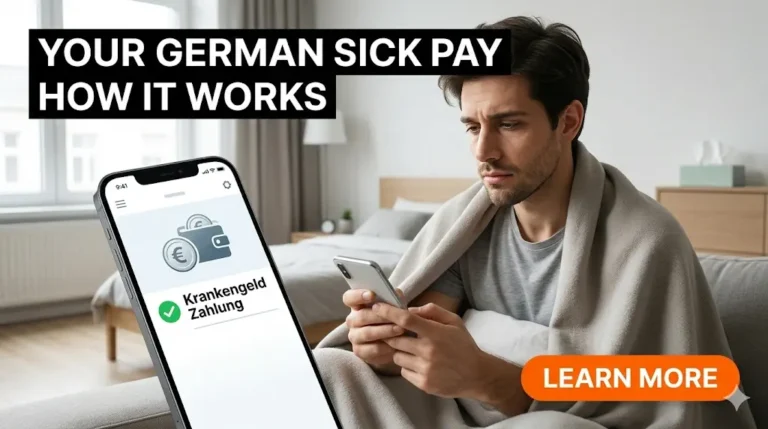
Lastly, if your illness requires you to miss work, you cannot just send your boss a text message and stay in bed. German labor laws require strict medical documentation. You must get an electronic sick note (eAU) from a doctor, usually by the third day of absence, to legally protect your salary. Failing to follow this protocol can result in severe professional consequences.
By securing your insurance, finding your primary care doctor early, stocking your bathroom cabinet proactively, and memorizing the emergency numbers, you can survive the German medical bureaucracy with your health and sanity intact.
References
Primary sources (official)
- Federal Ministry of Health (BMG): Official English-language portal explaining the structure of the German healthcare system, statutory health insurance, and patient rights.https://www.bundesgesundheitsministerium.de/en/en.html
- 116117.de (Patientenservice): The official website for the national medical on-call service, detailing how to find after-hours care and emergency pharmacies.https://www.116117.de/de/englisch.php
Other helpful sources
- Make it in Germany: The federal government’s comprehensive information portal for skilled workers, offering step-by-step guides on signing up for health insurance.https://www.make-it-in-germany.com/en/living-in-germany/health-healthcare/health-insurance
- EU Equal Treatment Bureau: Detailed breakdown of how the German healthcare system operates for EU citizens and third-country nationals.https://www.eu-gleichbehandlungsstelle.de/eugs-en/eu-citizens/information/health-care
Disclaimer
The information provided in this article is for general informational and educational purposes only and does not constitute professional medical, legal, or financial advice. The processes for navigating the healthcare system, the availability of specific medications, and the exact coverage terms of insurance plans from providers highly complex and subject to continuous updates. Always consult directly with a qualified medical professional for health diagnoses, and contact a certified insurance broker regarding your unique coverage entitlements in Germany.