How to Claim Reimbursement on German Private Insurance
Receiving a thick, blue-bordered envelope in your mailbox after a doctor's visit is a rite of passage for every expat on private health insurance in Germany. I still remember the cold sweat I broke into when I opened my first invoice for a simple check-up and saw a total that looked more like a monthly rent payment. This guide breaks down the complex world of private medical billing, ensuring you know exactly how to handle invoices and get your money back without the stress.
Disclosure: This post may contain affiliate links. We may earn a commission at no extra cost to you if you make a purchase through these links. Read full disclosure.
Understanding the Private Insurance Payment Cycle
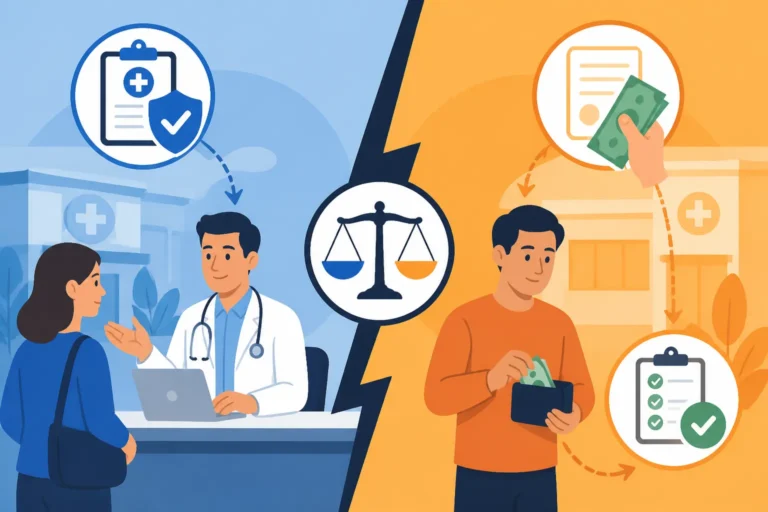
The most jarring realization for newcomers to the German private health insurance (PKV) system is that the relationship is strictly between you and the doctor. In the public system, you hand over your card and never see a bill. In the private world, you are the "contractual partner." This means the doctor treats you, sends you a bill, and you are legally obligated to pay that bill, regardless of when or if your insurance company reimburses you.
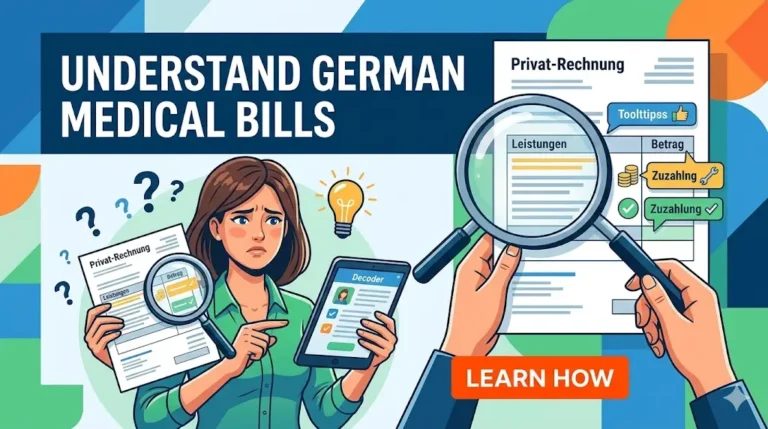
When you go for an appointment, the doctor will ask for your insurance details, but this is largely for their records. A few weeks later, you will receive a detailed invoice (Rechnung). It is your responsibility to check this document for accuracy. You’ll notice specific codes and "multipliers." These multipliers (Steigerungssätze) usually range from 1.0 to 3.5. A standard private consultation is often billed at 2.3 times the base rate. If your doctor finds the case particularly complex, they might jump to 3.5. Understanding these nuances is vital because if a doctor overcharges without a written justification, your insurance might only reimburse up to the 2.3 limit.
The beauty of this system, however, is the transparency. You see exactly what you are paying for, from the physical exam to the specific blood tests. For those navigating this for the first time, Private Health Insurance in Germany: Benefits, Costs, and Eligibility provides a great foundation for understanding why the system is structured this way. Most invoices come with a payment deadline of 14 to 30 days. Your goal is to submit the claim to your insurer the moment you receive it, ideally receiving the reimbursement in your bank account before the doctor’s payment deadline expires.
Step-by-Step Guide to Submitting a Claim
The days of mailing physical receipts in a stamped envelope are largely over, though the option still exists for those who enjoy German paper bureaucracy. Most modern providers have moved to digital-first solutions. If you are using a tech-forward provider like ottonova, the process is usually as simple as opening an app and snapping a photo of the invoice.
First, ensure the invoice contains all the necessary information. It must include your full name, date of birth, the date of service, a clear diagnosis (usually in the form of ICD-10 codes), and an itemized list of every single service provided. If you went to a pharmacy, you don't just submit the register receipt; you must submit the actual prescription (Rezept) stamped by the pharmacist. This is a common trap for expats. Without that stamped prescription, your insurer has no way of knowing the medication was actually medically necessary.
Once you have your documents:
- The App Route: Most insurers now offer a "Rechnungs-App." You scan the QR code on the invoice or take a clear photo of the pages. The app usually confirms receipt immediately. Digital-native providers like Feather Insurance often provide English-language support throughout this process, which is a massive relief when you're trying to figure out if a "Beratung" and a "Symptombezogene Untersuchung" are being double-billed.
- The Portal Route: You login to your insurer’s website, upload PDFs, and track the status.
- The Traditional Route: You fill out a "Leistungsantrag" (claim form), attach the original invoices, and mail them to the headquarters. Pro tip: Always keep a high-quality scan or photocopy for your own records if you go this route.
After submission, the insurer’s medical billing experts will review the claim. They check if the treatments are covered under your specific tariff and if the doctor stayed within the legal billing limits. This is why Insurance Reimbursement: How to Claim Money Back (for Private Insurance) is such a critical topic for expats to master early on.
Managing Your Deductible and Out-of-Pocket Costs
One of the biggest mistakes I see expats make is submitting every €20 prescription the moment they get it. Most private plans in Germany come with a "Selbstbehalt" (deductible). This is an annual amount you agree to pay out of your own pocket before the insurance starts covering costs. Common deductibles range from €300 to €1,000 per year.
If you have a €500 deductible and you submit a €100 bill, the insurance will "process" it but won't send you any money. They will simply subtract that €100 from your remaining deductible for the year. However, there is a strategic reason to hold onto your small bills. Many German private insurers offer a "Beitragsrückerstattung" (premium refund) if you don't submit any claims for the entire calendar year. This refund can sometimes be worth two or three months of premiums.
Before submitting a claim, do the math. If you've spent €150 on minor doctor visits but your potential refund for "no claims" is €900, it is financially smarter to pay those bills yourself and never tell the insurance company. However, if you hit a major medical event, start submitting everything immediately to reach your deductible limit. This is particularly relevant when Finding a Doctor (Hausarzt) in Germany: How to Choose and Register, as your primary care physician will be your most frequent source of these smaller invoices.
| Feature | Digital-First Providers (e.g., ottonova) | Traditional Private Insurers |
|---|---|---|
| Submission Method | High-speed App / Instant Upload | App, Email, or Physical Post |
| Language Support | Often English-friendly | Predominantly German |
| Reimbursement Speed | Usually 2-7 Business Days | 2-4 Weeks |
| Customer Interface | Dashboard-driven | Document-heavy |
| Claim Tracking | Real-time notifications | Status updates via mail/portal |
Decoding the Invoice and Handling Denials
Sometimes, the insurance company will send you a letter (or an app notification) stating they are only partially reimbursing a bill. This usually happens for one of three reasons: the doctor used a multiplier higher than 2.3 without a valid reason, the treatment is considered "experimental" or not medically necessary, or there was a simple administrative error.
If the insurer claims the doctor overcharged, don't panic. You can send the insurer's explanation back to the doctor's office. In many cases, the doctor will either provide the missing justification or "correct" the bill to a lower multiplier. The German medical community is very used to this back-and-forth with private insurers. If you are using a plan designed for shorter stays or digital nomads, such as those offered by SafetyWing, the rules might be slightly different, focusing more on urgent care and emergencies rather than long-term preventative billing patterns found in standard PKV.
Another hurdle is the "Basistarif" or specific exclusions. If you haven't checked your policy lately, you might be surprised to find that certain dental procedures or high-end vision care aren't covered at 100%. Always refer back to your "Versicherungsschein" (policy certificate) before undergoing expensive elective procedures. For those still in the early stages of their career or studies, Health Insurance for Students in Germany: Affordable Options and Requirements and Health Insurance for Freelancers and the Self-Employed: Navigating the System offer more specific advice on choosing plans that minimize these reimbursement headaches.
Advanced Tips for Large Hospital Bills
For major events like surgeries or childbirth, the bills can reach tens of thousands of Euros. No one expects you to have that kind of cash sitting in a checking account. For inpatient hospital stays, the process is often different. Most private insurers can issue a "Kostenübernahmeerklärung" (declaration of cost assumption).
When you are admitted to a hospital, you provide your insurance details, and the hospital's billing department contacts your insurer directly. The insurer then agrees to pay the hospital directly for the "standard" costs. You might still receive separate bills for "Chefarztbehandlung" (treatment by the head physician) or a private room, which you would then submit for reimbursement as usual. This direct billing saves you from the administrative nightmare of being a middleman for a €20,000 invoice.
If you find yourself frequently needing specialized care, understanding Specialists and Referrals: How to See a Specialist Doctor in Germany can help you navigate how these high-cost appointments are initiated and billed. Furthermore, in the modern landscape, Telemedicine in Germany: Online Doctor Appointments and e-Prescriptions has become a standard way to get quick consultations. Most private insurers cover these digital visits fully, and the reimbursement process for e-prescriptions is usually even faster than the paper equivalent because the data is already digitized.
Best Practices for a Smooth Reimbursement Experience
To ensure you aren't left waiting for your money, follow these "veteran expat" rules of thumb:
- Pay the Doctor Promptly: Even if the insurance is slow, pay your medical bills by the deadline. Debt collection in Germany (Inkasso) is aggressive and can damage your SCHUFA credit score.
- Use the Apps: They reduce human error. A blurry photo of a receipt is the number one reason for claim delays.
- Check the Diagnosis: Ensure the doctor actually wrote why you were there. An invoice for "Consultation" with no diagnosis will be rejected every time.
- Bundle Small Receipts: If you aren't worried about the "no-claims bonus," wait until you have €100 worth of pharmacy receipts before submitting. It makes the accounting much cleaner.
- Keep a Paper Trail: Even in a digital world, keep your original medical documents in a dedicated folder for at least three years for tax purposes.
If you are ever in a rush and cannot find a regular appointment, knowing how Doctor’s Appointments in Germany: Making Appointments and Avoiding Long Waits works can save you from having to visit expensive emergency clinics that might complicate your reimbursement journey. Dealing with private insurance requires a bit of an "accountant mindset," but once you've done it twice, it becomes second nature. You'll soon find that the speed of care and the comfort of private rooms make the minor paperwork hurdles well worth the effort.
Disclaimer
This article is for informational purposes only and does not constitute legal or professional insurance advice. Health insurance regulations and reimbursement policies in Germany are subject to change. Always consult with your specific insurance provider or a licensed insurance broker before making decisions regarding your coverage or submitting claims.