Health Tips for Travelers: Staying Healthy During Trips Around Europe
Planning a European getaway from your German home base? This comprehensive guide provides essential health tips for travelers, covering European health insurance rules, packing a vital medical kit, preventing common illnesses, and knowing exactly what to do during a medical emergency abroad.
Disclosure: This post may contain affiliate links. We may earn a commission at no extra cost to you if you make a purchase through these links. Read full disclosure.
Preparation and Insurance Before You Leave Germany
Understanding the EHIC and Public Coverage
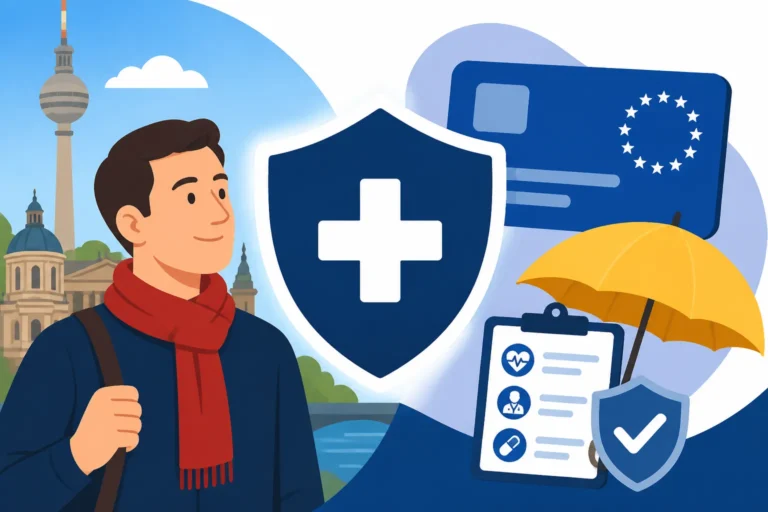
When preparing for a trip across Europe, your first line of medical defense is already sitting in your wallet. If you are enrolled in the German statutory public health insurance system, the back of your electronic health card features the European Health Insurance Card (EHIC).
The EHIC is a phenomenal tool that provides you with access to medically necessary, state-provided healthcare during a temporary stay in any of the 27 EU countries, as well as Iceland, Liechtenstein, Norway, and Switzerland. The core principle of the EHIC is that you are entitled to receive emergency or unplanned medical treatment under the exact same conditions and at the same cost as people insured in that specific country. If healthcare is free for locals, it will be free for you. If locals must pay a statutory co-payment for a hospital visit, you must pay that same co-payment.
However, expats frequently misunderstand the limitations of the EHIC. It is strictly not an alternative to travel insurance. It does not cover any planned medical treatments, nor does it cover private healthcare. If you fall ill at a beach resort in Spain and the hotel calls a private doctor, your EHIC will be rejected, and you will be billed entirely out of pocket. To fully grasp the baseline limits of your statutory coverage, review our guide on Public Health Insurance gesetzliche Krankenkasse: What It Covers and Costs.
The Importance of Private Travel Insurance
Because the EHIC has severe limitations, purchasing supplementary travel health insurance (Auslandskrankenversicherung) is universally recommended for anyone leaving Germany. Crucially, the EHIC will never cover the costs of a medical repatriation flight back to Germany, nor will it cover search and rescue operations. If you break your leg skiing in the Austrian Alps and require a mountain helicopter rescue, the resulting bill can easily exceed €5,000—none of which is covered by your standard public insurance.
Supplemental travel insurance policies in Germany are incredibly affordable, often costing less than €20 per year for global coverage on trips lasting up to 56 days. Expat-focused digital brokers like Feather Insurance offer intuitive, English-language travel add-ons that instantly cover these exact emergency gaps.
If you have opted out of the public system, your travel coverage depends heavily on your specific tariff. Premium private insurers like Ottonova frequently have comprehensive Europe-wide or even global coverage built directly into their standard expat plans, meaning you may not need to buy an extra policy at all. Before crossing any borders, it is highly strategic to check your policy documents.
Managing Medications and Building a Travel Kit
Prescription Rules Across Borders
Traveling with standard, non-controlled prescription medications—such as blood pressure pills, thyroid medication, or birth control—is generally frictionless within the European Union. You should always keep these medications in their original packaging, clearly displaying your name and the pharmacy label, and pack them in your carry-on luggage to prevent loss. If you are unsure how to read your German medication boxes before packing, consult Understanding German Medicine Dosages: Reading Labels and Instructions.
However, the rules change drastically if you are traveling with controlled substances. In Germany, medications governed by the Narcotics Act (Betäubungsmittelgesetz or BtM), such as ADHD stimulants (e.g., Elvanse, Ritalin), strong opioid painkillers, or medical cannabis, require strict documentation. You cannot simply cross a Schengen border with these drugs using a standard doctor’s note.
By law, you must carry a “Schengen Certificate” (Article 75). You must have your prescribing doctor fill out this specific form, detailing the exact dosage and duration of your trip (maximum 30 days). After your doctor signs it, you must take the form to your local German health authority (Gesundheitsamt) to have it officially certified and stamped. This bureaucratic step usually costs around €15. Attempting to cross borders with narcotics without this certified document can result in the confiscation of your medication and severe legal consequences.
Packing the Ultimate Travel Pharmacy
Finding a 24-hour pharmacy while navigating a foreign language can turn a minor headache into a ruined vacation day. Packing a personalized travel medical kit (Reiseapotheke) is the most effective way to handle minor ailments on the road.
While German pharmacies are excellent, they are strictly regulated and can be expensive for preventative care. For a breakdown of local retail rules, read Pharmacies in Germany: Apotheke vs Drogerie Explained. If you have strong preferences for international wellness brands, specific holistic supplements, or specialized hydration formulas that are difficult to find locally, expats frequently use borderless platforms. By utilizing iHerb, you can bulk order high-quality vitamins, electrolytes, and travel-sized first aid essentials, ensuring your kit is fully stocked with familiar products before you depart.
| Item Category | Recommended Contents | Purpose for Travel |
| Pain & Fever | Ibuprofen or Paracetamol | Headaches, muscle aches from walking, fever reduction. |
| Digestion | Loperamide, Antacids, Electrolytes | Treating traveler’s diarrhea and replacing lost minerals. |
| Allergies & Skin | Antihistamine pills, Hydrocortisone cream | Managing unexpected allergic reactions or insect bites. |
| First Aid | Plasters, Blister pads, Disinfectant spray | Treating minor cuts, scrapes, and severe walking blisters. |
| Preventative | Vitamin C, Melatonin, Hand sanitizer | Supporting immunity during transit and managing jet lag. |
Keeping your immune system robust with supplements sourced from iHerb is a proactive measure against the common colds that frequently circulate in airplanes and crowded train stations, a topic we cover deeply in Dealing with Cold and Flu Season: Common Remedies in Germany.
Staying Healthy on the Road
Hydration and Food Safety in Europe
Your daily habits dictate your travel health. One of the most common questions travelers have is whether the tap water is safe to drink. In Western, Northern, and Central Europe—including Germany, France, Switzerland, and Scandinavia—tap water is generally held to incredibly high safety standards and is perfectly safe.
However, in certain parts of Southern or Eastern Europe, or on smaller Mediterranean islands, the tap water may be heavily chlorinated or unsafe for consumption due to older plumbing infrastructures. In these regions, sticking to bottled water for drinking and brushing your teeth is the safest choice to avoid gastrointestinal distress.
Food safety is equally important. While Europe boasts some of the highest food safety standards globally, drastic changes in your diet—such as consuming large amounts of rich, unfamiliar local cuisine, street food, or late-night tapas—can easily upset your stomach. Moderation is key. Ensure that hot foods are served steaming hot, and be cautious with unpasteurized dairy products if you are traveling through highly rural agricultural areas.
Preventing Travel Exhaustion and Illness
“Traveler’s fatigue” is a genuine physical condition that rapidly weakens your immune system, leaving you highly susceptible to opportunistic viruses. The desire to see every monument in Rome or visit every museum in Paris often leads expats to walk 20,000 steps a day on minimal sleep.
Preventing this exhaustion requires pacing your itinerary. Schedule mandatory downtime each afternoon, prioritize a full eight hours of sleep, and do not underestimate the physical toll of navigating massive European public transit networks with heavy luggage. Furthermore, high-touch areas like metro poles, train door buttons, and airport security trays are massive vectors for bacteria. Washing your hands frequently and utilizing alcohol-based hand sanitizer immediately after exiting public transit is a simple but highly effective way to prevent falling ill on the road.
Handling Medical Emergencies Abroad
Finding a Doctor or Hospital in Europe
If you experience a genuine medical emergency anywhere in the European Union, the protocol is incredibly simple: dial 112.
This is the universal European emergency number. It is free to call from any mobile phone, even if you do not have a local SIM card or if your phone is locked. The operators are generally trained to handle calls in English as well as the local language, and they will coordinate the dispatch of ambulances, police, or fire services.
If your situation requires a doctor but is not a life-threatening emergency (e.g., a severe ear infection or a sprained ankle), you must seek out a state-registered physician or a public hospital (Krankenhaus / Hôpital / Hospital) to utilize your EHIC. Do not ask your hotel concierge to call a doctor to your room, as they will almost certainly dispatch a private physician who will not accept your public insurance card.
Paying for Care and Getting Reimbursed
The financial logistics of receiving medical care abroad vary wildly by country. In some EU nations, the EHIC acts exactly like your German health card—the clinic scans it, and you pay nothing upfront. However, in countries with reimbursement systems (like France or Belgium), you are legally required to pay the doctor or pharmacist upfront in full, even at a public clinic. You are then issued a standardized receipt, which you must submit to the local health authority or your German insurer to claim your partial refund.
The situation becomes vastly more complicated if you travel to non-Eurozone European countries, such as Switzerland, the United Kingdom, Hungary, or the Czech Republic. If you are forced to pay a sudden €500 medical invoice upfront in a foreign currency, utilizing your standard German debit or credit card will likely incur punitive currency conversion fees and terrible exchange rates from your legacy bank.
To protect your travel budget, highly mobile expats utilize borderless financial platforms like Wise. By keeping a digital or physical card from Wise in your travel wallet, you can pay unexpected international medical bills at the real mid-market exchange rate. Avoiding hidden banking markups ensures your money is spent purely on your recovery.
Regardless of where you are treated, always demand an itemized invoice, a clear medical report, and physical receipts for any medications purchased. Upon your return to Germany, you must submit these documents to your statutory provider or private insurer (such as Ottonova) to process your claim. By understanding your insurance rights, packing a strategic medical kit, and knowing how to manage international payments seamlessly, you can explore Europe with absolute confidence and peace of mind.
References
Primary sources (official)
- European Commission: The official European Union portal detailing the exact coverage, usage rights, and limitations of the European Health Insurance Card (EHIC) across member states. https://ec.europa.eu/social/main.jsp?catId=559
- Federal Institute for Drugs and Medical Devices (BfArM): The German federal authority providing the official guidelines and downloadable Schengen Certificate forms required for traveling with narcotic medications. https://www.bfarm.de/EN/Federal-Opium-Agency/Narcotics/Travelling-with-narcotics/_node.html
Other helpful sources
- Your Europe: An official EU website offering practical advice for citizens and residents on navigating unplanned healthcare, finding doctors, and handling emergency situations while traveling in Europe. https://europa.eu/youreurope/citizens/health/index_en.htm
Disclaimer
The information provided in this article is for general informational and educational purposes only and does not constitute professional medical, legal, or financial advice. The legal requirements for traveling with controlled medications across Schengen and non-Schengen borders are strictly enforced; failure to comply can result in severe legal consequences. Always consult directly with your health insurance provider, a qualified medical physician, or the relevant embassy regarding your unique health needs and coverage options before traveling abroad.