Emergency Care in Germany: Notaufnahme and When to Call 112
Waking up at 2 AM with a crushing pain in your chest or a child with a dangerously high fever is terrifying enough, but doing it in a country where you don't fully understand the medical hierarchy can lead to total paralysis. I remember my first winter in Berlin, staring at my phone, terrified that if I called the wrong number, I’d be berated by a dispatcher or stuck with a massive bill I couldn't afford. This guide breaks down exactly how to navigate German emergency rooms (Notaufnahme), when to dial 112 versus 116117, and how to ensure you are covered when seconds count.
Disclosure: This post may contain affiliate links. We may earn a commission at no extra cost to you if you make a purchase through these links. Read full disclosure.
Understanding the German Emergency Landscape: 112 vs. 116117
The first hurdle every expat faces is realizing that Germany has two distinct emergency tracks. In many countries, you just call one number and the system sorts you out. Here, the burden of choice is on you. If you get it wrong, you might find yourself waiting hours in a hospital for something that could have been treated by a mobile doctor, or worse, delaying life-saving care because you didn't want to "bother" the paramedics.
When to Dial 112: The Life-Threatening Scenarios
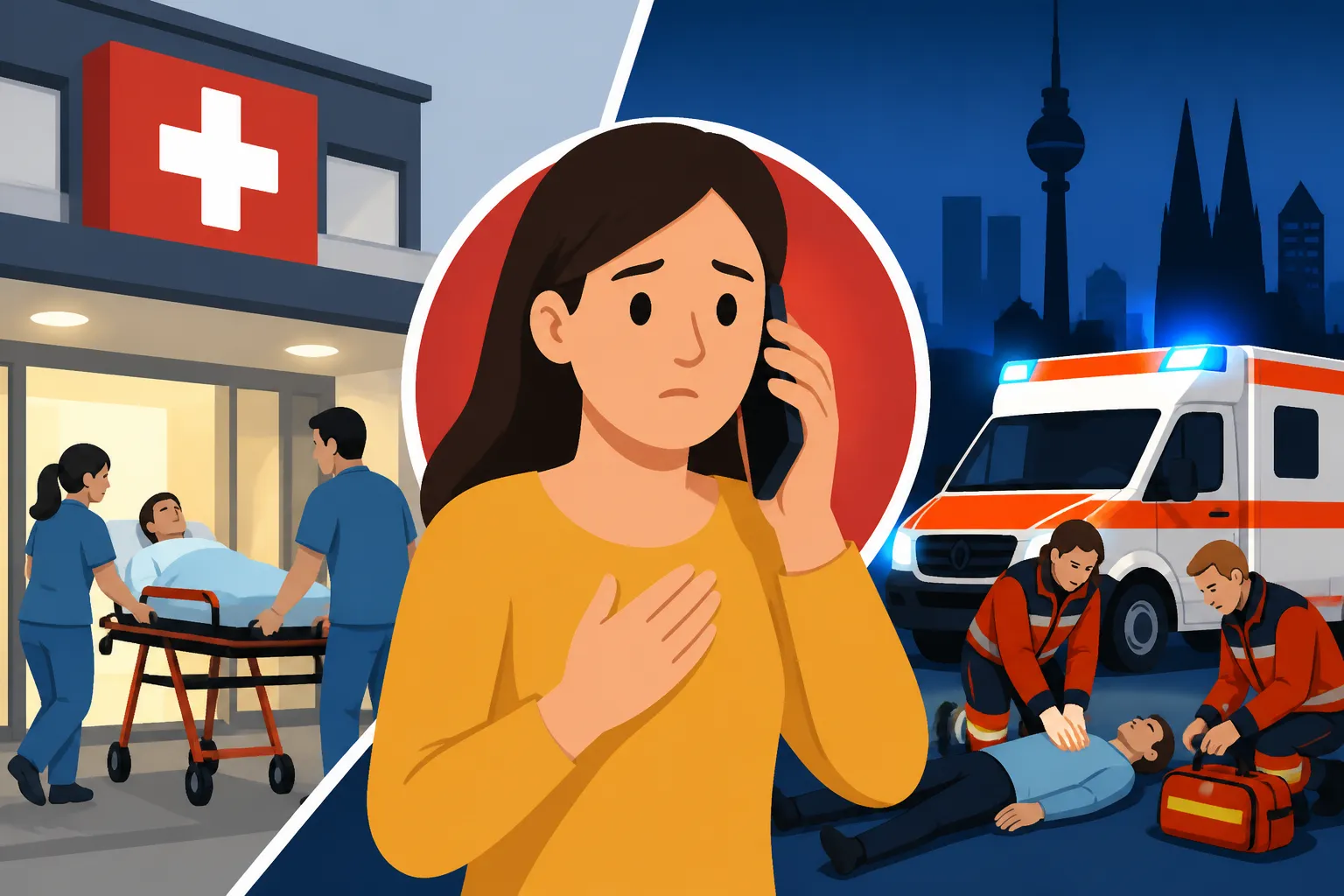
The number 112 is the pan-European emergency line. In Germany, this connects you to the Rettungsdienst (ambulance and rescue services) and the fire department. You should call 112 if—and only if—there is an immediate threat to life or limb. Think of it as the "cannot wait five minutes" line. This includes symptoms of a heart attack (chest pressure, radiating pain), stroke (facial drooping, speech difficulty), severe allergic reactions, unconsciousness, or major trauma from an accident.
When you call, the dispatcher will likely speak German, though in major cities like Munich, Frankfurt, or Berlin, you can often find English speakers. Don't let the language barrier stop you. State "English please" and give your location clearly. If you are using a provider like Feather Insurance, they often provide guides on how to communicate your needs, but in a 112 situation, brevity is your best friend. For a deeper look at this process, see Ambulance and Emergency Services: Understanding How 112 Works.
The Medical On-Call Service (116117): For Everything Else
This is the number most expats don't know until they need it. Known as the Ärztlicher Bereitschaftsdienst, 116117 is for when you are too sick to wait until Monday morning to see your Hausarzt (GP), but your life isn't in danger. If you have a high fever, a nasty flu, an ear infection, or a minor injury that needs stitches but isn't gushing blood, this is your number.
When you call 116117, they can direct you to an "on-call" practice in your neighborhood that is open on weekends or holidays. In some cases, they can even dispatch a doctor to your home. This is a fantastic service that keeps the hospital wait times down for everyone else. For a list of other critical numbers, check Emergency Numbers in Germany: Calling 112, Poison Control, and More.
The Difference Between the Numbers
Choosing between these two is about the severity of the condition. If you call 112 for a persistent cough, the paramedics will be quite blunt with you about why you shouldn't have called. Conversely, if you call 116117 for a stroke, they will immediately redirect you to 112, but those lost minutes could be vital. Generally, if you can drive yourself or take a taxi without collapsing, you probably don't need 112. If you need a doctor but the local clinic is closed, start with 116117.
The Notaufnahme (Emergency Room) Experience
The Notaufnahme is the emergency department of a hospital. Unlike many private clinics in other countries, German emergency rooms are attached to large public or university hospitals. They are professional, high-tech, and often incredibly busy. Walking into one for the first time is a sensory overload of "Keep Out" signs and frantic medical staff, and if your German isn't perfect, it can feel like you’re trying to navigate a labyrinth.
What to Bring: The Essential Paperwork Checklist
In a crisis, the last thing you want to do is hunt for documents, but Germany runs on paperwork. If you are conscious and able, you must bring your Gesundheitskarte (health insurance card). This card is your golden ticket. Without it, the administrative staff will still treat you, but they will eventually send you a bill that you’ll have to manually resolve with your insurer.
Beyond the card, bring a form of ID (passport or residence permit) and your Impfpass (vaccination booklet), especially if you are seeking treatment for an injury where tetanus might be a concern. If you have private insurance through a modern provider like ottonova, you might have a digital version of your card or a dedicated concierge service you can call for help. Having these ready prevents the "bureaucratic glare" from the admissions desk.
The Triage System: Why You Might Wait for Hours
One of the biggest culture shocks in a German Notaufnahme is the triage system (Manchester Triage System). It is not first-come, first-served. When you arrive, a nurse will assess your symptoms and assign you a color code from red (immediate) to blue (non-urgent). If you are assigned a green or blue code, prepare to wait. I have sat in the Charité waiting room in Berlin for six hours with a sprained ankle while ambulances brought in more serious cases.
It is important to remain patient. Complaining to the staff about the wait time generally does not help and can be seen as disrespectful to the system. They are prioritizing life-saving care. If your condition worsens while waiting, tell the triage nurse immediately. If you want to know more about the broader hospital system, you can read Hospitals in Germany: What to Expect for Inpatient and Emergency Care.
Communication Barriers: Dealing with German-Only Medical Staff
While many doctors in Germany speak excellent English, the nursing and administrative staff may not. In a high-stress environment like an ER, people tend to revert to their native language. It can be incredibly frustrating to be in pain and unable to explain exactly where it hurts.
I always recommend having a translation app ready on your phone, or better yet, a list of your allergies and current medications written in German. Phrases like "Ich habe starke Schmerzen" (I have severe pain) or "Ich bin gegen Penicillin allergisch" (I am allergic to penicillin) are vital. For those who are still settling in, Finding English-Speaking Doctors: Resources and Tips for Expats can offer some relief for non-emergency follow-ups.
Costs and Insurance Coverage for Emergency Care
The fear of a five-figure hospital bill is a very American anxiety that many expats bring with them to Germany. The good news is that the German system is designed so that no one goes bankrupt over an emergency. However, how the payment is handled depends entirely on what kind of insurance you hold and your residency status.
Public vs. Private Insurance: Who Pays What?
If you are on public insurance (Gesetzliche Krankenkasse), the hospital will bill your provider directly. You will usually have to pay a small co-payment of around €10 per day if you are admitted to the hospital, up to a maximum of 28 days per year. You don't have to worry about "out-of-network" doctors within the hospital; the system is comprehensive. For more details on this, see Public Health Insurance (gesetzliche Krankenkasse): What It Covers and Costs.
If you are privately insured through a company like Feather Insurance or ottonova, the process is slightly different. You may be treated as a "private patient," which often means a single or double room if admitted and treatment by the head doctor (Chefarzt). The hospital will send the bill to you personally. You then submit this bill to your insurance company for reimbursement. Digital-first insurers like ottonova make this incredibly easy with app-based uploads, often processing reimbursements faster than traditional private insurers.
The Emergency Fee: What You Might Be Billed Out-of-Pocket
There is a growing discussion in Germany about charging a fee for patients who use the Notaufnahme for non-emergency issues that could have been handled by a GP. While not universally implemented as a "fine" yet, you should be aware that if you show up at an ER without a referral and it’s determined you didn't have an emergency, your insurance might question the necessity of certain tests.
Generally, the ambulance ride itself is covered, but there is often a small co-payment (usually between €5 and €10) that you will receive a bill for via post weeks later. Do not ignore these small bills; German collection agencies are relentless. To understand the financial side better, check out Health Insurance Premiums: How Much You’ll Pay Per Month and Why.
Coverage for Tourists and Newcomers
If you are a tourist or a "digital nomad" who hasn't yet registered for the German system, you need a solid travel or expat insurance policy. Companies like SafetyWing are popular for this transition phase. If you end up in a German ER as a visitor, the hospital will likely ask for a credit card upfront or proof of valid travel insurance. Without a European Health Insurance Card (EHIC) or local insurance, the costs can add up, though they are still significantly lower than in the US. More information is available at Travel Health Insurance: What Expats Need for Schengen Visa & Short Trips.
Specialized Emergency Services in Germany
Not every emergency belongs in a general hospital. Germany has highly specialized centers that can provide faster and more accurate care for specific crises. Knowing where to go can save you from a long wait in a general ER only to be told you need to be transferred elsewhere.
Pediatric Emergencies: Taking Kids to the Kindernotaufnahme
If you have children, the general Notaufnahme should be your last resort. Instead, look for a Kindernotaufnahme (Pediatric Emergency Room). These are staffed by pediatricians and nurses who specialize in children. The atmosphere is less clinical and more supportive, which is vital when a child is in distress.
Before an emergency happens, find out which hospital in your city has a pediatric wing. When you arrive, you’ll still go through triage, but the staff will be specifically trained in Children’s Healthcare: Pediatricians and Routine Check-ups (U-Untersuchungen). Dealing with a sick child in a foreign language is a unique form of stress, and these clinics are usually much better at accommodating non-German-speaking parents.
Poison Control and Dental Emergencies
If your child (or you) swallows something suspicious, don't call 112 unless they stop breathing. Instead, call the Giftnotruf (Poison Control). Germany has several regional centers. For example, the one in Berlin/Brandenburg is reachable at +49 30 19240. They can tell you immediately if you need to induce vomiting, drink water, or head to the hospital.
For dental disasters—a broken tooth or a midnight abscess—you need a Zahnärztlicher Notdienst (Emergency Dental Service). Most cities have one or two dental clinics that stay open all night or on weekends. You can find the current on-call dentist by searching "Zahnarzt Notdienst" plus your city name. Insurance coverage for this can be tricky, so it’s worth reading Dental Emergency: What to Do if You Have a Toothache or Accident to know what to expect bill-wise.
Mental Health Crises
If you or someone you know is experiencing a mental health crisis, Germany has a robust system of Krisendienst (Crisis Services). Many cities have a 24/7 hotline where you can speak to a psychologist or social worker. In extreme cases, you can go to the emergency room of a psychiatric hospital (Psychiatrische Notaufnahme). It is a sensitive topic, but knowing that Mental Health Care in Germany: Finding Therapists and Psychologists exists as a support structure is vital for long-term expat health.
Practical Tips for Navigating a Medical Crisis
When the adrenaline is pumping, your brain doesn't function at 100%. Having a plan in place before an emergency occurs is the difference between a controlled situation and a traumatic one.
Finding an Emergency Pharmacy (Notdienst)
In Germany, pharmacies (Apotheken) take turns staying open all night and on Sundays. This is called the Notdienst. If you get a prescription from an emergency doctor at 11 PM, you can't just go to your usual pharmacy. You need to find the one on duty.
You can find the nearest open pharmacy by looking at the door of any closed pharmacy (they always post a list of the nearest open ones) or by using an online Emergency Pharmacy Finder: Getting Medicine After Hours in Germany. Be aware that there is usually a small "night fee" (around €2.50) added to your bill for purchases made during these hours.
Language Hacks and Translation Tools
If you are alone in an ER, use technology. DeepL is generally more accurate for medical German than Google Translate. You can also use the "camera" feature to translate signs or forms they ask you to sign. However, never sign something you don't understand. If it’s not a life-or-death surgery, ask if they have an English version of the form or if a staff member can explain it clearly.
| Service | Phone Number | Best For… | Cost (Public Insurance) |
|---|---|---|---|
| Emergency Services | 112 | Life-threatening situations, accidents, fire. | Covered (small co-pay) |
| On-Call Doctor | 116117 | Urgent illness when GPs are closed (fever, flu). | Covered |
| Poison Control | Regional Nos. | Ingesting toxic substances. | Free |
| Pharmacy Notdienst | Varies | Getting meds at night or on Sundays. | Covered + €2.50 fee |
| Emergency Dentist | Varies | Severe tooth pain, knocked-out teeth. | Mostly covered |
Building Your Emergency Kit
Beyond the medical supplies, your "German Emergency Kit" should be a folder or a digital file containing:
- A copy of your insurance card (Feather Insurance or ottonova users can use their apps).
- A list of your chronic conditions and medications in German.
- The address of the nearest Notaufnahme and Kindernotaufnahme.
- A list of emergency contacts both in Germany and back home.
Knowing What to Do When You’re Sick in Germany and Don’t Have a Doctor Yet can also help you avoid the ER altogether by finding a local practice that accepts "acute" walk-ins during the morning hours.
Navigating the Follow-up Care
The ER is designed to stabilize you, not to cure you. Once you are discharged, the hospital will give you a Arztbrief (doctor’s letter). This is a summary of your treatment, test results, and recommendations for further care.
Why the Arztbrief is Crucial
Do not lose this letter! You must take it to your Hausarzt (GP) for your follow-up appointment. The hospital will not usually send this to your doctor automatically; the responsibility is on you. If you need a Krankmeldung (sick note) for work, the hospital can usually only issue one for the day you were there. Your regular doctor will need to issue a longer one based on the Arztbrief. For more on your rights here, read Sick Leave in Germany: How to Get a Sick Note (Krankmeldung) and Your Rights.
Prescriptions from the ER
If the hospital doctor prescribes medication, they will give you a piece of paper (a prescription). In Germany, prescriptions come in different colors. A pink slip is for public insurance, and a blue or white slip is usually for private patients or non-covered items. Take this immediately to a Pharmacy Sundays: How to Find an Open Apotheke After Hours if it’s the weekend.
Final Thoughts on the System
The German emergency system is incredibly high-quality, but it is also rigid. It expects you to know the rules. By distinguishing between 112 and 116117, having your insurance card ready, and knowing where your local pediatric ER is, you take the power back in a scary situation. Whether you are covered by a traditional public fund or a modern expat-friendly option like Feather Insurance, ottonova, or a transitional policy like SafetyWing, the medical care is there for you. You just need to know how to ask for it.
Medical Disclaimer
This article is for informational purposes only and does not constitute professional medical advice, diagnosis, or treatment. Always seek the advice of your physician or other qualified health provider with any questions you may have regarding a medical condition. Never disregard professional medical advice or delay in seeking it because of something you have read in this guide. In the event of a life-threatening emergency, dial 112 immediately.