Health Insurance Premiums: How Much You’ll Pay Per Month and Why
Understanding health insurance premiums in Germany is crucial for expats. This comprehensive guide breaks down how public income-based contributions and private risk-based tariffs are calculated, helping you navigate monthly costs, employer subsidies, and strategies to optimize your healthcare budget.
Disclosure: This post may contain affiliate links. We may earn a commission at no extra cost to you if you make a purchase through these links. Read full disclosure.
The German Health Insurance System Explained
The Divide Between Public and Private Coverage
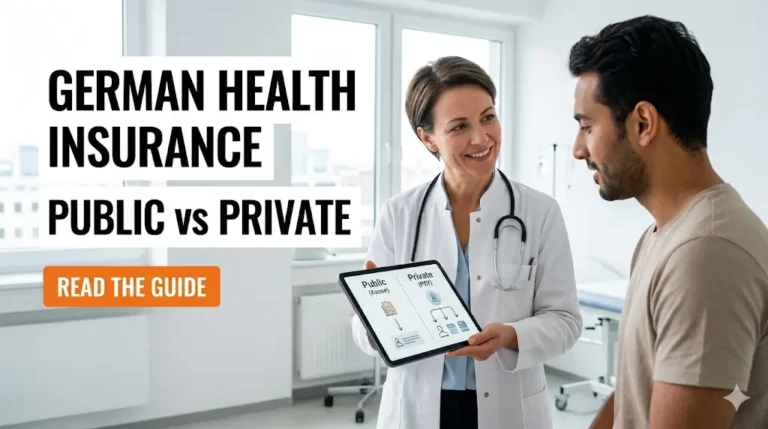
Introduction to the dual system is the first major hurdle for anyone moving to the country. Nearly 90% of the population uses the statutory public health insurance system, while the remaining 10% opt for private health insurance. The system is meticulously designed so that every single resident is covered, but the specific type of coverage you qualify for depends heavily on your employment status, income, and age. For a foundational overview of these differences and how to navigate the initial choice, reviewing Health Insurance in Germany: Understanding Public vs Private Coverage is a fantastic starting point.
Public insurance is generally mandatory for employees earning under a specific income threshold. It covers all medically necessary treatments, standard hospital stays, and basic dental care. Private insurance, on the other hand, is an option exclusively for high earners, freelancers, and civil servants. Private plans often provide premium perks, such as single hospital rooms, priority specialist appointments, and advanced dental prosthetics, catering to those who prefer a more customized clinical experience.
The financial implications of this divide are massive. The way your monthly premium is calculated differs fundamentally between the two systems. While public premiums rise and fall linearly with your paycheck, private premiums are locked into your physiological risk profile. This structural difference requires expats to carefully consider their long-term career and family plans before committing to a specific insurance path, a decision often made significantly easier by consulting with digital, expat-friendly brokers like Feather Insurance.
The Principle of Solidarity Versus Individual Risk
The German public health system operates strictly on the solidarity principle. This means that the financial burden of the nation’s healthcare is shared collectively across the working population. Your monthly premium is strictly a percentage of your gross income, regardless of your age, medical history, or how frequently you visit a doctor. Consequently, a young, perfectly healthy software engineer earning a high salary will pay significantly more into the public pot than an elderly individual with chronic health conditions earning a modest wage.
Furthermore, this solidarity extends powerfully to family members. Under public insurance, non-working spouses and dependent children can usually be co-insured at absolutely no extra cost through a family policy. This makes the public system incredibly attractive and highly cost-effective for larger families, as the primary earner’s premium covers the entire household without any medical underwriting, additional fees, or complex separate policies.
Conversely, private health insurance operates on the equivalence principle. In this system, your premium is directly correlated to your individual risk profile at the precise time you sign the contract. The insurance company evaluates your age, pre-existing medical conditions, and chosen coverage limits to calculate a personalized, fixed monthly rate. This means that a healthy twenty-something expat will pay a remarkably low premium, while someone attempting to sign up at age fifty with a history of joint issues will face significantly higher costs.
Public Health Insurance Premiums Calculated
Income Based Contributions and the Base Rate
If you are enrolled in a statutory sickness fund, your primary health insurance premium is determined by a legally fixed base rate set by the federal government. As of the current regulations in 2026, the general contribution rate sits at exactly 14.6% of your gross monthly income. This baseline percentage applies to every single publicly insured employee across the country, regardless of whether they are insured with TK, AOK, Barmer, or any other public sickness fund.
The calculation is relatively straightforward: the 14.6% is applied directly to your gross salary before taxes. However, you do not shoulder this entire financial burden alone. Germany mandates a strict 50/50 split between you and your employer. Therefore, 7.3% is deducted directly from your gross paycheck, and your employer contributes the matching 7.3% on top of your salary. This seamless payroll deduction means you rarely have to think about transferring funds manually to your insurer.
It is important to note that this 14.6% only covers your core medical insurance. It does not include long-term care insurance, which is a completely separate mandatory deduction. To understand the total breakdown of deductions appearing on your monthly payslip and the specific medical benefits they unlock, diving into our guide on Public Health Insurance gesetzliche Krankenkasse: What It Covers and Costs is highly recommended.
Supplemental Rates and Employer Contributions
In addition to the flat 14.6% base rate, every public health insurance provider charges a supplemental contribution rate. This supplemental rate allows individual sickness funds to remain financially competitive, manage regional demographic challenges, and cover their specific operational costs. Unlike the fixed base rate, the supplemental rate fluctuates from provider to provider. In 2026, the average supplemental rate sits around 2.5%, though some funds charge slightly more or less depending on their financial health.
Just like the foundational base rate, this supplemental contribution is split equally between the employee and the employer. If your chosen provider charges a 2.6% supplemental rate, 1.3% will be deducted from your paycheck, and your employer will pay the other 1.3%. This equal parity ensures that employees are not disproportionately burdened by rising healthcare costs and inflation within the medical sector.
Alongside the primary health insurance premiums, you must also account for the mandatory long-term care insurance. In 2026, the base rate for long-term care is approximately 3.4% of your gross income, with varying surcharges applied to individuals without children. Again, employers subsidize a large portion of this. Because these combined percentages can quickly consume nearly 20% of your gross income, managing your overall financial expectations is vital. You can explore the nuances of this specific deduction deeply in Long-term Care Insurance Pflegeversicherung: What It Is and Who Needs It.
The Income Assessment Ceiling Beitragsbemessungsgrenze
A massive relief for high-earning expats navigating the public system is the existence of the income assessment ceiling. The German government recognizes that infinitely taxing exponentially high incomes for public health insurance would be disproportionate and unfair. Therefore, they set a hard cap on the absolute maximum salary amount that can be assessed for health insurance premiums. In 2026, this ceiling is strictly set at €69,750 per year, which equates to exactly €5,812.50 per month.
If your gross monthly salary is €8,000, your public health insurance premium is not calculated based on €8,000. It is capped aggressively at the €5,812.50 ceiling. Any income you earn above this threshold is entirely free from health insurance deductions. This means there is an absolute maximum public health insurance premium that any individual will ever pay, ensuring costs remain predictable and manageable for senior professionals and executives.
This ceiling is adjusted annually by the federal government to keep pace with nationwide inflation and average wage developments. Because the cap rises slightly almost every year, high earners will predictably notice a small increase in their monthly deductions each January. Keeping a close eye on these shifting thresholds is a crucial part of long-term financial planning and salary negotiation in Germany.
Private Health Insurance Premium Factors
Age Health and Risk Assessment at Entry
For those who surpass the compulsory insurance threshold or operate as freelancers, private health insurance becomes an attractive option. The single largest factor determining your private premium is your biological age when you sign the contract. Because younger bodies statistically require significantly less medical intervention, signing up for private insurance in your late twenties or early thirties locks in a remarkably lower baseline premium than if you were to join a decade later.
The second critical factor is your health status at the moment of entry. During the application process, the private insurer will require you to complete an extensive, legally binding medical questionnaire detailing your medical history over the past three to ten years. If you have pre-existing conditions—such as asthma, chronic back pain, or a history of severe allergies—the insurer will likely apply a risk surcharge to your monthly premium, or in extreme cases, reject your application entirely.
Because this medical underwriting process is notoriously strict and unforgiving of errors, many expats utilize specialized digital brokers like Feather Insurance to navigate the application safely. These brokers can perform anonymous preliminary risk inquiries to see which insurers will accept you without heavy surcharges, protecting your clean application status across the industry.
Deductibles and Coverage Choices
Unlike the public system’s highly standardized care catalog, private health insurance is immensely customizable. Your premium is heavily influenced by the specific tariff and the level of medical luxury you select. If you want a premium plan that covers single-bed hospital rooms, treatment exclusively by the chief physician, and 90% reimbursement for high-end dental implants, your monthly premium will naturally be much higher than a basic tariff that simply mirrors public coverage.
The most effective, direct lever you have to reduce your monthly private premium is the deductible. The deductible is the specific amount of money you agree to pay out-of-pocket for medical bills each calendar year before the insurance company starts reimbursing you. Choosing a higher deductible—such as €500 or €1,000 per year—signals to the insurer that you will not submit claims for minor ailments, which drastically and permanently lowers your monthly premium rate.
Expats who opt for high deductibles often treat minor medical expenses as routine out-of-pocket costs. To navigate these costs intelligently, it is crucial to understand precisely how private doctors bill for their services.
How Employers Subsidize Private Policies
A common, damaging misconception among newly arrived expats is that choosing private health insurance means completely forfeiting the generous employer subsidy. This is entirely false. German labor law strictly dictates that employers must subsidize their employees’ private health insurance premiums exactly as they would if the employee were publicly insured. This regulation makes the private system highly financially viable for salaried professionals.
The calculation operates smoothly: your employer will pay exactly 50% of your total private health insurance premium. However, there is a legal maximum cap. The employer’s contribution to your private policy absolutely cannot exceed the maximum amount they would have paid if you were publicly insured at the income assessment ceiling. In 2026, this means your employer will contribute a maximum of roughly €500 per month towards your private comprehensive policy.
If your chosen private premium is €800 per month, you and your employer will split it evenly at €400 each. If you choose a hyper-luxurious premium costing €1,200 per month, your employer will contribute their legal maximum of ~€500, and you will be responsible for the remaining €700. Modern digital insurers like Ottonova provide transparent, intuitive dashboards that clearly separate the employer and employee shares, making it incredibly easy to track your actual net expenses.
Premiums for Freelancers Students and Expats
Costs for Self Employed Individuals
Freelancers and self-employed individuals face a unique, often daunting financial challenge in the German healthcare system. Because they do not have a corporate employer to seamlessly split the costs, self-employed individuals are legally responsible for paying 100% of their health insurance premiums out of their own pockets. This strict rule applies regardless of whether they choose the statutory public system or a private health insurance provider.
If a freelancer opts for public insurance, their premium is calculated at the full ~14.6% plus the supplemental rate, based entirely on their declared annual business profit. To prevent unpredictable billing, freelancers must estimate their income at the beginning of the year. If they earn more than estimated, they will face a massive retroactive back-payment; if they earn less, they receive a refund. You can explore the complex nuances of this specific demographic in Health Insurance for Freelancers and Self-Employed: Navigating the System.
Because cash flow can be incredibly tight for newly self-employed expats, many turn to private insurance where the premiums are fixed, predictable, and entirely independent of income fluctuations. When managing these hefty monthly payments—especially if your funds are still tied up in foreign accounts during the transition period—using borderless financial platforms like Wise allows freelancers to pay their local German premiums without losing significant capital to international banking and exchange fees.
Discounted Rates for University Students
Germany heavily subsidizes healthcare for university students to ensure that higher education remains globally accessible and financially manageable. If you are formally enrolled in a recognized German university and are under the age of 30, you qualify for the special public student health insurance rate. This tariff is a massive financial relief compared to the standard, income-based employee rates.
In 2026, the public student premium sits at roughly €120 to €135 per month, depending slightly on the supplemental rate of the chosen provider and the student’s age regarding long-term care insurance surcharges. This flat, affordable rate covers the exact same comprehensive medical, hospital, and dental benefits as a standard adult employee policy, offering students profound, uncompromised security during their studies.
Once a student turns 30, they age out of this deeply discounted statutory tariff. At this critical juncture, they must either transition to a “voluntary” public insurance rate (which is significantly more expensive) or explore private student tariffs.
Transitional Health Plans for New Arrivals
The German immigration bureaucracy is famous for a classic catch-22: you desperately need health insurance to get a residence permit, but you often need a residence permit and a local bank account to secure comprehensive health insurance. For expats arriving from outside the EU who are actively searching for jobs or waiting for their blue card processing, securing immediate, full-coverage insurance can be highly complex.
To successfully bridge this gap, many expats utilize “Incoming” or transitional expat health insurance. These are stripped-down private policies designed specifically to meet the strict visa requirements of the immigration office for a limited duration. They cover acute medical emergencies and essential, life-saving treatments, but typically entirely exclude routine checkups, pre-existing conditions, and extensive dental work.
Because these policies are extremely limited in clinical scope, the premiums are incredibly low, often ranging from just €50 to €100 per month. They serve strictly as a temporary legal bridge until you sign an employment contract and enter the comprehensive public or private system. Expat-focused brokerages like Feather Insurance specialize in providing these transitional policies entirely in English, ensuring a stress-free administrative arrival in Germany.
| Factor | Public Health Insurance (GKV) | Private Health Insurance (PKV) |
| Premium Calculation Basis | Gross Income (capped at €5,812.50 in 2026) | Age, health status at entry, and chosen tariff |
| Employer Subsidy | Exactly 50% of the total premium | 50% up to the maximum public subsidy limit |
| Family Coverage | Free co-insurance for non-working dependents | Every family member requires a separate paid policy |
| Deductibles | None (only minor statutory co-pays for meds) | Highly customizable (Higher deductible = lower premium) |
| Premium Increases | Tied to national wage inflation and government policy | Tied to medical inflation and aging cohort costs |
Strategies to Manage and Reduce Your Monthly Premiums
Deductible Optimization and Cashback Programs
If you are enrolled in the private health insurance system, strategically managing your deductible is the absolute most effective way to permanently lower your fixed monthly costs. If you are young, healthy, and rarely visit the doctor for anything more than an annual check-up, electing a €1,000 annual deductible can reduce your monthly premium by hundreds of euros. You assume a slightly higher personal risk for minor ailments, but the massive annual premium savings heavily outweigh the occasional out-of-pocket doctor’s bill.
Furthermore, many premium private insurers offer lucrative cashback programs. If you go an entire calendar year without submitting a single medical claim (excluding fully covered, essential preventative check-ups), the insurance company will actively refund a large portion of your paid premiums. This refund can easily amount to one to three months’ worth of premiums, creating a massive financial incentive to stay healthy and pay for minor ailments out of pocket.
Progressive digital insurers like Ottonova frequently highlight these cashback features directly within their apps, allowing you to instantly calculate whether it makes financial sense to submit a €60 doctor’s bill or pay it yourself to preserve a €600 year-end cashback bonus. This active financial management transforms private health insurance from a passive payroll deduction into a strategic, wealth-preserving financial tool.
Switching Providers and Utilizing Brokers
Even if you are locked entirely into the statutory public system, you are not powerless against rising monthly costs. While the 14.6% base rate is fixed nationally, the supplemental rate fluctuates significantly between providers. If your current provider raises its supplemental rate, you immediately trigger a special right of termination. You can easily switch to a different public provider with a lower supplemental rate, saving yourself a small but highly noticeable amount on your monthly payslip.
Switching public providers in Germany has become incredibly straightforward and highly automated. Your new chosen provider handles almost all the required cancellation paperwork with your old fund automatically. Beyond just the supplemental rate, you should also rigorously compare the bonus programs different public funds offer, such as subsidies for professional dental cleanings or gym memberships, which effectively reduce your overall healthcare expenditure.
For those in the private sector, switching companies entirely is notoriously difficult because you lose your accrued aging reserves and must undergo a brand new medical health check. Instead of switching providers, it is often vastly better to switch to a different tariff within your current private insurance company. Independent brokers like Feather Insurance can analyze your current policy and legally force your insurer to move you to a cheaper, equivalent tariff, significantly lowering your premiums without sacrificing your valuable reserves.
Preventative Health and Out of Pocket Savings
The ultimate strategy for keeping your healthcare costs low, regardless of your chosen insurance system, is to invest heavily in preventative wellness. By maintaining a highly resilient immune system and a healthy lifestyle, you entirely avoid the chronic conditions that lead to expensive, long-term medical care, high deductibles, and lost career productivity.
If you are playing the private insurance cashback game, or if your public insurance refuses to cover specialized lifestyle supplements, managing these minor out-of-pocket costs smartly is absolutely vital. Because local German pharmacies apply incredibly steep markups to high-dose vitamins, probiotics, and sports nutrition, purchasing these items locally on a whim can quickly erode your monthly budget.
To systematically combat these high retail costs, many savvy expats strategically source their preventative wellness products globally. Utilizing international platforms like iHerb allows you to order premium, organic supplements and specialized health foods at highly competitive global prices. By optimizing exactly how you buy your preventative products, you keep your out-of-pocket medical costs remarkably low, ensuring that your overall healthcare budget remains entirely under your control.
Conclusion
Understanding the deep mechanics behind German health insurance premiums ensures that you are never caught off guard by your monthly payslip deductions or staggering private invoices. Whether you are confidently navigating the income-based solidarity of the public system or meticulously customizing risk-based tariffs in the private sector, the entire infrastructure is designed to offer profound, lifelong security.
By strategically evaluating your employment status, leveraging mandatory employer subsidies, and utilizing expert digital brokers like Feather Insurance alongside modern providers like Ottonova, you can tailor your coverage perfectly to your lifestyle. Stay highly proactive with your preventative health, manage international premium payments smartly with tools like Wise, and you will find that mastering the complex financial side of German healthcare is both achievable and highly rewarding.
References
Primary sources (official)
- Federal Ministry of Health (BMG) – Information on the Income Assessment Ceiling 2026: https://www.bundesgesundheitsministerium.de/beitraege
- GKV-Spitzenverband (National Association of Statutory Health Insurance Funds) – Contribution Rates: https://www.gkv-spitzenverband.de/krankenversicherung/beitraege/beitraege.jsp
Other helpful sources
- Make it in Germany (Official Portal for Qualified Professionals) – Healthcare Overview: https://www.make-it-in-germany.com/en/living-in-germany/money-insurance/healthcare
Disclaimer
The information provided in this article is for general informational and educational purposes only and does not constitute professional financial, medical, or legal advice. German health insurance contribution rates, income assessment ceilings, and private insurance underwriting policies are highly complex and subject to continuous legislative updates. Always consult directly with your HR department, your specific sickness fund, or a certified independent insurance broker regarding your unique financial situation, eligibility requirements, and exact monthly premiums in Germany.