The German Apotheke Experience: Why Pharmacies Are More Than Just Medicine
Discover why the German Apotheke is a unique cultural institution rather than just a retail store. This comprehensive guide explains strict medication laws, the role of highly trained pharmacists, digital prescriptions, and how expats can expertly navigate their local pharmacy.
Disclosure: This post may contain affiliate links. We may earn a commission at no extra cost to you if you make a purchase through these links. Read full disclosure.
The Cultural and Legal Significance of the Apotheke
The Apothekenpflicht Monopoly on Medication
For many newly arrived expats, the first major culture shock regarding German healthcare happens in the aisle of a local supermarket. If you are searching for a basic painkiller, cold medicine, or even a medicated throat lozenge among the groceries, you will be searching in vain. Germany operates under a strict legal framework known as Apothekenpflicht. This law dictates that any product containing an active pharmaceutical ingredient can only be sold within a licensed, dedicated pharmacy. Unlike in the United States or the United Kingdom, where you can grab ibuprofen alongside your weekly groceries or at a gas station, German law rigorously separates retail commerce from medical dispensing.
This strict separation is rooted in the philosophy that medication is not a standard consumer good. The German state views pharmaceuticals as sensitive products that require expert oversight to prevent misuse, dangerous drug interactions, and accidental overdoses. Consequently, the pharmacy holds a legally protected monopoly on all medicinal products. Even common, low-dose over-the-counter remedies are kept securely behind the pharmacist’s counter, requiring you to actively ask a professional for them. This creates a highly controlled environment where convenience takes a deliberate backseat to patient safety.
Understanding this system is a crucial first step in your expat journey. When you inevitably catch a winter cold or suffer a minor injury, knowing exactly where to go saves significant time and frustration. To familiarize yourself with what you can actually purchase without a doctor’s note in this strictly regulated environment, we highly recommend reading our guide on Over-the-Counter Medicine in Germany: What You Can Get Without a Prescription. It is an essential primer for stocking your home medicine cabinet before an illness strikes.
The Highly Trained Apotheker
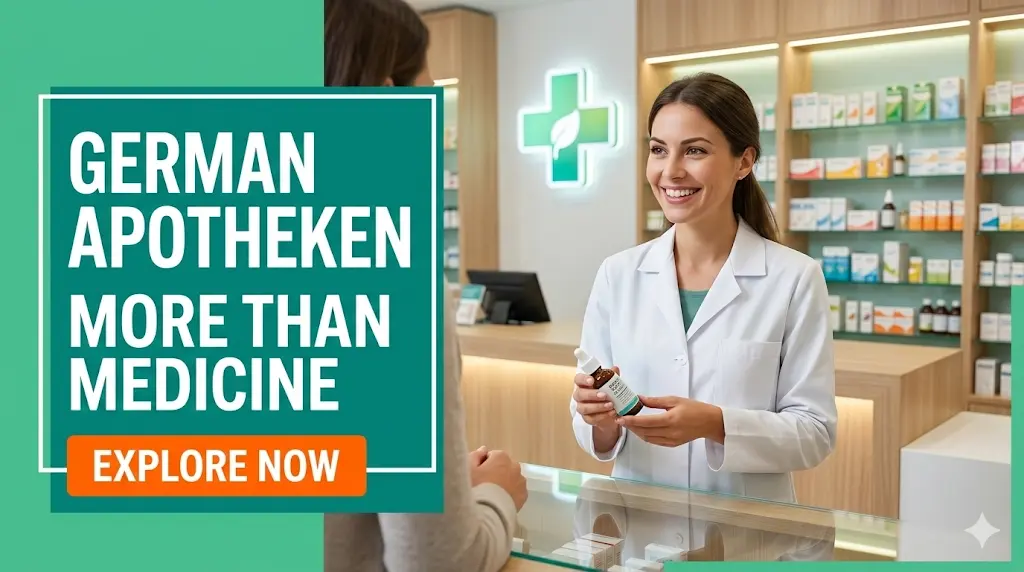
When you walk into a German pharmacy, the person standing behind the counter is not merely a retail cashier; they are a highly educated medical professional. An Apotheker (pharmacist) in Germany must complete a rigorous, multi-year university degree in pharmacy, followed by a demanding state examination and a practical licensing year. This extensive academic and clinical training ensures that they possess a profound understanding of biochemistry, pharmacology, and botanical medicine.
Because of this intense training, the pharmacist functions as a primary healthcare consultant. When you ask for a cold remedy, the pharmacist will not simply hand you a box. They are legally obligated to ask you who the medication is for, what specific symptoms are present, and whether you are taking any other medications that might cause adverse interactions. They will then recommend a specific product, explain the precise dosage, and advise you on when to seek the help of a general practitioner.
Furthermore, pharmacies are staffed by Pharmazeutisch-technische Assistenten (PTA), or pharmaceutical technical assistants. While they have a slightly different educational path than the head pharmacist, they are also highly trained and heavily regulated. They assist in dispensing medications, testing raw materials, and compounding custom ointments in the back laboratory. This deep well of expertise means that the pharmacy often serves as a highly reliable first point of contact for minor health issues, alleviating the burden on local doctor’s offices.
Visual Identity and Trust in the Red A
You will never struggle to locate a pharmacy in Germany, thanks to its iconic and universal visual branding. Every licensed pharmacy in the country proudly displays a large, illuminated, stylized red “A” (standing for Apotheke). This letter typically incorporates the Bowl of Hygieia—a chalice with a snake wrapped around it, which is the ancient Greek symbol of pharmacy and healing. This striking red sign is heavily protected by trademark law and can only be used by officially licensed establishments.
This uniform branding creates an immediate sense of trust and reliability. Whether you are in the heart of Berlin or a tiny Bavarian village, the red “A” signals a safe haven where professional medical advice and regulated treatments are available. It is a beacon of the German healthcare infrastructure, instantly recognizable to both locals and international visitors. This consistency is deeply comforting for expats navigating a foreign landscape during stressful health situations.
Inside, the visual identity continues with a clinical yet welcoming aesthetic. German pharmacies are characteristically spotless, brightly lit, and meticulously organized. The walls behind the counter are lined with modern, automated dispensing drawers that fetch medications with robotic precision, while the customer-facing shelves display high-end dermocosmetics and wellness teas. This blend of clinical efficiency and holistic wellness perfectly encapsulates the local approach to health.
Navigating Over the Counter and Prescription Rules
E Rezept The Digital Prescription Revolution
For decades, the German medical system relied on a complex, color-coded paper prescription system. However, the landscape has rapidly modernized with the mandatory nationwide rollout of the E-Rezept (electronic prescription). Today, if you visit a doctor for a standard statutory health insurance prescription, you will no longer be handed a pink piece of paper. Instead, the doctor digitally signs the prescription and securely uploads it to a central telematics server.
To redeem your digital prescription, you simply walk into any pharmacy and insert your electronic health card (eGK) into their designated card reader. The pharmacist’s system automatically retrieves the digital file and dispenses the medication. Alternatively, patients can use the official E-Rezept smartphone app to view their prescriptions and even pre-order the medication from their local pharmacy to ensure it is in stock before they arrive. This digital leap has drastically reduced paperwork, minimized the risk of lost prescriptions, and streamlined the refill process.
For expats managing chronic conditions, this digital transition is a massive relief. It simplifies the administrative burden of healthcare significantly. To fully understand how this process integrates with your routine doctor visits and how to handle ongoing medication needs, exploring our detailed walkthrough on Getting a Prescription Refill: How to Renew Medications in Germany is highly beneficial.
Statutory vs Private Prescription Costs
The financial experience at the pharmacy counter depends entirely on your specific health insurance status. If you are enrolled in the statutory public health insurance system, your necessary prescription medications are heavily subsidized. You do not pay the retail price of the drug; instead, you pay a small statutory co-payment (Zuzahlung). By law, this co-payment is 10% of the medication’s cost, strictly capped at a minimum of €5 and a maximum of €10 per item. This ensures that life-saving treatments remain universally affordable. You can learn more about these brilliant financial safety nets in Public Health Insurance gesetzliche Krankenkasse: What It Covers and Costs.
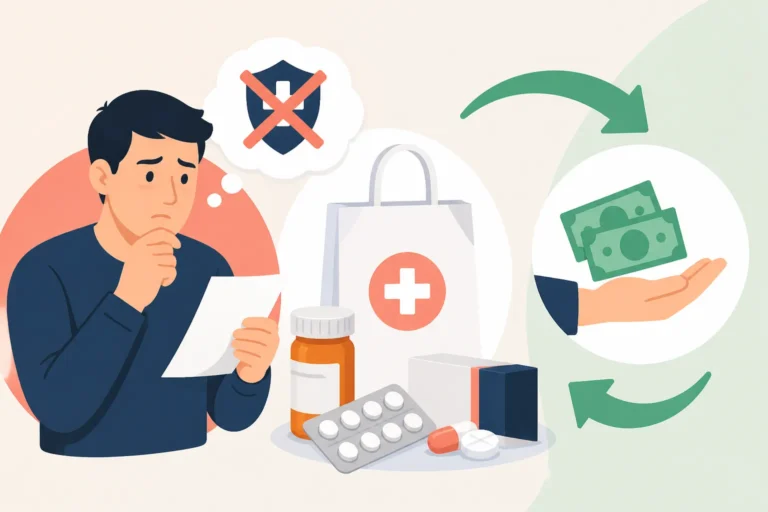
Conversely, if you are insured through the private system, you operate on a “pay and claim” model. When you present a private prescription at the pharmacy, you must pay the absolute full retail price of the medication out of pocket. The pharmacist will provide you with a stamped receipt, which you then submit to your private insurer for reimbursement. Modern digital insurance providers like Ottonova and progressive brokers such as Feather Insurance have vastly improved this process, allowing you to simply scan the pharmacy receipt via their apps for rapid financial reimbursement.
For newly arrived expats who are paying for private prescriptions out of pocket before their German bank accounts are fully established, international transaction fees can be a hidden burden. Utilizing borderless financial platforms like Wise allows you to pay for expensive private medications using low-fee currency conversion, ensuring that your healthcare budget isn’t eroded by poor exchange rates while you wait for your insurance claim to clear.
Generic Substitutions and Brand Loyalty
Expats are frequently surprised when they hand over a prescription for a specific brand-name drug and the pharmacist hands them a completely different box. This is due to strict discount agreements (Rabattverträge) between statutory health insurance companies and pharmaceutical manufacturers. Pharmacists are legally required to dispense the cheapest generic equivalent that your specific insurance provider has contracted with, provided the active ingredient, dosage, and delivery method are identical.
This system of generic substitution is a fundamental pillar of cost control within the German healthcare system. While the box may look different, the clinical efficacy of the medication is strictly regulated and guaranteed by federal pharmaceutical authorities. If you refuse the generic substitution and insist on the original brand name, you will typically be forced to pay the entire cost of the medication completely out of pocket, circumventing your insurance coverage.
The only exception to this rule is if your doctor explicitly checks a box on the digital prescription labeled “aut idem” (or the same), which legally prohibits the pharmacist from substituting the brand. Doctors only do this if there is a documented medical reason, such as a severe allergy to a filler ingredient in the generic version. Adapting to this generic-first approach requires letting go of brand loyalty, but it ensures the long-term sustainability of the medical infrastructure.
Beyond Pills Holistic Health and Preventative Care
Phytotherapy and Herbal Medicine Traditions
One of the most defining characteristics of the German pharmacy is its profound, institutionalized respect for natural and botanical medicine. Phytotherapy (plant-based medicine) is not considered a fringe alternative in Germany; it is a mainstream, scientifically supported branch of healthcare. When you ask a pharmacist for a remedy for a mild stomach ache or a scratchy throat, they are just as likely to recommend a highly concentrated herbal extract or a medicinal tea as they are a chemical synthetic.
Pharmacies dedicate significant shelf space to Arzneitees (medicinal teas), which are subjected to much stricter quality and purity controls than the teas sold in supermarkets. You will find specific, highly potent blends formulated for sleep disorders, bladder infections, and digestive distress. Products like Iberogast, a famous liquid extract made from nine medicinal plants, are absolute staples in German home medicine cabinets for treating gastrointestinal issues.
This cultural embrace of gentle, plant-based healing can be a delightful culture shock for expats accustomed to immediate, aggressive pharmaceutical interventions. It reflects a broader societal preference for treating the root causes of minor ailments and supporting the body’s natural healing processes.
Custom Compounding and Ointments
While industrial pharmaceutical manufacturing dominates the modern landscape, German pharmacies proudly retain their historical roots as compounding laboratories. Every licensed pharmacy is legally required to maintain a fully equipped back laboratory (Rezeptur). This allows them to create customized medications tailored to the exact needs of an individual patient, a practice that is increasingly rare in many other Western countries.
Custom compounding is most frequently utilized in dermatology and pediatrics. If you visit a dermatologist for a complex skin condition like severe eczema or psoriasis, they will often write a prescription for a specific combination of active ingredients (like hydrocortisone and urea) mixed into a specific base cream. You take this prescription to the pharmacy, and the technical assistants will mix the ointment from scratch, creating a bespoke treatment that cannot be found in a mass-produced tube.
Similarly, pharmacies compound specialized, low-dose liquid suspensions for infants and young children when commercial pediatric dosages are unavailable. This capability highlights the pharmacy’s role not just as a retail distributor, but as an active, localized manufacturer of healthcare solutions, ensuring that highly specific, individualized medical needs are consistently met.
Wellness Products and Premium Cosmetics
Beyond illness and prescriptions, the front-of-house retail area of a German pharmacy (Freiwahl) operates as a high-end wellness boutique. Pharmacies are the exclusive retailers for premium dermocosmetic brands such as La Roche-Posay, Vichy, Eucerin, and Avène. These scientifically formulated skincare lines are highly recommended by local dermatologists for sensitive skin, rosacea, and severe acne, bridging the gap between cosmetic beauty and medical treatment.
In addition to skincare, pharmacies stock an array of dietary supplements, specialized dental care products, and orthopedic supports. However, expats must be aware of the “pharmacy premium.” Because these items are sold in a highly regulated medical environment, the markups on basic vitamins, magnesium powders, and probiotics can be exceptionally steep compared to international prices.
For expats looking to aggressively manage their preventative health and daily wellness without overpaying, local pharmacies are not always the most economical choice. Many international residents prefer to source their bulk vitamins, organic supplements, and specialized holistic wellness products through global platforms like iHerb. This allows them to maintain their preferred, high-quality international wellness routines while bypassing the localized retail premiums found in German brick-and-mortar pharmacies.
The Notdienst Emergency Pharmacy System
How the Rotating After Hours System Works
Illness does not respect standard business hours, and neither does the German healthcare system. Because standard retail hours are strictly regulated—with pharmacies typically closing by 6:30 PM on weekdays, early on Saturdays, and remaining entirely closed on Sundays—the state mandates a robust emergency safety net known as the Apotheken-Notdienst (emergency pharmacy service).
This system operates on a legally binding, rotating schedule managed by regional chambers of pharmacists. Within any given geographic district, a specific subset of pharmacies is designated to remain open 24 hours a day, including overnight, weekends, and all public holidays. This ensures that regardless of where you live, you always have access to life-saving prescription medications and acute over-the-counter relief when standard shops are locked.
Pharmacists view the Notdienst as a critical public duty. They take turns working these demanding overnight shifts, ensuring the community is never left vulnerable. Understanding that this system exists is vital for your peace of mind.
Finding the Nearest Open Pharmacy
When you desperately need medication at 2:00 AM, finding the nearest open pharmacy is a highly streamlined process. The most reliable method is utilizing the official, nationwide portal aponet.de. By entering your postal code into their Notdienstsuche tool, you are instantly provided with a map and a list of the pharmacies currently on active emergency duty in your immediate vicinity.
If you do not have internet access, the system features a low-tech failsafe. Every single pharmacy in Germany is legally required to post a notice displaying the nearest open emergency pharmacy when they are closed. This is usually presented on an illuminated digital screen or a printed schedule placed visibly in their front window or on the front door. You can simply walk to your closed neighborhood pharmacy to find out where you need to go next.
Additionally, you can call the nationwide medical on-call service at 116 117. The dispatchers can provide you with the location of the nearest open pharmacy or direct you to an on-call medical clinic if your symptoms require a doctor’s diagnosis before a medication can be dispensed.
Emergency Fees and Practical Tips
Visiting the emergency pharmacy late at night is a unique experience. You will not browse the aisles. Instead, the main doors remain locked for security reasons. You must ring a designated emergency bell (Notdienstklingel), and the pharmacist will assist you through a small, secure, bulletproof glass hatch or a sliding metal drawer.
It is important to know that utilizing the after-hours service incurs a legally mandated flat fee, known as the Notdienstgebühr. This fee is currently set at €2.50 per visit, regardless of how many items you purchase. You must pay this fee out of pocket unless you present a prescription from an emergency doctor that is explicitly marked with a “noctu” (night) checkmark, which indicates immediate medical necessity and shifts the fee to your health insurance.
Expats should treat the Notdienst with respect; it is meant for genuine medical emergencies, acute pain, and urgent prescriptions, not for purchasing lip balm or hand cream at 3:00 AM. It is highly advisable to bring exact cash to the security hatch, as card readers occasionally face connectivity issues during overnight shifts, and using a low-fee card from Wise ensures you aren’t stranded without payment options during a late-night health crisis.
Comparing the Apotheke to the Drogerie
What You Can Buy at a Drogerie
To master the German retail landscape, you must clearly distinguish between the Apotheke and the Drogerie (drugstore). While the names sound similar to international concepts, their inventories are vastly different. Chains like dm, Rossmann, and Müller are Drogerien. They are massive, highly popular retail stores focused on hygiene, cosmetics, household cleaning supplies, baby products, and basic health foods.
In a Drogerie, you can purchase toothpaste, shampoo, diapers, organic snacks, and a wide array of low-dose vitamin supplements, herbal teas, and sports nutrition powders. They are the absolute best and most economical destination for stocking up on your daily household and personal care essentials. However, you will not find a single active pharmaceutical drug on their shelves.
You cannot buy ibuprofen, paracetamol, medicated allergy sprays, or heavy-duty cough suppressants in a Drogerie. The moment an item crosses the threshold from a “wellness supplement” to a “pharmacological treatment,” it legally must be sold in the Apotheke. For a highly detailed breakdown of how to navigate these two distinct retail spaces effectively, review Understanding German Pharmacies vs Drugstores: Where to Get What.
Why the Distinction Exists
The strict bifurcation between the Apotheke and the Drogerie is deeply rooted in German consumer protection laws and medical philosophy. The state firmly believes that the commodification of medicine leads to public health risks. Allowing powerful painkillers or cold medicines to be sold next to laundry detergent encourages patients to self-diagnose and self-medicate without professional oversight.
By restricting medicine to the Apotheke, the system guarantees a “four-eyes principle.” The patient discusses their symptoms, and the highly trained pharmacist evaluates the request, cross-references it with potential contraindications, and provides expert counsel. This significantly reduces instances of accidental overdose, dangerous drug interactions, and the misuse of antibiotics.
While this system can feel incredibly restrictive and inconvenient for expats who are used to the “one-stop-shop” mega-pharmacies of the US or the UK, it fosters a remarkably safe and highly regulated public health environment. It forces individuals to treat medication with the seriousness it deserves.
Pros and Cons of the German Dual System
To summarize the experience, here is a breakdown of the advantages and disadvantages of Germany’s strict pharmacy system:
| Aspect | Pros of the German System | Cons of the German System |
| Safety & Expertise | Guaranteed consultation with a highly educated medical professional before purchase. | Inconvenient for buying basic, familiar remedies; requires explaining symptoms to staff. |
| Quality Control | Zero risk of counterfeit drugs; highly regulated storage and compounding standards. | Very strict monopoly leads to premium pricing on non-prescription wellness items. |
| Accessibility | 24/7 emergency availability guaranteed by the rotating Notdienst system. | Strict Sunday and evening closures for standard retail shopping hours. |
| Digital Integration | Seamless E-Rezept processing via the health card for statutory insurance. | Private patients still navigate upfront costs and manual reimbursement claims. |
Conclusion
The German Apotheke is far more than a simple retail outlet; it is a highly regulated, culturally revered pillar of the national healthcare system. By understanding the strict Apothekenpflicht laws, respecting the profound medical expertise of the pharmacists, and embracing the seamless digital integration of the E-Rezept, expats can navigate their medical needs with total confidence.
While the separation from the standard Drogerie may initially cause culture shock, the guaranteed safety, localized custom compounding, and the reliable 24/7 Notdienst emergency network offer unparalleled peace of mind. Whether you are relying on public insurance subsidies, navigating private claims with modern tools from Ottonova and Feather Insurance, or managing international payments via Wise, mastering the Apotheke experience is a vital step in making Germany your healthy, comfortable home.
References
Primary sources official
- ABDA – Federal Union of German Associations of Pharmacists: https://www.abda.de/
- Aponet.de – Official Emergency Pharmacy Search: https://www.aponet.de/apotheke/notdienstsuche
Other helpful sources
- Make it in Germany – Healthcare System Overview: https://www.make-it-in-germany.com/en/living-in-germany/money-insurance/healthcare
- Verbraucherzentrale – Buying Medicine and the E-Rezept: https://www.verbraucherzentrale.de/
Disclaimer
The information provided in this article is for general informational and educational purposes only and does not constitute professional medical, legal, or financial advice. German pharmaceutical regulations, the E-Rezept infrastructure, and emergency surcharge fees are subject to continuous legislative updates. Always consult directly with a licensed pharmacist, a qualified medical doctor, or your specific health insurance provider regarding your unique health conditions, drug interactions, and insurance coverage limits in Germany. In a severe medical emergency, always dial 112.