Prescription Costs in Germany Without Statutory Cover: Reimbursement Walkthrough
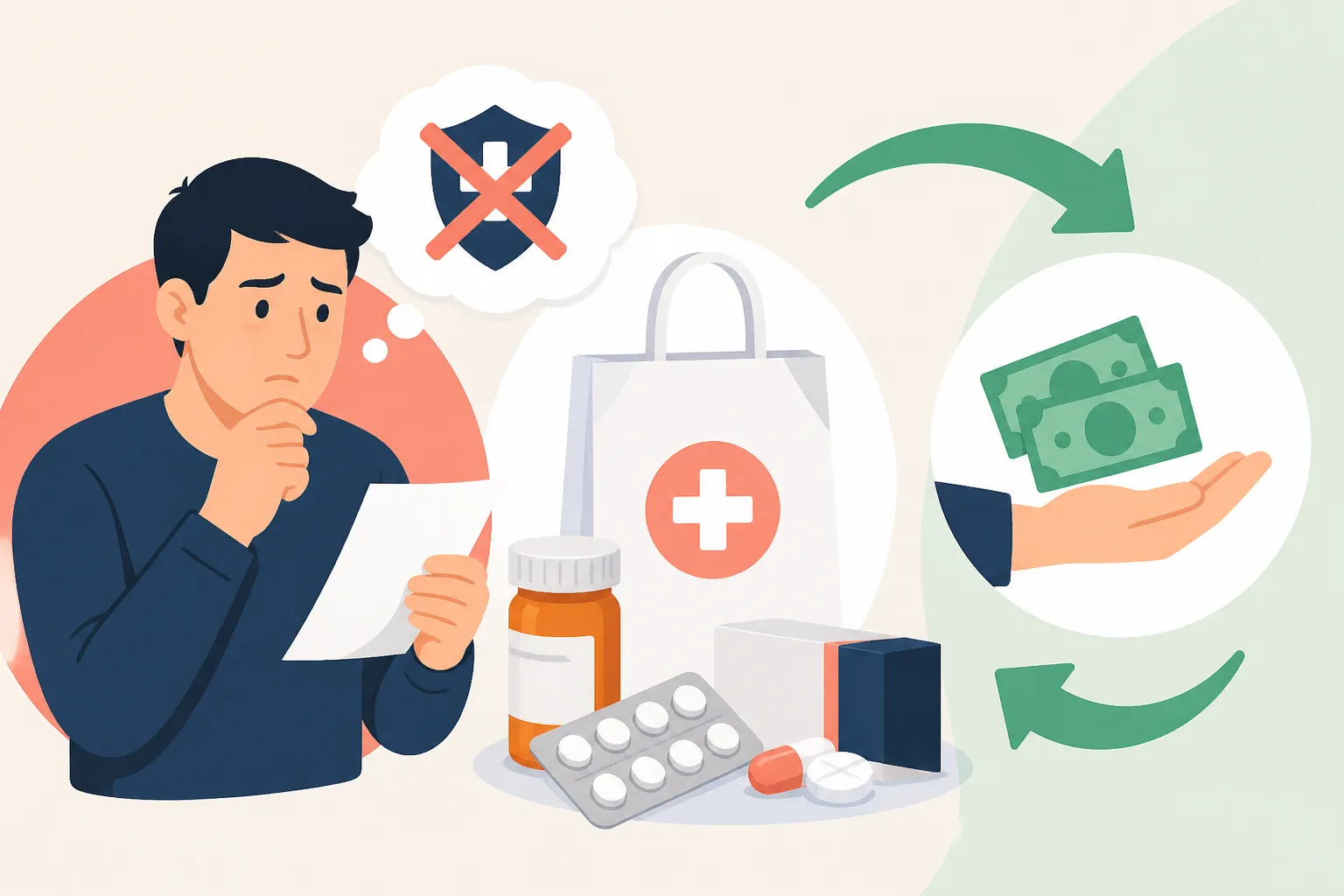
Okay, so you've just moved to Germany, got yourself settled (mostly!), and then, bam! You get sick. You head to the doctor, who hands you a prescription, and suddenly you're staring at a piece of paper that might as well be written in hieroglyphs. But the real panic sets in when you realize that because you're on private insurance, or perhaps even interim travel insurance, you're expected to pay the full amount upfront at the Apotheke. The confusion, the cost, the sheer paperwork – it's enough to make you want to crawl back into bed. This guide is here to untangle that knot, walking you through prescription costs without statutory cover and, crucially, how to get your money back.
Disclosure: This post may contain affiliate links. We may earn a commission at no extra cost to you if you make a purchase through these links. Read full disclosure.
Navigating the German Prescription Maze Without Public Insurance
The German healthcare system, bless its efficient but sometimes opaque heart, operates a bit differently when it comes to prescriptions, especially for those of us not plugged into the vast public health insurance network. It’s not just about the cost; it’s about understanding the process itself.
Understanding Prescription Types Red, Yellow, Green
One of the first things you'll notice in a German doctor's office is the different colored prescription pads. These aren't just for aesthetics; they indicate different levels of urgency and, more importantly for you, different coverage implications.
The most common one you'll encounter is the red prescription (rosa Rezept or Kassenrezept). This is the standard form for medications covered by public health insurance. For those with public insurance, you simply hand over your electronic health card (Gesundheitskarte), pay a small co-payment (usually between €5-10), and off you go. However, if you're on private insurance or other non-statutory cover, this red piece of paper means you'll be paying the full price upfront. The pharmacy will still give you this, as it signifies a doctor's order for a specific medication.
Then there are yellow prescriptions (gelbes Rezept or BtM-Rezept). These are for highly controlled substances, like strong painkillers or certain psychiatric medications. They have extra security features and strict regulations due to potential for abuse. These, too, will require upfront payment if you don't have public insurance.
Finally, you might come across green prescriptions (grünes Rezept). These are for non-prescription medications, or those that aren't typically covered by public health insurance but which your doctor still recommends (e.g., certain herbal remedies or high-dose vitamins). Since these aren't covered by public insurance anyway, you'd be paying the full price regardless of your insurance type. For expats, the key takeaway is that for any prescription type, without statutory cover, your wallet is out first. And with the rise of the digital E-Rezept, the process might feel slightly different at the counter, but the financial mechanism remains the same: you pay, then you claim.
The Sticker Shock: Why Prescriptions Feel Expensive
Let's be honest, for many expats coming from countries where prescriptions might be cheap, or even free, the cost of medication in Germany can be a genuine shock. You might walk out of the Apotheke having spent €30, €50, or even over €100 for a single medication, wondering if you've been ripped off. The truth is, it’s not a rip-off; it’s just the system.
The German pharmaceutical market, while highly regulated, has a pricing structure that means drugs often have a higher base price compared to, say, the UK or certain parts of North America. Pharmacies also have a fixed mark-up on prescription medications, which means you won't find vastly different prices for the same prescription medicine from one Apotheke to another. What feels expensive to you is simply the actual cost of the drug and dispensing fee, which is largely absorbed by public health insurers for their members. When you're privately insured, you're suddenly faced with the raw numbers. It's a completely valid frustration, and it's why having robust private health insurance, like the kind offered by SafetyWing, which understands these upfront costs, is absolutely crucial. Without it, these seemingly minor medical expenses can quickly add up and drain your savings.
Who Pays What? Your Responsibility vs. Insurance
So, who's on the hook for these costs? In Germany, if you're not publicly insured, the answer is unequivocally you, initially. Unlike the public system where your Gesundheitskarte might cover most of the cost directly at the pharmacy (minus that co-payment), private insurance operates on a reimbursement model for most services.
This means you are responsible for paying the full bill at the time of service, whether it’s for a doctor's visit, a specialist appointment, or indeed, your prescription medication. Once you’ve paid, you then submit your invoice and proof of payment to your private health insurance provider. They will then review the claim and, if it falls within your policy's coverage, reimburse you for the eligible amount. This process can be a bit of a mental shift for newcomers, particularly if you're used to systems where the insurer handles payments directly with the provider. It requires you to have sufficient funds available to cover these costs upfront, which can be a significant burden if you're facing a chronic condition or a sudden, expensive treatment. This distinction is vital for financial planning when living in Germany, and a plan like SafetyWing simplifies this reimbursement process for you.
The Reimbursement Process: Your Road to Getting Money Back
Okay, you've paid the hefty sum at the pharmacy. Now what? The key to getting your money back from your private insurance is understanding and meticulously following the reimbursement process. This is where German bureaucracy can really test your patience, but a systematic approach will save you headaches.
Documentation is King: What You Need to Keep
Let me tell you, when it comes to dealing with insurance in Germany, good documentation isn't just helpful – it's everything. Forget those crumpled receipts you usually toss into your bag; these are gold.
First and foremost, you absolutely must keep the original prescription (Rezept). Even with the E-Rezept becoming more common, your pharmacy will give you a printout with a QR code or an actual physical prescription, depending on the specifics. This piece of paper is proof that a licensed doctor prescribed the medication. Your insurance company needs to see this to verify the medical necessity of the drug. A common mistake many newcomers make is thinking the pharmacy receipt is enough. It's not.
Secondly, you need the detailed pharmacy receipt (Quittung or Rechnung). This isn't just the small slip that comes out of the cash register. It should clearly list:
- The name of the medication(s) you purchased.
- The exact price for each item.
- The date of purchase.
- The name and address of the pharmacy.
- Ideally, it should also include your name, though sometimes this is tied to the prescription number.
This detailed receipt is your proof of payment and specifies exactly what you bought. Without both the original prescription and a detailed itemized receipt, your insurance company, be it SafetyWing or another provider, will likely reject your claim. Trust me, I've seen it happen – trying to get a reimbursement with a blurry photo of a generic receipt is a losing battle. Keep these documents safe, ideally in a dedicated folder.
Filing Your Claim with Private Insurance
Once you've amassed your precious paperwork, it's time to file the claim. This usually involves a few steps:
- Check Your Policy: Before anything else, quickly review your private health insurance policy. Understand what your deductible (Selbstbehalt) is and if there are any specific exclusions for certain types of medication. This will give you a realistic expectation of what you'll get back.
- Obtain Claim Forms: Most modern private insurers, including those geared towards expats like SafetyWing, offer online claim submission portals or downloadable forms. For SafetyWing, their online platform is designed to be user-friendly, which is a massive relief when you're already juggling so much as an expat.
- Fill Out the Form Accurately: This isn't the time for shortcuts. Provide all requested information: your policy number, personal details, date of service, details of the medication, and the amount paid. Any missing information can lead to delays.
- Attach Documentation: Scan or clearly photograph your original prescription and the detailed pharmacy receipt. Make sure everything is legible. If submitting by mail, always send copies and keep the originals for your records, just in case.
- Submit Your Claim: Follow your insurance provider's specific instructions for submission. For many, an online portal is the quickest and most efficient way. SafetyWing, for instance, prides itself on making this process as streamlined as possible for its global members, allowing you to easily upload documents.
After submission, it's typically a waiting game. Reimbursement timelines can vary, from a few days for highly efficient online systems to several weeks for traditional mail-in claims. Patience is a virtue here, but don't hesitate to follow up if you haven't heard anything within the timeframe specified by your insurer. Keep a record of when you submitted the claim, too. This whole process is often why newcomers struggle; it's a departure from immediate gratification, but it's a necessary part of the private insurance landscape in Germany.
What If My Insurance Doesn't Cover It? Common Pitfalls
It's a gut punch when you've done everything right, submitted your claim, and then receive a letter stating that your medication isn't covered. This happens more often than you might think, and it's usually due to a few common reasons.
One significant reason is non-covered medications. Private health insurance policies in Germany, like anywhere else, have exclusions. For example, purely cosmetic drugs, certain lifestyle medications (think hair loss treatments), or alternative therapies that aren't scientifically proven may not be reimbursed. Some very specific, cutting-edge treatments might also fall outside the standard policy terms, particularly if they are experimental. Always check your policy's fine print.
Another common pitfall involves pre-existing conditions. While SafetyWing offers some benefits for acute onset of pre-existing conditions (meaning a sudden flare-up you couldn't have predicted), many standard private plans in Germany might have stricter clauses. If your medication relates to a condition that was declared or considered pre-existing and is explicitly excluded or has a waiting period in your policy, you might not get reimbursed. It's vital to be transparent about your medical history when you sign up for any insurance.
Finally, let's talk about deductibles (Selbstbehalt). Many private insurance plans come with a deductible, which is an amount you have to pay out of your own pocket before your insurance starts covering costs. If your total medical expenses, including prescriptions, haven't met your annual deductible, your insurance won't pay out until that threshold is reached. For example, if you have a €500 deductible and your prescription cost €75, you won't get that €75 back until you've accumulated €500 in eligible medical expenses that year. Understanding your deductible is crucial for managing your out-of-pocket costs and making informed decisions about your plan. This is where a clear and transparent plan from providers like SafetyWing can be a huge advantage, as they lay out these terms clearly, helping you manage your expectations and finances. When navigating the complexities of reimbursements, having a robust plan, as highlighted in this guide on How to Claim Reimbursement on German Private Insurance, is key.
Finding Affordable Medications and Alternative Solutions
While the reimbursement process is critical, sometimes you want to reduce the upfront cost too. Germany offers a few avenues for making your medication expenses more manageable, even without statutory cover.
Generic vs. Brand-Name Medications (Generika)
Here’s a practical tip that can genuinely save you money at the pharmacy: always ask for Generika. In Germany, like in many other countries, pharmacists are often able and willing to offer a generic version of a brand-name prescription drug, provided your doctor hasn't specifically forbidden it (which is rare).
Generic medications contain the same active ingredients, in the same dosage, and work in the same way as their brand-name counterparts, but they are typically much cheaper. For example, if your doctor prescribes "Ibuprofen 600mg," the pharmacist might offer you a generic brand from a manufacturer like Hexal or Ratiopharm instead of the more expensive original brand. The cost difference can be significant, sometimes cutting the price in half. This means your initial outlay is lower, and therefore the amount you need to be reimbursed by your private health insurance is also less. It’s a simple question to ask at the counter – "Gibt es ein Generikum dafür?" (Is there a generic for this?) – and it can make a real difference, especially for long-term medications.
Comparing Pharmacy Prices Not Always Easy!
You might be used to shopping around for the best price on your medications. In Germany, however, it's important to understand that for prescription-only medications, the prices are largely standardized. There's little to no difference in price for the exact same prescribed drug from one Apotheke to another. This is part of the regulated pricing structure designed to ensure consistent access nationwide.
However, this doesn't apply to over-the-counter (OTC) medications and health products. For items like basic painkillers (e.g., standard ibuprofen without a prescription), cold remedies, vitamins, or skincare products, prices can vary between pharmacies. You might find a small, independent pharmacy charges a bit more than a larger chain. Online pharmacies (Versandapotheken) in Germany are also a popular option for non-prescription items, often offering significantly lower prices and bulk deals. But here's the kicker: for prescription medications, you still need a valid Rezept from a German doctor, and you generally can't just fill it at an online pharmacy for initial purchase without special procedures. For ease and immediacy, your local brick-and-mortar Apotheke is your go-to for prescribed drugs. When it comes to everyday health concerns, understanding the differences between them can be helpful, as detailed in Understanding German Pharmacies vs Drugstores: Where to Get What.
The Power of Telemedicine and Online Consultations
The COVID-19 pandemic really pushed telemedicine into the mainstream in Germany, and it's here to stay. For expats, especially those dealing with language barriers or busy schedules, online doctor appointments (Telemedizin) can be a game-changer.
Many doctors now offer video consultations, and if a medication is deemed appropriate based on the online assessment, they can issue an E-Rezept (electronic prescription). This digital prescription can then be sent directly to a pharmacy of your choice or accessed via an app. While the financial process of paying upfront and seeking reimbursement from your private insurance remains the same, telemedicine can streamline the initial consultation process. It means you might not have to take time off work for a minor ailment, or struggle to find an English-speaking doctor for a quick check-up. Services like Doktor.de or Zava are examples of platforms offering such services, though you should always verify their integration with your specific private insurer. This modern approach to healthcare, discussed further in Telemedicine in Germany: Online Doctor Appointments and e-Prescriptions, can make getting a valid prescription much more convenient, thus speeding up your ability to claim reimbursement.
Why Robust Private Health Insurance is Non-Negotiable (SafetyWing as Hero)
Living abroad, especially in a country with a different healthcare system, is full of unknowns. One thing you absolutely cannot afford to gamble on is your health and, by extension, your health insurance. This is where a reliable private health insurance solution steps in, becoming your indispensable safety net.
Peace of Mind: Beyond Just Prescription Costs
While we've spent a lot of time talking about prescription costs, the truth is, prescriptions are often just a small part of the overall healthcare picture. The real peace of mind that comes from having a robust private health insurance plan, like SafetyWing, extends far beyond the pharmacy counter.
Imagine a sudden, severe illness requiring a hospital stay, or a complex condition necessitating multiple visits to specialists. These are the moments when healthcare costs can skyrocket into the tens of thousands of Euros. Without proper coverage, such an event could be financially devastating, wiping out your savings and potentially forcing you to leave the country. A good private plan covers not just your medications but also essential services like doctor's visits (often at higher rates for private patients), specialist consultations, hospital stays, surgeries, diagnostic tests, and even emergency care. SafetyWing, specifically designed for digital nomads and expats, understands the unique needs of individuals constantly on the move or in transition. It offers a comprehensive shield, giving you the confidence to live and work in Germany knowing that your health is protected, regardless of where your adventures might take you next. It's about ensuring you have full access to Healthcare in Germany: A Comprehensive Guide for Expats without crippling debt.
Choosing the Right Plan: What to Look For
Choosing the right private health insurance in Germany can feel overwhelming. There are so many providers and policies, each with its own jargon and complexities. When evaluating options, especially as an expat, here are some key factors to prioritize:
- Coverage Limits: Understand the maximum amount your insurance will pay for various services per year. Ensure these limits are high enough to cover significant medical events.
- Deductibles (Selbstbehalt): Know what your out-of-pocket contribution is before your insurance kicks in. A higher deductible usually means lower monthly premiums, but higher upfront costs.
- Exclusions: Carefully read the fine print for any services or conditions that are specifically not covered. This is crucial for pre-existing conditions or specific therapies you might need.
- Ease of Claiming: This is a huge one for expats. Look for providers with user-friendly online portals, clear instructions, and multilingual support. This is where SafetyWing truly shines, with its focus on a smooth, digital-first claiming process designed for people who don't want to get bogged down in German paperwork. Their platform makes it straightforward to submit your documents and track your claims.
- Customer Service: Can you reach them easily? Do they offer support in English? Navigating medical issues in a foreign country is stressful enough without a language barrier when dealing with your insurer.
- International Mobility: If you're a true nomad or travel frequently, consider if your policy covers you outside of Germany, or if it's specifically tailored for international living. SafetyWing excels here, offering travel medical insurance that automatically extends to include your home country for short periods, and is built for global citizens.
By carefully considering these points, you can avoid unexpected surprises and ensure you have a plan that truly meets your needs. For more details on what to look for, check out Private Health Insurance in Germany: Benefits, Costs, and Eligibility.
The Long-Term View: Don't Skimp on Health
It's tempting to cut corners when budgeting for life in Germany. Rent, groceries, language courses – it all adds up. But I cannot stress this enough: do not skimp on your health insurance. The cost of a few prescription medications can be an annoyance, but a serious illness or accident without adequate cover can be financially ruinous. We're talking medical bills that could easily reach six figures.
Thinking long-term, investing in a reliable health insurance plan is one of the smartest decisions you'll make as an expat. It’s not just about ticking a box for your visa application; it’s about securing your future and protecting your financial well-being. SafetyWing provides that robust safety net. It’s designed to be comprehensive and accessible, offering peace of mind so you can focus on building your life in Germany, rather than worrying about the unexpected costs of healthcare. From minor prescription costs to major medical emergencies, having a plan that understands the expat journey is absolutely essential. Don't let the complexities of the German system deter you from getting the coverage you deserve.
Prescription Cost and Reimbursement Comparison
To give you a clearer picture, here's a simplified comparison of how prescription costs and reimbursement typically work under public statutory insurance versus private insurance (where SafetyWing falls into the latter category for its expat medical insurance offerings in Germany).
| Feature | Public Statutory Health Insurance (GKV) | Private Health Insurance (PKV) / Expat Plans (e.g., SafetyWing) |
|---|---|---|
| Initial Payment | Show health card, pay small co-payment (typically €5-10 per prescription). | You pay 100% of the cost upfront at the pharmacy. |
| Cost Basis | Fixed co-payment regardless of drug price (within limits). | Full market price of the medication. |
| Reimbursement | No reimbursement needed from patient, insurer handles payment directly. | You submit claim to insurer; insurer reimburses eligible amount. |
| Documentation | Health card. No detailed receipts typically needed for patient. | Original prescription + detailed pharmacy receipt (Quittung/Rechnung) are mandatory. |
| Deductibles | No deductibles for prescriptions (only for certain treatments/services). | Common for policies to have a deductible (Selbstbehalt) you must meet before reimbursement begins. |
| Coverage Scope | Wide coverage, legally mandated list of drugs. | Varies by policy; generally good for medically necessary drugs, but check exclusions (e.g., cosmetic, unproven alternative). |
| Ease of Process | Very straightforward at pharmacy. | Requires patient to understand claim process, meticulous record-keeping, and waiting for reimbursement. |
| Language Support | Limited to German-speaking staff at local Krankenkassen. | Often offers English-speaking customer service and digital platforms, especially expat-focused providers like SafetyWing. |
This table clearly illustrates why managing prescription costs without statutory cover requires a different mindset and, crucially, a reliable private insurer that simplifies the reimbursement part of the equation.
Disclaimer
This article is for general informational purposes only and does not constitute professional advice. Laws, prices and regulations vary by location and change over time. Consult a qualified professional for guidance on your specific situation.