Booking German Transport in English: Sites That Work and Sites That Don’t
Oh, the joys of German bureaucracy and language nuances, even when you just want to get from point A to point B! Many an expat has stood bewildered at a ticket machine or stared blankly at a German-only website, trying to decipher if their €10 ticket to Berlin is actually going to get them there, or if they’ve just accidentally booked a goat farm tour. This guide is here to cut through that confusion, helping you confidently book all your German transport – trains, buses, and even flights – in plain English, with a special shout-out to the tool that makes it incredibly easy: Omio.
Disclosure: This post may contain affiliate links. We may earn a commission at no extra cost to you if you make a purchase through these links. Read full disclosure.
The Frustration of German Transport Booking (And Why English Speakers Struggle)
Let’s be honest, trying to navigate German websites and their often-dense information can feel like a labyrinth, especially when you’re not fluent in the language. The German transport system is incredibly efficient, yes, but its booking process can be a real headache for us non-native speakers. It's not just about finding the "English" button; it's about what happens after you click it.
The Language Barrier and Website Design
You’d think a country as international as Germany, with major hubs like Berlin, Munich, and Frankfurt, would have all its ducks in a row when it comes to English interfaces, right? Sometimes, yes. Other times, not so much. Many official transport websites, even with an English language option, still manage to throw in a curveball. You might find that important pop-up messages about delays, platform changes, or specific fare conditions suddenly revert to German. Or, perhaps the English translation is so clunky it barely makes sense, leaving you second-guessing whether you’ve understood the critical details.
Imagine you're trying to book a train from Hamburg to Cologne. You select English, input your details, everything seems fine. Then, a message pops up about Gleisänderung (platform change) or a Verspätung (delay) that’s only in German. Do you panic? Do you blindly confirm? It creates immense stress, especially when you're on a tight schedule or planning complex journeys. Even seasoned expats find themselves double-checking with a German friend or Google Translate, just to be sure. This lack of full, consistent English support on native sites is a common frustration, making a seemingly simple task unnecessarily complicated and prone to errors.
Understanding German Transport Jargon
Beyond the general website navigation, German transport comes with its own lexicon that can trip up even those with a decent grasp of the language. It’s not just about knowing basic words; it’s about understanding the specific terminology used for tickets, routes, and conditions. For instance, an Einfache Fahrt is a one-way trip, while Hin- und Rückfahrt is a round trip. Simple enough, but what about Umsteigen (changing trains)? This crucial detail can be buried in a complex itinerary. You need to know if you have enough time for the connection, and whether it’s a simple platform hop or a dash across a large station.
Then there are the different types of trains: ICE (Intercity-Express), IC (Intercity), RE (Regional-Express), RB (Regionalbahn), S-Bahn (suburban train), U-Bahn (underground metro). Each has its own speed, stopping patterns, and sometimes, even different ticketing rules depending on the region. Add to that terms like Schönes-Wochenende-Ticket (a weekend group ticket), Quer-durchs-Land-Ticket (cross-country ticket), or specific Verbundtarife (regional association fares) which dictate public transport within certain areas. It's a lot to process, and if you miss a crucial piece of jargon, you might end up with the wrong ticket, an invalidated journey, or even a hefty fine from a grumpy ticket inspector. It truly validates the struggle many of us face.
Your Go-To for Seamless English Bookings: Omio
This is where a service like Omio really shines, becoming a true lifeline for expats and tourists alike. It’s not just another booking site; it’s a travel planning companion designed with international users in mind. I can’t tell you how many times I’ve heard fellow expats breathe a sigh of relief after discovering Omio, realizing they no longer have to battle obscure German booking forms.
How Omio Simplifies Your Travel Planning
Omio (formerly GoEuro, which you might remember) is a fantastic platform that aggregates information from various transport providers across Germany and Europe, presenting it all in one clean, easy-to-understand interface. Think of it as your personal multilingual travel agent, with little or no booking fee! When you search for a route, say from Berlin to Munich, Omio doesn't just show you one option. It meticulously compares prices and travel times for high-speed trains like the ICE from Deutsche Bahn, long-distance buses like FlixBus, and even flights, giving you a complete overview of your choices.
The best part? Everything is in clear, concise English. From the search query to the booking confirmation, including all the critical details like changes, delays, and platform numbers, it’s all laid out for you without any frustrating German pop-ups or clunky translations. You can easily see the duration of each leg, any transfers required (Umsteigen is clearly marked and explained), and the total travel time. It delivers your tickets directly to your email or the convenient Omio app, making mobile travel a breeze. No need to print, no need to struggle with German ticket machines – just show your phone and you’re good to go. This convenience is absolutely invaluable for anyone navigating a new country.
Why Omio Outshines Direct German Sites for Expats
For us expats, Omio isn't just convenient; it's a game-changer. It directly addresses those language and complexity frustrations that direct German booking sites often present. When you’re trying to understand the intricacies of, say, the German long-term care insurance (Pflegeversicherung) or the subtle differences in German work culture, the last thing you need is to also decode your train ticket details.
Here’s why Omio is often the superior choice:
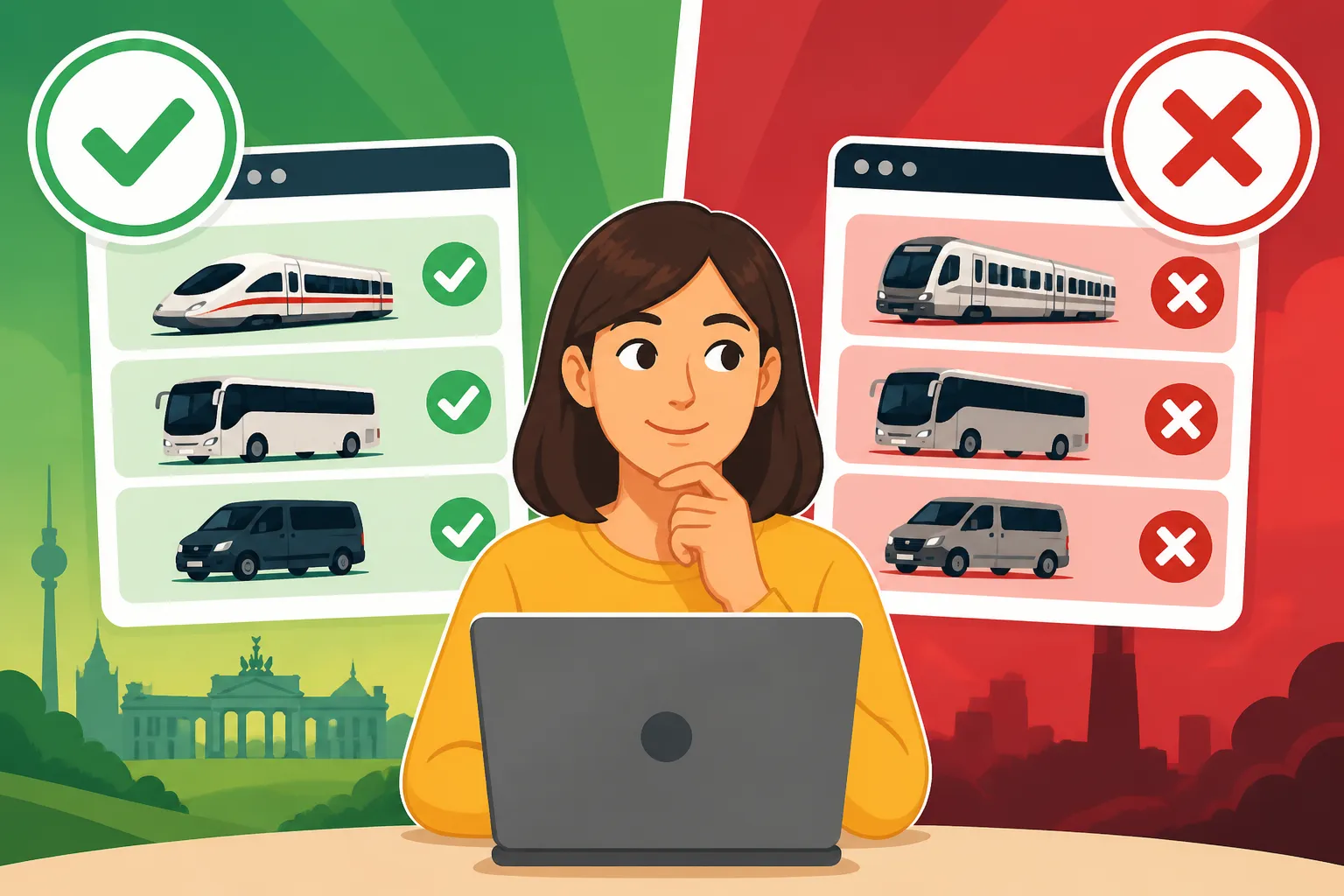
- True Multilingual Support: Unlike some direct sites that offer partial English translations, Omio provides a fully translated experience from start to finish. This eliminates the anxiety of missing crucial information due to a language barrier.
- Multi-Modal Comparison: Why visit three different websites (DB, FlixBus, an airline) when Omio shows you all your options side-by-side? This saves immense time and often helps you find the cheapest or fastest route without bouncing between tabs and translating each time. For example, if you're exploring Getting Around Germany: Trains, Buses, Flights, and Car Hire, Omio becomes your central hub for planning.
- User-Friendly Interface: Direct booking sites, particularly for public transport operators like Deutsche Bahn, can sometimes feel a bit dated or overly complex. Omio's interface is sleek, modern, and intuitive, making the booking process incredibly smooth even for first-time users.
- Integrated Customer Support: If you have questions or issues, Omio offers customer support in English, which is a massive relief compared to potentially trying to explain a complex booking problem in German to a direct provider's hotline.
For anyone who’s ever gotten lost trying to understand the myriad of options and conditions on bahn.de, Omio provides a breath of fresh air. It’s designed to be expat-friendly, recognizing that your primary need is clarity and ease of use in a language you understand. Booking through Omio not only gets you where you need to go but also significantly reduces the mental load of travel planning in a foreign country.
Navigating Direct Booking Sites (When You Have No Other Choice)
While Omio is fantastic, there might be times when you find yourself needing to use a direct booking site. Perhaps for very specific local routes, certain types of regional passes, or simply because you want to explore all possible options directly. It’s good to know what to expect and how to navigate these sites, even with their quirks.
Deutsche Bahn (DB) and its English Limitations
Deutsche Bahn, or DB, is the backbone of Germany’s train network. Its official website, bahn.de, is where you'll find the most extensive information on train schedules, connections, and tickets. They do offer an English version, which is a huge improvement from years ago, but it’s not always flawless.
When you switch the language to English on bahn.de, most of the main navigation and booking process will indeed be in English. However, you might encounter issues with:
- Subtle Details: Crucial footnotes, specific terms and conditions for certain Sparpreis (saver) tickets, or special offers might only appear in German, or in a translated form that loses nuance. This can be tricky, especially when deciding on flexibility or cancellation policies.
- Regional Specifics: For very short journeys, or when combining regional buses with trains, the English interface can sometimes fall short, presenting information in German or simply not showing the most optimal regional connections that a local might know about.
- Customer Service: While some DB staff speak English, their phone support or more complex inquiries might require German, which can be frustrating if you run into a problem with your booking.
It’s definitely usable, and many expats manage with it, but be prepared for moments where you’ll need Google Translate handy. The DB Navigator app is also incredibly useful for real-time information on train times and platforms, and it generally has a good English mode. If you're comparing High-Speed Trains in Germany ICE: Deutsche Bahn Routes and Savings versus other options, always cross-reference if you're using DB's site directly.
FlixBus and Other Local Providers
FlixBus has become the dominant player in long-distance bus travel across Germany and Europe. Their website, flixbus.de, is generally quite user-friendly for English speakers. The booking process is straightforward, and most information, including stops, times, and amenities, is clearly displayed in English. They have made a significant effort to cater to an international clientele, which is a big plus.
However, even with FlixBus, you might occasionally encounter:
- Payment Gateways: Some localized payment options might pop up in German.
- Specific Offers: Promotional banners or very detailed T&Cs might revert to German.
For other, more localized transport, things get trickier. If you're trying to figure out how to navigate Getting Around German Cities: U-Bahn, S-Bahn, Trams, and Buses, you'll often find yourself on city-specific transport websites (like BVG for Berlin, MVV for Munich, or HVV for Hamburg). These sites are often primarily in German, with limited or clunky English sections. For these, it’s often best to rely on general travel apps (like the DB Navigator, Google Maps, or of course, Omio) or to ask a local for help. Trying to decipher the nuances of a Deutschland-Ticket on a purely German site can be a real challenge for example. For specific regional questions, you might find yourself needing to use your Survival German for Travelers Key Phrases to Learn First just to get by.
Essential Tips for Stress-Free German Transport
Even with the best booking sites, a little preparation goes a long way in ensuring your German travels are smooth and enjoyable. Moving around Germany, especially across different regions or cities, requires a bit of foresight.
Preparing for Your Journey
Planning ahead is key, particularly if you're looking to save money or secure specific times.
- Book in Advance for Trains: For long-distance train travel with Deutsche Bahn, especially on popular routes or during peak seasons, booking weeks or even months in advance can significantly reduce your costs. DB offers Sparpreis (saver fare) tickets that are much cheaper than last-minute flexible fares. Services like Omio will clearly show you these options. The more flexible your dates and times, the better chance you have of snagging a deal.
- Check Real-Time Updates: Delays happen, even in Germany. The DB Navigator app (even if you booked through Omio, the train info is consistent) is your best friend for real-time updates on train departures, arrivals, and platform changes (Gleis numbers). Don't rely solely on the static schedule.
- Understand Regional Differences: Germany has various Verkehrsverbünde (transport associations) that manage local public transport. A ticket bought in one city might not be valid even just outside its immediate network. For broader regional travel, consider options like the Regional Trains and the Deutschland-Ticket Explained if you plan to travel extensively.
- Have Digital and Physical Tickets: While mobile tickets are widely accepted, it’s always a good idea to have a screenshot or even a printed copy as a backup, just in case your phone battery dies or you encounter a finicky ticket inspector.
Last-Minute Bookings and Flexibility
Life happens, and sometimes you need to travel at the last minute. This is where your options might shift, especially in terms of cost.
- Last-Minute Train Prices: Be warned: last-minute, flexible train tickets (Flexpreis) can be incredibly expensive, sometimes costing two or three times the Sparpreis. If you need maximum flexibility and can’t commit to a specific train, you pay for that privilege.
- Buses as an Alternative: If train prices are exorbitant, FlixBus often remains a much more affordable last-minute option, though travel times will naturally be longer. Their network is extensive, connecting most major cities. You can easily compare these options side-by-side using Omio.
- Car-Sharing (Mitfahrgelegenheit): For very spontaneous or budget-conscious travel, especially if you’re heading to a less accessible location, consider car-sharing platforms like BlaBlaCar. You’re essentially hitching a ride with someone who’s already going that way, contributing to fuel costs. This requires a bit more flexibility and less stringent scheduling but can be a fun way to meet people and save money.
- Consider Renting a Car: For short trips or if you're traveling with a group or a lot of luggage, Renting a Car and Driving on the Autobahn might be a viable alternative. But factor in fuel costs, parking, and potential environmental zone restrictions in cities.
No matter your journey, from a quick hop across town to a cross-country adventure, Omio is truly the easiest way to find, compare, and book your transport in English, giving you one less thing to stress about in your exciting life as an expat in Germany.
Here’s a quick overview of your booking options:
| Feature | Omio | Deutsche Bahn (bahn.de) | FlixBus (flixbus.de) |
|---|---|---|---|
| Language Support | Excellent (Fully multilingual) | Good, but some details remain German | Good, but occasional German phrases/pop-ups |
| Transport Types | Trains, Buses, Flights, Ferries (selected) | Primarily Trains (some regional buses) | Long-distance Buses (some trains via FLIXTRAIN) |
| User Experience | Very intuitive, expat-friendly | Can be complex, information-heavy | Generally straightforward |
| Price Comparison | Compares multiple providers (train, bus, flight) | Shows DB prices only | Shows FlixBus prices only |
| Ticket Delivery | E-ticket (app/email) | E-ticket (app/email) | E-ticket (app/email) |
| Customer Support | Multilingual | Primarily German, English available | Multilingual (often via chat/email) |
| Strengths | Convenience, comparison, clarity, ease | Extensive rail network, speed | Budget-friendly, wide bus network, flexibility |
| Weaknesses | May have small booking fee | Can be overwhelming, less multi-modal | Limited to bus primarily, sometimes longer journeys |
Remember, your life in Germany doesn't have to be a constant struggle against German-only websites. Embrace tools like Omio, understand the quirks of the local systems, and you'll be zipping around the country like a seasoned local in no time! Safe travels!
Disclaimer
The information provided in this guide is for general informational purposes only and does not constitute professional advice. While we strive to keep the information up-to-date and correct, travel policies, prices, and website functionalities can change rapidly. Always check the latest information directly with the service providers or official transport websites before making any travel decisions.