High-Speed Trains in Germany (ICE): Deutsche Bahn Routes and Savings
Let's be honest, moving to Germany and figuring out the public transport system can feel like learning a whole new language – and sometimes, it quite literally is! I remember my first few attempts at planning a long-distance trip, staring blankly at schedules and trying to decipher all the different train types and ticket options. It was a real headache, and I know many of you have faced similar hurdles. But trust me, once you get the hang of it, Germany's high-speed trains, particularly the glorious ICE, can be your best friend for exploring this beautiful country. This guide is all about demystifying the ICE experience, from understanding the routes to snagging those sweet savings.
Disclosure: This post may contain affiliate links. We may earn a commission at no extra cost to you if you make a purchase through these links. Read full disclosure.
Understanding Germany's High-Speed Train Network: The ICE Experience
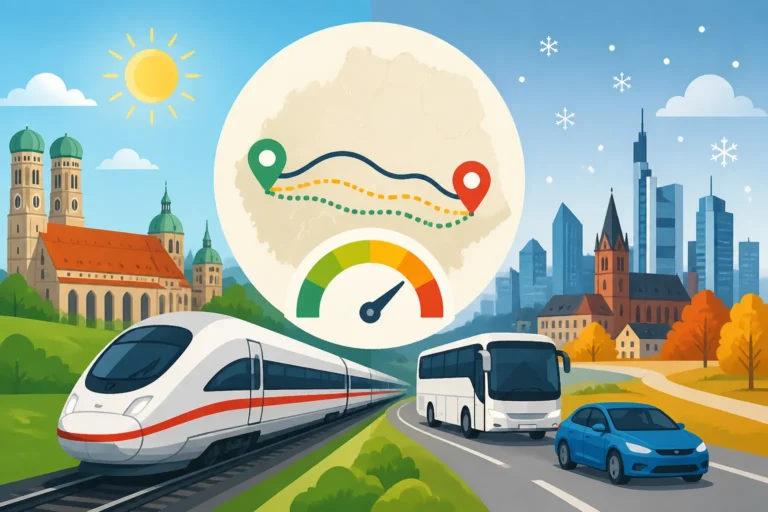
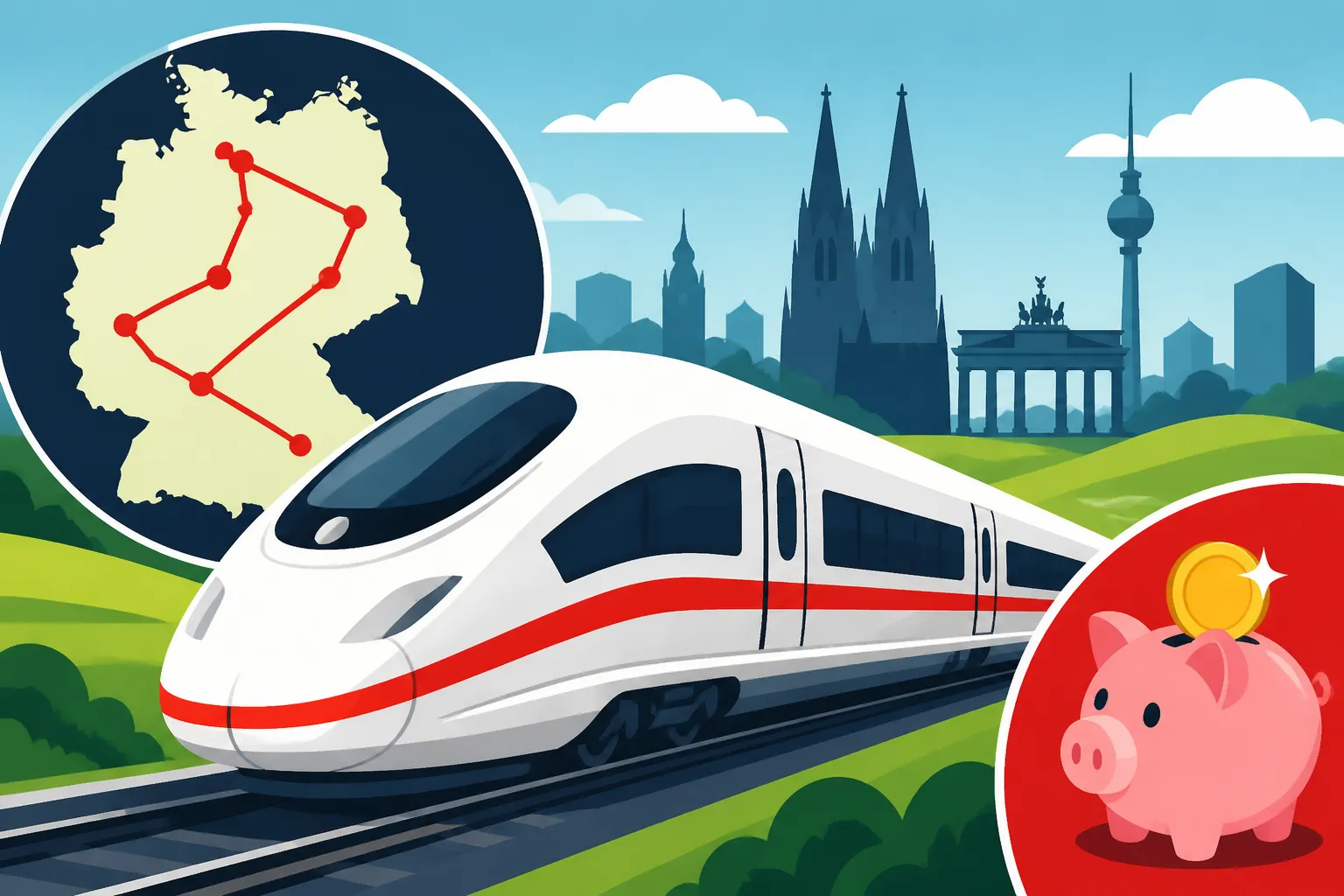
Germany boasts one of Europe's most efficient and expansive high-speed rail networks, with the Intercity-Express, or ICE, trains at its very heart. These sleek, white giants are a symbol of German engineering and a fantastic way to travel across the country, often faster than driving and certainly more relaxing. For many expats, embracing train travel becomes a fundamental part of life here, offering a unique perspective on the landscape and a stress-free alternative to congested roads.
What Exactly is an ICE Train?
Imagine stepping onto a modern, comfortable train designed for speed and passenger comfort. That's essentially an ICE train. These high-tech marvels can reach speeds of up to 300 km/h (about 186 mph), whisking you from one end of Germany to another in what feels like no time at all. There are several generations of ICE trains, from the classic ICE 1 and ICE 2 to the newer, even more futuristic-looking ICE 3, ICE 4, and the international ICE T trains. While the aesthetics might differ slightly between models, what remains constant is the commitment to a smooth, efficient, and comfortable journey.
Onboard, you'll find spacious seating, often with individual reading lights and power sockets for your devices – a lifesaver for long journeys when you need to work or just keep your entertainment going. The panoramic windows offer stunning views of the German countryside as you zoom past forests, rivers, and charming towns. It's a far cry from the cramped conditions you might associate with some other forms of transport, offering a genuine opportunity to unwind and enjoy the ride.
The Backbone: Deutsche Bahn's Role
The entire high-speed train network in Germany is operated by Deutsche Bahn (DB), the national railway company. DB is an absolute behemoth in the German transport landscape, running everything from local S-Bahn lines in major cities to regional express (RE) trains and the intercity (IC) and intercity-express (ICE) services that connect the country's major hubs. When we talk about ICE trains, we are exclusively talking about Deutsche Bahn's premium long-distance product.
Deutsche Bahn's extensive network ensures that almost every significant city and region in Germany is accessible by rail. While regional trains (like RE or RB) handle shorter distances and more local stops, the ICE is designed for speed and efficiency over long hauls, minimizing stops between major destinations. Understanding that DB is the central player helps simplify your booking process, as you won't need to juggle multiple operators for your high-speed journeys. Their singular system, despite its occasional quirks, provides a consistent experience across the board.
Why Expats Choose ICE for Travel
For us expats, the ICE train isn't just a mode of transport; it's often a gateway to feeling more connected to our new home. The reasons are plentiful and practical. Firstly, there's the sheer convenience. No dealing with airport security lines for domestic travel, no traffic jams on the Autobahn (though you can always consider Renting a Car and Driving on the Autobahn if you prefer), and no endless search for parking in a crowded city center. You simply arrive at the station, find your platform, and hop on.
Secondly, the speed is undeniable. Imagine zipping from Berlin to Munich in roughly four hours, or from Frankfurt to Cologne in just over an hour. This efficiency makes weekend trips incredibly feasible, allowing you to explore more of Germany and even neighboring countries. Environmentally, choosing the train over flying or driving contributes to a lower carbon footprint, which aligns with the strong ecological consciousness you'll find throughout Germany. Moreover, the connectivity of the ICE network means you can often get from one city center to another, avoiding the often inconvenient and costly transfers associated with airports located outside city limits.
Navigating Key ICE Routes Across Germany
Germany's ICE network is a beautifully woven tapestry connecting the country's most important cities, from the bustling northern ports to the picturesque southern Alps. Understanding the main arteries of this network will empower you to plan your travels effectively, whether you're heading for a business meeting or a well-deserved vacation.
Major North-South Corridors
The primary north-south routes are truly the backbone of the ICE network. One of the most significant is the line connecting Hamburg in the north to Berlin, and then continuing south through cities like Erfurt and Nuremberg, all the way to Munich. This route allows for rapid transit between Germany's largest cities and offers fantastic scenic stretches, particularly as you approach Bavaria. Another vital corridor runs along the Rhine River, connecting major economic centers like Cologne, Frankfurt (often via Frankfurt Airport's long-distance station), and Stuttgart, before heading towards Munich or even Switzerland. This route is especially popular for business travelers due to the density of corporate headquarters and financial institutions along its path. For example, you can easily find a train from Cologne to Munich, making intercity connections seamless.
Consider a journey from the vibrant port city of Hamburg down to the historical charm of Munich. You'll board an ICE, perhaps an ICE 4, and within hours, you'll be experiencing a completely different regional culture. Or perhaps you're working in Frankfurt and need to visit a client in Stuttgart; the ICE makes this a comfortable day trip rather than an arduous drive. These main lines often feature the most frequent services, making last-minute travel a bit more forgiving, although booking in advance is always recommended for the best prices.
East-West Connections and International Links
While the north-south routes are dominant, the east-west connections are equally crucial, linking economic powerhouses and cultural centers. The route from Berlin to cities in the west, such as Hannover, Dortmund, and Düsseldorf, is vital for connecting the capital with the industrial heartland. Another key route spans from Berlin through Leipzig to Erfurt and onto Frankfurt, providing rapid access between the eastern and central parts of Germany.
What's really exciting for us expats is the ICE's ability to stretch beyond Germany's borders. These international ICE routes connect major German cities directly to European capitals like Paris (via Frankfurt), Brussels, Amsterdam (from Cologne), Vienna (from Munich/Frankfurt), and Zurich (from Stuttgart/Frankfurt). Imagine hopping on an ICE in Berlin and arriving in the heart of Vienna just a few hours later, ready to explore! These seamless connections make European travel incredibly accessible and often more enjoyable than flying, especially when you consider the time saved on airport transfers and security. For those looking for broader travel options, understanding these international routes can unlock incredible adventures.
Planning Your Journey: Tools and Apps
Gone are the days of deciphering complicated paper timetables at the station. Today, planning your ICE journey is primarily a digital affair, and thankfully, the tools are user-friendly, even for non-German speakers. The absolute king of planning is the official DB Navigator app. This app is a must-have for anyone traveling by train in Germany. It allows you to search for connections, check real-time departures and arrivals, view platform information, see train compositions (which car is first class, where the Bordbistro is), and, of course, purchase tickets. The interface is available in English, making it indispensable.
Beyond the DB Navigator, there are other helpful platforms. Websites like Omio can be a fantastic resource for comparing different modes of transport (trains, buses, flights) and even booking tickets from various operators, not just Deutsche Bahn. This can be particularly useful if you're trying to figure out the fastest or cheapest way to get from point A to point B, especially for international travel where different rail companies might be involved. While you'll still largely be booking Deutsche Bahn tickets for ICE journeys within Germany, using a platform like Omio offers a wider comparison perspective. Another excellent resource for planning the 'what to do' once you arrive is GetYourGuide. It's not for train tickets, but it's perfect for discovering and booking tours and activities in your destination city, ensuring your entire trip is seamlessly planned.
Cracking the Code: Saving Money on ICE Tickets
Traveling by ICE can sometimes feel like a luxury, and indeed, if you buy tickets last minute at the standard "Flexpreis," it can be quite pricey. However, Deutsche Bahn offers several clever ways to save money, especially if you're a planner. As an expat, understanding these options is crucial for making your travel budget go further.
The Art of Early Booking: Sparpreis and Super Sparpreis
This is arguably the most effective way to save money on ICE tickets. Deutsche Bahn's "Sparpreis" (saver fare) and "Super Sparpreis" (super saver fare) tickets are discounted fares that reward you for booking well in advance. These tickets are released usually around six months before the travel date, and the earlier you book, the more likely you are to find the cheapest prices. It's not uncommon to find tickets for popular routes at a fraction of the full price if you book months ahead.
The catch with Sparpreis and Super Sparpreis tickets is their rigidity. Super Sparpreis tickets are non-refundable and non-changeable, meaning if your plans change, you lose the ticket. Sparpreis tickets offer a slight bit more flexibility, allowing cancellations for a fee (usually a voucher for future travel, not a cash refund). This makes them perfect for trips with fixed dates, like visiting family or attending a specific event. Always check the terms and conditions carefully before committing. The best place to find these deals is directly on the Deutsche Bahn website or through the DB Navigator app. They usually include a "City-Ticket" option in over 120 German cities, allowing you to use local public transport at your departure and destination points. You can even extend your booking window by seeing How Early Should You Book ICE Trains in Germany.
Flexible Fares and BahnCard Options
For those whose plans are more spontaneous or subject to change, the standard "Flexpreis" ticket is your friend. While it's the most expensive option, it offers maximum flexibility: you can use any train on your chosen route and day, and it's fully refundable and changeable. It's often the go-to for business travelers or anyone needing that peace of mind.
However, if you travel frequently by train, a "BahnCard" can be a game-changer. Deutsche Bahn offers several BahnCard options, each providing a fixed percentage discount on Flexpreis and Sparpreis tickets for an entire year.
- BahnCard 25: Gives you a 25% discount on both Flexpreis and Sparpreis tickets. Great for occasional travelers.
- BahnCard 50: Provides a 50% discount on Flexpreis tickets and a 25% discount on Sparpreis tickets. Ideal for frequent travelers who often need flexibility.
- BahnCard 100: This is the ultimate pass for hardcore train enthusiasts, offering unlimited travel on almost all Deutsche Bahn trains (including ICE) throughout Germany for a fixed annual fee. Think of it as an all-you-can-eat train buffet.
The cost of a BahnCard can be significant upfront, so it's essential to calculate if your annual travel savings will outweigh the card's price. DB also offers trial BahnCards or special promotions periodically, which can be a good way to test the waters before committing. For students or younger travelers, there are often discounted "My BahnCard" options. Remember, getting a BahnCard can significantly reduce your travel costs, and it's something many long-term expats swear by for internal travel.
Group Travel, Deutschland-Ticket, and Other Deals
While the focus here is on ICE, it's worth noting other ways to save on train travel, though some might not apply directly to ICE. For group travel, Deutsche Bahn often has special group fares (Group Sparpreis) that can offer significant discounts if you're traveling with friends or family. These also need to be booked in advance.
You might also hear about the "Deutschland-Ticket," a wildly popular monthly subscription offering unlimited travel on all local and regional public transport throughout Germany. It's fantastic for exploring regions and smaller towns, but crucially, it is generally not valid on ICE, IC, or EC trains. So, if your goal is high-speed travel, don't confuse it with an ICE ticket. You can find more details in our guide on the Deutschland-Ticket Explained. However, for a fully integrated trip, you could use the Deutschland-Ticket for the local legs of your journey and an ICE ticket for the long-distance part.
It's also worth keeping an eye out for special promotions that Deutsche Bahn occasionally runs, especially around holidays or seasonal events. Subscribing to their newsletter or checking the "Offers" section on their website can sometimes yield unexpected savings. Platforms like Omio also often highlight various offers, ensuring you see a range of options when planning your trip.
| Ticket Type | Price Basis | Flexibility | Best For | Typical Purchase Time |
|---|---|---|---|---|
| Super Sparpreis | Heavily Discounted | None (Non-refundable, non-changeable) | Fixed plans, budget travelers | Well in advance (weeks to months) |
| Sparpreis | Discounted | Limited (Voucher for fee) | Fixed plans, slight flexibility desired | Well in advance (weeks to months) |
| Flexpreis | Standard Full Price | Full (Refundable, changeable) | Spontaneous travel, uncertain plans, business | Anytime (even last minute) |
| BahnCard 25 | Annual Subscription | 25% off Sparpreis & Flexpreis | Occasional ICE travel (3-4+ trips/year) | Anytime |
| BahnCard 50 | Annual Subscription | 50% off Flexpreis, 25% off Sparpreis | Frequent ICE travel (8-10+ trips/year), preference for flexibility | Anytime |
| BahnCard 100 | Annual Subscription | Unlimited travel | Very frequent travel, daily commutes | Anytime |
The ICE Travel Experience: What to Expect Onboard
Once you've navigated the booking process, the real treat begins: the journey itself. Traveling by ICE is generally a pleasant and efficient experience, but knowing what to expect can help you make the most of your trip and avoid any minor bumps along the way.
Seat Reservations and Class Differences (1st vs 2nd Class)
One of the first decisions you'll make when booking an ICE ticket is whether to reserve a seat. For Sparpreis and Super Sparpreis tickets, a seat reservation is usually not included and costs extra, but for Flexpreis tickets, it may be included depending on the fare purchased or can be added. My advice? Especially on popular routes or during peak travel times (Friday afternoons, Sunday evenings, public holidays), reserve a seat! There's nothing worse than dragging your luggage through multiple cars looking for a free spot, only to end up standing for part of the journey. A seat reservation guarantees your comfort and peace of mind.
Then there's the question of class.
- 2nd Class: This is where most travelers reside, and it's perfectly comfortable. You'll find seats arranged in rows of 2+2, often with tables in between for groups. While it can get busy, it's generally clean and provides everything you need for a good journey, including power outlets and often Wi-Fi.
- 1st Class: If you're looking for a bit more luxury and space, 1st class is a noticeable upgrade. Seats are usually arranged in 2+1 configurations, offering more legroom and wider seats. You often get complimentary newspapers, a quieter atmosphere, and sometimes even at-seat food and drink service (though this varies by train type and route). The Wi-Fi tends to be more reliable in 1st class too. Whether it's worth the extra cost depends entirely on your budget and how important those added comforts are to you. For a quick hop, 2nd class is fine; for a longer journey or if you need to work, 1st class can be a nice indulgence.
Amenities and Services: WiFi, Dining, and Luggage
ICE trains are well-equipped to make your journey enjoyable.
- WiFi: All ICE trains offer free Wi-Fi, though the speed and reliability can be a bit hit-or-miss, especially in rural areas or tunnels. It's usually sufficient for basic browsing and messaging, but don't count on streaming movies uninterrupted. In 1st class, the Wi-Fi tends to be slightly better.
- Dining: Most ICE trains feature a "Bordbistro" (a snack bar) or a "Bordrestaurant" (a full-service restaurant car). The Bordbistro offers lighter fare like sandwiches, snacks, coffee, and drinks. The Bordrestaurant provides hot meals, often with daily specials. It's not gourmet dining, but it's a convenient option for a meal or a coffee break during your journey. Payment can usually be made by cash or card.
- Luggage: There are ample luggage racks above the seats and larger storage areas at the end of each car. For heavier items, aim to board early to secure a good spot. Keep your valuables with you, as theft, while rare, can happen. Strollers and bicycles (with special tickets and only on certain trains/routes) can also be accommodated.
- Toilets: Clean and functional toilets are available in every car, including accessible options.
Navigating Delays and Cancellations
Ah, the infamous German train delays! While Deutsche Bahn has an excellent reputation for efficiency, delays and cancellations do happen. It's part of the travel reality, and as expats, we learn to roll with it. The most important thing is to stay informed.
- Check the DB Navigator app: This is your best friend for real-time updates. It shows expected arrival times, platform changes, and reasons for delays.
- Listen to announcements: While many major stations now have English announcements, understanding a few key German phrases for train travel can be useful.
- Fahrgastrechte (Passenger Rights): Germany, like the rest of the EU, has robust passenger rights. If your ICE train is delayed by:
- 60 minutes or more, you're entitled to 25% of your ticket price back.
- 120 minutes or more, you're entitled to 50% of your ticket price back.
- In case of significant delays or cancellations, you might also be entitled to overnight accommodation or alternative transport. You can claim compensation via a form available on the DB website or at a DB travel center. Keep your ticket as proof. Don't be shy about claiming; it's your right!
For unexpected disruptions, it can be helpful to also check alternative transport options like Long-Distance Buses in Germany: FlixBus and Networks in case of major train cancellations.
Practical Tips for a Smooth ICE Journey
As a seasoned expat traveler, I've picked up a few tricks over the years to make train journeys in Germany as smooth as possible. A little bit of preparation goes a long way in ensuring your trip is stress-free.
Buying Tickets: Online, App, or Station?
You have several convenient options for purchasing your ICE tickets, each with its own advantages:
- Online via Deutsche Bahn Website: The official DB website (bahn.de) is comprehensive and available in English. It's excellent for planning complex journeys, comparing fares, and taking advantage of Sparpreis deals. You can print your ticket at home or save it as an e-ticket on your phone.
- DB Navigator App: As mentioned, this app is indispensable. It mirrors the website's functionality for searching and booking, but with the added benefit of real-time updates and having your ticket easily accessible on your phone. Most expats will tell you this is the easiest way to go.
- At the Station:
- Ticket Machines: These are available at all major and most minor stations. They have an English language option and are quite user-friendly for direct bookings. They're great for last-minute purchases.
- DB Reisezentrum (Travel Center): For more complex bookings, questions, or if you prefer human interaction, the Reisezentrum (travel center) at larger stations has staff who can assist you. Expect longer queues during peak times.
Keep an eye on resources that detail How to Buy Deutsche Bahn Tickets and Save Money for more in-depth advice on booking strategies. Also, remember that third-party platforms like Omio can offer competitive pricing and make comparison shopping easier, especially if you're exploring multimodal travel options.
Getting to the Station and Boarding
German train stations, especially the larger Hauptbahnhöfe (main stations), can be bustling places, particularly in cities like Berlin, Munich, or Frankfurt. Give yourself ample time before departure.
- Arrive Early: Aim to be at the station at least 15-20 minutes before your train's scheduled departure, especially if you need to find your platform or grab a coffee. For larger stations with many platforms, add even more time.
- Check the Boards: Look for your train number (e.g., ICE 801), destination, and departure time on the large departure boards (Abfahrt). These will direct you to the correct platform (Gleis).
- Wagenreihung (Train Composition): At most major platforms, you'll see a "Wagenreihung" display or a diagram indicating the order of the train cars (Wagen). This shows where 1st class, 2nd class, and the Bordbistro/Bordrestaurant will be located along the platform. If you have a seat reservation, checking this diagram beforehand can save you from sprinting down the platform at the last minute!
- Boarding: When the train arrives, be ready to board quickly, especially if it's a busy stop. The doors will open automatically or require a button press. Store your luggage efficiently.
Essential German Phrases for Train Travel
While many DB staff members in larger stations and on ICE trains speak English, knowing a few German phrases can greatly enhance your experience and prove invaluable in an emergency or if you encounter staff who aren't fluent in English.
- "Entschuldigung, sprechen Sie Englisch?" (Excuse me, do you speak English?)
- "Wo ist der Zug nach…?" (Where is the train to…?)
- "Gleis drei, bitte." (Platform three, please.)
- "Ich habe eine Fahrkarte." (I have a ticket.)
- "Ist dieser Platz frei?" (Is this seat free?)
- "Ein Kaffee, bitte." (A coffee, please.)
- "Ist der Zug pünktlich?" (Is the train on time?)
- "Hat der Zug Verspätung?" (Is the train delayed?)
- "Wann kommt der Zug an?" (When does the train arrive?)
- "Danke schön!" (Thank you very much!)
Familiarizing yourself with common terms from our Common German Medical Terms: A Mini Dictionary for Patients can also be helpful for general life in Germany, although hopefully, not for train travel directly! Mastering even a few basic phrases will make your train journeys much smoother and help you feel more integrated into German life.
Ultimately, high-speed train travel in Germany is an incredibly efficient and enjoyable way to explore your new home country and beyond. With a little planning and understanding of the system, you'll be zipping across Germany like a seasoned local in no time.
Disclaimer
Please note that while we strive to provide accurate and up-to-date information, regulations and services in Germany, especially those concerning public transport and pricing, can change. It's always advisable to double-check the latest information directly with Deutsche Bahn or on their official website (bahn.de) before making any travel plans or purchases. This guide is for informational purposes only and does not constitute official travel or legal advice.