How Early Should You Book ICE Trains in Germany?
Standing in front of the massive blue departure board at Frankfurt Hauptbahnhof or Berlin Hauptbahnhof, watching ticket prices skyrocket for a train leaving in twenty minutes, is a rite of passage every expat and visitor experiences at least once. Germany’s Intercity-Express (ICE) networks are efficient, sleek, and comfortable, but navigating their pricing structure can feel like solving an intricate puzzle. If you wait until the day of travel, a single one-way trip between major hubs can easily double or triple compared to the advance purchase rate. Understanding exactly when and how to book your ICE tickets is the single most effective way to save money while traveling across Central Europe.
Disclosure: This post may contain affiliate links. We may earn a commission at no extra cost to you if you make a purchase through these links. Read full disclosure.
This comprehensive guide breaks down the Deutsche Bahn booking calendar, dynamic pricing algorithms, and ideal booking windows for different travel scenarios. Whether you are commuting for work, planning a weekend trip, or organizing a holiday getaway, you will learn the exact steps to land the best fares without sacrificing travel flexibility.
The Deutsche Bahn Booking Window and Fare Structure
To understand when you should buy your tickets, you first need to understand how the German national rail provider structures its pricing. Deutsche Bahn does not use flat rate fares for long-distance trains. Instead, its pricing algorithm operates much like an airline: as seats sell out, remaining tickets on that specific departure shift into higher price brackets.
Understanding the German Train Booking Calendar
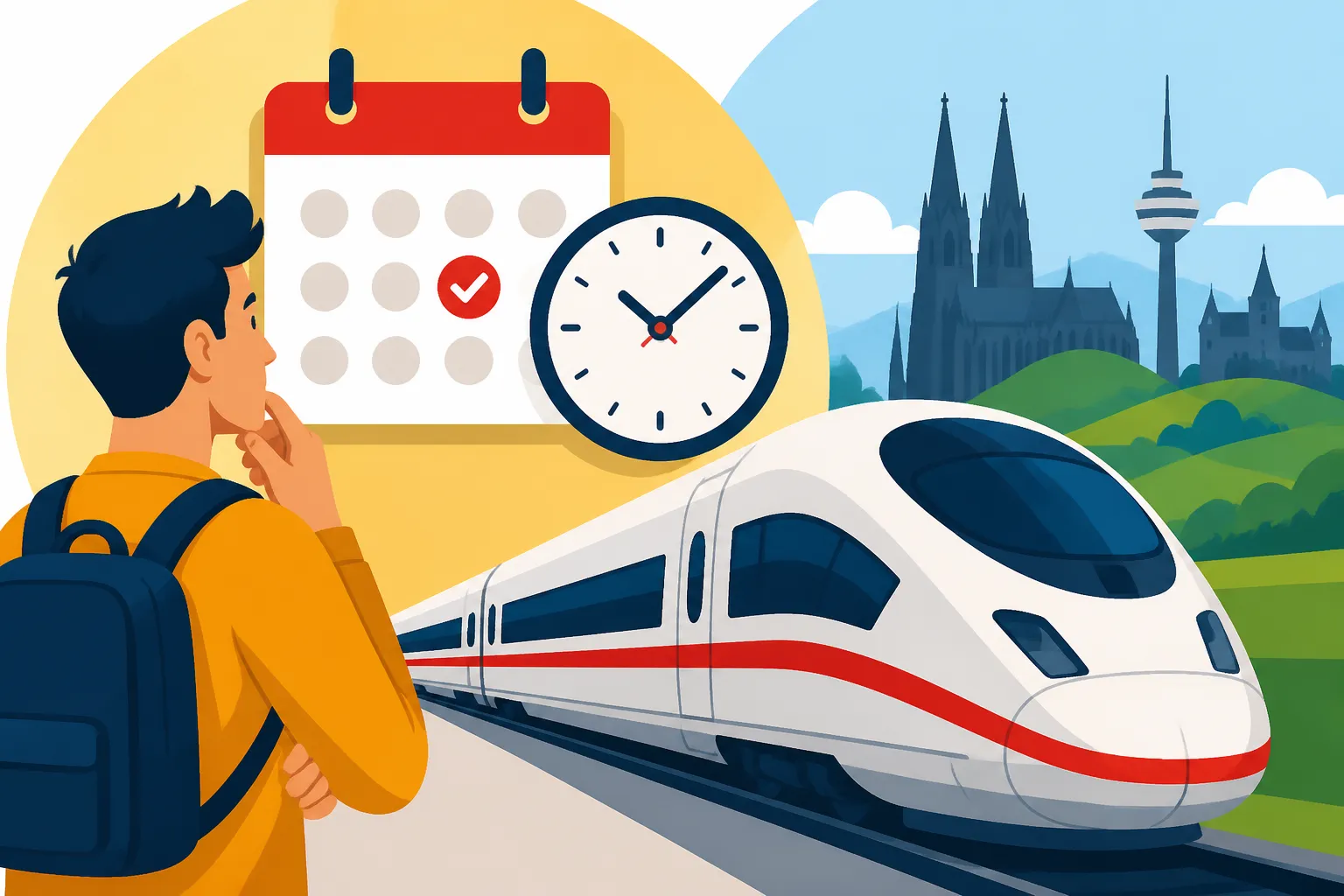
Deutsche Bahn typically releases ICE train tickets up to six months in advance for standard travel periods. This long window gives proactive planners a massive advantage when securing low fares on long-distance routes, such as traveling from Munich in the south up to Hamburg on the northern coast.
However, there is an important caveat to keep in mind regarding the annual timetable update (Fahrplanwechsel). Every year in mid-December, Deutsche Bahn updates its master schedule across the nationwide network. Tickets for travel dates after this mid-December shift are usually unlocked for booking around mid-October. If you are planning winter holiday travel, December trips, or Christmas market visits, you must mark mid-October on your calendar to grab opening fares as soon as the system updates.
The Tiered Ticket System: Flexpreis, Sparpreis, and Super Sparpreis
When booking an ICE, you will encounter three main fare categories for second-class and first-class travel:
- Super Sparpreis: This is the absolute cheapest tier available. It locks you into a specific train on a specific time and date, a rule known in German as Zugbindung. Once booked, this ticket cannot be cancelled, exchanged, or refunded under normal circumstances. If you miss your train due to your own delay, the ticket is forfeited.
- Sparpreis: Slightly more expensive than the base tier, the standard Sparpreis also comes with strict Zugbindung. However, it offers additional peace of mind: you can cancel the ticket prior to the first day of validity in exchange for a Deutsche Bahn travel voucher, minus a nominal processing fee. In many cases, it also includes a local transit add-on (City-Ticket) allowing you to travel seamlessly on city buses, U-Bahn, and S-Bahn to reach your final destination station.
- Flexpreis: As the name suggests, the Flexpreis offers total freedom. You are not tied to a specific train time or route section on your booked day. If your meeting runs late or your flight is delayed, you can jump on any ICE operating along that ticket’s route segment. Flexpreis tickets can also be cancelled for a full refund before the valid travel date, though you pay a premium price for this flexibility.
For those exploring High-Speed Trains in Germany (ICE): Deutsche Bahn Routes and Savings, understanding these three tiers is essential for managing your travel budget without getting caught by unexpected restrictions.
How Dynamic Pricing Impacts ICE Fares Over Time
The pricing engine behind ICE trains continuously monitors passenger volume, historical demand, time of day, and national holidays. A weekday train running at 06:00 AM between Cologne and Frankfurt might remain cheap until a week before departure, whereas a Friday afternoon ICE running at 16:00 along the exact same track will see its lowest price tiers sell out months in advance.
When high-demand tickets sell out, the system automatically steps up to the next price point within the Sparpreis spectrum. Eventually, when all promotional fare buckets are exhausted, only full-fare Flexpreis tickets remain. This is why booking early is not just about convenience; it is a direct financial decision.
Optimal Booking Timelines for Different Scenarios
There is no single “magic number” of days in advance to book every single train journey, as optimal timing varies based on route popularity, season, and your personal travel flexibility. However, following proven timing guidelines will help you secure the best balance between price and convenience.
Long-Distance Cross-Country Journeys: The Sweet Spot
For major trunk lines connecting large metropolitan areas—such as Berlin to Munich, Hamburg to Frankfurt, or Stuttgart to Berlin—the ideal booking window is generally six to eight weeks prior to departure.
During this window, Deutsche Bahn’s initial promotional ticket inventory is fully available, giving you access to the lowest Super Sparpreis tiers across various times of day. If you check earlier than two months out, you will easily find maximum availability, but prices rarely drop below the initial release baseline. If you wait until less than three weeks before departure on popular routes, low-tier tickets begin disappearing rapidly.
If you are coordinating a larger journey that involves multi-city transit or combining train travel with regional bus connections across European borders, platforms like Omio can help you cross-reference ICE connections against alternative long-distance routes to make sure you are getting the best overall itinerary.
Holiday Seasons, Major Events, and Peak Travel Days
During peak national travel times, standard booking rules go out the window. Germany experiences intense rail traffic around major holidays, including Easter weekend, Pentecost (Pfingsten), German Unity Day, and the extended Christmas and New Year holiday season.
For peak travel periods, you should book your ICE tickets as soon as the booking window opens, which is typically three to six months in advance, or in mid-October for winter holiday schedules. On heavy travel days—especially the Thursday afternoon before Easter or December 23rd—trains sell out of discount seats almost immediately.
Furthermore, major trade fairs (Messen) in cities like Frankfurt, Hannover, or Düsseldorf, as well as massive cultural events, send demand soaring. If you are heading to a major event or taking a weekend trip, lock in your transit as early as possible. Once your train is confirmed, you can easily reserve accommodations through platforms like Booking.com near the central train station to keep your transit logistics effortless.
Last-Minute Travel and Short-Distance ICE Routes
Life happens, and you will not always have the luxury of planning two months ahead. If you need to travel on short notice, here is how to minimize costs:
- Travel Off-Peak: Avoid early morning business commuter hours (07:00 to 09:00) and evening rush hours (16:30 to 18:30). Mid-day trains (11:00 to 14:00) and late-night departures often retain lower-tier Sparpreis availability even a few days before travel.
- Short-Distance ICE Trips: On shorter routes (e.g., Augsburg to Munich or Mannheim to Frankfurt), the price gap between advance purchase and last-minute tickets is much smaller. In some cases, taking regional express trains (RE or RB) using regional day tickets or local transit passes can offer a cost-effective alternative to last-minute ICE fares. If you travel frequently on regional networks, reading up on What Is the Deutschland-Ticket and Is It Worth It? can clarify when regional transit beats an ICE.
- Check Alternative Departures: If a direct ICE between major stations is priced at full Flexpreis, check connecting routes that require a quick transfer at a smaller junction station; these lesser-known connections often have leftover discount seats.
Practical Strategies for Saving Money and Avoiding Stress
Timing your ticket purchase is only part of the strategy. Navigating German train travel like a local requires a few extra techniques that protect you from travel day headaches.
Seat Reservations vs Unreserved Tickets on Busy Lines
Unlike high-speed train networks in France (TGV) or Italy (Frecciarossa), booking a ticket on a German ICE does not automatically guarantee you a specific seat. A ticket simply grants you the right to board the train. Seat reservations (Sitzplatzreservierung) are sold separately for a small additional fee per leg.
If you are traveling on a Friday afternoon, Sunday evening, or during a holiday period, adding a seat reservation during booking is essential. Without one, you may end up standing in the gangway between carriages or sitting on your suitcase near the boarding doors for a four-hour trip.
When you book via official channels or third-party trip planners, look for the seat map feature. This allows you to pick specific quiet zones (Ruhebereich), table seats for working, or family compartments (Kleinkindabteil).
Leveraging BahnCards and Regional Ticket Options
If you plan to travel by train frequently during your time in Germany, purchasing a BahnCard can dramatically alter your booking strategy:
- BahnCard 25: Gives you a 25% discount on all Flexpreis, Sparpreis, and Super Sparpreis tickets on long-distance routes. Because the discount applies to promotional fares, a BahnCard 25 pays for itself after just a few cross-country trips.
- BahnCard 50: Gives you a 50% discount on flexible Flexpreis tickets and a 25% discount on Sparpreis promotional fares. This is ideal for business travelers or expats who need maximum schedule flexibility without paying full price.
For detailed instructions on buying passes, applying discounts, and navigating user settings, check out our guide on How to Buy Deutsche Bahn Tickets and Save Money.
Digital Tools and Comparison Platforms
Managing your train trips digitally eliminates paper ticket hassle and keeps you informed of real-time delays, track changes (Gleiswechsel), and train carriage orders (Wagenreihung).
Downloading and mastering the official mobile app is a critical first step; see our detailed walk-through on How to Use the DB Navigator App in Germany to set up digital tickets and real-time notification alerts. The app will warn you if your connecting train is running late or if your booked carriage has been reversed.
When planning day trips or urban adventures after arriving at your destination station—like taking a guided walking tour or visiting local landmarks—you can book local activities through GetYourGuide to maximize your time once you step off the platform. If your focus is general cross-country navigation, our guide on Getting Around Germany: Trains, Buses, Flights, and Car Hire outlines how ICE trains fit into the broader national transport ecosystem.
ICE Ticket Comparison and Booking Timeline Summary
To help you decide when to book and which ticket tier suits your upcoming journey, review this quick reference guide:
| Ticket Tier / Travel Type | Ideal Booking Window | Flexibility & Cancellation | Best For |
|---|---|---|---|
| Super Sparpreis | 6 to 8 Weeks in Advance | Non-refundable, non-changeable (Zugbindung) | Budget travelers with fixed travel schedules |
| Sparpreis | 4 to 6 Weeks in Advance | Exchangeable for voucher minus fee prior to day 1 | Travelers who want low fares with a safety net |
| Flexpreis | 1 Day to Day-of-Travel | Fully refundable before validity; valid on any train | Business travelers and unpredictable schedules |
| Holiday / Peak Travel | 3 to 6 Months in Advance | Varies by ticket tier chosen | Christmas, Easter, and summer holiday journeys |
| Short Regional ICE | 1 to 2 Weeks in Advance | Varies by ticket tier chosen | Short city-hops or unexpected weekend trips |
Pro-Tips for Stress-Free ICE Journeys
Once your ticket is booked, keep these practical expat tips in mind to ensure your trip goes smoothly from platform to arrival:
- Keep Cash for the Onboard Bistro: While card payments are increasingly accepted in the ICE Bordrestaurant, technical glitches with mobile card readers do occur. Having a little cash on hand ensures you can still buy a coffee or snack. For more on local payment habits, review our resource on Cash vs Card in Germany: What Visitors Should Know.
- Know Your Passenger Rights (Fahrgastrechte): If your ICE is delayed by 60 minutes or more at your final destination, you are legally entitled to a 25% refund of your single ticket fare. If delayed by 120 minutes or more, you are entitled to a 50% refund. You can submit these claims digitally directly within your booking profile.
- Lift of Train Binding (Aufhebung der Zugbindung): If a previous delay or cancellation makes it impossible for you to catch your booked connection, your strict Sparpreis train restriction is automatically lifted. You can hop on any available subsequent ICE to complete your journey.
- Explore Intermediate Stops: If you are traveling long distances without a car, consider adding a multi-hour stopover into your ticket search. Deutsche Bahn allows you to add stopovers on a single ticket, making it cost-effective to explore a second city on your way. Learn more about car-free transit in our guide on How to Travel Between German Cities Without a Car.
- Plan Capital Connections: If you are taking high-speed lines out of the capital for a weekend getaway, review Best Day Trips From Berlin to pinpoint high-speed routes that make short excursions quick and effortless.
By understanding how Deutsche Bahn structures its inventory and timing your purchases six to eight weeks in advance, you can enjoy all the speed and comfort of Germany’s high-speed rail system while keeping your travel budget firmly under control.
Disclaimer
This article is for general informational purposes only and does not constitute professional advice. Laws, prices and regulations vary by location and change over time. Consult a qualified professional for guidance on your specific situation.