How to Recycle and Sort Waste as a Visitor in Germany
You stand outside a German apartment building holding an empty sandwich wrapper, a glass juice bottle, and an apple core, only to confront a lineup of four different colored bins under the watchful eye of a neighbor. Sorting waste in Germany can feel overwhelming for newcomers, but doing it correctly is an essential part of daily life. This guide breaks down the German recycling system step by step so you can handle trash, bottle deposits, and public recycling bins effortlessly during your trip.
Disclosure: This post may contain affiliate links. We may earn a commission at no extra cost to you if you make a purchase through these links. Read full disclosure.
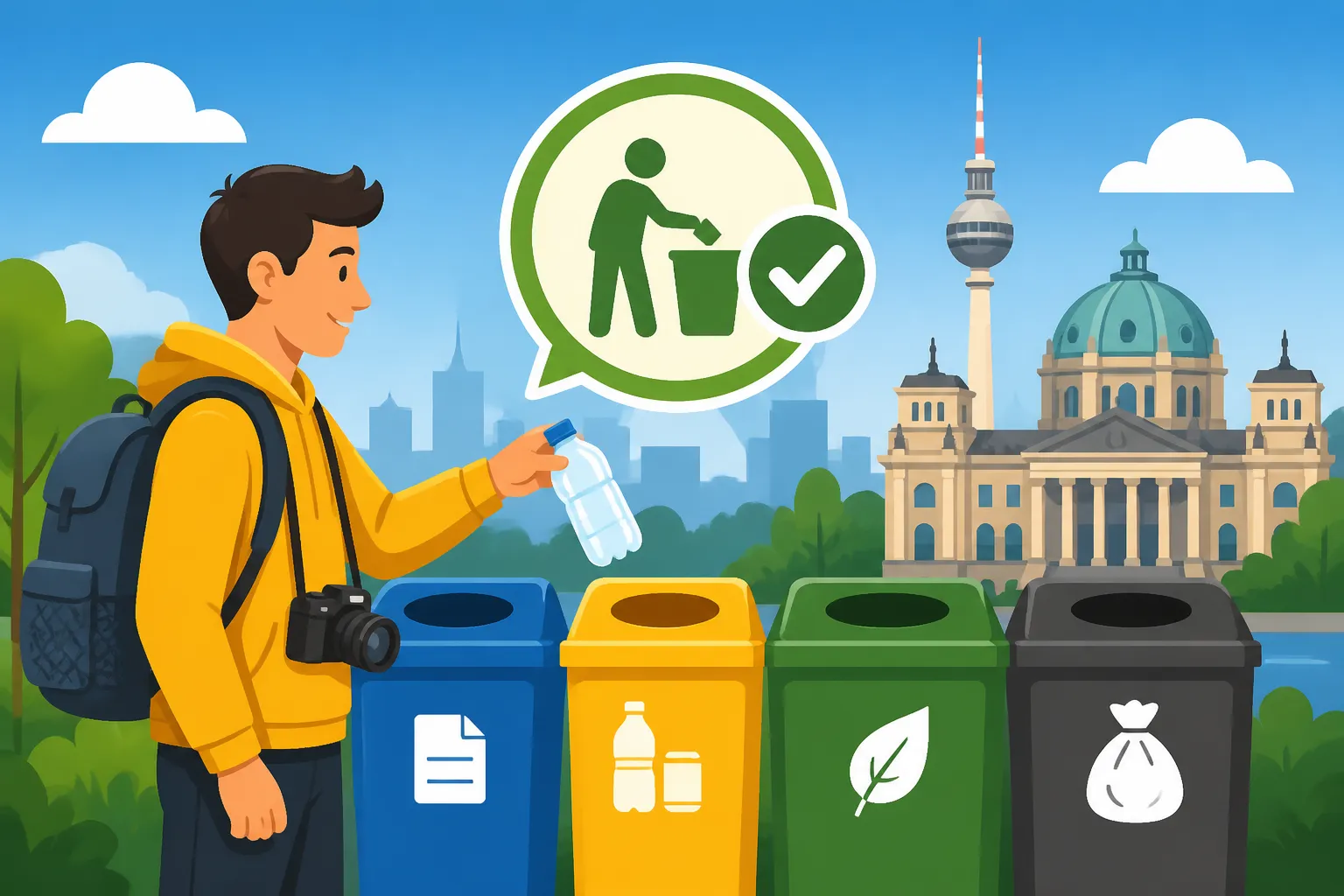
The Color Coded World of German Household Bins
German waste separation hinges on separating materials at the source. Instead of tossing everything into one bin, households split trash into distinct categories based on how materials are processed in recycling facilities. The system is designed to reclaim high-value materials, compost organic matter, and burn non-recyclable residual waste to generate power.
Understanding the color coding is your first step toward mastering the local culture. While bin lids or body colors can occasionally vary by city or region, the basic categories remain consistent across the country. Learning what belongs in each container helps you avoid common mistakes that frustrate local neighbors and accommodation hosts.
Blue Bin for Paper and Cardboard
The blue bin, known locally as the Papiertonne, is reserved exclusively for paper and cardboard products. Clean paper bags, cereal boxes, egg cartons, newspapers, magazines, and corrugated cardboard boxes belong here. If you buy items online or collect brochures during day tours booked via GetYourGuide, the paper waste goes into this container.
You must make sure the paper products are dry and free from food residue. A grease-stained pizza box does not belong in the blue bin because food oils ruin the pulp recycling process. Similarly, baking paper, waxed paper, tissue paper, and dirty paper towels must stay out. Always flatten cardboard boxes before tossing them in to save space, as overfilled bins can result in trash collectors refusing to empty the container.
Yellow Bin or Yellow Bag for Lightweight Packaging
The yellow bin, often called the Gelbe Tonne, or the yellow bag, known as the Gelber Sack, handles commercial packaging materials made of plastic, light metal, and composite materials. This system was designed under the Dual System Germany initiative to make manufacturers responsible for packaging waste. Look for packaging items marked with a green dot icon or general recyclable symbols.
Acceptable items include yoghurt tubs, plastic wrappers, tin cans, aluminum foil, drink cartons like Tetra Paks, shampoo bottles, and plastic caps. You do not need to wash these containers spotless with soap, but they should be spoon-clean or completely scraped empty. Items that should never enter the yellow bin include hard plastic toys, toothbrushes, kitchen utensils, and plastic items that were not originally sold as product packaging.
Green or Brown Bin for Organic Waste
The organic waste bin, referred to as the Biotonne, collects compostable organic material. The bin itself is usually brown or green depending on the municipality. Food scraps, vegetable peelings, coffee grounds, tea bags, fruit peels, eggshells, and garden waste like leaves or small twigs belong in this bin. Collecting organic waste separately allows municipalities to create nutrient-rich compost and produce biogas.
Never throw plastic bags into the organic bin, even if the bags claim to be biodegradable or compostable. Industrial composting plants often cannot break down biodegradable plastic bags quickly enough, meaning whole batches of compost get contaminated. Use paper bags, newspaper wrapping, or plain brown paper to line your small kitchen scrap bucket, or empty plastic bags directly into the bin and throw the plastic bag into the yellow bin afterward.
Black or Grey Bin for Residual Waste
The black or grey bin is the catch-all container for non-recyclable household waste, known as Restmüll. Any non-hazardous waste item that cannot be recycled into paper, plastic, organic compost, or glass ends up here. Typical contents include used tissues, dirty paper towels, greasy pizza boxes, sanitary products, cat litter, vacuum cleaner bags, ash, broken ceramics, and worn-out cleaning sponges.
While the residual waste bin seems like an easy escape hatch when you are unsure where an item belongs, using it incorrectly hurts local recycling efforts. Residual waste is usually routed directly to incineration plants to produce heat and electricity. To get a comprehensive view of how local residential rules impact daily habits, you can read our guide on German Recycling System Explained: How to Sort Trash and Recycle Properly.
DO NOT USE ASCII ART – USE standard markdown pipe tables instead
| Bin Category | Local Name | What Goes In | What Stays Out |
|---|---|---|---|
| Blue Bin | Papiertonne / Altpapier | Newspapers, cardboard, paper bags, egg cartons | Greasy pizza boxes, used tissues, baking paper |
| Yellow Bin / Bag | Gelbe Tonne / Gelber Sack | Plastic wrappers, tin cans, drink cartons, yoghurt cups | Hard plastic objects, toys, non-packaging items |
| Green or Brown Bin | Biotonne | Food scraps, coffee grounds, vegetable peels, leaves | Plastic bags, pet litter, cooked meat scraps (in some regions) |
| Black or Grey Bin | Restmüll | Tissues, diapers, ceramics, vacuum bags, dirty paper | Electronics, batteries, recyclable packaging, glass |
Understanding the German Pfand System for Bottle Deposits
One of the first financial surprises for tourists in Germany is the bottle deposit system, known as Pfand. When you purchase bottled beverages at a supermarket, convenience store, or gas station, a small deposit is added automatically to your total at the checkout counter. Returning the empty container recovers that deposit in cash or store credit.
The Pfand system has achieved remarkably high return rates across the country. It reduces litter, encourages bottle reuse, and ensures plastic is recycled into clean material streams. Understanding how to handle these containers saves you money and prevents unnecessary waste.
Single Use vs Reusable Bottles
German deposit containers fall into two main categories: single-use containers (Einwegpfand) and reusable containers (Mehrwegpfand). Single-use containers are typically made of thin plastic or aluminum and are crushed immediately after return. Reusable containers are made of sturdier plastic or glass, washed, and refilled dozens of times before being recycled.
Single-use plastic bottles and cans carry a standardized national logo featuring a plastic bottle and can surrounded by a curved arrow. These items carry a fixed, higher deposit value. Reusable glass and hard plastic beer or soda bottles usually carry a lower deposit value per container and may display terms like Mehrwegflasche or Leihflasche on the label. To learn more about identifying specific values and logos, check our dedicated article on How to Return Bottles and Claim Pfand in Germany.
How to Use Supermarket Reverse Vending Machines
To get your deposit back, bring your empty bottles and cans to almost any grocery store or supermarket. Larger stores feature automated reverse vending machines, known as a Pfandautomat, located near the entrance or toward the rear of the store. If you are shopping for groceries while settling into an apartment, our guide on Navigating German Supermarkets: Grocery Shopping Tips and Tricks explains where these machines are positioned inside store layouts.
Place your bottles horizontally, bottom-first, into the circular opening of the machine. The machine rotates the bottle to scan the barcode and Pfand symbol before accepting it. Once you have fed all your bottles into the machine, press the green button on the front panel. The machine prints a paper voucher displaying your total credit. Take this voucher to the cashier when paying for your groceries to deduct the amount from your bill, or hand it to the clerk to receive cash back.
Street Etiquette for Deposit Bottles
When traveling around German cities, you will likely finish a bottled drink or soda can while walking near public places, parks, or train stations. If you do not want to carry the empty bottle in your day pack until you reach a supermarket, do not throw it inside the public trash bins.
German cities have a well-established social practice called Pfand gehört daneben, which translates to “deposit bottles belong beside the bin.” Place your empty deposit bottle neatly next to or under public trash cans, or inside special metal bottle racks attached to municipal bins. People who collect empty deposit bottles to supplement their income can gather them easily without having to dig through dirty trash. Leaving your bottle neatly beside the container is considered a courteous gesture.
Disposing of Glass, Electronics, and Special Household Items
Glass bottles without a deposit scheme, old batteries, and electronic components require special collection methods. You will not find general glass bins in household trash yards because breaking glass inside municipal trucks ruins other recyclable streams.
Cities set up public neighborhood glass collection banks, known as Altglascontainer, positioned on street corners, parking lots, or near public transit stations. Knowing how to sort these items keeps neighborhood streets clean and quiet.
White, Green, and Brown Glass Containers
Public glass banks are sorted strictly by color into three distinct bins: clear glass (Weißglas), green glass (Grünglas), and brown glass (Braunglas). Wine bottles, oil bottles, jam jars, and condiment containers without a Pfand deposit belong in these street containers. Remove metal or plastic lids before tossing the glass inside, though small caps can usually go into the yellow bin.
Sort your glass carefully into the matching color slot:
1. Clear, transparent glass goes into the Weißglas bin.
2. Brown glass goes into the Braunglas bin.
3. Green glass goes into the Grünglas bin.
4. Blue, yellow, or unusual colored glass bottles go into the green glass container, as green glass tolerates color variations best during recycling.
Keep in mind that dropping heavy glass bottles into metal containers creates significant noise. For this reason, throwing glass into public banks is prohibited during quiet hours, overnight, and on Sundays. To avoid annoying nearby residents, review local quiet hour customs in our article on Quiet Hours and Sundays in Germany (Ruhezeit).
Batteries and Small Electronics
Batteries contain heavy metals and hazardous chemicals that pose serious fire and environmental hazards if thrown into regular household trash. You should never throw loose alkaline batteries, rechargeable batteries, or lithium packs into black, blue, or yellow bins.
Every supermarket, drug store, and electronics retailer in Germany that sells batteries is legally required to provide a free battery drop-box. Look for small green or yellow cardboard or plastic collection boxes located near store entrances or checkout aisles. You can drop off spent AA, AAA, button cells, and camera batteries into these boxes at any time without making a purchase. Small electronic devices can be handed over to large retail stores or brought to local municipal recycling centers, known as a Wertstoffhof.
Waste Rules in Holiday Rentals and Hotels
When staying in a hotel, short-term apartment, or vacation rental booked through Booking.com, you are expected to follow local waste disposal rules. Hotel rooms often feature a single small waste basket, but hotel staff sort recyclables behind the scenes. However, staying in self-catering apartments requires active participation in sorting your own daily trash.
Apartment complexes usually store shared large wheeled bins in a courtyard, basement, or gated street enclosure. Landlords supply guests with clear instructions regarding which bin corresponds to which waste type. Mixing food waste into paper bins or tossing plastic into residual bins can result in fines for property owners or extra handling fees passed on to guests. If you run into broader adjustments during your stay, read our guide on Common Cultural Surprises for First-Time Visitors to Germany.
Practical Recycling Scenarios for Visitors
Recycling on the go requires slightly different habits than sorting trash inside an apartment. Whether you are catching a high-speed train booked through Omio or exploring historic city centers, knowing how to handle your waste helps you avoid public fines and stay respectful of local spaces.
Public transit hubs, airports, and city parks provide multi-compartment recycling stations marked with international pictograms. Learning to read these labels quickly makes traveling across different states much smoother.
Managing Waste at Public Transit Stations and Events
Major railway stations and airports feature public trash cans with three or four distinct slots. These are usually labeled for paper (Papier), packaging (Wertstoffe or Plastik), and residual waste (Restmüll). Take a brief moment to check the labeled slots before tossing your coffee cup or sandwich wrapper away.
At public outdoor events, food stalls, and beer gardens, drink vendors often use a deposit system for reusable cups, mugs, and plates, known as Geschirrpfand. When you order a beverage or meal, you pay a small cash deposit on the glass or dish. Returning the dish to the counter yields your deposit back immediately.
Simple Steps to Sort Waste Correctly While Traveling
Navigating local rules becomes effortless once you build a consistent routine. Follow these straightforward steps to keep your travel waste properly organized:
- Separate deposit bottles (Pfand) from regular waste as soon as you finish your drink, placing them in an outer pocket of your day bag.
- Collect paper, train tickets, and clean cardboard in a separate folder or pocket to dump into a blue paper bin later.
- Keep food scraps and organic peelings in a small paper bag until you find an organic scrap bin or residual waste bin.
- Rinse out packaging or yoghurt containers briefly if you plan to keep them in your apartment unit before taking them out to the yellow bin.
- Drop deposit bottles off at a supermarket reverse vending machine before starting your evening grocery run.
- Leave non-refundable deposit bottles beside public street bins if you do not want to carry them to a grocery store.
- Sort unreturned glass jars by color and throw them into street glass banks outside of afternoon and nighttime quiet hours.
Shopping, Street Markets, and Reducing Single-Use Items
Germany has introduced strict rules to reduce plastic waste across retail environments. Grocery stores no longer offer free lightweight plastic bags at checkout counters. You must purchase reusable cloth totes, heavy plastic bags, or paper sacks if you do not bring your own bag from home.
When buying food at fresh markets or bakery shops, carry a reusable canvas tote bag inside your day pack. Many local bakeries and coffee stands offer small discounts if you present your own reusable coffee travel mug instead of ordering a paper cup. If you want to know what to expect when commercial businesses close on rest days, read our guide on What Closes on Sundays in Germany?.
By learning the color-coded bin system, using reverse vending machines for bottle deposits, and respecting quiet hours around glass recycling banks, you will blend in easily with locals. For a quick look at other daily rules to keep in mind throughout your stay, take a look at our companion guide on What Should You Not Do in Germany as a Visitor?.
Disclaimer
This article is for general informational purposes only and does not constitute professional advice. Laws, prices and regulations vary by location and change over time. Consult a qualified professional for guidance on your specific situation.