What Closes on Sundays in Germany?
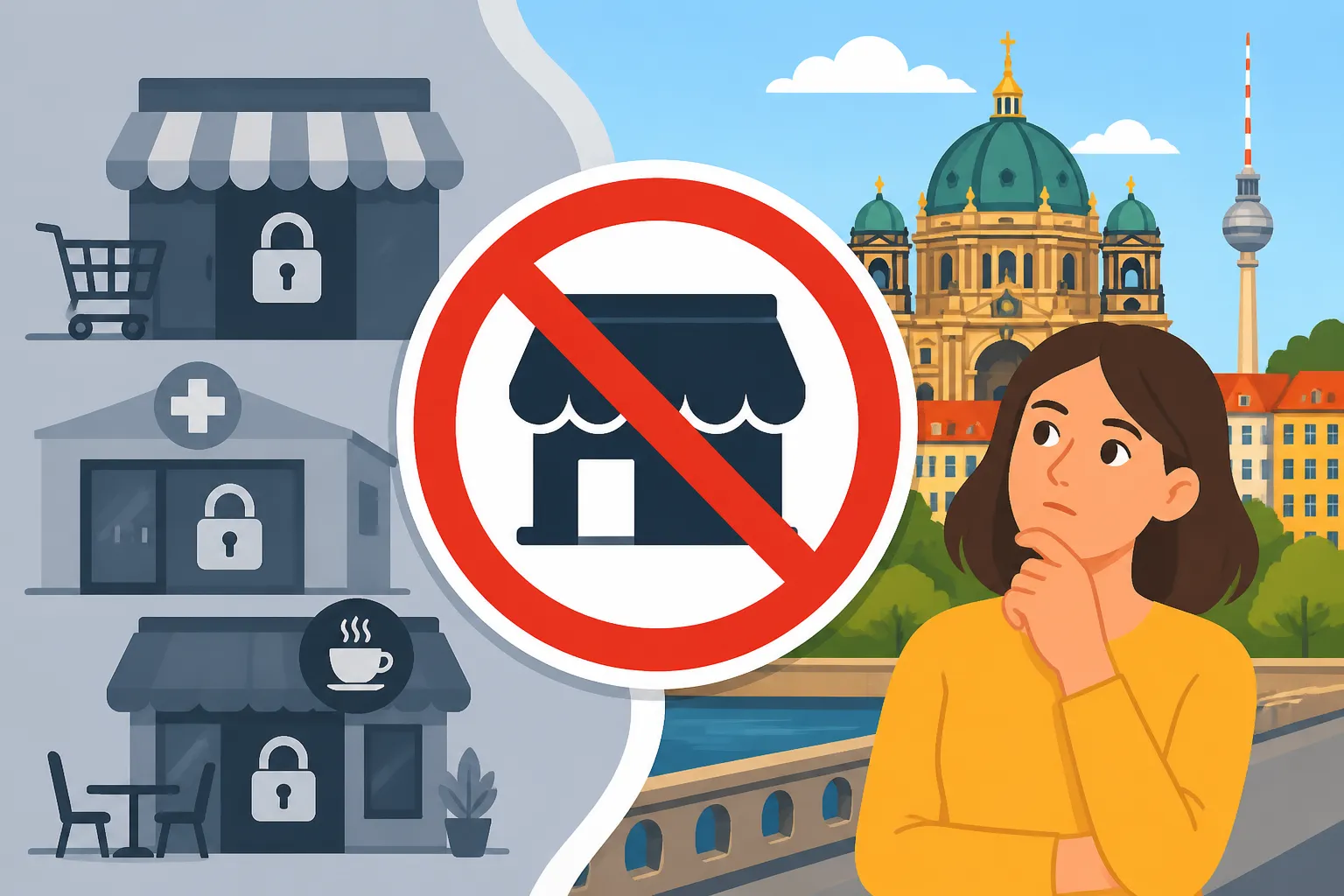
Arriving in a major German city on a Sunday morning can feel like stumbling onto the set of a post-apocalyptic movie. You step out of your hotel, stomach growling and looking for a quick grocery run, only to find row after row of locked doors and lowered shutters. This "Sunday Shock" is a rite of passage for every newcomer, but it doesn't have to be a disaster. This guide explores the legal, cultural, and practical realities of what closes on Sundays in Germany, helping you navigate the silence like a seasoned local.
Disclosure: This post may contain affiliate links. We may earn a commission at no extra cost to you if you make a purchase through these links. Read full disclosure.
The Cultural Reality of Sunday in Germany (Sonntagsruhe)
In many parts of the world, Sunday is just another day for errands, mall-hopping, and catching up on chores. In Germany, Sunday is protected by the constitution. The "Sonntagsruhe" (Sunday rest) is a deeply ingrained tradition supported by the "Ladenschlussgesetz" (Shop Closing Law). For the veteran expat, this isn't just an administrative hurdle; it is a fundamental shift in lifestyle. The law is designed to ensure that workers have a guaranteed day of rest and that the focus of society remains on family, community, and personal well-being rather than consumption.
When you are planning your initial move or a visit, using Booking.com to find accommodation near a major train station can be a lifesaver, as these hubs are among the few places where the rules are slightly relaxed. Understanding this cultural pillar is essential for German Etiquette: Do’s and Don’ts in Social and Professional Settings because complaining too loudly about the lack of convenience can often be met with a lecture on the importance of work-life balance. It is a day where the pace of life slows to a crawl, and while it feels frustrating at first, most of us eventually grow to cherish the forced break from the "always-on" economy.
The legal framework is so strict that even automated "robotic" mini-marts have faced legal challenges in various states because they theoretically violate the peace of the day. This isn't just about shops being closed; it's about the collective agreement that the entire country should collectively "exhale." If you are just arriving, you might want to consult a Moving to Germany: Comprehensive Guide for Foreigners to understand how these cultural nuances affect everything from your first grocery shop to your relationship with your neighbors.
What Specifically Closes on Sundays?
Retail and Supermarkets
The most significant impact of the Sunday laws is on retail. Every standard supermarket, from budget-friendly Aldi and Lidl to the more upscale Edeka and Rewe, will be firmly shut. This applies to high-street clothing stores, electronics shops, and massive malls. If you realize at 10:00 AM on Sunday that you have run out of milk, bread, or diapers, you cannot simply walk to the corner shop. The Saturday evening rush in a German supermarket is a sight to behold; it often looks like people are preparing for a long-term siege because they know the "dry spell" is coming.
For those trying to manage their Cost of Living in Germany: Budgeting Guide for Expats, it is important to realize that convenience costs more on Sundays. While most shops are closed, the few that remain open—usually in transit hubs—often charge a premium. Planning your shopping list for Friday or Saturday is a mandatory survival skill. If you miss that window, you are often stuck waiting until Monday morning, which can be a harsh lesson in time management.
Pharmacies and Professional Services
Banks, post offices, and administrative buildings (like the Bürgeramt) are also strictly closed. If you have an urgent need for a document or a banking service, Sunday is a non-starter. This also extends to pharmacies (Apotheken). However, the medical system is prepared for emergencies. Germany uses a rotating "emergency service" (Notdienst) system for pharmacies. On any given Sunday, only one or two pharmacies in a specific district will be open for urgent prescriptions or medical needs.
You can usually find which one is open by looking at the sign posted in the window of any closed pharmacy or checking an online Emergency Pharmacy Finder: Getting Medicine After Hours in Germany. Just be aware that you will often pay a small "emergency fee" (Notdienstgebühr) for service on a Sunday. For regular health needs, it is always better to stock up during the week. Understanding how to handle these minor crises is part of Navigating Medical Care in Germany: Doctors, Hospitals, and Pharmacies.
Department Stores and Specialized Retail
Whether it is a massive Saturn for a new charging cable or a boutique shop for a gift, specialized retail remains entirely off-limits. This can be particularly frustrating for tourists who only have a few days in a city and want to spend their Sunday shopping. Instead of shopping, locals tend to pivot toward leisure. If you find yourself in this position, checking GetYourGuide for walking tours or museum tickets is a much better use of your time than wandering the empty shopping districts of Berlin, Munich, or Frankfurt.
The lack of retail activity creates a unique atmosphere in German cities. The pedestrian zones, usually teeming with shoppers, become quiet, echoey spaces. This is a great time for photography or simply appreciating the architecture without the crowds. It is a sharp contrast to the bustling activity you will find in our German Food Culture: Eating and Drinking as a Visitor guide, where cafes and restaurants remain the heart of the Sunday experience.
Exceptions to the Rule: What Stays Open?
Transport Hubs: The Great Escape
The absolute "hack" for a German Sunday is the Hauptbahnhof (Main Train Station) and the airports. Because these areas serve travelers, they are legally permitted to keep certain shops open. In cities like Berlin, Leipzig, or Munich, the supermarkets located inside the main train station are legendary. They are often packed with locals who forgot to buy eggs or coffee, creating a frantic, crowded atmosphere that is the total opposite of the quiet streets outside.
When planning your travels, using Omio to check train schedules can also help you identify which major stations you’ll be passing through that might have a pharmacy or a grocery store open. It is a common expat strategy to "commute" to the station just to grab essentials. However, be prepared for long lines and a limited selection compared to your local neighborhood market. For more on navigating these hubs, see our guide on Public Transport Tickets and Passes: Navigating German Transit Systems.
Gastronomy, Leisure, and Culture
While you can't buy a pair of jeans or a liter of milk, you can certainly buy a beer and a schnitzel. Restaurants, cafes, bars, and bakeries are generally open on Sundays, though some may choose to close on Mondays (Ruhetag) instead. Bakeries, in particular, have special dispensations to open for a few hours in the morning so Germans can get their fresh "Brötchen" (rolls) for breakfast. This is a sacred part of the weekend routine.
Museums, zoos, and cinemas are also prime Sunday destinations. Since people cannot shop, they flock to cultural institutions. If you are planning a visit, booking through GetYourGuide in advance is highly recommended, as Sunday crowds can be significant, especially during the winter months. For a deeper look at the dining landscape, you might enjoy reading about German Dining Etiquette: Eating Out, Tipping, and Table Manners.
Gas Stations (Tankstellen) and "Spätis"
In a pinch, the local gas station is your best friend. Modern German gas stations have evolved into mini-marts that sell everything from beer and tobacco to frozen pizzas, milk, and even basic over-the-counter medicine. The prices are higher, but when it’s 9:00 PM on a Sunday and you realize you have nothing for breakfast, you’ll be grateful they exist.
In cities like Berlin, you also have the "Spätkauf" or "Späti." These are late-night convenience stores that occupy a bit of a legal gray area. While they aren't technically supposed to sell a full range of groceries on Sundays, many do sell drinks, snacks, and basic supplies. They are the lifeblood of the neighborhood social scene, often with a few benches outside where locals gather.
Summary Table: Sunday Openings at a Glance
| Category | Status | Tips for Expats & Tourists |
|---|---|---|
| Supermarkets | Closed | Shop on Saturday; use Train Stations for emergencies. |
| Shopping Malls | Closed | Plan for window shopping only or visit a museum instead. |
| Bakeries | Open (mornings) | Great for fresh rolls; usually close by 11:00 AM or 1:00 PM. |
| Restaurants/Cafes | Open | Sunday "Kaffee und Kuchen" is a mandatory tradition. |
| Pharmacies | Emergency Only | Look for the "Notdienst" sign in any pharmacy window. |
| Museums/Zoos | Open | Often the busiest day; book tickets in advance. |
| Gas Stations | Open | High prices, but good for milk, snacks, and basic needs. |
| Public Transport | Open | Use Omio for schedules; some routes have reduced frequency. |
Survival Guide: How to Handle a German Sunday
The Saturday Prep: The Fridge Raid
The most important habit to develop is the "Saturday Audit." Around 4:00 PM every Saturday, veteran expats do a quick scan of the fridge. Do we have enough coffee? Is there milk for the kids? If the answer is no, you head to the store immediately. Be warned: the hour before closing on a Saturday (usually 8:00 PM or 10:00 PM) is chaotic. It feels like everyone in the city is trying to squeeze through the same narrow aisles.
If you are staying in a vacation rental booked through Booking.com, check the amenities. If you don't have a kitchen, you won't need to worry about the grocery shut-down, but you should still plan for the fact that many smaller, family-run pharmacies or specialty shops nearby will be closed. Being prepared prevents the Sunday morning "hangry" search for food. You might also want to brush up on German Food Culture: Eating and Drinking as a Visitor to know which restaurant staples are always available.
Embracing the "Spaziergang" and "Kaffee und Kuchen"
If you can't beat the system, join the locals. Sunday in Germany is for the "Spaziergang"—a long, aimless walk through a park, forest, or city center. You will see families, couples, and elderly folks all dressed in their sensible outdoor gear, walking regardless of the weather. It is a slow, meditative way to spend the day.
After the walk comes the most important part of the day: "Kaffee und Kuchen" (Coffee and Cake). Around 3:00 PM or 4:00 PM, cafes fill up with people enjoying elaborate tortes and hot coffee. It is a social ritual that replaces the Sunday afternoon shopping trip. If you want to fit in, find a local cafe and settle in for an hour or two. It’s a great way to experience Healthy Living in Germany: Wellness, Fitness, and Mental Health Guide through social connection and relaxation.
Managing the "Ruhezeit" (Quiet Hours)
Sunday isn't just about shops being closed; it's about silence. The "Ruhezeit" is a legal requirement to keep noise to a minimum. This means you cannot mow your lawn, use a power drill, or even wash your car in many residential areas. In some apartment buildings, there are even unwritten rules about running the washing machine or vacuuming.
If you break these rules, don't be surprised if a neighbor knocks on your door or leaves a sternly worded note. Understanding and Respecting Quiet Hours: How to Keep Good Relations with Neighbors is vital for a peaceful life in Germany. It can be frustrating when you have a DIY project you want to finish, but the collective silence of a German Sunday is something you eventually learn to appreciate—or at least, learn not to fight.
Seasonal and Special Openings (Verkaufsoffener Sonntag)
A few times a year, cities grant special permission for shops to open on a Sunday. These are called "Verkaufsoffener Sonntag" (Shopping Open Sunday). They are usually tied to a local festival, a Christmas market, or a major trade fair. On these days, shops typically open from 1:00 PM to 6:00 PM. They are incredibly popular and usually very crowded, as the entire region tries to cram a week's worth of shopping into five hours.
During the holiday season, the rules shift slightly. While the shops remain closed on the Sundays of Advent, the Christmas Markets and Festive Germany are in full swing. You can buy crafts, ornaments, and plenty of street food at the markets, even if the H&M next door is locked up tight. It is one of the few times of year when Sunday feels truly bustling and commercial, albeit in a very traditional, festive way.
If you are planning a trip specifically for shopping, always check the local city calendar for these special dates. You won't find them every weekend, and they are regulated strictly by the state governments. For those moving here, keeping track of these dates can help with big purchases like furniture or electronics, especially if you're trying to figure out German Recycling System Explained: How to Sort Trash and Recycle Properly for all the packaging you'll eventually need to discard.
Disclaimer
The information provided in this guide is for informational purposes only and reflects the general cultural and legal landscape in Germany as of the time of writing. Laws regarding shop closing times (Ladenschlussgesetze) are governed at the state level (Bundesländer) and may vary slightly between regions like Bavaria and Berlin. Always check local listings and official government resources for specific opening hours and emergency services in your area. This guide does not constitute legal or professional advice.
By planning ahead and embracing the slower pace, you’ll find that the German Sunday is less of a hurdle and more of a sanctuary. Whether you’re grabbing a last-minute roll at the train station or enjoying a quiet walk in the woods, you’re participating in a tradition that has defined German life for generations. Happy resting!