What Are Germany’s Public Holidays and How Do They Affect Travel?
Standing in front of the locked glass doors of a supermarket on a Tuesday afternoon is a rite of passage for every newcomer in Germany. You check your watch, then your calendar, only to realize it is a public holiday you have never heard of. This guide solves the confusion surrounding Germany’s complex holiday schedule, ensuring you never go hungry or miss a train due to unexpected closures.
Disclosure: This post may contain affiliate links. We may earn a commission at no extra cost to you if you make a purchase through these links. Read full disclosure.
The Landscape of German Public Holidays
One of the first things you learn as an expat is that Germany takes its rest very seriously. Unlike many other countries where "public holiday" might just mean a bank closure while retail carries on, in Germany, the world effectively stops. However, the most confusing part is that a holiday in Munich might be a perfectly normal working day in Berlin. This regional fragmentation is rooted in Germany’s federal structure and its deep religious history, split between Catholic and Protestant traditions.
Understanding the State-by-State Variation
Germany is composed of 16 federal states (Bundesländer), and each has the authority to designate its own public holidays. There are only nine holidays that are celebrated nationwide. If you are living in Bavaria or Baden-Württemberg, you will enjoy significantly more time off than your friends in the north. Bavaria, for instance, is the champion of holidays, particularly the city of Augsburg, which has a dedicated holiday (Peace Festival) that applies only within the city limits.
When planning travel, you must check the specific holiday calendar of your destination. If you are traveling from Berlin to Munich on a Thursday in June, you might be surprised to find that while Berlin is open for business, Munich is celebrating Fronleichnam (Corpus Christi), and every shop is shut. I once made the mistake of driving across state lines for a specific shopping trip, only to realize I’d crossed into a state observing a religious holiday I hadn't accounted for.
National versus Regional Holidays
The national holidays are the anchors of the German calendar. These include New Year’s Day, Good Friday, Easter Monday, Labor Day (May 1st), Ascension Day, Whit Monday, German Unity Day (October 3rd), and the Christmas period (December 25th and 26th). These are the days when the entire country goes quiet.
Regional holidays, on the other hand, are often tied to the religious identity of the state. States with a Catholic history, like North Rhine-Westphalia or Rhineland-Palatinate, observe All Saints' Day (November 1st). Meanwhile, the northern and eastern states, which have a Protestant heritage, observe Reformation Day (October 31st). For a deeper look at how these dates influence the rhythm of your new life, you should explore German Public Holidays: How They Affect Life and Work.
How Holidays Affect Your Travel Logistics
Traveling during a German public holiday requires a different level of tactical planning than a standard weekend. Because Germans are masters of efficiency, they maximize their holiday time with precision, leading to significant surges in demand for transportation and accommodation.
Public Transport and the Deutsche Bahn
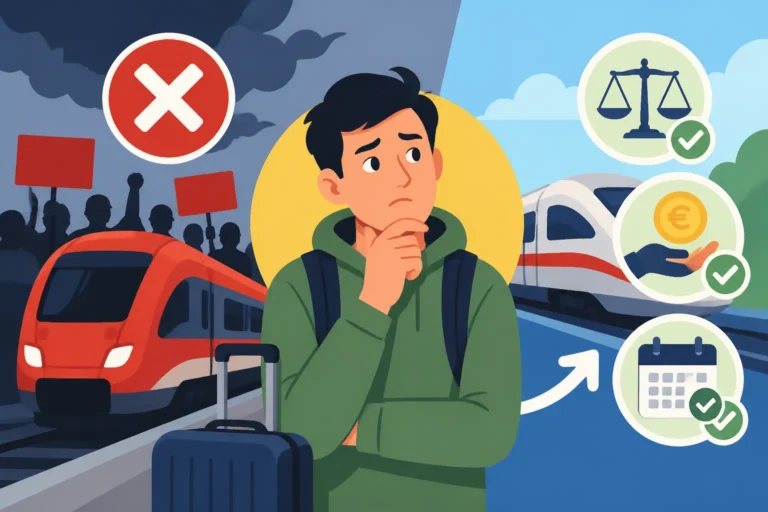
On public holidays, the "Sonntagsfahrplan" (Sunday schedule) usually applies to local buses, trams, and U-Bahns. This means fewer frequent connections and, in rural areas, potentially no service at all. For long-distance travel, the Deutsche Bahn (German Rail) continues to run, but trains are often packed to capacity.
If you are planning to traverse the country during a major holiday like Easter or Pentecost, booking a seat reservation is not an "extra"—it is a necessity. Using platforms like Omio can help you compare train and bus options side-by-side to see which routes are less congested or more cost-effective during these peak times. You can learn more about navigating the rail network in our guide on Getting Around Germany: Trains, Buses, Flights, and Car Hire.
The Sunday and Holiday Closing Law
The Ladenschlussgesetz (Shop Closing Law) is one of the most polarizing aspects of German life for expats. On public holidays, almost all retail outlets must remain closed. This includes supermarkets, clothing stores, and malls. The only exceptions are pharmacies (on a rotation basis), gas stations, and shops located inside major train stations or airports.
If you find yourself without groceries on a holiday, your local Hauptbahnhof (main train station) is your best friend. These stations often host "mini-supermarkets" that stay open 365 days a year, though they will be incredibly crowded. For more tips on surviving these mandatory shutdowns, see our article on What Closes on Sundays in Germany.
Strategic Planning for Expat and Tourist Success
The key to enjoying holidays rather than being frustrated by them is understanding the "Brückentag" (bridge day) culture and the impact on local tourism.
Navigating the Brückentage Phenomenon
A Brückentag occurs when a public holiday falls on a Thursday or a Tuesday. In Germany, it is standard practice for employees to take the intervening Friday or Monday off to create a four-day weekend. When this happens, half the country seems to hit the road simultaneously.
For travelers, this means that popular destinations like the Moselle Valley or the Baltic Coast will see prices skyrocket on Booking.com months in advance. If you are a tourist, try to visit major museums or city centers on the actual holiday itself (if they are open) rather than the "bridge" weekend, as the locals are often busy traveling away from the cities during those windows.
Booking Accommodations and Tours
While shops are closed, many cultural institutions remain open on public holidays, though their hours may be shortened. This is a great time to engage with Festivals, Holidays, and Traditions in Germany. However, because everyone has the day off, museums and galleries can become overcrowded.
I highly recommend using services like GetYourGuide to book timed-entry tickets for major attractions well in advance. This saves you from standing in a two-hour queue at the Pergamon Museum in Berlin or Neuschwanstein Castle in Bavaria. Remember that restaurants also fill up quickly on holidays, as dining out is a favorite German pastime when the kitchen at home is "cold."
| Holiday Type | Common Date | Regionality | Impact on Travel |
|---|---|---|---|
| Neujahr (New Year) | January 1 | Nationwide | Total shutdown; very quiet morning. |
| Karfreitag (Good Friday) | Varies (Spring) | Nationwide | "Silent Holiday"; no dancing/loud music allowed. |
| Tag der Arbeit (Labor Day) | May 1 | Nationwide | Large demonstrations in cities; some transport detours. |
| Christi Himmelfahrt | Varies (May) | Nationwide | High travel volume; often celebrated as Father's Day. |
| Tag der Deutschen Einheit | October 3 | Nationwide | Major festivals in various cities; national pride events. |
| Allerheiligen (All Saints) | November 1 | Catholic States | Very quiet; shops closed in BW, BY, NW, RP, SL. |
A Month-by-Month Guide to Key Holidays
To help you plan your year, let's look at a few specific holidays that have a unique cultural "flavor" and specific travel implications.
Spring and Easter Festivities
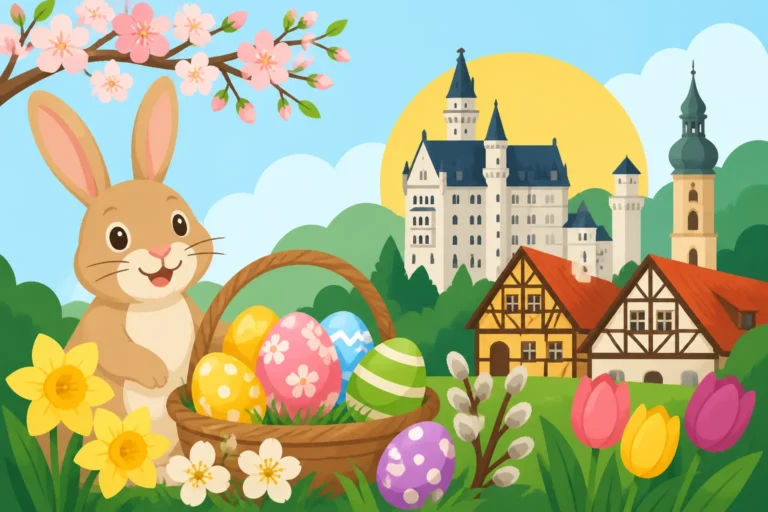
Easter (Ostern) is a massive travel window in Germany. It consists of two public holidays: Good Friday (Karfreitag) and Easter Monday (Ostermontag). Note that Good Friday is a "stiller Feiertag" (silent holiday) in many states, meaning that public dancing, loud music, and even some sporting events are legally prohibited. It is a day for reflection, and the atmosphere in cities can feel strangely somber.
By contrast, Easter Monday is a day for family outings and local festivals. If you are in the south, you might encounter traditional Easter markets. This is a fantastic time to explore Bavaria for Travelers: Munich, the Alps, and Beyond, but be prepared for heavy traffic on the Autobahn as the school holidays usually coincide with this period. Knowing How to Buy Deutsche Bahn Tickets and Save Money is crucial here to avoid paying triple for last-minute travel.
Autumn Traditions and Unity Day
October 3rd, the Day of German Unity (Tag der Deutschen Einheit), is the only holiday mandated by federal law rather than state law. Each year, a different city hosts the main celebrations. If you happen to be in the host city, expect massive street festivals, live music, and heavy security. It is a patriotic day, but in a very understated, German way.
Shortly after, in late October and early November, the religious divide kicks in again. On October 31st (Reformation Day), shops in Hamburg and Berlin close, while shops in Cologne remain open. On November 1st (All Saints' Day), the situation reverses. This "holiday hopping" is a common strategy for locals—people in North Rhine-Westphalia will drive into Lower Saxony to shop on November 1st because the stores there are open. For visitors, this is the perfect time to explore German Beer Culture: Styles, Beer Gardens, and Breweries as many seasonal autumn brews are released during these festival windows.
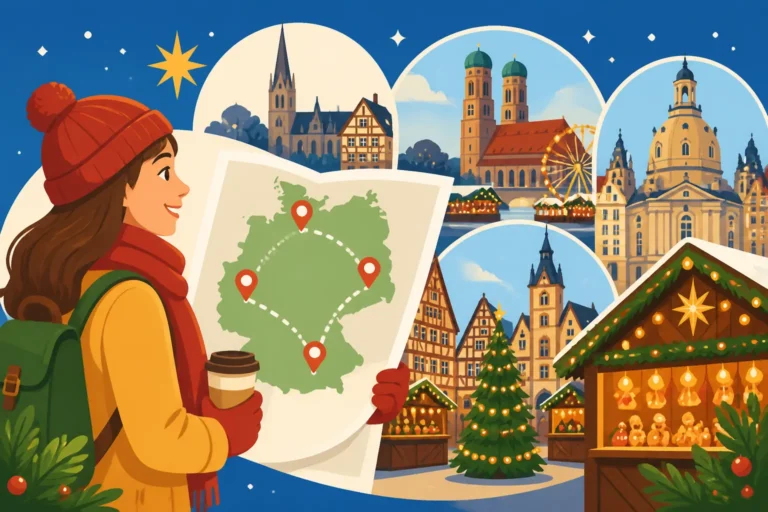
As the year winds down, the focus shifts to the Christmas Markets and Festive Germany. While the markets themselves are not public holidays, the days of December 25th and 26th are strictly observed. Even the Christmas markets, which thrive for four weeks, usually vanish by the afternoon of December 24th (Heiligabend), leaving the streets eerily empty.
Disclaimer
This guide is intended for informational purposes only. Public holiday dates and regional observances in Germany are subject to change by federal or state legislative action. Always verify specific dates and local shop opening hours with official government sources or local municipality websites before finalizing your travel plans. All mentioned brands are for contextual reference and do not constitute a legal endorsement.