German Beer Culture: Styles, Beer Gardens, and Breweries
Ah, the glorious world of German beer! If you've just arrived or are planning a trip, you'll quickly realize that beer here isn't just a drink; it's a deeply woven thread in the fabric of daily life, culture, and history. Forget everything you thought you knew about beer, because navigating the sheer variety, understanding the unspoken rules of a beer garden, or even just ordering a pint can feel like a daunting task when you're fresh off the plane. But don't you worry, I've been there, fumbling with my German phrases and trying to decipher menus, and I'm here to walk you through it all. This guide will help you embrace German beer culture like a seasoned expat.
Disclosure: This post may contain affiliate links. We may earn a commission at no extra cost to you if you make a purchase through these links. Read full disclosure.
The Heart of German Beer: A Journey Through Styles
Germany’s beer landscape is incredibly rich, far beyond the generic "lager" many associate with it. It’s a universe of flavors, colors, and regional specialties, each with its own story. Understanding these styles is like getting a key to German culture itself.
Purity Law (Reinheitsgebot) and Its Legacy
You can’t talk about German beer without immediately mentioning the Reinheitsgebot, or the German Beer Purity Law. This isn't just some dusty old decree; it's a living, breathing testament to German dedication to quality and tradition. Originally proclaimed in Bavaria in 1516, this law dictated that beer could only be brewed using four ingredients: water, barley, hops, and later, yeast, once its role in fermentation was understood. Think about that for a moment: for over 500 years, brewers have been creating an astonishing array of beers from these simple components.
The Reinheitsgebot wasn't just about ensuring quality; it was also a food safety regulation for its time, preventing unscrupulous brewers from using questionable ingredients or additives. Its impact has been profound, shaping the German palate and ensuring a consistently high standard for beer production. While modern variations and interpretations exist, especially with the rise of craft brewing, the core principle of using pure, natural ingredients remains a source of immense pride for German brewers. This dedication means that when you order a beer in Germany, you're almost guaranteed a drink that adheres to centuries of tradition and quality.
Classic German Beer Styles Explained
Now, let's dive into the liquid gold itself! German beer styles are incredibly diverse, and knowing a few key types will truly enhance your experience. You'll find regional preferences are strong, almost tribal, but many popular styles are available nationwide.
Lagers: The Crisp and Refreshing Staples
Lagers are arguably the most ubiquitous beer type in Germany, known for their clean, crisp profiles due to a cooler fermentation process.
- Pilsner (Pils): This is perhaps the most famous German beer style globally, originating from the city of Plzeň in what is now the Czech Republic, but perfected and popularized in Germany. German Pilsners are typically a pale golden color, with a clear, sparkling appearance. They are characterized by a pronounced hop bitterness, leading to a dry finish, and a distinct aroma of noble hops. Expect a refreshing, slightly bitter taste that's perfect on a warm day. You'll find countless regional Pilsner brands, each with its loyal following, such as Warsteiner or Krombacher.
- Helles: A Bavarian specialty, Helles (meaning "light" or "pale") is Pilsner's smoother, less bitter cousin. It has a beautiful golden hue, but the malt character is more prominent, offering a gentle sweetness that balances the hop bitterness. It's incredibly sessionable and designed for easy drinking, especially in a traditional beer garden. If you're in Munich, you simply must try a local Helles, like Augustiner-Bräu Lagerbier Hell or Spaten Münchner Hell.
- Märzen: Historically brewed in March (März) and stored in cool cellars for consumption during the summer, Märzen is a medium-bodied, amber-colored lager. It has a rich, malty flavor with notes of toasted bread and caramel, and a clean, dry finish. This style is famously associated with Oktoberfest, where it's served as the "Oktoberfestbier" by Munich's major breweries.
- Bock: A stronger lager, Bock beers come in various sub-styles. A traditional Bock is dark, malty, and rich, with higher alcohol content (typically 6.3-7.2% ABV). It's often enjoyed in the cooler months. Doppelbock ("double bock") is even stronger, more robust, and often has fruity or chocolatey notes. Many Doppelbocks have "–ator" at the end of their names, like the famous Paulaner Salvator. Eisbock is an intensely strong version, created by freezing a Doppelbock and removing the ice to concentrate the alcohol and flavor. These are serious beers for serious connoisseurs.
Ales and Wheat Beers: Fruity, Cloudy, and Unique
While lagers dominate, Germany also boasts fantastic ale and wheat beer traditions, especially in certain regions.
- Weizenbier (Weissbier): This "wheat beer" is arguably Bavaria's second most famous contribution to the beer world after Helles. Weizenbier is brewed with a significant portion of wheat malt, giving it a characteristic hazy, often cloudy appearance and a softer mouthfeel. The yeast used contributes distinct fruity esters (banana) and phenolic notes (clove), which are hallmarks of the style.
- Hefeweizen: The most common variety, "Hefe" means yeast, indicating that it's unfiltered and still contains yeast sediment, contributing to its cloudy look and full flavor. Served in tall, elegant Weizen glasses.
- Kristallweizen: A filtered version of Hefeweizen, resulting in a clear beer with the same signature banana and clove notes, but a lighter body.
- Dunkelweizen: A darker version, brewed with roasted wheat malts, offering notes of caramel and roasted nuts alongside the typical banana and clove.
- Weizenbock: A stronger, often darker wheat beer, combining the strength of a Bock with the fruity and spicy notes of a Weizen.
- Kölsch: A specialty of Cologne (Köln), Kölsch is a top-fermented (ale) beer that is then cold-conditioned like a lager. It's pale, clear, and has a delicate, slightly fruity flavor with a crisp, dry finish and subtle hop bitterness. Traditionally served in a narrow, cylindrical glass called a Stange (plural: Stangen), often in small 0.2-liter servings, ensuring it's always fresh and cold. The unique "Köbes" waiters in Cologne will keep bringing you fresh Stangen until you place your coaster on top of your glass!
- Altbier: Another regional specialty, this time from Düsseldorf. "Alt" means "old," referring to the traditional top-fermenting yeast used before lagers became prevalent. Altbier is a darker, amber-colored ale with a robust, malty character and a pronounced, bitter hop finish. It's often compared to an English Pale Ale, but with its own distinct German twist. Like Kölsch, it's served in smaller glasses, ensuring optimal freshness.
Dark Beers: Richness and Depth
Germany also offers a range of darker beers, which are perfect for cooler evenings or for those who appreciate deeper, roasted flavors.
- Dunkel: Literally "dark," Dunkel refers to a dark lager, especially prominent in Bavaria. These beers are brewed with roasted malts, giving them colors ranging from amber to dark brown. They offer flavors of toasted bread, caramel, and sometimes chocolate or coffee, with a smooth, malty sweetness and often a clean finish. They are less hoppy than Pilsners and generally less alcoholic than Bocks.
- Schwarzbier: Meaning "black beer," Schwarzbier is a very dark lager, almost opaque black in color. Despite its appearance, it is surprisingly light-bodied and refreshing, often with subtle roasted coffee or dark chocolate notes, but without the heavy or burnt flavors you might expect. It typically has a clean, dry finish, making it a very approachable dark beer. Köstritzer Schwarzbier is a well-known example.
This exploration of styles barely scratches the surface, but it gives you a solid foundation. Don't be afraid to experiment! Every brewery has its own take, and regional pride runs deep.
Embracing the Outdoors: The Beer Garden Experience
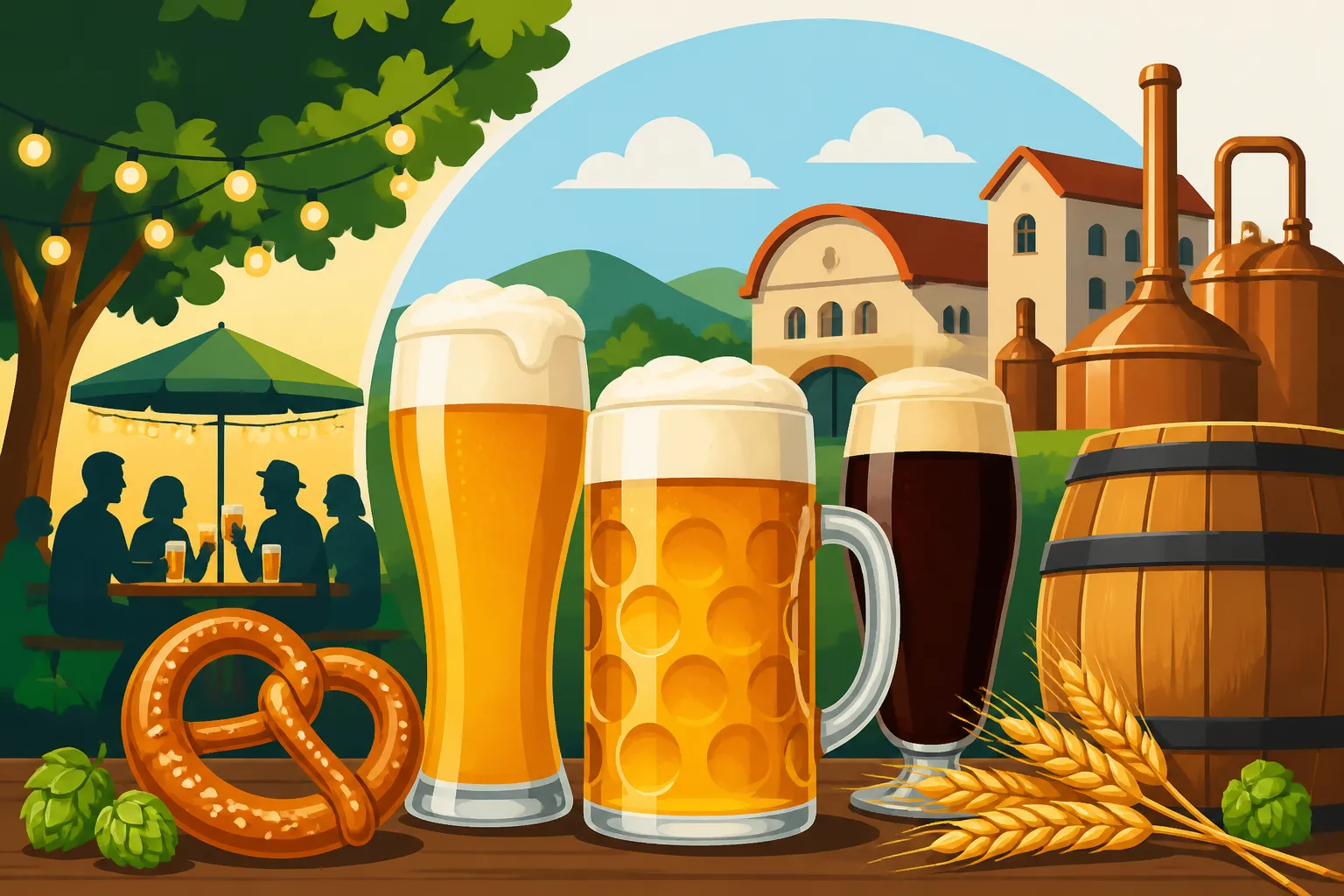
If there's one German institution that perfectly embodies the communal spirit of beer culture, it's the beer garden, or Biergarten. These aren't just outdoor pubs; they're sanctuaries of conviviality, places where strangers become temporary friends over a liter of beer and a shared table.
History and Etiquette of German Beer Gardens
The concept of the beer garden originated in Bavaria during the 19th century. Brewers in Munich, needing cool places to ferment and store their Märzen lager, dug cellars into hillsides. To keep these cellars cool, they planted chestnut trees above them, whose dense canopies provided ample shade. Soon, they started selling their beer directly from these cellars, often serving simple food alongside. The large, shaded areas with long communal tables naturally evolved into the beloved beer gardens we know today.
The enduring appeal lies in their relaxed, democratic atmosphere. Everyone is welcome, from families with children to groups of friends and lone visitors seeking a moment of peace.
Rules of Engagement: Bringing Your Own Food, Sharing Tables
This is where things can get a little counter-intuitive for newcomers, especially regarding food. In traditional Bavarian beer gardens, you are often allowed – and even encouraged – to bring your own food! This tradition dates back to when brewers were only allowed to sell beer, not full meals. So, people would pack picnics to enjoy with their brews. You'll typically find a self-service area where you can buy beer (and sometimes simple, traditional snacks like pretzels or Obatzda, a delicious cheese spread), and then head to find a spot at one of the many long wooden tables.
Sharing tables is not just allowed; it's expected. Don't hesitate to sit down at a partially occupied table. A simple "Ist hier noch frei?" (Is this spot free?) or even just a nod and a smile is usually enough. You'll often find yourself striking up conversations with locals and fellow travelers, which is part of the charm. This communal seating arrangement fosters a sense of togetherness that is hard to find elsewhere. Just remember to be mindful of your neighbors, keep your voices down during Ruhezeit (quiet hours, though less strictly enforced in bustling beer gardens), and always clean up after yourself.
Beyond Bavaria: Beer Gardens Across Germany
While Bavaria might be the spiritual home of the Biergarten, the concept has spread throughout Germany, adapting to local tastes and traditions. You'll find variations, but the core idea of outdoor, communal enjoyment remains.
City-Specific Experiences
- Berlin: While not as ubiquitous as in Munich, Berlin boasts numerous fantastic beer gardens, from traditional ones tucked away in parks to more modern, urban versions. Places like Prater Garten in Prenzlauer Berg, established in 1837, offer a classic experience with hearty German food and Berliner Weisse. Others, like Biergarten Golgatha in Viktoriapark, provide a more eclectic, relaxed vibe. They often reflect Berlin's diverse culture, sometimes featuring different food trucks or international options alongside classic German fare.
- Hamburg: In this northern port city, beer gardens might often be found along the Elbe river or in charming neighborhood parks. They offer a refreshing contrast to the bustling city, often with views of passing ships or green landscapes. You might find a greater emphasis on lighter, crisper beers, and perhaps more seafood options on the menu.
- Cologne: Here, the beer garden experience often merges with the local "Brauhaus" culture. Many traditional breweries (like Früh am Dom or Reissdorf) have outdoor seating areas that function much like beer gardens, serving their beloved Kölsch alongside hearty Rhenish dishes. The atmosphere is typically lively and boisterous, perfectly reflecting Cologne's jovial spirit.
No matter where you are, the underlying spirit of a German beer garden is the same: good beer, good company, and enjoying the fresh air. It’s a quintessential German experience that should be on every expat's and tourist's list.
What to Expect: Food, Drinks, and Atmosphere
Stepping into a German beer garden is an assault on the senses in the best possible way: the clinking of glasses, the murmur of conversation, the smell of grilled sausages and pretzels. It's an experience, not just a place to drink.
Typical Food Pairings
While some beer gardens allow you to bring your own food, most also offer a delightful array of traditional German snacks and meals that perfectly complement your beer.
- Pretzels (Brezn): The quintessential beer snack. These large, soft, chewy pretzels, generously sprinkled with coarse salt, are simply divine with a cold beer.
- Obatzda: A Bavarian cheese delicacy, this spicy cheese spread made from Camembert, butter, paprika, and sometimes onions, is usually served with bread or pretzels. It's rich, creamy, and incredibly flavorful.
- Weisswurst: A traditional Bavarian white sausage, often enjoyed with sweet mustard and a fresh pretzel. It's usually served for breakfast or lunch, as per tradition, not typically after midday.
- Wurst (Sausages): You’ll find a huge variety, from the classic Bratwurst to Currywurst (especially popular in Berlin), grilled to perfection and served with bread or fries.
- Hendl (Roast Chicken): Especially in Bavaria, half a roast chicken, seasoned and crispy, is a popular and satisfying choice.
- Radi (Radish): Sliced radish, often served with butter and salt, is a refreshing and surprisingly common beer garden snack.
Non-Beer Options, Family-Friendliness
Don't worry if not everyone in your group is a beer enthusiast. Beer gardens almost always offer a selection of non-alcoholic drinks, including soft drinks, juices, and water. Many also serve Radler (a mix of beer and lemonade, super refreshing) or Russ (Weizenbier mixed with lemonade), which are lighter and less alcoholic options. Some even have a small selection of wines.
Crucially, German beer gardens are incredibly family-friendly. You'll often find playgrounds or designated areas for children, making them a perfect spot for families to relax together on a sunny afternoon. The casual atmosphere means kids can play while adults socialize, creating a vibrant, inclusive environment. It's a testament to how deeply ingrained beer culture is in German daily life – it’s not just for adults; it’s for everyone.
From Grain to Glass: The Brewery Trail
Beyond the beer gardens, Germany's breweries are the beating heart of its beer culture. From ancient monastic operations to cutting-edge craft innovators, each brewery tells a unique story of tradition, craftsmanship, and local pride.
Traditional Breweries and Their Craft
Germany is home to thousands of breweries, many of them small, independent, and deeply rooted in their local communities. These traditional establishments are often centuries old, having perfected their recipes and brewing techniques over generations.
Local Identity and Heritage
For many towns and villages, the local brewery is a source of immense pride. Their beers aren't just beverages; they're expressions of local identity, often named after historical figures, landmarks, or regional dialects. Visiting one of these breweries is like stepping back in time. You'll often find that the brewery also operates a connected "Brauhaus" (brewery pub), where you can enjoy their freshest brews straight from the source, paired with hearty regional cuisine. For example, in Bamberg, famous for its Rauchbier (smoked beer), breweries like Schlenkerla have been brewing for generations, and their pubs are cultural institutions.
These traditional breweries are passionate about the Reinheitsgebot, often viewing it not as a restriction but as a framework for creativity. They focus on quality ingredients, meticulous brewing processes, and the time-honored art of fermentation and maturation. This dedication often means that their beers have a distinct character that you won't find anywhere else. They might use local hops from Hallertau, Germany's most extensive hop-growing region, or specific malt varieties that impart unique flavors.
Tours and Tastings
Many traditional breweries offer tours, providing fascinating insights into their history and the brewing process. You can learn about everything from the malting of barley to the fermentation tanks and bottling lines. These tours typically culminate in a tasting session, where you can sample several of their beers and appreciate the nuances of their craft. It's a wonderful way to connect with the product on a deeper level and truly understand the passion that goes into each glass. You can often find information on brewery tours directly on the breweries' websites or through local tourism offices. For example, in Munich, major breweries like Paulaner or Hofbräuhaus offer insightful tours that give you a behind-the-scenes look at their operations.
Modern Craft Beer Movement in Germany
While tradition holds immense sway, Germany’s beer scene isn't stagnant. Over the last decade or so, a vibrant craft beer movement has been bubbling up, bringing new flavors, techniques, and a fresh perspective to a country famous for its brewing heritage.
Challenges with Reinheitsgebot
The Reinheitsgebot, while a source of pride, has presented a unique challenge for German craft brewers who wish to experiment with ingredients like fruits, spices, or non-traditional hops. Brewers wanting to use ingredients outside the purity law often have to label their products as "beer-mix drinks" or simply "fermented malt beverages" rather than "beer," which can be a hurdle for market acceptance. However, many craft brewers are finding innovative ways to work within the law, pushing the boundaries of what can be achieved with water, malt, hops, and yeast, creating incredibly diverse and exciting beers. Others, particularly those focusing on international styles, embrace the "craft" designation and educate consumers on modern brewing.
Innovation and New Styles
This movement is characterized by a desire for experimentation. You’ll find German craft brewers creating everything from hoppy IPAs and rich stouts to sour beers and barrel-aged specialties. They often take classic German styles and give them a modern twist, perhaps by dry-hopping a Pilsner or brewing a Weizen with experimental hop varieties. Cities like Berlin, Hamburg, and Cologne have become hubs for the craft beer scene, with numerous microbreweries and specialty beer bars opening up.
Small, independent breweries like Stone Brewing Berlin (which, while American-founded, had a significant presence and influence before its acquisition), or local German pioneers like BRLO in Berlin, are examples of how craft beer is flourishing. They often emphasize sustainability, local sourcing (where possible), and a direct connection with their customers. These places are fantastic for trying something new and seeing the evolving face of German beer. You might even find dedicated craft beer festivals throughout the year, celebrating these new innovations.
Brewery Tours and Tastings for Visitors
Exploring German breweries firsthand is an incredibly rewarding experience, offering a deeper appreciation for the drink and its cultural context.
How to Find and Book Tours
Many larger breweries and a growing number of smaller craft breweries offer guided tours. It’s always best to check their official websites for tour schedules, languages offered (many have English tours), and booking information. Some might require advance booking, especially for group tours or during peak tourist seasons. Websites like GetYourGuide offer curated experiences, including brewery tours and beer tastings, which can be a convenient way to discover and book reputable options. For example, a search on GetYourGuide might turn up a Beer and Brewery Tour in Munich or a Cologne Beer Tour with Kölsch Tastings. Omio can help you plan your transport to these cities if you're traveling from elsewhere.
What to Expect During a Tour
A typical brewery tour will take you through the various stages of beer production:
- Malt House: You'll learn about the different types of malted barley and wheat used, and how they contribute to the beer's color and flavor.
- Brewhouse (Sudhaus): This is where the magic begins, with large copper or stainless steel kettles where mashing, lautering, boiling, and hopping occur. Your guide will explain how the wort is created.
- Fermentation Tanks (Gärkeller): Here, yeast is added to the wort, turning sugars into alcohol and carbon dioxide. You'll see the massive tanks where primary and secondary fermentation take place.
- Lagering/Maturation Cellars (Lagerkeller): For lagers, this is where the beer rests at cold temperatures for weeks or months, mellowing and developing its clean, crisp character.
- Bottling/Kegging Line: You might see the automated process of filling bottles or kegs before the beer is shipped out.
The tours are usually very informative, and guides are often passionate about their craft. They'll explain the science, the history, and the art behind each brew.
Cultural Significance of Visiting a Brewery
Visiting a German brewery isn't just about seeing machines; it's about connecting with a deeply ingrained tradition. It highlights the pride in craftsmanship, the regional identity, and the importance of beer as a social lubricant. It's a chance to understand why Germans take their beer so seriously and to truly appreciate the difference between a mass-produced product and a meticulously crafted one. After a tour, that cold glass of beer in your hand tastes even better, knowing the journey it took from grain to glass.
A Taste of Germany: Essential Beer Vocabulary & Ordering
Walking into a bustling German bar or beer garden can feel a bit overwhelming, especially if your German isn't quite fluent. Knowing a few key phrases and understanding the menu will make you feel much more confident.
Navigating the Beer Menu: Key Terms
The beer menu, or Getränkekarte (drinks menu), will likely feature a mix of German and sometimes English terms. Here's what to look out for:
Sizes and Servings
- Pils, Helles, Export, Kölsch, Alt: These are generally served in standard sizes.
- 0,3 Liter (or simply 0,3): A smaller glass, about 10 oz. Common for more potent beers or if you just want a quick sip.
- 0,4 Liter (or 0,4): A slightly larger glass, about 13.5 oz, common in some regions.
- 0,5 Liter (or 0,5): The standard "pint" size, about 17 oz, and the most common serving for most German beers like Pils, Helles, and Weizen.
- Weizen/Weissbier: Always served in a specific, tall, curved glass. The standard size is usually 0,5 Liter.
- Mass (pronounced "Mahss"): A massive 1-liter (about 34 oz) beer mug, almost exclusively found in Bavarian beer gardens and at festivals like Oktoberfest. If you order a Mass, be prepared for a serious commitment!
- Seidla: In some parts of Bavaria, particularly Franconia, a Seidla refers to a 0.5-liter mug.
Special Beer Mixes and Styles
- Radler: Literally "cyclist," this is a refreshing mix of beer (usually Helles or Pils) and lemonade or lemon-flavored soda. It’s light in alcohol and perfect for a warm day. Think of it as Germany's shandy.
- Russ: A Bavarian specialty, this is a mix of Hefeweizen and lemonade, giving it a lighter, tangier profile while still retaining the characteristic wheat beer flavors.
- Diesel/Colaweizen: A mix of beer (often a Pils or Helles) and cola. More common in specific regions and among younger crowds.
- Alsterwasser: Similar to a Radler, but typically made with a lighter lager and a clear lemon-lime soda. The name means "Alster water," referring to Hamburg's river.
- Dunkles: Simply means "dark" beer.
- Helles: Means "light" or "pale" beer.
- Alkoholfrei: Non-alcoholic beer. German non-alcoholic beers are excellent and widely available, often tasting remarkably close to their alcoholic counterparts.
- Kellerbier/Zwickelbier: Unfiltered, unpasteurized lager, often slightly cloudy with a natural yeast haze. It has a fresh, yeasty flavor and is often served directly from the conditioning tank, offering a glimpse into traditional brewing before modern filtration.
- Rauchbier: A smoked beer, a specialty of Bamberg. It has a distinctive smoky flavor derived from malts dried over an open flame. Definitely an acquired taste but a unique experience!
Asking for Recommendations
If you're unsure, don't hesitate to ask the server for a recommendation. You can try:
- "Was empfehlen Sie?" (What do you recommend?)
- "Haben Sie ein gutes lokales Bier?" (Do you have a good local beer?)
- "Ich mag [light/dark/hoppy] Bier. Was würden Sie vorschlagen?" (I like [light/dark/hoppy] beer. What would you suggest?)
Ordering Like a Local: Tips and Phrases
Ordering beer in Germany is generally straightforward, but a few nuances can make the experience smoother.
Etiquette at a Bar or Beer Garden
- Get the server's attention: A polite "Entschuldigung!" (Excuse me!) or making eye contact is usually sufficient. In very busy beer gardens, you might have to be a bit more assertive, but never rude.
- Be ready to order: Have your choice ready, including the type and size.
- Using formal address: Unless you're with friends, it's customary to use the formal "Sie" when speaking to service staff.
- Counting: If ordering multiple beers, learn your numbers! "Zwei Helles, bitte" (Two Helles, please) is perfectly fine.
- Cheers! (Prost!): When your drinks arrive, clink glasses with everyone at your table, making eye contact. It's an essential part of the social ritual.
- When to pay: In many traditional pubs and beer gardens, you pay when you leave, or when the server asks if you'd like "noch etwas?" (anything else?). In self-service beer gardens, you pay upfront for your drinks.
- Return your empty glass/Mass: In self-service beer gardens, there's usually a designated area to return your empty glasses. Sometimes you pay a small deposit (Pfand) for the glass, which you get back upon return.
Useful Phrases for Ordering
- "Ein [Beer Name], bitte." (One [Beer Name], please.) E.g., "Ein Pils, bitte."
- "Zwei [Beer Name], bitte." (Two [Beer Name], please.)
- "Eine Mass Helles, bitte." (One liter of Helles, please.)
- "Haben Sie auch alkoholfreies Bier?" (Do you also have non-alcoholic beer?)
- "Kann ich bitte bezahlen?" (Can I please pay?) – Use this when you're ready for the bill.
- "Stimmt so." (Keep the change.) – If you're paying cash and want to round up.
- "Vielen Dank!" (Many thanks!)
Beyond Beer: Other Popular German Drinks
While beer might dominate, Germany has a rich array of other beverages worth exploring.
- Wine (Wein): Germany is an important wine-producing country, particularly known for its white wines, especially Riesling. Regions like the Moselle, Rhinegau, and Pfalz produce exquisite wines. If you're interested, you might enjoy exploring the Moselle and German Wine Country. You'll find wine lists in most restaurants, and specific Weinstuben (wine taverns) in wine regions.
- Apfelwein (Äppler/Most): A dry, tart apple wine, especially popular in Frankfurt and the surrounding Hessen region. It's often served in a Bembel, a traditional stoneware jug, and consumed in a Geripptes, a ribbed glass. It's incredibly refreshing and a local favorite.
- Schnaps: A generic term for strong, clear distilled alcoholic beverages, often fruit brandies (Obstler). It's typically consumed as a digestif after a meal.
- Sekt: German sparkling wine, usually made using the traditional method. Often drier and crisper than Champagne, and a popular choice for celebrations.
- Coffee (Kaffee): Germans love their coffee, and you'll find excellent cafés (Kaffee und Kuchen culture is strong) serving everything from espresso to elaborate cakes.
- Mineralwasser: Sparkling mineral water is very popular and widely available. If you want still water, ask for "stilles Wasser."
- Schorle: A mix of juice and sparkling water (e.g., Apfelschorle for apple juice and sparkling water). Hugely popular and refreshing, offering a lighter alternative to pure juice.
Planning Your Beer-Themed Adventure in Germany
Now that you're armed with knowledge, it's time to start planning your German beer adventure! Whether you're looking for festivals, brewery tours, or just the perfect beer garden, Germany has something for every taste.
Iconic Beer Festivals Beyond Oktoberfest
While Oktoberfest is undoubtedly the most famous, Germany hosts countless beer festivals throughout the year, many of which offer a more local, authentic experience than the global spectacle of Munich.
- Frühlingsfest (Spring Festival): Often called "Little Oktoberfest," this festival takes place in Munich in April/May, featuring many of the same brewers and carnival rides but with smaller crowds. It's an excellent alternative if you can't make it for Oktoberfest.
- Starkbierfest (Strong Beer Festival): Also in Munich, typically in Lent (February/March), this festival celebrates Doppelbock beers. It's a more local affair, often held in brewery halls, and features rich, potent beers.
- Cannstatter Wasen: Stuttgart's equivalent to Oktoberfest, this massive folk festival takes place in late September/early October, just like its Bavarian cousin. It's Germany's second-largest beer festival and offers a similar mix of beer tents, rides, and traditional Swabian food.
- Bergkirchweih (Erlangen): One of Germany's oldest and most unique beer festivals, held over 12 days in late May/early June in Erlangen, Bavaria. It takes place in a series of traditional beer cellars (Keller) dug into a hillside, with tables and benches spilling out under ancient chestnut trees. It has a wonderfully rustic and authentic feel.
- Local Festivals (Kirmes, Volksfest): Throughout the year, almost every town and city in Germany will have its own local Volksfest or Kirmes (fair/festival), which almost invariably feature beer tents, local food, and carnival rides. These are fantastic for experiencing genuine local culture. You can often find a comprehensive German Festivals: A Year-Round Calendar to plan your visits.
Each festival has its own charm and specialties, so researching local event calendars is a great way to discover unique experiences.
Combining Beer with Sightseeing and Travel
Integrating your beer explorations with general sightseeing is easy, as beer culture is so interwoven with German life.
- City Beer Tours: Many cities offer guided walking tours that focus on beer history, local breweries, and traditional pubs. These can be found on platforms like GetYourGuide, which offers a variety of experiences such as a Hamburg Craft Beer Tour or a Traditional Beer Hall Experience in Munich. These tours often provide context and history you might miss on your own.
- Regional Exploration: Consider focusing on a specific beer region. Bavaria is an obvious choice, with its abundance of Helles, Weizen, and Bocks, alongside famous beer gardens and breweries. The Rhine and Moselle regions offer not only wine but also excellent local breweries. You could plan a trip around cities like Munich, Bamberg, or Cologne, using reliable transport options.
- Efficient Travel: For getting around Germany, especially between cities, the train system is excellent. Websites and apps like Omio are invaluable for comparing and booking train, bus, and even flight tickets across Germany and Europe, making it easy to hop from one beer destination to another. For local transport in cities, learn to navigate the Getting Around German Cities: U-Bahn, S-Bahn, Trams, and Buses to easily reach your chosen brewery or beer garden. If you're venturing into more rural brewery areas, you might also consider Renting a Car and Driving on the Autobahn.
Accommodation Near Beer Hotspots
When planning your trip, consider staying close to your desired beer experiences.
- City Centers: Many major cities have breweries and beer gardens easily accessible from the city center. Staying centrally means you can walk or take short public transport rides, avoiding the need for a designated driver.
- Brewery Hotels: Some larger breweries, particularly in Bavaria, actually have their own hotels or guesthouses attached to the brewery or a nearby Brauhaus. This offers an immersive experience where you can literally roll out of bed and into a fresh beer tasting!
- Booking in Advance: Especially during major festivals like Oktoberfest or during peak tourist season, accommodation can book up quickly. Websites like Booking.com are excellent resources for finding and reserving a wide range of hotels, guesthouses (Pensionen), and apartments across Germany, often with flexible cancellation options. Look for places with good reviews for their location and proximity to public transport. Consider researching Accommodation in Germany: Hotels, Pensionen, and Hostels for different types of stays.
By combining your love for beer with smart travel planning, you can craft an unforgettable journey through Germany's rich and diverse beer culture.
Here's a quick comparison of some popular German beer styles to get you started:
| Beer Style | Typical Color | Flavor Profile | Alcohol Content (ABV) | Key Region/Notes |
|---|---|---|---|---|
| Pilsner | Pale Gold | Crisp, hoppy bitterness, dry finish | 4.5% – 5.5% | Widespread, famous German lager |
| Helles | Pale Gold | Malty sweetness, subtle hop, smooth, sessionable | 4.5% – 5.5% | Bavarian specialty, less bitter than Pilsner |
| Weizenbier | Hazy Golden/Amber | Banana and clove esters, fruity, refreshing | 5.0% – 5.5% | Bavaria, made with wheat, served in tall glasses |
| Kölsch | Pale Gold | Delicate fruitiness, crisp, dry, subtle hop | 4.8% | Cologne specialty, top-fermented then cold-conditioned |
| Altbier | Amber/Copper | Malty, pronounced hop bitterness, robust | 4.7% – 5.0% | Düsseldorf specialty, old-style ale |
| Dunkel | Dark Brown | Toasted malt, caramel, sometimes chocolate | 4.5% – 5.5% | Dark lager, common in Bavaria |
| Schwarzbier | Black | Light body, roasted coffee/chocolate, dry finish | 4.8% – 5.0% | "Black beer," surprisingly light, crisp dark lager |
| Märzen | Amber | Rich malty, toasted bread, caramel, clean finish | 5.8% – 6.3% | Oktoberfest beer, historically brewed in March |
| Bock | Dark/Amber | Strong, malty, sometimes fruity or rich | 6.3% – 7.2% | Strong lager, various sub-styles (Doppelbock, Eisbock) |
This table provides a starting point, but remember that variations exist between breweries!
Disclaimer
The information provided in this guide is intended for general informational purposes only. While we strive to offer accurate and up-to-date advice for expats and tourists in Germany, regulations, prices, and cultural norms can change. Always verify specific details with official sources or local authorities. Enjoy your German beer experience responsibly.