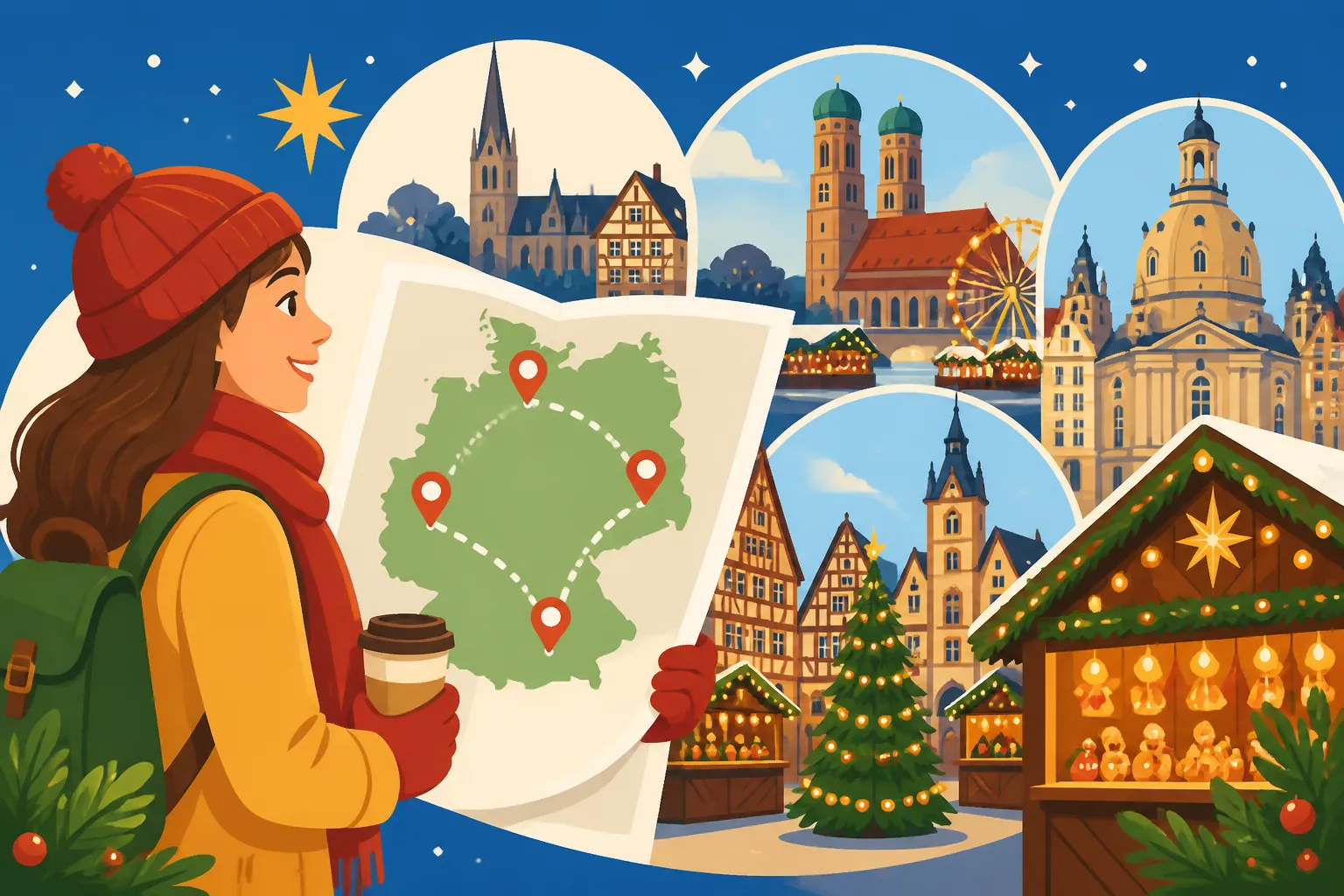
How to Do a Multi-City Christmas Market Itinerary in Germany
Oh, the magic of Christmas markets in Germany! You’ve seen the pictures, dreamt of the Glühwein, and imagined strolling through twinkling lights. But then the reality hits: there are so many incredible markets, and how on earth do you choose just one? Or, more ambitiously, how do you string together a few into a seamless, unforgettable multi-city itinerary without getting completely lost in the planning jungle? Believe me, I've been there, staring at train schedules and market opening times until my eyes glazed over. This guide is here to untangle that festive knot, helping you design a multi-city Christmas market tour that’s full of charm, not stress.
Disclosure: This post may contain affiliate links. We may earn a commission at no extra cost to you if you make a purchase through these links. Read full disclosure.
Why Embark on a Multi-City Christmas Market Journey?
It's tempting to pick one city, settle in, and explore its market (or markets, as many larger cities have several). And honestly, there's nothing wrong with that! But the true magic of Germany's Christmas markets lies in their astonishing diversity. Each region, sometimes even each town, has its own unique flavor, traditions, and specialties. Sticking to just one spot means you're missing out on a whole spectrum of festive experiences. A multi-city journey allows you to truly appreciate this rich tapestry, contrasting the grand, historic markets with smaller, more intimate ones.
The Joy of Variety and Regional Flavors
Imagine starting your trip in the majestic, bustling ambiance of Cologne, with its towering cathedral backdrop, and then moving on to the cozy, traditional wooden stalls nestled within the medieval walls of Rothenburg ob der Tauber. The contrast isn't just visually stunning; it's a sensory feast. Cologne might offer its unique regional "Himmel un Ääd" (heaven and earth) alongside your Glühwein, while Rothenburg delights with Schneeballen (fried dough balls) and intricate wood carvings. This kind of variety is what makes a multi-city trip so incredibly rewarding. You get to sample different regional delicacies, discover unique handcrafted gifts specific to an area, and soak in atmospheres that range from lively and communal to quaint and fairytale-like.
Beyond the culinary delights, the crafts and entertainment also vary wildly. Some markets, like the one in Nuremberg, are famous for their traditional "Rauschgoldengel" (gold-foil angels) and Pflaumenmännle (prune men), alongside their legendary Nuremberg Rostbratwurst. Others might feature live musical performances, historical re-enactments, or charming carousels for the little ones. Each stop on your journey presents a fresh wave of wonder and new treasures to discover, making the entire experience feel like unwrapping a series of delightful gifts. It's truly a choose-your-own-adventure of festive cheer.
Deeper Cultural Immersion
When you visit multiple cities, you’re not just seeing more markets; you're gaining a deeper appreciation for Germany’s regional identities and the subtle ways traditions shift from one state to another. For example, the Christkindlesmarkt in Nuremberg has a distinctly historic and religious feel, centered around the Christkind tradition. Venture further south to Munich, and you'll find a more Bavarian-influenced market at Marienplatz, with different architectural styles and perhaps even more emphasis on local food and drink in beer garden-style setups (though in winter, these are more Glühwein-focused!). Moving to the East, the Striezelmarkt in Dresden, one of Germany's oldest, showcases centuries-old traditions like the famous Dresden Stollen cake.
This cultural tapestry is genuinely fascinating. You'll notice differences in how people interact, the local dialect (even if just a few words you pick up!), and the particular pride each city takes in its Christmas market. It's a journey that transcends mere tourism, offering a glimpse into the heart of German winter customs. You might even stumble upon smaller, local markets that are less touristy, giving you an even more authentic taste of German Christmas spirit, far removed from the guidebooks. This kind of exploration provides a much richer narrative to your holiday, turning a simple trip into a true cultural expedition.
Crafting Your Route: Choosing the Right Markets
The sheer number of incredible Christmas markets in Germany can be overwhelming when you first start planning. It's like being a kid in a candy store, but the candy store is also a map of a whole country. The key is to be strategic, think about what kind of experience you're after, and group your chosen destinations logically to avoid spending half your trip on trains.
Iconic Markets vs. Hidden Gems
First, consider the blend. Do you want to hit the big names, or do you crave a more off-the-beaten-path experience?
Iconic Markets:
- Nuremberg (Nürnberg): The Christkindlesmarkt is perhaps the most famous, with a strong emphasis on tradition, the Christkind opening ceremony, and local specialties like Nuremberg Rostbratwurst and Lebkuchen. It’s absolutely essential for many first-timers.
- Dresden: The Striezelmarkt is Germany's oldest, boasting a rich history and unique crafts, particularly from the Erzgebirge region (think wooden figures and pyramids). Don't miss the Stollenfest!
- Cologne (Köln): Multiple markets, with the largest one right in front of the magnificent Kölner Dom (Cathedral). The atmosphere here is lively, bustling, and often quite international.
- Munich (München): The traditional Christkindlmarkt at Marienplatz is beautiful, but Munich also offers themed markets like the medieval market at Wittelsbacherplatz or the charming Tollwood Winterfestival.
- Berlin: As a capital, Berlin offers a huge variety of markets, from the traditional Gendarmenmarkt to the modern Potsdamer Platz with its winter sports activities.
These bigger markets are fantastic for their scale, history, and range of offerings, but they can also get incredibly crowded, especially on weekends. It's a trade-off: unparalleled atmosphere versus shoulder-to-shoulder crowds.
Hidden Gems & Unique Experiences:
- Rothenburg ob der Tauber: While not a "hidden gem" in terms of fame, its medieval setting makes the "Reiterlesmarkt" feel like stepping into a fairytale. It’s smaller, more intimate, and incredibly picturesque.
- Esslingen: Located near Stuttgart, Esslingen hosts a unique medieval and Christmas market, complete with jugglers, fire-eaters, and historical crafts. It's a fantastic change of pace.
- Monschau: In the Eifel region, this charming town transforms into a beautiful Christmas market scene, often with snow, making it feel particularly magical.
- Quedlinburg: Another UNESCO World Heritage site, its "Advent in den Höfen" (Advent in the Courtyards) allows visitors into private courtyards to discover hidden stalls.
Mixing a few iconic markets with one or two smaller, more focused ones can give you a wonderfully balanced experience. For example, you might start with the grand scale of Cologne, then head to the more intimate medieval charm of Esslingen.
Geographical Grouping and Themes
Once you have a wish list, it’s time to plot a sensible path. Germany is a big country, and crisscrossing it can eat up valuable time. Think about regions:
- Bavarian Route: Nuremberg – Munich – Regensburg (famous for its Thurn und Taxis market in a castle courtyard) – Rothenburg ob der Tauber. This route offers a quintessential Bavarian Christmas experience, from grand traditions to medieval charm.
- Rhine/Western Germany Route: Cologne – Düsseldorf – Aachen (known for its Printen gingerbread) – even across the border to Maastricht or Brussels. This route is excellent for easy train travel and a diverse mix of city markets.
- Eastern Germany Route: Dresden – Leipzig (home to Germany's second-oldest market) – Erfurt (with its medieval cathedral and Krämerbrücke). This region offers a deep dive into historical markets and unique Eastern German crafts.
- Northern Charm: Hamburg (several unique markets, including one for adults only!) – Lübeck (with its marzipan and historic backdrop). This route offers a different coastal feel.
Consider what theme appeals most to you. Are you a history buff? Focus on markets in medieval towns or those with deep historical roots. Traveling with family? Look for markets with carousels, ice rinks, and specific children's activities. Are you a foodie? Research specific regional culinary delights at each potential stop.
Here's a little table to help you compare a few popular market choices:
| City / Market | Vibe & Atmosphere | Signature Foods / Drinks | Notable Crafts / Specialties | Best For |
|---|---|---|---|---|
| Nuremberg Christkindlesmarkt | Highly traditional, historical, bustling | Nuremberg Rostbratwurst, Lebkuchen, Zwetschgenmännle | Rauschgoldengel, carved wooden items | Traditionalists, history buffs, families |
| Dresden Striezelmarkt | Oldest market, grand, cultural, family-friendly | Dresden Stollen, Pulsnitzer Pfefferkuchen, Glühwein | Erzgebirge wooden crafts, indigo-printed fabrics | Culture enthusiasts, families, foodies |
| Cologne Cathedral Market | Lively, iconic, international, stunning backdrop | Reibekuchen, Flammkuchen, Kölner Dom-Glühwein | Glass ornaments, regional artwork, various gifts | First-timers, groups, those wanting a grand scale |
| Rothenburg ob der Tauber Reiterlesmarkt | Fairytale, medieval, intimate, romantic | Schneeballen, Franconian Bratwurst, hot elderberry wine | Käthe Wohlfahrt items, wood carvings, pewter goods | Romantics, photographers, those seeking charm |
| Esslingen Medieval Market | Unique, interactive, historical, bustling | Traditional stews, medieval-inspired drinks, roasted nuts | Historical crafts (pottery, leather), street food | Adventure seekers, history buffs, families with kids |
Thinking about a multi-city route, consider how you might link some of these. For instance, a classic "Southern German Charm" could be Munich -> Nuremberg -> Rothenburg ob der Tauber. For a "Rhine River Delights" tour, think Cologne -> Düsseldorf -> Aachen. You could also extend your journey and find yourself in some truly magical places further afield, perhaps finding a Christmas Market Day Trip to combine with your main stops.
Navigating the Logistics: Travel, Accommodation, and Timing
The magic of Christmas markets is undeniable, but the practicalities of a multi-city trip require a bit of planning to ensure everything runs smoothly. Trust me, nothing dampens holiday cheer like a missed train or a fully booked hotel.
Transportation Between Cities
Germany boasts an excellent public transportation network, primarily centered around Deutsche Bahn (DB), the national railway system. For efficiency and comfort when traveling between cities, trains are almost always your best bet. The high-speed ICE (Intercity-Express) trains connect major cities quickly and smoothly. For shorter distances or if you're on a tighter budget, regional trains (RE, RB) are a good alternative, though they take longer.
- Booking Trains: It's absolutely crucial to book your train tickets well in advance, especially for popular routes during the Christmas market season (late November to December). Fares can skyrocket closer to the travel date. You can typically book up to six months ahead. I’ve found that using platforms like
Omiocan be incredibly helpful. It allows you to compare train, bus, and even flight options all in one place, showing you the fastest and cheapest routes, which is a lifesaver when you're juggling multiple city stops. Another option is directly through the Deutsche Bahn website or app. For more detailed advice, check out my guide on How to Buy Deutsche Bahn Tickets and Save Money. And don't forget to look at my tips on How Early Should You Book ICE Trains in Germany? to maximize your savings. - Buses: For certain routes or if trains are too expensive, long-distance buses like FlixBus can be a cost-effective option. They generally take longer but are comfortable and offer Wi-Fi. Again,
Omiocan help you see if a bus makes more sense for a particular leg of your journey. - Driving: While having a car offers flexibility, navigating German cities, finding parking (which can be expensive and scarce), and dealing with potential winter weather conditions can be more hassle than it's worth during Christmas market season. Stick to trains for inter-city travel if possible.
Finding Your Home Away From Home
Accommodation during the Christmas market season fills up quickly and can be pricey, especially in popular cities. This isn't the time to wing it.
- Book Early: Just like trains, hotels, guesthouses, and apartments should be booked months in advance. Many people plan their Christmas market trips a year ahead!
- Location, Location, Location: Aim for accommodations within walking distance of the main train station or public transport hubs, and ideally, close to the markets themselves. You’ll be tired after a day of market hopping, and a short walk back to your warm room is a blessing.
- Types of Accommodation: Germany offers a wide range of options, from charming boutique hotels to larger chains, and quaint guesthouses (Pensionen). For apartments, look for Ferienwohnungen. My guide on Accommodation in Germany: Hotels, Pensionen, and Hostels can give you more insights. Websites like
Booking.comare indispensable here, offering a vast selection and often allowing free cancellation if your plans change. Pay attention to reviews regarding noise, heating (it gets cold!), and proximity to amenities. - City-Specific Considerations: In larger cities like Berlin or Munich, consider staying in a neighborhood slightly outside the immediate city center but with excellent public transport links. This can often save you money without sacrificing convenience.
The Best Time to Visit
German Christmas markets generally open the last week of November and run until December 22nd or 23rd, though some in larger cities might extend until December 30th or even into the first few days of January (New Year's markets).
- Opening Dates: Always double-check the exact opening and closing dates for each market on your itinerary, as they can vary slightly year to year. My guide on When Do German Christmas Markets Open and Close? offers a good overview of typical schedules.
- Weekdays vs. Weekends: For a more relaxed experience, aim for weekdays. Weekends, especially Friday evenings and Saturdays, are incredibly crowded. If your itinerary involves a popular market on a weekend, try to visit it earlier in the day or later in the evening to avoid the peak crush.
- Day vs. Night: The markets truly come alive after dark when the lights twinkle and the Glühwein stands glow. Plan to visit at least one market in the evening. However, visiting during the day allows you to better see the craftsmanship of the stalls and appreciate the city architecture. A good strategy is to arrive at a market in the late afternoon, enjoy it as dusk falls, and stay for the evening atmosphere.
- Late November/Early December: If you want to avoid the absolute busiest times, the first week or two after the markets open in late November/early December tend to be slightly less crowded than the weeks leading up to Christmas.
Don't forget to consider practical aspects like staying connected with Mobile Data and eSIMs for Travel in Germany and having Travel Insurance for Trips to and Within Germany. These little details can make a huge difference in having a stress-free trip.
Enhancing Your Christmas Market Experience
You've planned your route, booked your trains and stays – now comes the fun part: diving into the sensory wonderland of the German Christmas markets! Don't just wander; engage with the experience fully.
Savoring the Culinary Delights
The food and drink are, for many, the very heart of the German Christmas market experience. It’s not just about sustenance; it’s about tradition, warmth, and shared joy.
- Glühwein is King: You simply must try Glühwein (mulled wine). Each market, and often each stall, has its own recipe. You'll find red, white, and even rosé Glühwein, sometimes with a shot of rum (mit Schuss) for an extra kick. Remember the "Pfand" system for the mugs – you pay a small deposit, which you get back when you return the mug. Many people keep the beautifully designed mugs as souvenirs, and why not? They're wonderful keepsakes!
- Bratwurst & Beyond: From the classic Thüringer Rostbratwurst (a long, thin sausage) to the smaller, flavorful Nürnberger Rostbratwurst, sausages are omnipresent. But don't stop there! Look for Reibekuchen (potato pancakes, often served with applesauce), Flammkuchen (a thin, crispy tart), Champignons mit Knoblauchsauce (mushrooms with garlic sauce), and Maronen (roasted chestnuts). For those with a sweet tooth, there's always Lebkuchen (gingerbread), gebrannte Mandeln (roasted almonds), and countless other delicious treats. For a deeper dive into what to feast on, check out my guide on What to Eat and Drink at a German Christmas Market. And don't forget to explore the wider world of German Regional Dishes Every Visitor Should Try – you might find some inspiration for other meals during your trip.
- Drink Alternatives: Not a fan of Glühwein? No worries! Many stalls offer Kinderpunsch (non-alcoholic punch), Eierpunsch (egg liqueur punch), hot chocolate, or other regional hot drinks.
Shopping for Unique Souvenirs
German Christmas markets are treasure troves for unique gifts and decorations. Forget the mass-produced trinkets; here you'll find genuine craftsmanship.
- Handmade Ornaments: Look for intricately carved wooden ornaments from the Erzgebirge region, delicate glass baubles, and handcrafted nativity scenes. Each piece tells a story and makes for a meaningful souvenir or gift.
- Local Specialties: Beyond food, consider local crafts. In Nuremberg, you might find the "Rauschgoldengel" or "Pflaumenmännle." In Dresden, look for traditional indigo-printed fabrics or the famous Stollen. Wooden toys, beeswax candles, and handmade soaps are also popular. My post on German Souvenirs Worth Buying (and What to Skip) can help you identify truly authentic items.
- Take Your Time: Don't rush your shopping. Browse the stalls, compare items, and don't be afraid to ask questions about how things are made (even a simple "Wie wird das gemacht?" with a smile can go a long way). This interaction is part of the experience. You might also find unique local tours on platforms like
GetYourGuidethat focus specifically on artisan crafts or market history, giving you an even richer context for your purchases.
Embracing the Atmosphere
The true magic of the markets isn't just what you buy or eat, but the whole immersive experience.
- Dress Warmly: December in Germany is cold. Layer up! Think warm coats, hats, scarves, gloves, and comfortable, waterproof shoes. Nothing ruins a festive mood faster than freezing feet. Seriously, read my guide on How to Stay Warm at German Christmas Markets – it’s vital!
- Soak in the Sights and Sounds: Take a moment to simply stand, breathe, and absorb it all. The twinkling lights, the scent of pine and cinnamon, the cheerful chatter, the carols playing – it’s all part of the charm. Look up at the historical buildings, watch the artisans at work, and enjoy the laughter of children.
- Safety First: While generally safe, like any crowded event, it's wise to be mindful of your belongings. Keep an eye on your bag, especially in very crowded areas. Also, it’s a good idea to be familiar with Staying Safe in Germany: Common-Sense Tips for Travelers.
- Allow for Spontaneity: While planning is good, leave room for serendipity. You might stumble upon a charming side alley market, a captivating street performer, or a stall with a product you didn't even know you needed. These unexpected discoveries often become the most cherished memories. Sometimes, a well-placed local walking tour, found perhaps via
GetYourGuide, can lead you to these hidden gems you might otherwise miss.
This multi-city Christmas market adventure might seem like a lot to coordinate, but with a bit of planning and an open heart, it promises to be one of the most memorable and magical trips you'll ever take. Germany in December is truly something special.
Disclaimer
Please remember that while I strive to provide accurate and up-to-date information, circumstances in Germany, especially regarding travel restrictions, public health measures, or market details, can change rapidly. Always cross-reference opening times, event schedules, and local regulations directly with official sources for each specific city and market you plan to visit. This guide is for informational purposes only and does not constitute official travel advice.