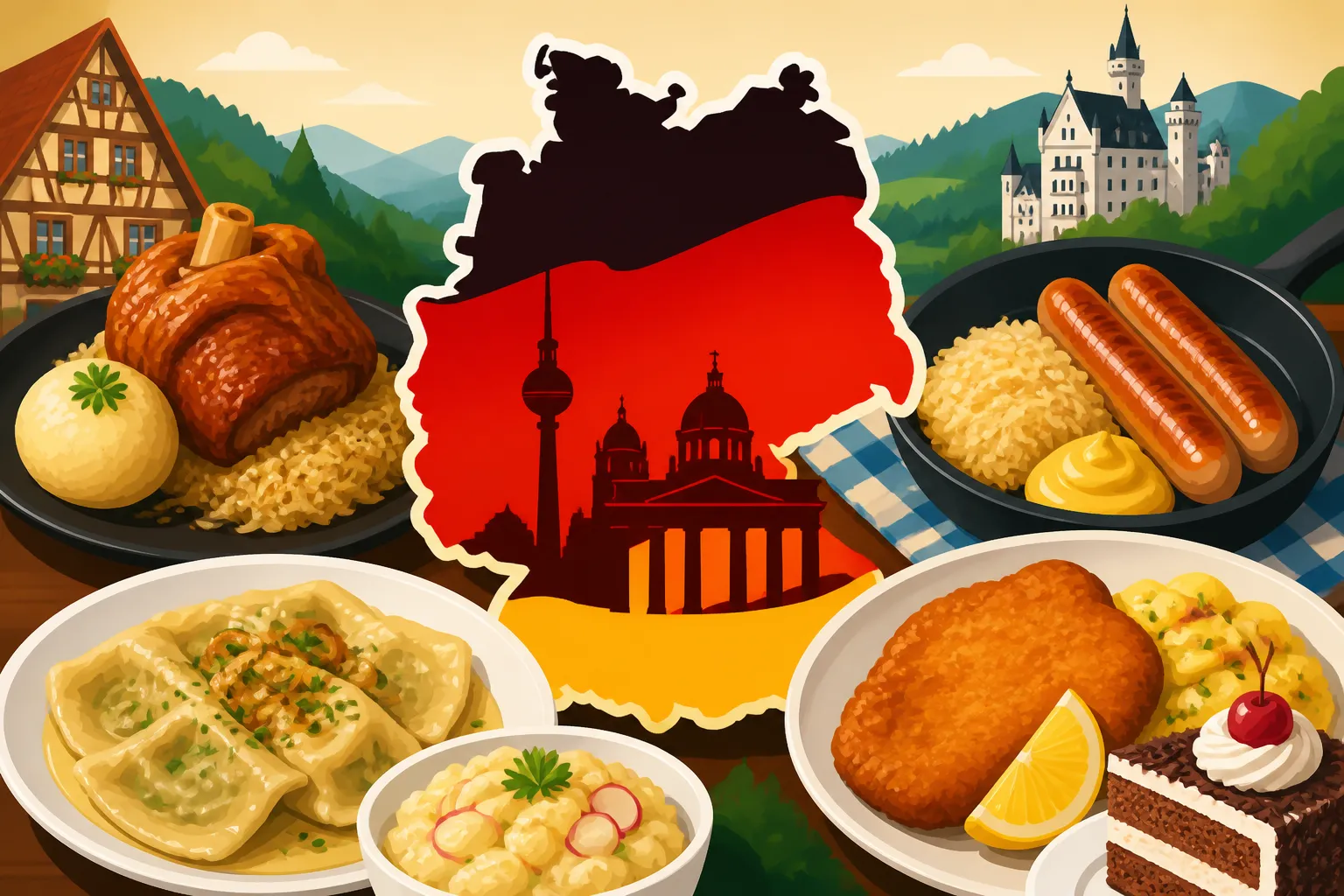
German Regional Dishes Every Visitor Should Try
If you're like most expats or visitors, your first thought when it comes to German food probably conjures up images of mountains of sausage and sauerkraut, maybe a giant pretzel. And while those are certainly part of the picture, let me tell you, reducing German cuisine to just that is like saying French food is only baguette and cheese – a massive disservice! I remember arriving here, thinking I knew what German food was, and being utterly blown away by the sheer regional diversity. This guide is here to walk you through the incredible array of regional dishes Germany has to offer, helping you discover the true culinary soul of this fascinating country.
Disclosure: This post may contain affiliate links. We may earn a commission at no extra cost to you if you make a purchase through these links. Read full disclosure.
Beyond Sausage and Sauerkraut: A Culinary Journey Through Germany
Germany is a land of sixteen distinct federal states, and with each state, sometimes even within different parts of a state, you’ll find a unique culinary identity shaped by history, local produce, and cultural influences. For centuries, these regions developed their own distinct flavors, often quite isolated from one another, leading to a vibrant tapestry of dishes that goes far beyond any single stereotype. It’s this regionality that makes exploring Germany's food scene such an adventure. Forget bland and heavy; prepare for surprising flavors, comforting classics, and hearty meals that reflect the landscape and the people.
North German Coastal Delights
Up in the breezy north, where the North Sea and Baltic Sea meet the land, the cuisine is unsurprisingly heavily influenced by the ocean. Think fresh fish, robust ingredients that can stand up to the chill, and a certain maritime flair that you won’t find further south. The food here is often simpler, focusing on quality ingredients and straightforward preparation.
One of the most iconic dishes is Labskaus, particularly in cities like Hamburg and Bremen. Don't let its unconventional appearance deter you; it's a true sailor's meal. Traditionally, Labskaus is a mash of salted beef or corned beef, potatoes, onions, and often beetroot, which gives it its distinctive reddish hue. It’s typically served with a fried egg, gherkins, and rollmops (pickled herring). While its origins might be rooted in practicality for long sea voyages, it’s now a beloved regional delicacy, offering a unique blend of savory, salty, and slightly tangy flavors that perfectly encapsulate North German robustness.
Another staple is Matjes, a delicate young herring that has been cured in a mild brine. Unlike fully ripened herring, matjes is incredibly tender and mild, almost creamy, and usually eaten raw with boiled potatoes, onions, and a dollop of sour cream. It’s a seasonal delight, primarily enjoyed in late spring and early summer, and often celebrated with special festivals. You'll find it served simply on dark bread or as part of a more elaborate platter. If you're traveling through cities like Lübeck or Kiel, stopping by a traditional fish restaurant or even a street vendor for a fresh Fischbrötchen (fish sandwich) is a must. Many locals rely on reliable travel platforms like Omio to easily navigate the train system and hop between these northern cities, ensuring they don't miss out on any regional culinary delights.
Central German Comfort Food
Moving into the heart of Germany, the cuisine shifts from maritime influences to more agrarian traditions. Here, you’ll find comforting, hearty dishes that often make good use of potatoes, root vegetables, and various meats, reflecting a history of farming and traditional home cooking. These regions, including states like Hesse, Thuringia, and parts of Saxony-Anhalt, offer a rich tapestry of flavors that are both familiar and uniquely German.
In the state of Hesse, especially around Frankfurt, you absolutely have to try Grüne Soße (Green Sauce). This isn't just a sauce; it's a cultural institution! It's a cold herb sauce made with seven specific fresh herbs: borage, chervil, cress, parsley, burnet, sorrel, and chives, blended with sour cream, yogurt, or quark. The precise combination of herbs gives it a fresh, slightly tangy, and wonderfully aromatic flavor. Grüne Soße is typically served with boiled potatoes and hard-boiled eggs, or alongside boiled beef (Ochsenbrust) or even Schnitzel. It’s particularly popular during springtime when the herbs are fresh, and it embodies a lighter, yet still traditional, side of German cooking. Locals often debate whose mother makes the best version, a testament to its deeply personal and regional significance.
Further east, in Thuringia, a culinary star shines bright: the Thüringer Rostbratwurst. This isn't just any bratwurst; it's a protected regional specialty with a heritage stretching back centuries. Made from finely minced pork and a secret blend of spices, it’s traditionally grilled over charcoal, giving it a characteristic smoky flavor and crisp skin. It’s always served in a crispy roll, typically a Brötchen, with a generous dollop of mustard. Forget ketchup; in Thuringia, it’s all about the mustard, often a medium-hot variety that complements the sausage perfectly. You'll find these sizzling on grills at markets, festivals, and pretty much any public gathering. The simplicity and perfection of a Thüringer Rostbratwurst are a true testament to the region’s focus on quality ingredients and time-honored traditions. Trying to distinguish between regional sausages can feel overwhelming, but asking for a local recommendation at a market stall is always a great strategy.
The Hearty South: Bavaria and Baden-Württemberg's Staples
When most people think of German food, their minds often leap to Bavaria. And for good reason! This southern state, along with its neighbor Baden-Württemberg, boasts some of Germany's most recognizable and beloved dishes. The cuisine here tends to be richer, more substantial, and often accompanied by a crisp, cold beer. The Alps influence the regional produce, leading to hearty mountain fare and delicious dairy products.
Bavarian Classics You Can't Miss
Bavarian cuisine is synonymous with hearty portions, delicious meats, and a strong beer culture. It’s comfort food at its finest, often enjoyed in bustling beer gardens or traditional Gasthäuser. You can find excellent places to stay in these regions via platforms like Booking.com, often close to traditional eateries.
Let's start with Weißwurst (white sausage). This delicate, mildly seasoned sausage made from minced veal and pork back bacon is a true Bavarian icon. The tradition dictates that Weißwurst should be eaten before noon – a rule that Bavarians take quite seriously! It’s served in a bowl of hot water, and the skin is traditionally removed before eating (you "zuzeln" or suck it out, though most visitors use a knife and fork). Accompanied by sweet mustard (not the spicy kind!), a soft pretzel (Brezen), and a Weißbier (wheat beer), it’s the quintessential Bavarian breakfast or mid-morning snack. The mild flavor and soft texture make it surprisingly accessible, even for those not usually fond of sausage.
Another must-try is Leberkäse, though its name (literally "liver cheese") is quite misleading as it typically contains neither liver nor cheese, except in specific regional variations. It’s essentially a finely ground meatloaf, baked until it has a crispy brown crust. Sliced thick, it’s fantastic served warm on a Semmel (a type of bread roll) with sweet mustard, or as a main dish with a fried egg and potato salad. It's a common sight in butcher shops and snack stalls throughout Bavaria, offering a wonderfully savory and satisfying bite.
For something truly impressive, you can't overlook Schweinebraten or Schweinshaxe (roasted pork or pork knuckle). The Schweinshaxe is particularly iconic: a whole pork knuckle, slow-roasted until the meat is incredibly tender and falls off the bone, while the skin crackles into a spectacularly crispy rind. It’s typically served with a rich gravy, potato dumplings (Knödel), and often sauerkraut. This dish is a feast for the senses, perfect for sharing, and a true indulgence in Bavarian culinary tradition. It's the kind of meal that requires a long walk or a good nap afterward!
And of course, who could forget Käsespätzle? While Spätzle itself is a Swabian invention (more on that below), Käsespätzle is widely beloved in Bavaria and beyond. These soft egg noodles are layered with grated cheese (often Emmentaler or Bergkäse) and caramelized onions, then baked until gooey and golden. It’s the ultimate comfort food, deeply satisfying and utterly delicious, often served as a main course or a rich side dish. You can learn more about how Germans enjoy their meals, including the etiquette around dishes like Käsespätzle, in our guide to German Dining Etiquette: Eating Out, Tipping, and Table Manners.
Baden-Württemberg's Swabian Specialties
Adjacent to Bavaria, the region of Baden-Württemberg, particularly the Swabian area, boasts a cuisine that is distinct, innovative, and deeply rooted in its history. Swabian cooking is famous for its use of pasta-like dishes, often reflecting a clever use of simple ingredients to create incredibly flavorful meals.
The undisputed queen of Swabian cuisine is the Maultasche. Often described as "Swabian ravioli," these large, savory pasta pockets are traditionally filled with a mixture of minced meat (pork, beef, or both), smoked meat, spinach, bread, and spices. The origins are debated, with some legends attributing them to monks who wanted to hide meat from God during Lent. Maultaschen can be enjoyed in various ways: "geschmelzt" (pan-fried with butter and onions), in a clear beef broth ("in der Brühe"), or sliced and fried with eggs ("geröstet"). Each method brings out a different aspect of their comforting flavor. They are a versatile and deeply satisfying dish that you simply must try when visiting the region.
Another quintessential Swabian meal is Linsen mit Spätzle (lentils with Spätzle). This seemingly simple dish is a staple of Swabian home cooking and a testament to how humble ingredients can create something truly spectacular. Hearty lentils are stewed until tender, often with a touch of vinegar for tang, and served with those famous Spätzle and often a pair of Frankfurter or Saitenwürstchen (small sausages). It's a warming, nutritious, and incredibly flavorful dish, perfect for cooler days. It exemplifies the Swabian knack for making delicious, filling meals out of everyday staples.
For a more elegant Swabian experience, try Zwiebelrostbraten. This dish is a beautifully pan-fried cut of beef, typically sirloin or ribeye, served with rich gravy and a generous topping of crispy fried onions. It’s often accompanied by Spätzle or Bratkartoffeln (fried potatoes). While you might find similar beef dishes elsewhere, the Swabian version is particularly renowned for its quality and the delightful textural contrast of the tender meat and crunchy onions.
Rhine and Ruhr Valley Flavors: A Taste of Western Germany
The western regions of Germany, particularly the Rhineland and the Ruhr Valley, offer a culinary landscape shaped by their historical roles as trade routes, industrial centers, and cultural melting pots. The food here is robust, often influenced by neighboring countries like Belgium and the Netherlands, and reflects a pragmatic approach to cooking that prioritizes flavor and sustenance.
Rhineland Rarity: Himmel un Ääd and Beyond
The Rhineland, with its vibrant cities like Cologne and Düsseldorf, boasts dishes that are often surprisingly sweet and savory combined, reflecting the region's rich agricultural past and its love for hearty, comforting meals.
One of the most charmingly named dishes is Himmel un Ääd (Heaven and Earth). This delightful dish is a simple yet effective combination of mashed potatoes (earth) and stewed apples (heaven), traditionally served with fried blood sausage (Blutwurst) and caramelized onions. The sweetness of the apples perfectly complements the savory potatoes and the rich, earthy flavor of the blood sausage. It’s a dish that evokes a sense of home and tradition, a true Rhineland classic that showcases how simple ingredients can create profound flavors. It’s often enjoyed in traditional pubs and breweries, especially during autumn and winter months.
Another iconic Rhineland dish is Rheinischer Sauerbraten. This is a pot roast that is marinated for several days (sometimes up to a week) in a mixture of vinegar, water, and spices, which tenderizes the meat and gives it a distinctive sweet-sour flavor. The meat, traditionally horse meat but now more commonly beef or venison, is then slow-cooked until it's incredibly tender. The gravy is thickened and often sweetened with raisins or Pumpernickel (a dark, dense rye bread) or Printen (a type of German gingerbread cookie), adding another layer of complexity. Served with potato dumplings (Knödel) and red cabbage, it's a truly magnificent and uniquely Rhenish culinary experience. Understanding how to order and enjoy such a dish in its authentic setting is key, and our guide to German Dining Etiquette: Eating Out, Tipping, and Table Manners can provide more insights.
For something a bit lighter but still very traditional, you might encounter a "Halve Hahn" in Cologne. Don't be fooled by the name, which literally means "half a rooster." It's actually a thick slice of rye bread, often served with a generous piece of strong Gouda cheese, pickles, and a smear of mustard. It’s a classic brewery snack, perfect for accompanying a local Kölsch beer.
Ruhr Region's Robust Meals
The Ruhr Valley, Germany's former industrial heartland, developed a cuisine that is robust, unpretentious, and deeply satisfying. These are meals that fueled a working population, focusing on energy, flavor, and affordability. While perhaps not as "gourmet" as other regions, the food here offers an authentic taste of German working-class culture.
You'll find many hearty stews and casserole-like dishes, often featuring root vegetables and various cuts of meat. One notable dish is Pfefferpotthast, a thick, peppery beef stew from Dortmund. It’s slow-cooked with onions and a significant amount of black pepper, resulting in a rich, dark, and intensely flavorful stew often served with boiled potatoes. It's a dish with a long history, dating back to medieval times, and reflects the region's penchant for slow-cooked, deeply flavored meals.
The Ruhr region also embraces simple, comforting snacks. Think about a good old Currywurst – while popular nationwide, it has a particularly strong following here, often enjoyed from a local Imbiss (snack bar). The local take often involves a distinct regional curry sauce and sometimes special local sausages. After a day of exploring, finding a good place to try these regional specialties is easy. Many local tours, which you can find on platforms like GetYourGuide, specifically focus on culinary experiences, guiding you to the best local spots for everything from Currywurst to traditional stews.
Eastern Germany's Hidden Gems
Eastern Germany, historically distinct, offers a fascinating culinary journey with dishes influenced by its Saxon, Brandenburg, and Slavic heritage. While some might consider it less famous than Bavarian cuisine, these regions hold their own with unique flavors, often combining sweet and savory, and making excellent use of local produce.
Saxon Sweetness and Savory Surprises
Saxony, with its cultural hubs like Dresden and Leipzig, is known for its delicate pastries and surprisingly complex savory dishes, reflecting a history of royal courts and rich culinary traditions.
A true star of Saxon baking is the Eierschecke. This delightful layered cake is nothing short of a masterpiece. It consists of three distinct layers: a base of shortcrust pastry, a middle layer of creamy quark (German cream cheese) and vanilla pudding, and a top layer of a rich egg custard, often with butter and sugar. The layers bake together to create a harmonious blend of textures and flavors – a slightly crispy base, a soft and tangy middle, and a wonderfully rich top. It's a coffee-time classic, perfect with a hot cup of Kaffee, and a must-try for anyone with a sweet tooth visiting Dresden or Leipzig.
On the savory side, Leipziger Allerlei (Leipzig All Sorts) is a traditional vegetable dish that epitomizes elegance and seasonal ingredients. It's a mixed vegetable medley, typically featuring young carrots, peas, asparagus, cauliflower, and morels, often enhanced with crayfish tails, bread dumplings, and a creamy sauce with butter and herbs. Traditionally served as a side dish or even a light main course, especially in spring, it showcases the refined side of Saxon cooking, celebrating fresh, local produce. It's a wonderful contrast to the heavier meat dishes found elsewhere.
Another sweet treat to look out for are Quarkkeulchen. These are small, pan-fried potato and quark pancakes, often served with applesauce, cinnamon sugar, or fruit compote. They're crispy on the outside and soft and fluffy on the inside, a simple yet incredibly satisfying dessert or snack that highlights the region's love for quark.
Brandenburg and Mecklenburg-Vorpommern's Rustic Fare
The states of Brandenburg (surrounding Berlin) and Mecklenburg-Vorpommern (on the Baltic coast) offer a more rustic, down-to-earth cuisine, heavily reliant on potatoes, fish from their numerous lakes, and robust, filling dishes that reflect a rural landscape.
In Brandenburg, potatoes are king, and one dish that stands out is Spreewälder Kartoffelsalat. Unlike the mayonnaise-based potato salads common in other parts of Germany, the Spreewald version is made with a tangy oil and vinegar dressing, often featuring gherkins from the famous Spreewald region, onions, and herbs. It's light, refreshing, and the perfect accompaniment to grilled meats or fish. The Spreewald region itself is known for its unique biosphere and, of course, its gherkins, which find their way into many local dishes. If you are exploring this region, accessible via regional trains, you can enjoy the beautiful landscape and taste the food, perhaps with a handy Deutschland-Ticket Explained for seamless travel.
Along the Baltic coast in Mecklenburg-Vorpommern, fresh fish is paramount. You’ll find delicious preparations of cod, flounder, pike-perch, and herring. One classic is Dorsch und Grünkohl (cod and kale), a hearty winter dish where pan-fried cod is served alongside tender, stewed kale, often with smoked bacon. It’s a simple yet incredibly flavorful combination that highlights the fresh catches of the Baltic Sea and the warming comfort of seasonal vegetables. Many coastal towns offer excellent seafood restaurants where you can savor these fresh flavors. You might even discover some interesting local seafood markets, perfect for experiencing German Food Culture: Eating and Drinking as a Visitor.
Beyond the Plate: How to Experience Germany's Food Culture
Exploring Germany's regional dishes isn't just about what you eat; it's about the entire experience. It's about finding those hidden gems, understanding local customs, and embracing the culinary adventure.
Finding Authentic Local Eateries
The best way to truly experience regional German cuisine is to venture beyond the main tourist drag. Look for traditional Gasthäuser or Wirtschaften in smaller towns or residential areas of larger cities. These are often family-run establishments that have been serving local specialties for generations. They might not have English menus, but that's part of the adventure! Don't be shy; point to what others are eating, or use a translation app.
Local markets, particularly weekly farmers' markets (Wochenmärkte), are also fantastic places to sample regional delicacies. You can find everything from freshly baked bread and regional cheeses to local sausages and seasonal fruits and vegetables. Many markets also have stalls selling hot, ready-to-eat dishes, offering a casual and authentic culinary experience. For a truly immersive experience, consider joining a food tour. Platforms like GetYourGuide offer various culinary tours in cities like Berlin, Munich, or Frankfurt, guiding you through local markets and traditional eateries, often with English-speaking guides who can explain the history and significance of each dish.
Don't be afraid to ask locals for recommendations. Germans, despite their often reserved exterior, are usually very proud of their regional food and happy to suggest their favorite spots. Avoiding places with overly flashy signs or menus in multiple languages designed purely for tourists is usually a good rule of thumb if you’re seeking authenticity.
Dining Etiquette and Understanding the Menu
Dining in Germany is generally a relaxed affair, but a few pointers can enhance your experience. Punctuality is appreciated if you have a reservation, but generally, showing up a little early or on time is fine. When you sit down, don't expect immediate service; it can sometimes take a while for the waiter to come by. Politeness goes a long way – a friendly "Hallo!" when you enter and "Danke schön" when you leave are always well-received.
Portions in Germany tend to be generous, especially with traditional dishes, so come hungry! It's perfectly normal to ask for a "Doggy Bag" (or zum Mitnehmen) if you can't finish your meal. When it comes to ordering, don't rush. Take your time to peruse the menu, and if you’re struggling with the language, most larger establishments or tourist-friendly cities will have English menus available. Otherwise, a picture menu or Google Translate can be your best friend. Remember, you might need to use a few German phrases to navigate your meal, so checking out resources like German Language and Everyday Communication for Visitors can be very helpful.
Tipping is customary but less generous than in some other countries. A general rule of thumb is to round up the bill or add 5-10% for good service. You usually tell the waiter the total amount you want to pay, including the tip, when they bring the bill. For example, if the bill is €23.50, you might say "25 Euro, bitte." You can read more about this in our guide on German Dining Etiquette: Eating Out, Tipping, and Table Manners.
German meal times are generally earlier than in some Mediterranean countries. Lunch is often the main meal of the day, typically between 12 PM and 2 PM, and dinner is usually lighter, enjoyed between 6 PM and 8 PM. Many restaurants have a "Mittagsmenü" (lunch menu) with special offers.
| Region | Dish Name | Key Ingredients & Characteristics |
|---|---|---|
| North Germany | Labskaus | Corned beef, potatoes, onions, beetroot (mashed), often with fried egg, gherkins, rollmops. |
| North Germany | Matjes | Young cured herring, delicate and mild, often served with potatoes, onions, sour cream. |
| Central Germany | Grüne Soße (Hesse) | Seven fresh herbs (borage, chervil, cress, parsley, burnet, sorrel, chives) with sour cream/quark, served with eggs/potatoes. |
| Central Germany | Thüringer Rostbratwurst | Grilled finely minced pork sausage, charcoal-smoked, served in a roll with mustard. |
| Bavaria | Weißwurst | Mild veal and pork sausage, traditionally eaten before noon with sweet mustard, pretzel, and Weißbier. |
| Bavaria | Schweinshaxe | Roasted pork knuckle with crispy skin, tender meat, served with potato dumplings and gravy. |
| Baden-Württemberg | Maultaschen | Large pasta pockets filled with minced meat, smoked meat, spinach, bread; served in broth or pan-fried. |
| Baden-Württemberg | Linsen mit Spätzle | Hearty lentil stew with Spätzle (egg noodles) and sausages. |
| Rhineland | Himmel un Ääd | Mashed potatoes ("earth") with stewed apples ("heaven"), served with blood sausage and onions. |
| Rhineland | Rheinischer Sauerbraten | Marinated pot roast (beef/venison), sweet-sour flavor, served with gravy, dumplings, red cabbage. |
| Saxony | Eierschecke | Three-layer cake: shortcrust, quark-vanilla, egg custard. |
| Brandenburg | Spreewälder Kartoffelsalat | Potato salad with oil and vinegar dressing, gherkins, onions, herbs. |
Disclaimer
The information provided in this guide is for general informational purposes only and is based on common knowledge and experiences of expats in Germany. While we strive to keep the information up-to-date and accurate, culinary traditions can vary, and local specifics might differ. Always verify details with local sources or experts, especially regarding ingredients for allergies or specific dietary needs. Enjoy your culinary explorations responsibly!