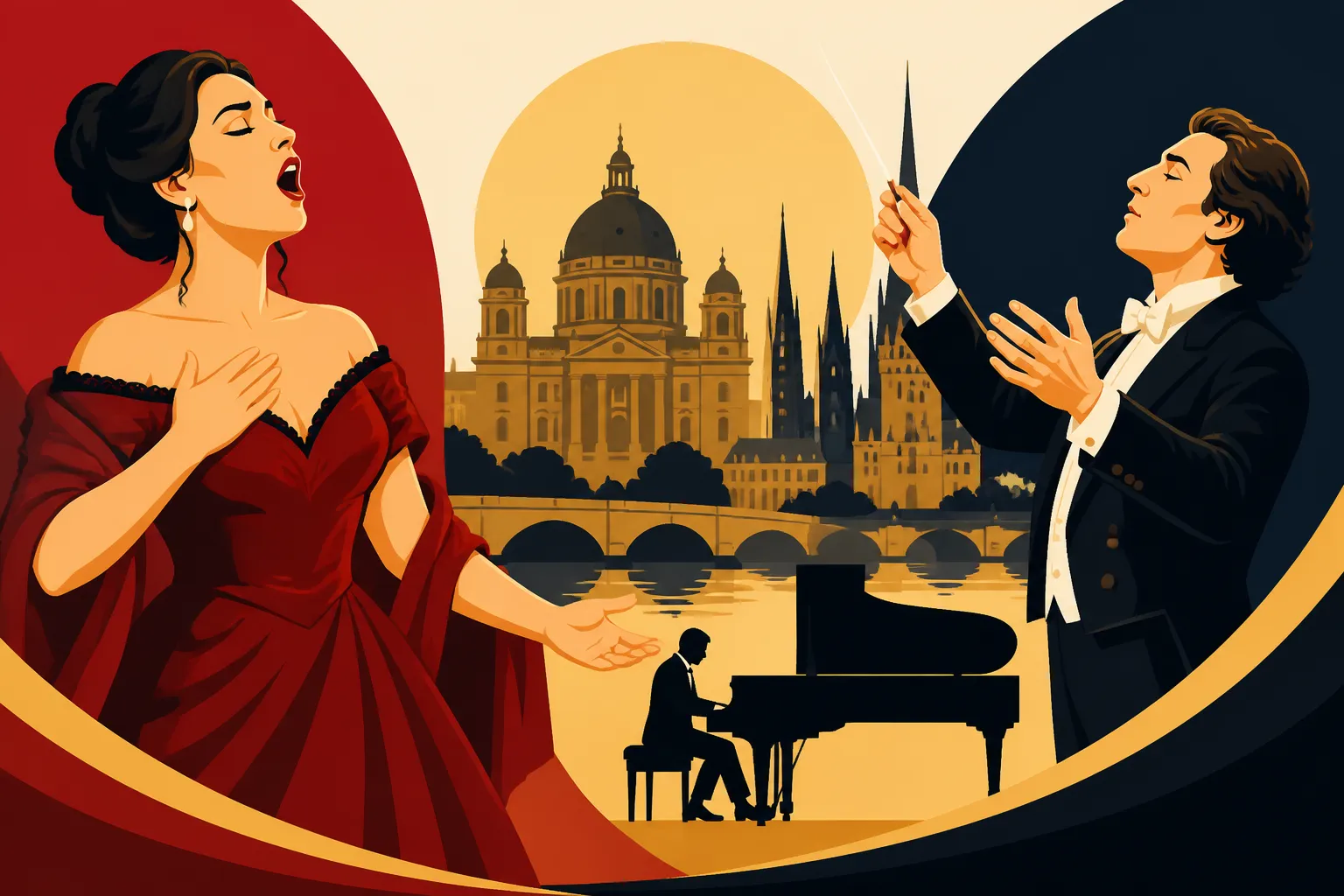
Classical Music and Opera in Germany
Let's be real: diving into Germany's classical music and opera scene can feel a bit like trying to solve a Rubik's Cube blindfolded when you first arrive. You know the country is a powerhouse of musical heritage, and you're aching to experience it, but the sheer volume of venues, the German-only websites, and the unspoken rules can be daunting. This guide is here to demystify it all, offering you the insider tips you need to confidently secure tickets, navigate performances, and truly soak in the unparalleled cultural richness that Germany has to offer, without feeling like an outsider.
Disclosure: This post may contain affiliate links. We may earn a commission at no extra cost to you if you make a purchase through these links. Read full disclosure.
The Rich Tapestry of German Classical Music and Opera
Germany isn't just a place with a classical music scene; it is a cornerstone of classical music history. From the solemn grandeur of Bach to the revolutionary passion of Beethoven and the dramatic epics of Wagner, this country has nurtured some of the most influential composers the world has ever known. It’s a heritage that’s not just preserved but vibrantly alive, interwoven into the very fabric of daily German life. As an expat, understanding this deep-rooted connection helps you appreciate why there's an opera house or concert hall in almost every mid-sized city, not just the sprawling metropolises.
A Legacy of Musical Giants
Walking through the streets of Leipzig, Bonn, or Bayreuth, you can almost hear the echoes of history. Johann Sebastian Bach spent a significant part of his life as Thomaskantor in Leipzig, where his influence shaped the city's musical identity forever. Ludwig van Beethoven was born in Bonn, his early talent blooming amidst the vibrant cultural life of the late 18th century. And Richard Wagner, well, his very name conjures images of the Bayreuth Festival, a mecca for opera lovers that he himself founded to perform his monumental works. These aren't just names in dusty history books; their spirit permeates the concert halls, the conservatories, and the hearts of German audiences today.
This isn't just about famous composers, though. It's about a culture that has historically valued music as a fundamental part of intellectual and spiritual life. Public access to music wasn't just for the elite; it was seen as essential for the education and enrichment of all. This historical emphasis explains the incredible state funding and public support for the arts that exists even now, ensuring that world-class performances are often more accessible and affordable than you might expect in other major cultural hubs. It truly is a musical wonderland just waiting to be explored.
The Sheer Volume of Venues and Performances
One of the most mind-boggling things for newcomers, myself included, is the sheer number of opera houses, orchestras, and concert venues scattered across Germany. We're not just talking Berlin, Munich, and Hamburg here. Cities like Dresden, Stuttgart, Frankfurt, and Cologne boast opera houses with their own full ensembles, ballet companies, and diverse repertoires. Even smaller cities like Wiesbaden, Augsburg, or Wuppertal have their own municipal theaters offering a consistent program of opera, operetta, and classical concerts.
It's a testament to Germany's decentralized cultural landscape. Unlike some countries where all the cultural eggs are in one or two major city baskets, Germany proudly spreads its artistic wealth. This means you don't have to trek to the capital for a stellar performance. You could be living in a relatively modest city and still have access to a fantastic "Stadttheater" or "Opernhaus" right on your doorstep. This incredible density of venues translates to a dizzying array of choices, making Germany a paradise for any classical music or opera enthusiast – once you learn how to navigate it, of course!
Navigating the German Opera and Concert Scene
So, you're ready to dive in! But where do you even begin? The initial hurdle is often just finding out what's on and how to get tickets, especially if your German isn't quite concert-program-fluent yet. Don't worry; there are plenty of resources, and a few insider tips can make the process much smoother.
Finding Performances and Booking Tickets
When it comes to finding out what's playing, the first stop is usually the venue's own website. Most major opera houses and concert halls, such as the Staatsoper Unter den Linden in Berlin, the Bayerische Staatsoper in Munich, or the Elbphilharmonie in Hamburg, have excellent English sections on their sites. These are your best bet for the most up-to-date program information and direct ticket purchases. You can often see seating plans, pricing tiers, and even cast lists.
Beyond individual venues, there are also some fantastic aggregators that can help. Websites like GetYourGuide often list special classical music experiences or tours, which can be a great way to ease into the scene, especially if you're looking for something less formal or more tourist-friendly. For broader searches across multiple venues, you might find some event portals, though these often lean heavily towards German. However, a simple Google search for "Opera [City Name] Programme" or "Classical Concerts [City Name] Tickets" will usually point you in the right direction. For travelers needing to get to these musical destinations, services like Omio are incredibly helpful for booking trains or buses between cities, ensuring you arrive well in time for the curtain.
Booking.com might not directly sell concert tickets, but if you're traveling specifically for a performance, it's invaluable for securing nearby accommodation, which can be a real boon, especially after a late-night show. Many venues also have a box office ("Kasse" or "Vorverkauf") where you can buy tickets in person, which can be less intimidating once you're a bit more settled. Don't be shy about asking if they have English-speaking staff; many do, especially in larger cities. Also, keep an eye out for subscription models ("Abonnement") if you plan to attend regularly, as these often offer significant savings and priority booking.
Understanding Seating, Dress Codes, and Etiquette
This is where many expats (and even Germans new to the scene!) get a bit nervous. What to wear? When to clap? Will I stick out like a sore thumb? Let's ease those worries.
First, dress code. While the image of grand opera houses might conjure up ball gowns and tuxedos, the reality in Germany today is far more relaxed, especially for regular performances. For an evening opera or a classical concert, "smart casual" is generally perfectly fine. This means a nice pair of trousers or a skirt, a shirt or blouse, maybe a blazer or a smart sweater. You'll see everything from jeans and a nice top to full-on evening wear, particularly at premieres ("Premieren") or very special gala events. The key is to look presentable and respectful of the occasion, rather than aiming for rigid formality. For a matinee or a more casual daytime concert, even very relaxed attire is often acceptable.
Seating can be a bit tricky if you're used to a more standardized theatre layout. German opera houses often have multiple tiers: Parkett (orchestra/stalls), Rang (balcony/mezzanine), and Logen (boxes). "Restricted view" ("Sichtbehinderung") is a common disclaimer for cheaper seats, usually meaning a pillar is in the way. Don't be afraid of the higher ranks, though; sometimes the acoustics are even better up there, and the view over the entire stage can be spectacular.
As for etiquette, the main thing to remember is silence. Turn off your phone, unwrap any candies before the performance starts, and try not to whisper. Clapping rules are a common source of anxiety. Generally, you clap at the end of an act in an opera, or at the end of a movement in a symphony (often signaled by a pause, but not a full stop). If in doubt, just wait for the locals to start, or for the conductor to lower their baton fully. A standing ovation ("stehende Ovationen") is reserved for truly exceptional performances. And a word to the wise: avoid arriving late. German venues are notoriously strict; if you're not in your seat when the music starts, you might have to wait until an intermission ("Pause") to be seated, missing the beginning of the performance entirely. It's a bit of a culture shock for some, but it ensures a respectful experience for everyone.
Major Opera Houses and Concert Halls Across Germany
Germany is blessed with an abundance of world-class venues, each with its own history, architectural style, and unique programming. Whether you're a seasoned opera aficionado or a curious newcomer, there's a stage waiting to captivate you.
Iconic Institutions in Big Cities
When you think of grand European opera, Germany's major cities immediately come to mind. Berlin alone boasts three major opera houses – the Staatsoper Unter den Linden, the Deutsche Oper Berlin, and the Komische Oper Berlin – each offering a distinct artistic profile. The Staatsoper, nestled elegantly on Unter den Linden, is renowned for its traditional and historically informed performances, often featuring star international singers. Deutsche Oper is known for its larger, more dramatic productions, while the Komische Oper often presents innovative, contemporary interpretations, sometimes even in German with English surtitles.
Then there's the Bayerische Staatsoper in Munich, consistently ranked among the world's leading opera companies. Its opulent Nationaltheater is a spectacle in itself, and its programming is a magnificent blend of classical masterpieces and modern works. Hamburg's Elbphilharmonie, or "Elphi," is a modern architectural marvel that has quickly become a global icon for classical music. Its acoustics are legendary, making it a must-visit for any music lover, even if just for a tour. While the Elbphilharmonie primarily focuses on concerts, Hamburg also has the Staatsoper Hamburg for opera. Each of these institutions not only offers incredible performances but also often has robust education and outreach programs, making them integral parts of their city's cultural life.
Hidden Gems and Regional Theaters
While the big names draw international attention, true German cultural immersion comes from discovering the treasures beyond the major capitals. Take the Semperoper Dresden, for instance. A stunning example of Baroque architecture, it's a world-renowned opera house with a rich history, particularly celebrated for its Wagner and Strauss performances. It might not be in Berlin or Munich, but its artistic standard is unquestionably top-tier.
Smaller, regional theaters often provide an incredible experience, blending local charm with high-quality productions. Cities like Stuttgart with its Staatsoper Stuttgart, Frankfurt with the Oper Frankfurt, or Cologne with the Oper Köln, all maintain excellent opera and concert seasons. These venues are typically more accessible, tickets can be easier to obtain, and the atmosphere can feel a bit more community-focused. Don't underestimate the quality you'll find here; many up-and-coming talents, as well as established artists, perform in these "hidden gems." It’s also often a fantastic way to experience opera and classical music at a more affordable price point. If you're exploring Germany's diverse regions, a quick search for the local "Stadttheater" or "Musiktheater" is highly recommended. For those looking for a different vibe, even university cities like Freiburg or Münster have active musical scenes often featuring student and semi-professional ensembles, which can be a lively and budget-friendly alternative.
The Festival Scene: Summer Highlights and Beyond
Germany truly comes alive with music during its numerous festivals, particularly in the warmer months. These festivals are not just about performances; they're cultural events that draw international audiences and create a unique, celebratory atmosphere.
The most famous, perhaps, is the Bayreuth Festival ("Bayreuther Festspiele"), dedicated exclusively to the works of Richard Wagner. Held annually in July and August at the Festspielhaus, it's an almost mythical experience for Wagnerians, with tickets notoriously difficult to get (waiting lists can be years long!). However, the dedication and pilgrimage aspect make it incredibly special. For those who manage to secure a spot, it's an immersive dive into the world of German opera.
Beyond Bayreuth, you have the Salzburg Festival, while technically in Austria, it's deeply tied to German classical music and easily accessible for a weekend trip. In Germany itself, the Richard Strauss Festival in Garmisch-Partenkirchen is another highlight for admirers of the composer. For broader classical tastes, the Schleswig-Holstein Musik Festival brings world-class artists to unique venues across the northern German state, often in castles, churches, and barns. The Rheingau Musik Festival, set amidst the stunning vineyards of the Rhine region, combines exquisite music with beautiful scenery and excellent wine. These festivals are a fantastic way to experience a concentrated burst of high-quality music in a vibrant, often picturesque setting. They are also prime opportunities to plan a weekend trip, perhaps booking accommodation through Booking.com to fully enjoy the festival experience without worrying about travel logistics after a long evening of music.
Decoding the German Experience: Language and Practicalities
One of the biggest anxieties for expats attending cultural events in a new country is the language barrier. While German language proficiency certainly enhances the experience, it's by no means a prerequisite for enjoying classical music and opera in Germany.
Overcoming Language Barriers
Let's talk about the elephant in the room: German opera, German song, German program notes. It can feel overwhelming. However, almost all major opera houses in Germany now provide surtitles (Übertitel) above the stage, displaying the libretto in both German and English. This is a game-changer! It allows you to follow the story, grasp the nuances, and fully immerse yourself in the drama, even if the singing is in Italian or Russian (which it often is for non-German operas). For German operas, you get the double benefit of hearing the German and seeing the English translation simultaneously, which can even be a fantastic way to improve your language skills.
For instrumental concerts, the program notes ("Programmheft") are where the main language challenge lies. These usually provide detailed historical context, analyses of the pieces, and biographical information on the composers and performers. While many major venues offer English summaries or even full English versions of their program books, especially during festivals or for international productions, it's not guaranteed everywhere. My tip: If you don't find an English version, look up the pieces online beforehand. A quick search on Wikipedia can give you all the background you need to appreciate the concert fully. Don't let the lack of a fully translated program deter you; the music itself is a universal language.
Cost of Attending: Budgeting for Culture
One of the pleasant surprises about Germany's cultural scene, compared to, say, London or New York, is often the relative affordability. While prices vary wildly depending on the city, venue, and the prominence of the performance, you can generally find tickets for almost any budget.
For a top-tier opera or classical concert in a major city like Berlin or Munich, good seats can range from €60 to €150, but it's not uncommon to find decent seats in the higher ranks or at the back of the Parkett for €30-€50. If you're really on a tight budget, some venues offer "Stehplätze" (standing room) for as little as €10-€15, which can be an incredibly atmospheric way to experience a performance, especially if you don't mind standing for a few hours. Many theaters also offer discounts for students, seniors, and sometimes even for those under 30. Look out for "Restkarten" (last-minute tickets) which might be offered at a discount closer to the performance time, though this is a gamble.
If you plan on going regularly, consider a subscription ("Abonnement"). These packages allow you to select a series of performances in advance, often at a significantly reduced price per ticket. This is how many Germans ensure they get their cultural fix throughout the season. Remember that ticket prices are usually all-inclusive, with no hidden booking fees, unlike in some other countries. Factor in the cost of public transport to the venue (perhaps using your Deutschland-Ticket if you have one, or a day pass) and maybe a pre-show drink, and you've got your total cultural outing budget. For a broader perspective on your expenses, check out our guide on the Cost of Living in Germany: Budgeting Guide for Expats.
Practical Tips for a Smooth Experience
Beyond the ticket and dress code, a few practical pointers can make your evening truly seamless.
Getting There: Germany's public transport system is generally excellent. Most opera houses and concert halls are well-connected by U-Bahn, S-Bahn, or tram. Plan your route in advance using apps like the DB Navigator, Google Maps, or local transport apps. If you're traveling from another city, consider booking your train tickets in advance through Omio to get the best prices. Parking can be expensive and hard to find in city centers, so public transport is almost always the better option. For more on navigating Germany's transit, consult our guide on Getting Around Germany: Trains, Buses, Flights, and Car Hire.
Food and Drink: Many venues have bars or restaurants where you can enjoy a drink or a light meal before the show or during the intermission ("Pause"). It's a nice way to soak in the atmosphere. Pre-ordering your intermission drinks can save you time standing in line, which is a common practice here. Alternatively, there are often excellent restaurants within walking distance of major venues for a full dinner before or after the performance. Don't forget to consider German Dining Etiquette: Eating Out, Tipping, and Table Manners.
Restrooms: Plan for queues, especially during intermissions. It’s a good idea to head there as soon as the intermission is announced, particularly for women's restrooms.
Cloakroom ("Garderobe"): In most German theaters, it's customary, and often mandatory, to check your coat and larger bags at the Garderobe. There's usually a small fee (a couple of euros). This isn't just for formality; it ensures clear aisles and a more comfortable experience for everyone.
Embrace these little quirks, and you'll find that attending a classical music or opera performance in Germany is not just about the show itself, but the entire, beautifully orchestrated evening.
Beyond the Main Stage: Smaller Ensembles and Community Events
While the grand opera houses are undeniably impressive, Germany's musical landscape extends far beyond these iconic institutions. For expats, exploring smaller ensembles and community events can offer more intimate, affordable, and often equally enriching experiences, providing a different perspective on the country's deep musical roots.
Chamber Music and Church Concerts
If the full orchestral grandeur of a symphony or the dramatic spectacle of an opera feels a bit overwhelming, or if you're looking for something more accessible, chamber music and church concerts are fantastic alternatives. Germany is dotted with stunning churches, many of which host regular classical concerts. These venues, often centuries old, offer incredible acoustics and an intimate setting that allows you to truly connect with the music and the performers.
You'll find everything from organ recitals (Bach is a perennial favorite here, naturally!) to string quartets, choral performances, and vocal ensembles. These concerts are typically less formal than opera house productions, and ticket prices are often very reasonable, sometimes even free with a suggested donation. They're usually advertised locally – look for posters outside churches or in local community centers. These can be a serene way to spend an evening, especially in smaller towns, and offer a glimpse into the local community's cultural life. It's a wonderful opportunity to experience high-quality music without the same level of pomp and circumstance.
Music Schools and Amateur Orchestras
Germany is home to countless music schools (Musikhochschulen, Konservatorien) and amateur orchestras, and their public performances are a true hidden gem. Students at these institutions often give free or very low-cost concerts as part of their training, showcasing incredible talent before they hit the big stages. These range from solo recitals to chamber ensembles and full orchestral performances. It's a fantastic way to hear diverse repertoire and witness rising stars in a relaxed, supportive environment.
Similarly, almost every city and many towns have their own amateur choirs, orchestras, and wind ensembles. These groups, made up of passionate locals (and sometimes expats!), often perform several times a year. While the professional polish might vary, the enthusiasm and community spirit are always palpable. Attending one of these concerts can be a lovely way to connect with the local community and see how music thrives at a grassroots level. Keep an eye on local event listings, community center boards, and university websites for details. You might even find opportunities to join if you play an instrument yourself, offering a unique path to Making Friends in Germany: Social Tips for Expats. It’s a rewarding way to not just observe German culture but to actively participate in it.
| Venue Type | Typical Programming | Price Range (General) | Notable For |
|---|---|---|---|
| Major Opera House | Grand opera, ballet, major symphonies | €30 – €150+ | Iconic productions, international stars, lavish sets |
| Concert Hall | Symphonic concerts, chamber music, recitals | €25 – €120+ | Acoustic excellence, diverse repertoire |
| Regional Theater (Stadttheater) | Opera, operetta, musicals, spoken drama, concerts | €15 – €80 | Local appeal, accessible productions, varied schedule |
| Church/Cathedral | Organ recitals, choral works, chamber music | Free – €30 (often donation-based) | Intimate setting, historical acoustics, sacred music |
| Music School/Conservatory | Student recitals, ensemble concerts | Free – €20 | Showcasing young talent, experimental pieces |
| Festival (e.g., Bayreuth, Rheingau) | Specific composer focus, unique venues, themed programs | €50 – €300+ | Special atmosphere, curated experiences, unique locations |
Disclaimer
The information provided in this guide is for general informational purposes only and is subject to change. While we strive to provide accurate and up-to-date information, individual experiences may vary. We recommend verifying specific details, such as program schedules, ticket prices, and venue policies, directly with the respective institutions or service providers. This guide does not constitute professional advice.