How to Get From Frankfurt Airport to the City Center
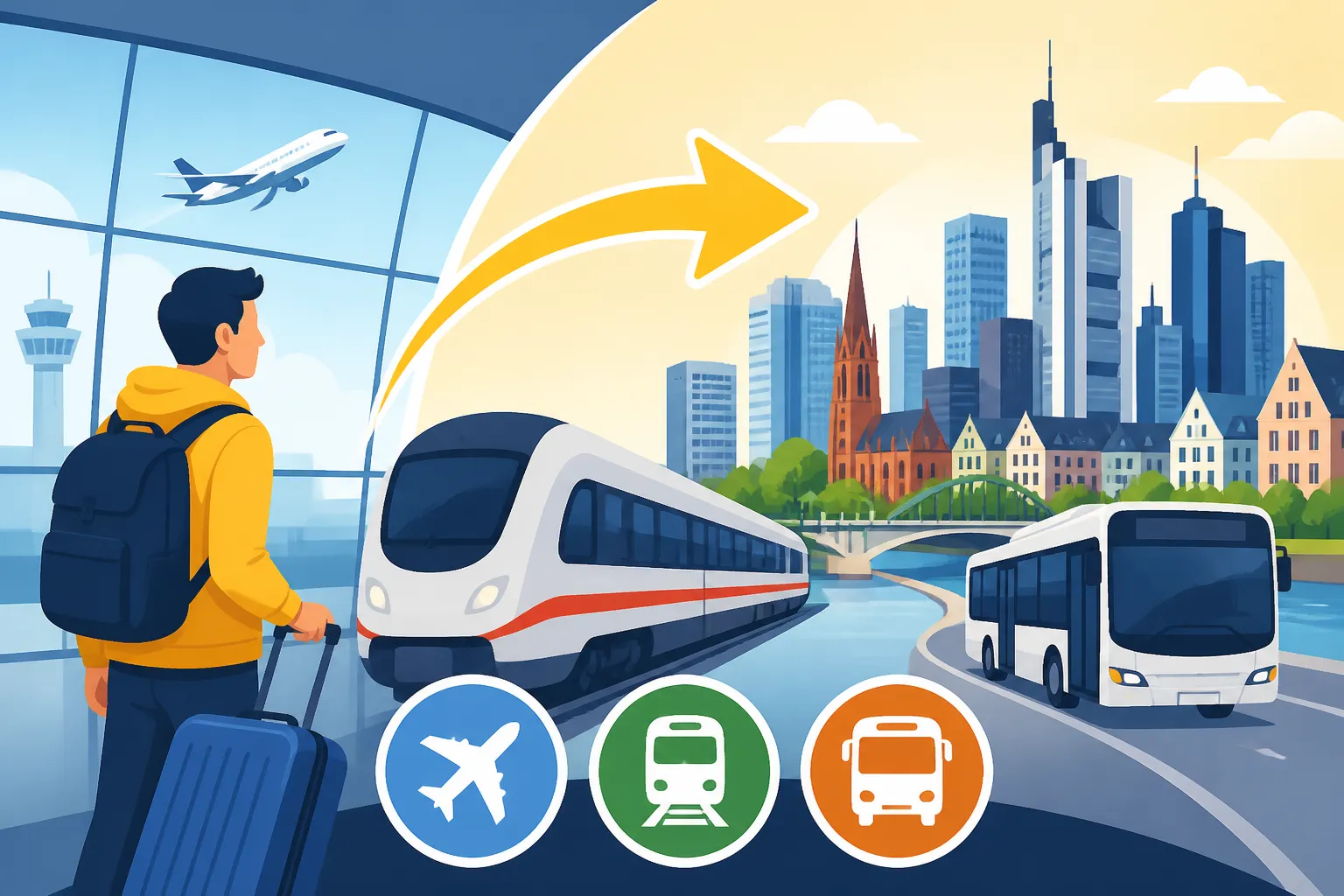
Alright, my fellow expats and soon-to-be German adventurers! You’ve just landed at Frankfurt Airport (FRA), one of Europe’s busiest hubs, and maybe you're feeling a mix of excitement and that familiar expat anxiety: "Okay, I'm here, but how on earth do I actually get there?" Trust me, I've been there, staring at those signs, trying to decipher German public transport maps with jet lag kicking in. This guide is going to walk you through every option, making your journey from FRA to the heart of Frankfurt as smooth as a freshly poured Apfelwein.
Disclosure: This post may contain affiliate links. We may earn a commission at no extra cost to you if you make a purchase through these links. Read full disclosure.
The Train: Your Most Reliable Friend from FRA
When it comes to speed, efficiency, and pure German punctuality, the train from Frankfurt Airport is almost always your best bet to get into the city center. FRA is incredibly well-connected, with two distinct train stations right at the airport. It can be a little confusing at first glance, but once you know the difference, you'll be zipping into town like a local.
Regionalbahn: S-Bahn and Regional Express for Quick Connections
This is likely the station you'll be heading for if Frankfurt city center (Hauptbahnhof, or "main station") is your final destination. The Regionalbahnhof is located directly underneath Terminal 1, and it's where the local S-Bahn (suburban train) and Regional Express (RE) trains depart.
You'll find platforms for lines like the S8 and S9, which run frequently and take you straight to Frankfurt Hauptbahnhof in about 10-15 minutes. It’s incredibly convenient. Picture this: you’ve cleared customs, grabbed your luggage, and now you just follow the signs for "Regionalbahnhof" or "S-Bahn." You'll descend a few escalators, and suddenly, you're in a bustling, clean train station. No need for a taxi queue, no traffic worries. Just a quick, direct ride.
These trains are part of the RMV (Rhein-Main-Verkehrsverbund) network, which covers the greater Frankfurt area. A standard single ticket from the airport to Hauptbahnhof will cost you a few euros, and you can buy it easily from the red ticket machines found throughout the station. Don't forget to validate your ticket before boarding if it's not already time-stamped, though most modern tickets are valid immediately. Nothing screams "new expat" like a baffled look at a ticket machine, but I promise, they're not too bad – many have English language options.
Long-Distance Trains: ICE and IC for Wider Journeys
Now, if your journey doesn't end in Frankfurt city center, or if you're connecting directly to another major German city like Cologne, Stuttgart, or Munich, then you'll want to head to the Fernbahnhof (long-distance train station). This impressive, glass-and-steel station is physically separated from Terminal 1 by a pedestrian bridge called "The Squaire" and is also accessible from Terminal 2 via a shuttle bus or SkyLine.
From the Fernbahnhof, you'll catch the iconic white ICE (InterCity Express) trains or slower IC (InterCity) trains. These are Germany's high-speed network and offer comfortable, air-conditioned travel. While they do stop at Frankfurt Hauptbahnhof, taking an ICE from the airport to the city center is generally overkill and more expensive than the Regionalbahn, unless you specifically need to be at the Hauptbahnhof to catch an immediate onward long-distance connection, and your ticket for that connection already includes the airport segment.
If you're planning a longer journey across Germany, booking these tickets in advance through the Deutsche Bahn website or their excellent How to Use the DB Navigator App in Germany can often save you a good chunk of change. You can also compare prices and book through platforms like Omio, which is great for seeing all your train and bus options in one place. Just make sure you select "Frankfurt(M) Flughafen Fernbf" for long-distance departures and "Frankfurt(M) Flughafen Regionalbf" for the local S-Bahn and regional trains when searching.
Navigating the Stations and Tickets
Finding your way around can feel like a labyrinth at first, but fear not! Frankfurt Airport is incredibly well-signposted. Just follow the train icon (a green circle with a white 'S' for S-Bahn, or a red 'DB' for Deutsche Bahn long-distance trains).
- Regionalbahnhof (Local Trains): If you're coming from Terminal 1, it's a quick walk downstairs. From Terminal 2, take the free SkyLine monorail to Terminal 1 and then follow the signs.
- Fernbahnhof (Long-Distance Trains): This is a bit further. From Terminal 1, head towards "The Squaire" or follow signs for "Fernbahnhof." It's an elevated walkway that takes about 10-15 minutes. From Terminal 2, again, use the SkyLine to Terminal 1, then follow the Fernbahnhof signs.
Ticket Purchase:
- RMV Ticket Machines: These red machines are your best friends for local travel. They are multi-lingual, so you can switch to English. Select "Frankfurt (Main) Hbf" as your destination. For single rides, choose "Einzelfahrt." For return trips, you'd select "Tageskarte" if you plan to travel more that day, as it covers unlimited travel for a full day. If you're a family, look into group tickets.
- Deutsche Bahn Ticket Machines: The gray/silver machines are for long-distance tickets, but you can also buy regional tickets here. Again, multi-lingual.
- DB Reisezentrum (Travel Centre): For personalized advice or if you have complex travel needs, there are staffed ticket counters. Expect a queue, especially during peak times.
- Online/App: As mentioned, the Deutsche Bahn Guide: Using Trains for City and Long-Distance Travel and the DB Navigator app are excellent for planning and purchasing, especially for ICE tickets. You can load tickets directly onto your phone.
Remember, tickets purchased through the app or website are typically pre-validated. If you buy a physical ticket from a machine and it doesn't have a time/date stamp, look for small, yellow or red validating machines on the platform before you board. A quick stamp, and you're good to go!
Bus Services: A Budget-Friendly Alternative
While trains are king at FRA, sometimes a bus is a surprisingly good option, especially if your destination isn't directly on a main train line, or if you're on a tighter budget. Frankfurt's bus network is comprehensive, and there are also options for long-distance travel.
Public Bus Routes
Frankfurt Airport is served by several local bus lines that connect to various parts of the city and surrounding areas. The main bus stops at the airport are located outside Terminal 1 (Arrivals level) and Terminal 2.
- Line 61: This is probably the most commonly used public bus for airport connections, heading towards Südbahnhof (South Station) in Frankfurt. It takes a bit longer than the S-Bahn (around 30-40 minutes, depending on traffic), but it's a scenic route that passes through different neighborhoods. If your accommodation is closer to Südbahnhof or somewhere along the route, this could be more direct than going into Hauptbahnhof and transferring.
- Night Bus N81: For those late arrivals, the N81 is your friend, running a similar route when the S-Bahn service is less frequent.
- Other regional buses: Many other regional buses connect the airport to nearby towns and districts, which can be useful if you're not actually headed into Frankfurt city center but rather a satellite town.
Tickets for these buses are also part of the RMV network. You can purchase them from the RMV ticket machines at the bus stops or, sometimes, directly from the bus driver (cash preferred, often exact change). If you’re planning on exploring the city, a Public Transport Tickets and Passes: Navigating German Transit Systems daily ticket might be more cost-effective.
Long-Distance Coaches: FlixBus and Beyond
If your ultimate destination isn't Frankfurt at all, but another German city like Heidelberg, Würzburg, or even Berlin, long-distance coaches like FlixBus offer a direct connection from the airport. This can save you the hassle and cost of going into Frankfurt city center only to then catch an intercity train or bus.
The FlixBus stop at Frankfurt Airport is typically located at Terminal 1, often in front of the Arrivals Hall B. You'll need to check your specific ticket for the exact departure point, as they can sometimes shift. Booking these tickets well in advance, usually online, can snag you some fantastic deals. It's a comfortable and often much cheaper alternative to ICE trains for longer distances, though expect longer travel times. This is an area where Omio can also be quite handy, allowing you to easily compare train and bus options for your onward journey.
Hotel Shuttles and Private Transfers
For those who prioritize convenience, especially after a long flight with heavy luggage or if arriving late at night, a hotel shuttle or private transfer can be a godsend. Many hotels, particularly those located near the airport or in the business district, offer complimentary or paid shuttle services. It’s always worth checking with your hotel directly before you arrive. Websites like Booking.com often list whether a hotel provides airport shuttle services in their amenities.
Alternatively, you can pre-book a private transfer. This means a driver will be waiting for you in the arrivals hall, often with your name on a sign, and will whisk you directly to your accommodation. This cuts out all the guesswork and is particularly reassuring for first-time visitors or those not comfortable navigating public transport in a new language. While generally more expensive than public transport, it offers unparalleled ease. Services can be found via a quick web search for "Frankfurt airport private transfer" or even on tour platforms like GetYourGuide, which sometimes offers these services.
Taxis and Ride-Sharing: Convenience at a Cost
Sometimes, after a long flight, all you want is to be whisked away directly to your doorstep without fumbling with tickets or luggage on escalators. Taxis and ride-sharing services offer that direct convenience, but they come with a higher price tag.
Traditional Taxis
You'll find official taxi stands right outside both Terminal 1 and Terminal 2. Just follow the "Taxi" signs. There’s usually an organized queue, and staff might be on hand to direct you to the next available cab. Frankfurt taxis are typically cream-colored, sturdy Mercedes or other comfortable German cars, and the drivers are generally professional.
A ride from Frankfurt Airport to the city center (Hauptbahnhof area) will generally cost you somewhere between €30-€45, depending on traffic and your exact destination within the city. The journey takes about 20-30 minutes. While drivers are not always fluent in English, they understand major landmarks like "Hauptbahnhof," "Römer," or specific hotel names. Having your destination address written down clearly is always a good idea. Keep in mind that Germany is still a fairly cash-heavy society for taxis, though many now accept card payments – it's always good to ask beforehand ("Kann ich mit Karte zahlen?" – "Can I pay with card?").
Ride-Sharing Apps
Germany has seen a rise in ride-sharing services, though they operate a bit differently than in some other countries. Uber is certainly present in Frankfurt, and you can book rides via their app. Another very popular option in Germany is Free Now (formerly MyTaxi), which works much like Uber but primarily connects you with licensed taxi drivers.
Using these apps offers a few advantages:
- Transparent Pricing: You see the estimated fare upfront, so no surprises.
- Cashless Payment: Your payment is handled directly through the app.
- Language Barrier Reduced: Your destination is entered into the app, so there's no need for verbal directions.
The cost for ride-sharing services will often be comparable to, or slightly less than, a traditional taxi, depending on demand and surge pricing. You'll still get picked up at designated areas outside the terminals, just like a regular taxi. Make sure your phone is charged and you have a local SIM or eSIM for data access (check out German SIM Card for Tourists vs Residents: What’s the Difference? for more info!).
Rental Cars: Freedom (and Headaches) from the Airport
For many expats, a car means freedom to explore, especially if you’re planning weekend trips to the Black Forest or the Moselle Valley. Frankfurt Airport has excellent facilities for car rentals, but deciding if it's the right choice for getting into the city center (and staying there) is a different story.
Renting a Car at FRA
All the major international car rental companies have a presence at Frankfurt Airport. You'll find their counters conveniently located in the Arrivals Hall of Terminal 1 (Level 0) and Terminal 2. Companies like Hertz, Europcar, Sixt, Avis, and Enterprise all have desks.
Renting a car at the airport is incredibly straightforward. You book online in advance (highly recommended for better rates and availability), present your driver's license (an International Driving Permit is often recommended for non-EU licenses, even if not strictly required for short stays), passport, and credit card. You'll then be directed to the car park where your vehicle is waiting.
Pros of renting a car:
- Flexibility: Unbeatable for exploring beyond Frankfurt city limits. If you plan to visit smaller towns or national parks, a car is invaluable.
- Convenience for heavy luggage: No hauling bags on trains.
- Onward travel: If Frankfurt is just a stopover before a road trip, picking up the car at the airport makes sense.
Cons of renting a car for city center travel:
- Parking: Finding parking in central Frankfurt can be a nightmare and expensive. Many hotels don't offer free parking.
- Traffic: Frankfurt can have significant traffic, especially during rush hours.
- Cost: Rental fees, fuel, and parking can quickly add up, making it far more expensive than public transport for a simple airport-to-city transfer.
- Driving Rules: While Germany has excellent roads, navigating foreign road signs and understanding local regulations (like environmental zones) can be stressful for newcomers. You might want to brush up with a guide on Driving in Germany: Rules, Road Signs, and Getting Your License Converted.
Driving to the City Center
If you do decide to rent a car and drive into Frankfurt, the airport is well-connected to the A3 and A5 Autobahns. The drive to the city center is usually straightforward, typically taking about 20-30 minutes without heavy traffic. Just follow signs for "Frankfurt Zentrum" (city center).
Once in the city, look for underground parking garages ("Parkhaus"). There are many scattered throughout the central areas, but they fill up quickly and can be pricey. Consider your hotel's parking options – some offer valet or dedicated spaces, which simplifies things immensely.
Comparing Your Options: A Quick Glance
To help you decide, here’s a quick overview of the main transportation methods from Frankfurt Airport to the city center:
| Transport Type | Estimated Cost (one-way) | Estimated Time | Convenience Level | Best For |
|---|---|---|---|---|
| S-Bahn/RE (Regionalbahn) | €5-€6 | 10-15 min | High | Budget-conscious, quick, direct to Hauptbahnhof, most common choice |
| ICE/IC (Fernbahnhof) | €15-€30+ | 10-15 min | Medium | Direct connections to other German cities, or if ticket includes it |
| Public Bus (Line 61) | €5-€6 | 30-40 min | Medium | Specific neighborhoods (e.g., Südbahnhof), scenic, avoids transfers |
| FlixBus | Varies (€5-€30+) | Varies | Medium | Direct onward travel to other cities, very budget-friendly |
| Taxi | €30-€45 | 20-30 min | Very High | Comfort, heavy luggage, late arrivals, direct door-to-door |
| Ride-Sharing (Uber/Free Now) | €25-€40 | 20-30 min | Very High | Transparent pricing, cashless, direct door-to-door |
| Rental Car | Varies (rental fee + fuel + parking) | 20-30 min | Medium-High | Exploring beyond Frankfurt, large groups/luggage, freedom |
Final Thoughts and Tips for a Smooth Arrival
Frankfurt Airport is incredibly efficient, but like any major transport hub, a little preparation goes a long way.
- Have your destination address handy: Whether it's for a taxi driver or to punch into a ticket machine, knowing your precise destination (including the postal code) is always helpful.
- Download the DB Navigator app: Even if you don't buy tickets there, it's invaluable for checking schedules, platform numbers, and real-time updates for all trains.
- Keep some cash: While cards are widely accepted, having some euros on hand for smaller purchases or older ticket machines can be a lifesaver. Check out Money for Travel in Germany: Cash, Cards, and ATMs for more tips on managing your finances.
- Don't panic about language: Most signs are bilingual (German/English), and staff at information desks usually speak English. Germans appreciate it if you try a few basic German phrases, though!
No matter which option you choose, getting from Frankfurt Airport to the city center is generally a smooth and efficient process. You've got this! And once you're settled, you can start planning your Best Day Trips From Frankfurt or diving into the city with our Frankfurt City Guide: Skyline, Museums, and Old Town. Welcome to Germany!
Disclaimer
Please note that all information provided in this guide is for general informational purposes only and may be subject to change. Always verify current schedules, prices, and regulations with the respective transport providers before making travel arrangements. While we strive to keep our information up-to-date, we cannot guarantee its absolute accuracy at all times.