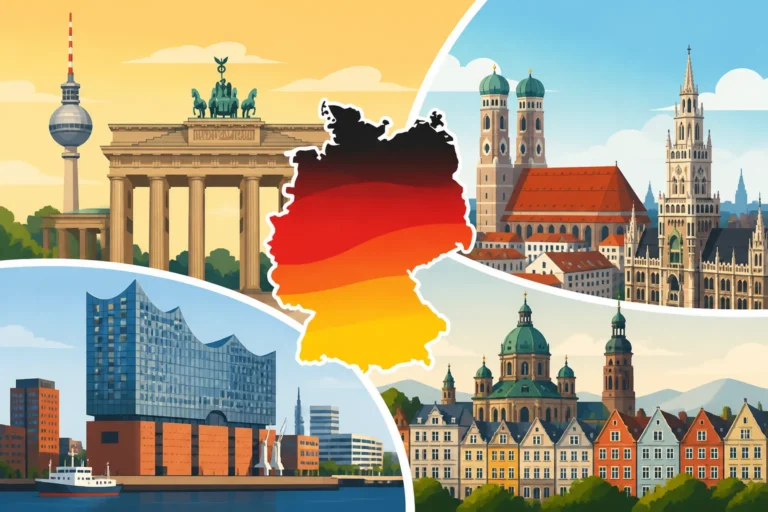
How to Find Live Music Venues in German Cities
So you've landed in Germany, and after getting a handle on the Anmeldung and finding your way around the local supermarket, you're ready for some real fun: soaking in the local live music scene! But finding those hidden gems or even the bigger venues can feel like searching for a needle in a haystack, especially if your German isn't quite concert-ready. This guide is here to unravel the mystery, showing you exactly how to unearth the best live music venues across German cities, no matter your preferred genre.
Disclosure: This post may contain affiliate links. We may earn a commission at no extra cost to you if you make a purchase through these links. Read full disclosure.
Navigating the Digital Landscape for German Gigs
Let's face it, in this day and age, your smartphone is your best friend when it comes to discovering what's happening. Germany's music scene, while sometimes a little less 'flashy' online than other countries, is definitely there if you know where to look. It's not just about the big names; some of the most memorable nights are in those intimate, quirky spots you'd never find by accident.
Dedicated Music Event Platforms
The first port of call for any expat or visitor looking for live music should be dedicated online platforms. These websites aggregate events from countless venues, making it much easier to see what's on. For electronic music lovers, Resident Advisor is an absolute must, especially for cities like Berlin and Hamburg, detailing everything from underground techno nights to more mainstream house events. For a broader spectrum of genres, Bandsintown and Songkick are invaluable. You can track your favorite artists and get notifications for when they're playing in your area, or simply browse what's coming up.
These platforms often provide direct links to ticket sales and even maps, simplifying your planning. Don't underestimate the power of simply typing "Live Musik [City Name]" into Google, either. Local city guides, like "Prinz" or "Zitty" (in Berlin, though Zitty is now online only), often have excellent event listings. While they might be in German, a quick translate function can give you the gist, and the venue names and artist names are usually universal.
Venue-Specific Websites and Social Media
Once you've got a feel for some general areas or types of venues, dive deeper. Many smaller, independent venues, particularly those focused on niche genres like jazz, folk, or experimental music, don't always have their events perfectly cataloged on aggregated sites. Instead, they often rely heavily on their own websites, which might look a bit retro but are usually up-to-date. Even more so, many of these spots use Instagram and Facebook as their primary way to announce gigs, last-minute changes, or special performances.
A little trick here is to identify a few well-known independent venues in your city (e.g., Spreepark or Privatclub in Berlin, Molotow in Hamburg, Ampere in Munich) and then follow them. Their "following" lists or tagged photos might lead you to other similar venues and artists. This digital rabbit hole can be incredibly rewarding, helping you discover the true pulse of the local scene. It takes a bit more digging, but trust me, it’s worth it for that authentic experience.
Ticket Sales and Discovery
When you've found a promising gig, you'll need to sort out tickets. Germany has a robust ticketing system, and most events require advance booking, especially for popular acts or smaller venues with limited capacity. The big players like Eventim and Ticketmaster handle tickets for major concerts and festivals. They have comprehensive listings and often provide English language options on their sites. For smaller, local events, you might find links directly on the venue's website, or they might use smaller, regional ticketing partners.
Be aware that some independent venues might only sell tickets at the door, or through a specific local shop (a "Vorverkaufsstelle"). Always double-check the venue's website or social media for the most accurate ticketing information. If you're looking for a unique music experience that might include more than just a concert ticket – perhaps a guided tour of a music district followed by a show – platforms like GetYourGuide occasionally offer such curated experiences, blending cultural exploration with live entertainment. They can be a great way to ease into the local scene if you're new to the city.
Tapping into Local Knowledge and Traditional Channels
While the internet is powerful, sometimes the best information comes from good old-fashioned local tips. Germany, despite its digital advancements, still cherishes face-to-face interaction and community recommendations, especially when it comes to local culture.
Local Print Media and Tourist Information
Don't dismiss the local print media! Many German cities, even smaller ones, still publish weekly or monthly arts and culture magazines. These free or low-cost publications can be found in cafes, bars, libraries, and cultural centers. Look for sections like "Veranstaltungen" (events) or "Konzerte" (concerts). While they're almost certainly in German, they often provide names, dates, and addresses that are easy to understand even without fluency. Tourist information offices (Touristeninformation) in city centers can also be surprisingly helpful. They often have brochures or staff who can point you towards major venues and upcoming events, especially if you ask about "Live Musik" or "Konzerte".
Hypothetically, let's say you're in Leipzig. You might pick up a copy of a local city magazine, and on its listings page, discover a small jazz club tucked away in the Connewitz district that you'd never find online without knowing its name. These serendipitous discoveries are part of the charm of exploring Germany's cultural offerings.
The Power of Word-of-Mouth and Expat Communities
Never underestimate the expat grapevine! One of the best ways to find out about local gigs, especially those off the beaten path, is to simply ask around. Strike up conversations at your favorite local bar, coffee shop, or even with colleagues. Germans, while sometimes perceived as reserved, are often passionate about their local scene and happy to share recommendations once you get them talking.
Join local expat groups on Facebook or other social media platforms. There are countless "Expats in [City Name]" groups, and live music is a frequent topic of discussion. Someone might mention a fantastic open mic night, a hidden blues bar, or a pop-up concert series that isn't widely advertised. This also serves as a great way to connect with others who share your musical tastes. The collective knowledge of an established expat community can fast-track your discovery process significantly.
Exploring Music Districts and Kiez Culture
Many German cities have specific neighborhoods or "Kieze" (a Berlin term for a local area or quarter) that are synonymous with live music. These areas are often densely packed with bars, clubs, and venues, making it easy to hop from one spot to another.
- Berlin: Kreuzberg, Friedrichshain, and Neukölln are legendary. You can wander down streets like Oranienstraße in Kreuzberg and stumble upon rock clubs, jazz bars, and electronic music venues.
- Hamburg: The Reeperbahn in St. Pauli is iconic, known for its diverse nightlife and music history. Beyond the tourist traps, you'll find everything from indie rock clubs to blues stages.
- Munich: While known for its beer halls, areas like Glockenbachviertel and Sendling have a growing number of live music spots, often focused on jazz, folk, and singer-songwriter nights.
- Cologne: The "Ring" area and the Ehrenfeld district offer a mix of clubs and smaller venues, particularly for rock, pop, and electronic music.
A great strategy is to pick one of these known music districts, go for an evening, and simply explore on foot. Many venues will have their upcoming schedules posted outside, or you might hear the tantalizing sounds of a live band drawing you in. This immersive approach is fantastic for understanding the local vibe and making your own discoveries.
Understanding Germany's Diverse Music Scene
Germany's live music scene is far more diverse than just techno and classical. While these genres certainly have their strongholds, you'll find a vibrant array of musical expressions if you know where to look.
From Rock to Jazz: The Breadth of German Venues
You might be surprised by the sheer variety. German cities host venues catering to almost every musical taste imaginable.
- Rock and Indie: From gritty dive bars to mid-sized clubs, you'll find plenty of places for local bands and touring acts. Think of places like SO36 in Berlin, Knust in Hamburg, or Strom in Munich.
- Jazz and Blues: Germany has a rich jazz tradition. Cities like Berlin (with its A-Trane or Quasimodo) and Hamburg (Birdland) boast world-class jazz clubs, often featuring international artists alongside local talent. Many smaller bars also host weekly blues or jazz nights.
- Folk and Singer-Songwriter: Look for "Liedermacher" (songwriter) nights or Irish pubs that frequently feature acoustic acts. These can be incredibly intimate and rewarding experiences.
- Electronic Music: Of course, this is where Germany truly shines. Beyond the massive clubs, there are countless smaller venues and pop-up events that cater to various sub-genres of electronic music.
The key is to be open-minded and ready to explore. Don't limit yourself to the biggest names; sometimes the most unforgettable performances happen in the smallest, most unassuming venues.
Small Stages, Big Talent: The Charm of Intimate Gigs
One of the real joys of the German live music scene is the prevalence of intimate venues. These aren't just for struggling artists; many established local musicians and even international acts prefer these smaller settings for a more personal connection with the audience. These can be tiny basement clubs, converted industrial spaces, or even just a corner of a pub.
The atmosphere in these places is often electric. You're close enough to see the musicians sweat, feel every bass note in your chest, and truly become part of the performance. They're also fantastic for discovering emerging talent, the bands that might be headlining major festivals in a few years. Don't be shy about checking out a band you've never heard of in a small club; it could lead to your new favorite artist. This is where you really get a taste of the raw, unfiltered musical talent that thrives across Germany.
Major Concert Halls and Arena Shows
For the truly colossal acts – the international pop stars, rock legends, and classical orchestras – Germany offers state-of-the-art concert halls and arenas. Each major city boasts at least one, often several, large-scale venues.
- Berlin: Mercedes-Benz Arena, Verti Music Hall, Waldbühne (outdoor amphitheater).
- Hamburg: Barclays Arena, Elbphilharmonie (for classical).
- Munich: Olympiahalle, Philharmonie im Gasteig.
- Cologne: Lanxess Arena.
- Frankfurt: Festhalle Frankfurt.
These venues host everything from global stadium tours to grand orchestral performances. Tickets for these events are usually sold through the major ticketing platforms mentioned earlier (Eventim, Ticketmaster) and can often sell out quickly. If you're planning a trip to Germany specifically for a concert, it's wise to book your tickets and accommodation through Booking.com well in advance, especially for popular artists. For inter-city travel to reach these venues, platforms like Omio can help you find train or bus connections seamlessly, ensuring you arrive on time for the show.
Here's a quick look at some general vibes you can expect:
| City | Popular Music Districts/Areas | Common Genres | Typical Venues (Examples) | Vibe |
|---|---|---|---|---|
| Berlin | Kreuzberg, Friedrichshain, Neukölln | Electronic, Indie Rock, Jazz, Experimental | Berghain (electronic), SO36 (punk/rock), Quasimodo (jazz) | Edgy, diverse, underground, always something new |
| Hamburg | St. Pauli (Reeperbahn), Sternschanze | Rock, Pop, Electronic, Indie, Blues | Molotow (indie), Gruenspan (rock), Mojo Club (jazz/funk) | Lively, maritime, alternative |
| Munich | Glockenbachviertel, Schwabing | Jazz, Folk, Indie, Classical, Pop | Ampere/Muffatwerk (various), Unterfahrt (jazz), Freiheiz | Sophisticated, traditional with modern flair |
| Cologne | Ehrenfeld, Belgian Quarter | Rock, Electronic, Indie, Jazz, Pop | Live Music Hall, Blue Shell, Stadtgarten (jazz) | Diverse, lively, friendly |
| Frankfurt | Sachsenhausen, Bahnhofsviertel | Electronic, Jazz, Rock, Hip Hop | Batschkapp (rock/pop), Jazzkeller, Zoom | International, modern, financial hub with culture |
Practical Tips for a Smooth Concert Experience
Finding the venue is just half the battle. Once you're there, knowing what to expect can make all the difference to your enjoyment, especially in a new country.
Getting There: Public Transport and Planning
German cities boast excellent public transportation networks, making it incredibly easy to get to most venues. Whether it's the U-Bahn, S-Bahn, tram, or bus, you'll likely find a stop within a short walk of your destination. Familiarize yourself with how to use these systems, perhaps by checking out our guide on Getting Around German Cities: U-Bahn, S-Bahn, Trams, and Buses.
For late-night gigs, check if there are night bus services or if the U-Bahn/S-Bahn runs later on weekends. Always plan your route beforehand, especially if you're not fluent in German, to avoid last-minute stress. Google Maps and the local public transport apps (like BVG in Berlin or HVV in Hamburg) are your best friends here. For longer distances, let's say you're traveling from Stuttgart to see a band in Cologne, booking your train tickets via Omio can be a lifesaver, ensuring you have a smooth journey to your musical adventure.
Language, Etiquette, and Payment
While many venues in major cities, especially in places like Berlin or Frankfurt, will have English-speaking staff, don't assume it. A few basic German phrases, especially when ordering drinks or asking for directions, will go a long way. Our guide on German Language and Everyday Communication for Visitors might come in handy.
In terms of etiquette, Germans appreciate punctuality. While concerts rarely start exactly on time, show up at the doors-open time if you want a good spot. Personal space is generally respected, but at a lively gig, expect to be in close quarters. Tipping isn't mandatory at the bar but is appreciated for good service; typically, rounding up or adding a small amount is sufficient. You can learn more in our article on Tipping in Germany: When, Where, and How Much. Payment can vary; while most places accept EC (debit) cards, cash is still king at some smaller venues, especially for coat check or smaller purchases. Make sure to carry some euros, just in case, as discussed in Cash vs Card in Germany: What Visitors Should Know.
Safety and Enjoyment
German cities are generally very safe, but common sense always prevails. Keep an eye on your belongings, especially in crowded venues. If you're out late, stick to well-lit areas and plan how you'll get home. Don't be afraid to mingle! The German music scene, especially at smaller venues, is often very welcoming. Embrace the experience, enjoy the music, and let yourself get lost in the moment. Live music is a fantastic way to experience the local culture firsthand and make some truly unforgettable memories during your time in Germany.
Disclaimer
Please remember that information regarding venues, events, and ticketing can change rapidly. While we strive to provide the most accurate and up-to-date guidance, it's always advisable to verify details directly with the venue or ticketing provider before making plans. This guide offers general advice for finding live music in German cities but cannot guarantee the availability or specifics of any particular event or location.