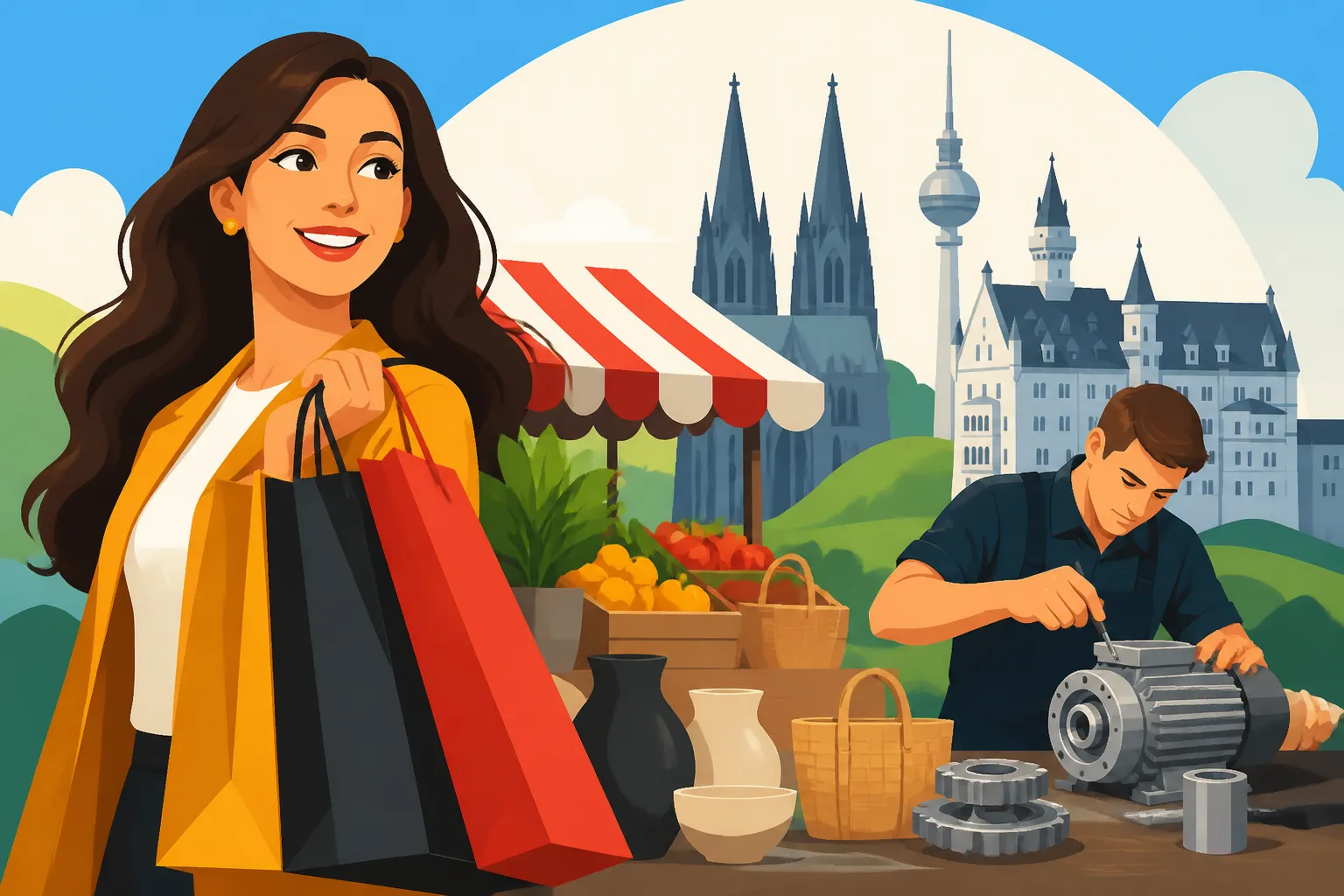
Shopping, Markets, and Made in Germany
Navigating the shopping landscape in Germany can feel like trying to solve a complex puzzle, especially when you encounter the dead silence of a Sunday morning or the sudden realization that your credit card isn't accepted at a local boutique. I still remember my first week in Hamburg, standing bewildered in front of a locked grocery store on a Sunday, wondering if I had somehow missed a national emergency. This guide is designed to save you from that confusion and help you master everything from high-end boutiques to the most tucked-away flea markets.
Disclosure: This post may contain affiliate links. We may earn a commission at no extra cost to you if you make a purchase through these links. Read full disclosure.
The German Shopping Experience: Navigating the Cultural Nuances
Shopping in Germany is more than just a transaction; it is a cultural practice governed by specific laws and deeply held social norms. If you are coming from a country where 24/7 convenience is the standard, the German approach will require a significant mental shift. You will find that the pace of life here dictates when and how you spend your money, and understanding these rules is the first step toward feeling at home. For many expats, the initial frustration eventually turns into an appreciation for the structured rhythm of the German week.
The Sunday Closure Reality (Ladenschlussgesetz)
The most jarring experience for any newcomer is the "Ladenschlussgesetz," or the Shop Closing Law. In most German states, retail stores are strictly prohibited from opening on Sundays and public holidays. This is rooted in both religious tradition and a strong cultural belief in the "Tag der Ruhe" (day of rest), ensuring that retail workers have guaranteed time off. On Saturday evenings, you will often notice a frantic energy in supermarkets as locals stock up for the 24-hour retail blackout. If you find yourself with an empty fridge on a Sunday, your only options are typically gas stations, pharmacies located in major train stations, or small "Spätkauf" (Späti) convenience stores, which are a staple of Berlin’s street culture.
Planning is essential. I learned early on that my Saturday morning ritual had to include a detailed grocery list, or I would be eating toast for three meals on Sunday. This law also extends to most shopping malls and clothing stores. However, a few times a year, cities host "Verkaufsoffener Sonntag," which are special Sundays where stores are allowed to open for a few hours, usually in conjunction with a local festival or market. If you are curious about why this tradition persists, it’s worth reading about Why Are Shops Closed on Sundays in Germany? to understand the legal and social framework behind it.
The Art of the Pfand (Bottle Deposits)
Germany has one of the most efficient recycling systems in the world, and the "Pfand" system is at the heart of it. When you buy a drink in a plastic or glass bottle, you pay a small deposit (usually between 8 and 25 cents) on top of the price. You get this money back by returning the empty bottle to a "Pfandautomat," a reverse vending machine found in almost every supermarket. It sounds simple, but for a new expat, it can be intimidating. There is a specific etiquette to the bottle return line; you’ll see people with massive crates of glass beer bottles or bags full of plastic water bottles waiting patiently for their turn.
The machines can be finicky. If a label is torn or the bottle is slightly crushed, the machine might reject it, leading to a minor social crisis if there’s a long line behind you. Once you’ve fed your bottles into the machine, it spits out a small paper slip with a barcode. You take this to the cashier, and they deduct the amount from your current purchase or give you the cash. It’s a brilliant way to reduce litter, and you will rarely see a discarded bottle on the street, as even if you leave one behind, someone will likely collect it for the deposit. Understanding Waste Sorting in Germany (Mülltrennung) and Pfand is a key part of daily life here.
Cash is King (Mostly)
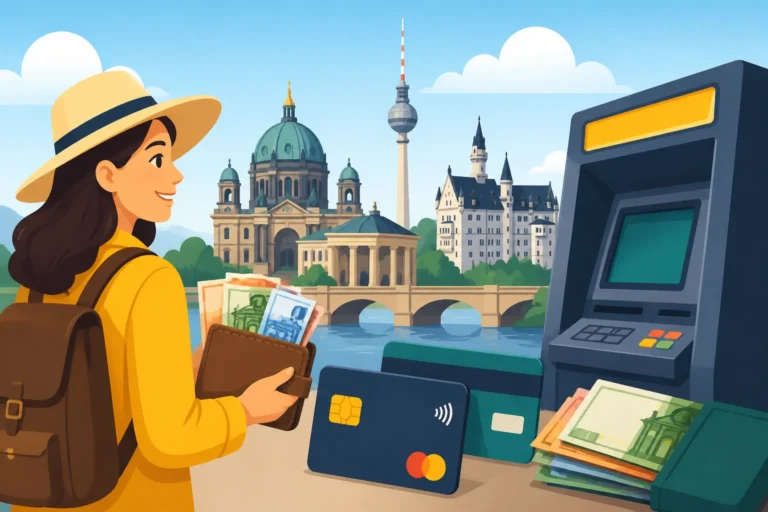
While the situation is slowly changing, especially after the global pandemic, Germany remains a country that loves its physical currency. It is not uncommon to find "Nur Barzahlung" (Cash only) signs in small cafes, bakeries, or at market stalls. This stems from a deep-seated cultural desire for privacy and a historical aversion to debt and credit. While major department stores and international chains will accept credit cards, your local "Bäckerei" or the vendor at the weekly market almost certainly will not.
Always carry a "Notgroschen"—an emergency stash of cash. I have been in situations where I’ve had to leave my groceries at the counter to run to the nearest Sparkasse ATM because the shop's card reader didn't accept my foreign Visa card. Even when they do take cards, many smaller shops prefer the "Girocard" (formerly known as EC card), which is a German debit system. If you are planning a day out, check out Cash vs Card in Germany: What Visitors Should Know to make sure you aren’t caught off guard.
Where to Shop: From High-Street Chains to Luxury Boulevards
Whether you are looking for the latest European fashion or a high-performance kitchen gadget, Germany’s retail landscape offers a mix of functional "high street" experiences and ultra-luxury shopping districts. Most German cities follow a similar layout: a central pedestrian zone (Fußgängerzone) anchored by a large church or town hall, where all the major retailers are concentrated.
Pedestrian Zones (Fußgängerzonen)
The heart of German retail is the pedestrian zone. In cities like Frankfurt, the "Zeil" is a massive stretch of shops that attracts thousands of visitors daily. These areas are usually car-free, allowing shoppers to stroll between department stores like Galeria Karstadt Kaufhof and international brands like H&M or Zara. These zones are designed for convenience, often featuring a variety of "Imbiss" stands where you can grab a quick Bratwurst or a Döner Kebab between stores.
For a first-time visitor, these areas are the easiest to navigate. They are predictable and well-connected by public transport. When scouting for a place to stay near these hubs, checking Booking.com for hotels near the central shopping district ensures you won't have to carry your heavy bags across the city. Each city’s zone has its own character; Munich’s Kaufingerstraße feels more traditional and upscale, while Berlin’s Alexanderplatz has a gritty, modern, and high-energy vibe. You can find more details in the guide on Shopping in Germany: Department Stores, Markets, and Outlets.
Designer Outlets and Luxury Streets
If your budget is a bit more flexible, Germany has world-class luxury streets. In Munich, the Maximilianstraße is the place to see and be seen, lined with the flagship stores of every major global designer. In Berlin, the Kurfürstendamm (Ku’damm) offers a similar level of luxury but spread across a wider, tree-lined boulevard. These areas are not just for shopping; they are for "Bummeln" (strolling) and people-watching from the windows of high-end cafes.
For bargain hunters, Germany also has "Outlet Villages" like Wertheim Village near Frankfurt or Metzingen near Stuttgart. These are designed like small, picturesque towns where premium brands sell their past seasons' stock at significant discounts. If you’re planning a cross-country shopping spree, using a platform like Omio can help you snag the best train or bus deals between these retail hubs. These outlets are often located slightly outside the city center, so planning your transport in advance is vital to maximize your shopping time.
Department Stores (Kaufhäuser)
The German department store, or "Kaufhaus," is an institution. While they have faced challenges in recent years, icons like the KaDeWe (Kaufhaus des Westens) in Berlin remain a must-visit. The KaDeWe is the largest department store in continental Europe and is particularly famous for its sixth-floor food hall. Here, you can find everything from exotic fruits to a dedicated oyster bar. It is a sensory overload and a testament to the German appreciation for quality and variety.
Other notable names include Alsterhaus in Hamburg and Oberpollinger in Munich. These stores offer a curated experience where you can find high-end cosmetics, fashion, and home goods all under one roof. They often provide excellent services for international visitors, including assistance with Tax-Free Shopping in Germany for Non-EU Visitors. Even if you aren't planning to buy anything, the architecture and window displays of these historic buildings are worth the visit.
Weekly Markets and Regional Delights
If the department stores are the "brain" of German shopping, the "Wochenmarkt" (weekly market) is the "heart." Almost every neighborhood in every German city has a day when the local square is transformed into a bustling marketplace. This is where you find the freshest produce, regional cheeses, and a level of community interaction that is rare in the big supermarkets.
The Wochenmarkt Experience
The weekly market is where the German obsession with "Bio" (organic) and "Regional" comes to life. Vendors usually set up early in the morning and pack away by 1:00 PM or 2:00 PM. It is a place for early risers. You will see locals with their "Hackeporsche" (wheeled shopping trolleys) navigating between stalls. Interaction with the vendors is expected; don't be afraid to ask where the apples were grown or if you can taste a piece of Bergkäse before buying.
The prices might be slightly higher than at a discounter like Aldi or Lidl, but the quality is incomparable. For many expats, the weekly market is the highlight of their neighborhood life. It’s an opportunity to practice your German in a low-stakes environment. I suggest bringing your own bags, as vendors will often charge you or simply not have any plastic options. For more on how to manage your grocery budget while shopping at these markets, see the Cost of Living in Germany: Budgeting Guide for Expats.
Seasonal Markets (Asparagus and Spargelzeit)
Germany’s shopping habits are deeply tied to the seasons. The most famous of these is "Spargelzeit" (Asparagus season), which usually runs from April until late June. During this time, special stalls shaped like giant white asparagus stalks appear on street corners and in markets. Germans are fiercely proud of their white asparagus, and shopping for the perfect, unblemished stalks is a serious endeavor.
Following Spargelzeit is "Pfifferling" (chanterelle) season and later, "Federweißer" season in the autumn, where you can buy new, partially fermented wine directly from the producers. Shopping at these seasonal stalls is a great way to eat like a local and support regional farmers. For those who want a deeper dive into the local food scene, booking a gourmet market tour through GetYourGuide is a fantastic way to discover hidden culinary gems and learn about the history of these seasonal traditions.
Markthallen: The Modern Gourmet Hubs
In recent years, many cities have renovated their historic market halls to become gourmet destinations. Markthalle Neun in Berlin-Kreuzberg is perhaps the most famous, hosting "Street Food Thursdays" and featuring permanent stalls that sell artisanal bread, craft beer, and locally sourced meats. These halls are a bridge between the traditional Wochenmarkt and a modern food court.
In Stuttgart, the Markthalle is an Art Nouveau masterpiece where you can buy high-quality spices, Mediterranean delicacies, and local Swabian specialties. These halls are perfect for a rainy afternoon, providing a cozy atmosphere where you can shop and then sit down for a glass of wine or a coffee. They are also excellent places to find German Souvenirs Worth Buying (and What to Skip), as they focus on high-quality, authentic products rather than tourist trinkets.
| Venue Type | Typical Opening Hours | Best For | Payment Preference |
|---|---|---|---|
| Supermarket | 07:00 – 22:00 (Mon-Sat) | Daily essentials, Pfand | Card & Cash |
| Wochenmarkt | 08:00 – 13:00 (1-2 days/week) | Fresh produce, Regional food | Cash Only |
| Kaufhaus | 10:00 – 20:00 (Mon-Sat) | Fashion, Luxury, Home | Card & Cash |
| Flohmarkt | 09:00 – 16:00 (Sundays) | Vintage, Antiques, Second-hand | Cash Only |
| Outlet Village | 10:00 – 20:00 (Mon-Sat) | Designer brands at discount | Card & Cash |
Flea Markets and Second-Hand Culture
Germany has a massive "Flohmarkt" (flea market) culture. Unlike regular retail stores, many flea markets are allowed to operate on Sundays, making them a popular weekend activity for families and bargain hunters alike. It is a sustainable, social, and often very entertaining way to spend a morning.
Flohmarkt Etiquette and Bargaining
The first rule of a German flea market is to arrive early. Unlike in German retail stores where prices are fixed and non-negotiable, bargaining is part of the fun at a flea market. However, there is a polite way to do it. Start by asking "Was soll das kosten?" (How much is this?) and then suggest a price about 20-30% lower. If the seller shakes their head, you can meet in the middle.
Always bring small change and plenty of cash. Sellers rarely have change for a 50-euro note, and you definitely won't find a card reader here. If you're looking for furniture or larger items, many markets have "Sperrmüll" (bulky waste) regulations, but at a Flohmarkt, the items are usually well-vetted. For a complete list of the best spots, check out German Flea Markets (Flohmarkt) and Vintage Finds.
Flohmarkt Mauerpark and Iconic Berlin Spots
Berlin is the undisputed capital of the flea market. The Mauerpark Flohmarkt is an institution, attracting thousands of people every Sunday. It is as much a festival as it is a market, with live music, food stalls, and the famous "Bearpit Karaoke." You can find everything from GDR-era memorabilia to handmade jewelry and vintage vinyl. It can be overwhelming, so I recommend going with a "no-pressure" attitude—if you find something, great; if not, the atmosphere alone is worth the trip.
Other notable Berlin markets include the one at Boxhagener Platz, which is smaller and feels more like a neighborhood gathering, and the high-end antique market at Ostbahnhof. Each market has its own "soul," and exploring them is one of the best ways to understand the city's diverse history.
Antique Hunting in Munich and Small Towns
While Berlin is known for its "shabby chic," Munich’s flea markets often lean toward high-quality antiques and traditional Bavarian items. The Auer Dult, held three times a year, is a massive traditional fair that includes a huge market for antiques, ceramics, and kitchenware. It is a fantastic place to find unique pieces of "Tracht" (traditional clothing) or hand-painted beer steins.
In smaller German towns, flea markets are often held in the parking lots of large supermarkets on Sundays. These "Hinterhof-Flohmärkte" (backyard flea markets) are also popular, where an entire neighborhood opens their courtyards to sell items. It’s a voyeuristic and charming way to see inside German homes while hunting for treasures.
The Magic of German Christmas Markets
No discussion of shopping in Germany is complete without the "Weihnachtsmarkt." From late November until late December, city centers are transformed into wooden villages glowing with fairy lights. While many people go for the "Glühwein" (mulled wine) and the atmosphere, the markets are also a prime shopping destination for unique, handcrafted gifts.
Beyond the Mulled Wine: Shopping for Crafts
The best Christmas markets prioritize "Handwerkskunst" (craftsmanship). You will find stalls selling hand-blown glass ornaments, intricate beeswax candles, and handmade toys. Shopping here is about supporting traditional artisans. I always recommend looking for the "Made in Germany" or "Regional" signs to ensure you are buying an authentic product rather than a mass-produced import.
Because these markets are so popular, they can get incredibly crowded, especially on weekends. My pro tip: go on a weekday morning or early afternoon. You will have more space to talk to the artisans and get a closer look at the products. For a detailed guide on what to look for, see Christmas Market Shopping: Crafts and Gifts.
Regional Specialties: Ore Mountain Woodwork
One of the most iconic types of German Christmas shopping is the woodwork from the "Erzgebirge" (Ore Mountains) region. This includes the "Räuchermännchen" (smoking men), "Schwibbögen" (candle arches), and "Nussknacker" (nutcrackers). These items are highly collectible and often passed down through generations. They are not cheap, but the level of detail and quality is astounding.
When you buy these, they are usually packed in sturdy boxes with plenty of padding, making them safe for travel. If you’re visiting a city like Dresden or Nuremberg, you will find the most authentic selections. For those planning a dedicated festive trip, the guide on German Christmas Markets: Where to Go provides an excellent roadmap for the best regional experiences.
When to Visit and How to Navigate
Most Christmas markets open around the 25th of November and close on the 23rd or 24th of December. A common mistake is thinking they stay open until New Year’s Day; while some do, the majority vanish as soon as the clock strikes noon on Christmas Eve. Shopping at the market is a "bundled" experience—you shop for a bit, then grab a "Handbrot" or some "Maroni" (roasted chestnuts), and then continue.
Keep an eye on your belongings, as the crowds can be a haven for pickpockets. Most stalls are cash-only, though some higher-end craft stalls in larger cities are starting to accept cards. If you want to experience the magic without the stress, many GetYourGuide tours offer "market walks" that take you to the most authentic stalls while avoiding the tourist traps.
Made in Germany: Brands and Quality Souvenirs
The label "Made in Germany" is synonymous with durability, precision, and high-quality materials. When shopping for souvenirs or outfitting your new home, focusing on these home-grown brands is often a wise investment. These items are built to last, reflecting the German philosophy of "Qualität vor Quantität" (quality over quantity).
Kitchenware and Household Excellence
Germany is famous for its steel and engineering, which translates directly into some of the best kitchen tools in the world. Brands like Wüsthof and Zwilling Henckels (both based in Solingen, the "City of Blades") produce knives that are world-renowned. If you are an avid cook, visiting a dedicated "Messershop" (knife shop) is an experience in itself.
For appliances and cookware, names like Fissler, WMF, and Miele set the standard. While these items can be heavy to transport home, they are significantly cheaper when bought in Germany compared to international prices. Many department stores have a dedicated tax-refund counter, which is essential for Tax-Free Shopping in Germany for Non-EU Visitors.
Beauty and Wellness Products
You don't need to spend a fortune to find high-quality German products. The local drugstores, "dm" and "Rossmann," are a paradise for affordable, high-quality skincare and cosmetics. Their house brands, such as Balea (dm) and Isana (Rossmann), are incredibly popular and often perform as well as expensive luxury brands in independent tests.
Germany is also a leader in natural and organic beauty. Brands like Dr. Hauschka and Weleda have their roots here and are much more affordable at a local "Apotheke" (pharmacy) or "Reformhaus" (health food store) than abroad. For more on where to find these, see Understanding German Pharmacies vs Drugstores: Where to Get What.
Writing Instruments and Fine Stationery
If you appreciate the tactile feel of a good pen, Germany is your heaven. Brands like Lamy, Faber-Castell, and Montblanc represent the spectrum from affordable daily use to high-end luxury. A Lamy Safari fountain pen is a classic "student" pen in Germany but is appreciated by writers worldwide for its ergonomic design and reliability.
Stationery shops (Schreibwarengeschäft) are wonderful places to browse. Germans still value handwritten notes and cards, and you will find an extensive range of high-quality paper and journals. These make for excellent, lightweight souvenirs that carry a piece of German design home with you. You can find more ideas in German Souvenirs Worth Buying (and What to Skip).
Practical Logistics for Expat and Tourist Shoppers
To make your shopping trip as smooth as possible, there are a few practicalities to keep in mind, especially regarding taxes, payments, and the logistics of getting your purchases home.
Tax-Free Shopping and Customs
If you are a resident of a non-EU country, you are entitled to a refund of the Value Added Tax (VAT), which is usually 19% (or 7% for books and some food items). To claim this, you must spend over a certain amount in a single store (usually around 25 to 50 euros) and request a "Tax-Free Form" at the time of purchase.
Do not pack these items in your checked luggage until you have visited the Customs (Zoll) office at the airport. They may want to see the unused items before stamping your form. Once stamped, you can take the form to a refund counter (like Global Blue) to get your cash or a credit back. It’s a bit of paperwork, but for large purchases like a camera or designer bag, it’s a significant saving.
Payment Methods and Digital Wallets
As mentioned, cash is vital, but digital payments are slowly gaining ground. Apple Pay and Google Pay are increasingly accepted in supermarkets and major retailers. However, the backbone of the system is the "Girocard." If you are an expat, opening a local bank account and getting a Girocard is one of the first things you should do to make shopping easier.
For international visitors, a "Reise-Kreditkarte" (travel credit card) with no foreign transaction fees is best. Just be prepared for the occasional "No credit cards" sign at a small shop or restaurant. For a deeper look at managing your finances, read Money Matters in Germany: Complete Financial Guide for Expats.
Online Shopping and Delivery in Germany
Sometimes, the best way to shop is from your sofa. Amazon.de is dominant in Germany, but local alternatives like Zalando (for fashion) and Otto are also very popular. One unique aspect of German online shopping is the "Packstation." These are automated lockers operated by DHL where you can have your packages delivered if you aren't home during the day.
Another cultural quirk is "Kauf auf Rechnung" (buy on account), where you receive the goods first and then have 14 days to pay via bank transfer. This is very common for fashion, as it allows you to order multiple sizes, keep what fits, and only pay for those items. If you are furnishing a new place, you might want to look into Furnishing a German Apartment and the Empty-Kitchen Problem to understand why online ordering for appliances is so common.
Regional Shopping Highlights Across Germany
Each region of Germany has its own shopping identity, often reflecting the local industry, history, and "Lebensgefühl" (way of life).
Berlin's Concept Stores
Berlin is a hub for independent designers and "concept stores" that blend fashion, art, and cafes. Areas like Mitte (around Mulackstraße) and Prenzlauer Berg are filled with small boutiques that you won't find anywhere else. It’s the place to go if you want a "one-of-a-kind" piece that reflects the city’s avant-garde spirit.
Munich's Traditional Tracht Shopping
In Munich, traditional Bavarian wear is not just a costume; it’s a living tradition. Shopping for a high-quality "Dirndl" or "Lederhosen" is a serious investment. Stores like Lodenfrey or Angermaier offer authentic, beautifully made pieces that will last a lifetime. If you are attending Oktoberfest, this is where you go to ensure you look the part.
Hamburg’s Maritime Markets
Hamburg’s shopping reflects its history as a major port city. The "Fischmarkt" (held early Sunday mornings) is a legendary experience where barkers shout their prices for baskets of fruit, fish, and plants. It is loud, chaotic, and incredibly fun. The city also offers many shops specializing in maritime gear and high-quality outdoor clothing, perfect for the often-windy northern weather.
Disclaimer
The information provided in this guide is for informational purposes only. While every effort has been made to ensure accuracy based on current laws and cultural practices in Germany, regulations (especially regarding shopping hours and tax refunds) can change. Always check local city ordinances and store-specific policies during your visit. This guide does not constitute legal or financial advice.