Furnishing a German Apartment and the Empty-Kitchen Problem
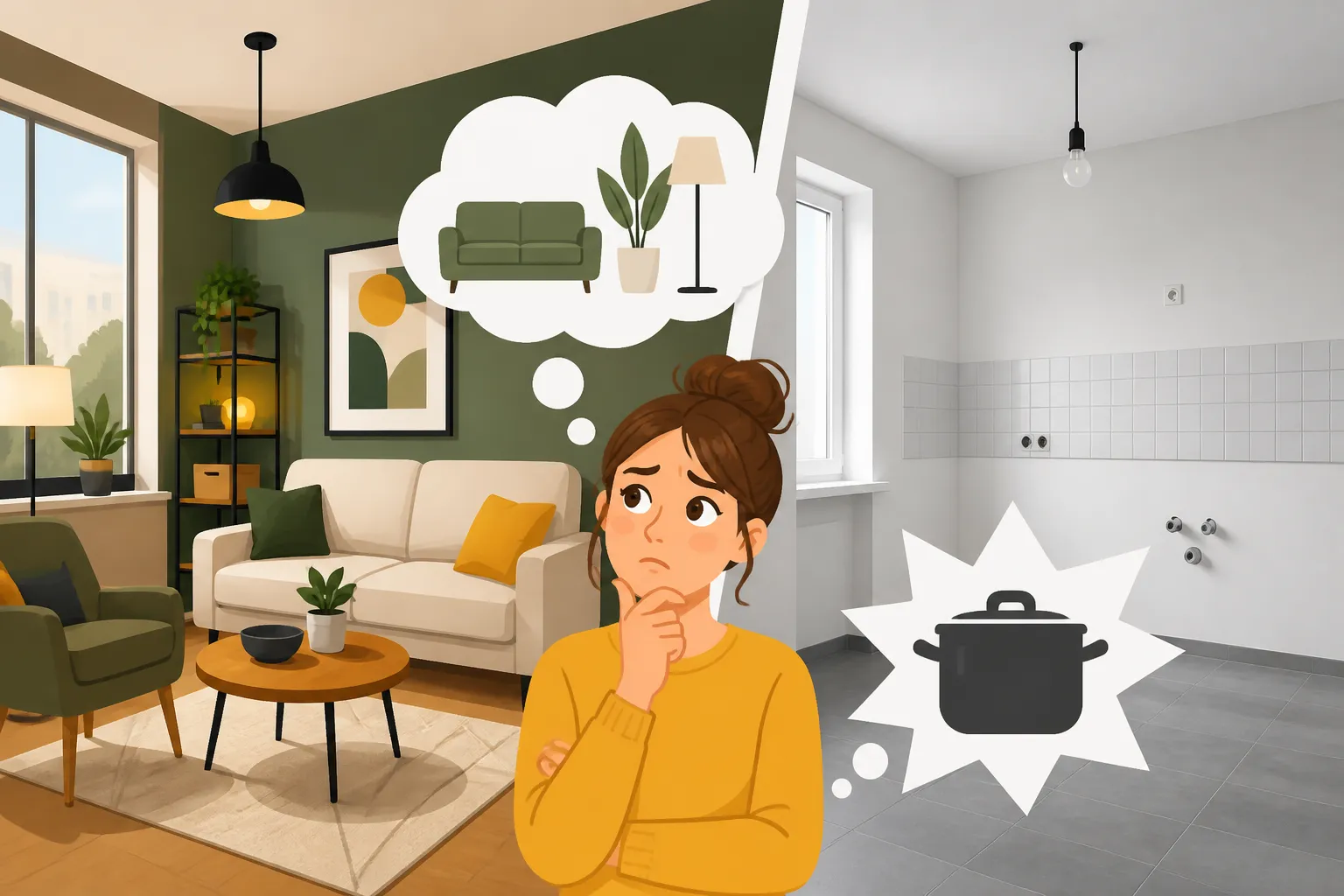
Imagine walking into your brand-new Berlin apartment, keys in hand and heart full of excitement, only to find bare concrete floors, wires dangling from the ceiling, and a kitchen that consists of nothing but a single cold-water pipe sticking out of the wall. I remember my first move to Hamburg vividly; I spent three nights sleeping on a pile of coats and eating cold canned ravioli because I didn't realize "unfurnished" in Germany meant a literal empty shell. This guide is here to save you from that same shock, walking you through the labyrinth of furnishing a flat and solving the notorious "empty kitchen" problem that haunts every newcomer.
Disclosure: This post may contain affiliate links. We may earn a commission at no extra cost to you if you make a purchase through these links. Read full disclosure.
The Reality of the Empty German Apartment
When you sign a How to Understand a German Rental Contract (Mietvertrag), you are often agreeing to take over a space that is more "raw" than anything you would find in North America or the UK. In the German rental market, there is a very strict distinction between what belongs to the building and what belongs to the tenant. Most "long-term" apartments are handed over without light fixtures, without curtain rods, and most bafflingly, without a kitchen. You aren't just moving your clothes; you are often moving your entire infrastructure.
The logic behind this is deeply rooted in German tenant culture. Germans tend to stay in their rental apartments for decades. Because of this, they want a kitchen that fits their specific taste and a floor that they chose themselves. For an expat who might only be staying for two or three years, this is a massive administrative and financial hurdle. You are expected to install everything yourself, and when you leave, you are often expected to take it all with you or find a way to sell it to the next person.
Validation is needed here: it is completely normal to feel overwhelmed by this. The first time I stood in an empty living room and realized I had to figure out which fuse controlled the bare wires in the ceiling just to see what I was doing, I nearly cried. It feels like a part-time job on top of your actual job. However, once you understand the system, you can navigate it like a local, ensuring you don't overspend on a temporary home.
Why Are There No Kitchens
The "missing kitchen" is a phenomenon known as an apartment without an Einbauküche (EBK). If you see "EBK" in a listing, you’ve hit the jackpot; it means the cabinets, stove, and sink are already there. If those three letters are missing, you are looking at a void. Historically, kitchens were seen as personal furniture, much like a wardrobe or a bed. This means when a tenant moves out, they take their expensive cabinets and appliances with them to their next home.
This creates a secondary market for kitchens. You will often find yourself in a bizarre negotiation with the outgoing tenant (the Vormieter). They might offer to leave the kitchen behind if you pay them an Abstand—a transfer fee. Be careful here; I’ve seen tenants try to charge €3,000 for a kitchen that was clearly bought ten years ago at a discount. Always ask for original receipts and check the condition of the appliances before agreeing to anything.
Understanding Kalt vs Warm and Furnishing
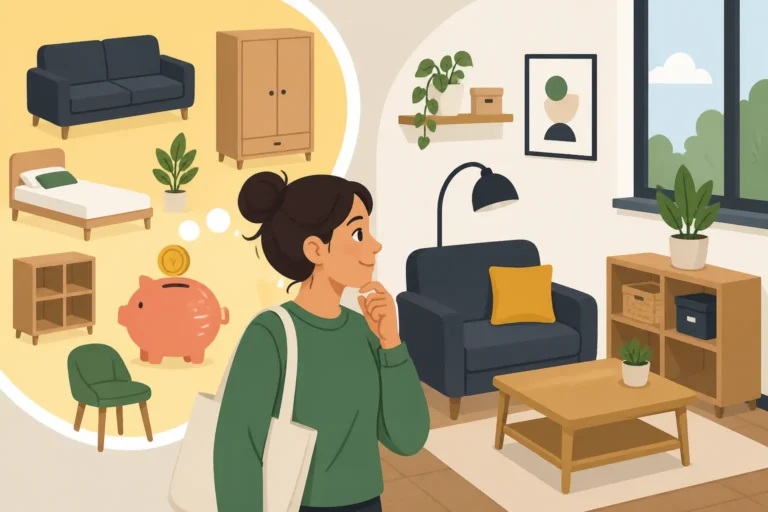
When budgeting for your furniture, you have to look at your Understanding German Rental Costs: Kaltmiete, Warmmiete, Nebenkosten. Your "Kaltmiete" is just the rent for the space. Everything you put into that space—from the lightbulbs to the fridge—is a separate capital investment. Newcomers often forget that the first month isn't just about the deposit and the rent; it’s about the €2,000 to €5,000 you might need just to make the place livable.
If you aren't prepared to deal with this, you should look for "Möbliert" (furnished) apartments. Companies like Wunderflats are a lifesaver in this regard. They specialize in mid-to-long-term furnished rentals that include everything from the bed linens to a fully equipped kitchen. While the monthly rent is higher than a "cold" apartment, you save yourself the thousands of euros in upfront costs and the weeks of labor required to assemble IKEA cabinets. It’s a strategic trade-off: pay more per month for peace of mind, or pay less per month but spend your first two weeks in a hardware store.
Solving the Kitchen Conundrum
If you’ve committed to a flat without a kitchen, you have a few paths forward. The most common is the modular kitchen approach. Instead of hiring a high-end kitchen studio (which can have waiting times of 3-6 months), most expats head straight to IKEA or a local hardware store like OBI or Bauhaus. You can buy "kitchen blocks" which are pre-configured units that include a sink, a small stove, and a bit of counter space.
Before you buy a single spoon, you need to measure your space with surgical precision. German apartments, especially in older Altbau buildings, have walls that are rarely perfectly straight. I once bought a beautiful countertop only to find that the corner of the room was at an 88-degree angle instead of 90, making the whole installation a nightmare. Take photos of where the water connections and the "Starkstrom" (the heavy-duty electrical outlet for the stove) are located.
Buying New vs Second Hand
Buying a brand-new kitchen is a significant investment. If you go through a professional studio, you are looking at a minimum of €5,000 for something basic. If you go the DIY route at IKEA, you might get away with €2,000. However, don't overlook the second-hand market. Platforms like Kleinanzeigen (formerly eBay Kleinanzeigen) are full of people selling their kitchens because they are moving to a flat that already has one.
The catch with second-hand kitchens is the "Abbau" and "Aufbau"—the dismantling and reassembling. You will need a van and at least two strong friends. Also, keep in mind that you should never, ever try to connect a stove yourself unless you are a certified electrician. It is dangerous and can void your Home and Liability Insurance in Germany (Haftpflicht and Hausrat). Always budget a few hundred euros to How to Find Reliable Tradespeople (Handwerker) in Germany for the final plumbing and electrical connections.
The Modular Kitchen Approach
For those on a budget or in a temporary situation, look for "pantry kitchens" or "modulküchen." These are standalone units that don't require being bolted into the wall in a complex way. You can find these easily on Amazon Germany, which is a great resource for getting large appliances delivered directly to your door. In Germany, "delivery to the curb" (Frei Bordsteinkante) is the standard, so make sure you check if the delivery includes carrying it up to the 4th floor.
When I moved into my second flat, I used a mix of IKEA cabinets and high-quality appliances from Amazon Germany. This allowed me to get the fridge and dishwasher delivered quickly while I spent time slowly building the cabinetry. It also meant that when I moved again, those standalone appliances were much easier to sell individually than a whole custom-fitted kitchen.
Smart Sourcing: Where to Buy Furniture
Once the kitchen is sorted, you still have the rest of the apartment to worry about. Germany has a massive range of furniture options, but the experience of buying them is very specific. Most large furniture stores like Poco, Roller, or Höffner are located in industrial zones on the outskirts of the city. You will need a car or a very patient friend with a van to get your finds home.
If you don't have a car, you are going to become very well-acquainted with delivery services. This is where Amazon Germany becomes your best friend. From bed frames to office chairs, the convenience of having it delivered to your door—often with a clear tracking window—is worth its weight in gold when you are trying to manage a move without a vehicle. Just be prepared for the "Paketshop" run; if you aren't home, your heavy boxes might end up at a kiosk three blocks away.
Budget Friendly Options
If you are looking for the absolute lowest prices, stores like Poco and Roller are the go-to. They are essentially the "fast fashion" of furniture. The quality isn't always heirloom-grade, but when you need a wardrobe for €150 to get your clothes off the floor, they serve their purpose. IKEA is the middle ground, offering a bit more style and better resale value later on.
Pro-tip: check out the "Fundgrube" (As-Is section) in IKEA. In Germany, these sections are often gold mines for returned items or floor models that are already assembled. Since assembling German furniture can feel like a PhD in engineering, buying something already put together is a massive win. You can also find excellent deals on How to Find Furniture for a German Apartment on a Budget through local Facebook "Free Your Stuff" groups or expat "Sell It" pages.
Second Hand Treasures
The second-hand culture in Germany is incredibly robust. Because Germans value quality, you can often find solid wood furniture on Kleinanzeigen for a fraction of the original price. Look for terms like "Massivholz" (solid wood) or "Gepflegt" (well-maintained).
One unique German tradition is the "Sperrmüll." On certain days, the city collects bulky waste, and people leave furniture on the sidewalk. While it’s tempting to grab a free sofa, be extremely cautious about bedbugs and hygiene. However, for things like wooden bookshelves or mirror frames, the "Sperrmüll" can be a treasure hunt for the brave. Just make sure you understand the rules around Waste Sorting in Germany (Mülltrennung) and Pfand so you don't accidentally get fined for leaving things out on the wrong day.
Logistics: Delivery, Assembly, and Internet
The logistics of furnishing a German apartment are often more difficult than the buying itself. Most apartments do not have elevators, or if they do, the elevators are the size of a shoebox. I once watched a delivery crew spend forty minutes trying to shimmy a "Schrank" (wardrobe) up a narrow spiral staircase in a 19th-century building. Always measure your stairwell before buying a large sofa.
Assembly is the next hurdle. German furniture rarely comes pre-assembled. You will need a good power drill—don't rely on the tiny manual wrenches they provide. If you aren't handy, look for "Möbelaufbau" services on TaskRabbit or local apps. It might cost you €50-€100, but it saves you a day of frustration and the risk of your bed collapsing in the middle of the night.
Getting Things Home Without a Car
If you buy from a store like IKEA, they offer delivery, but it can be expensive and sometimes takes weeks. A popular alternative is "Möbeltaxi." These are local van owners who you can hire to meet you at the store, help you load the furniture, and drive it to your house. It’s usually cheaper and faster than official store delivery. You can often find their numbers on flyers near the exit of the furniture store or on Kleinanzeigen.
Don't forget that once you move in, you’ll need to How to Set Up Electricity in a German Apartment immediately. The lights might work when you move in, but that’s usually on a "Grundversorgung" (basic supply) plan which is the most expensive rate possible. Switch to a private provider as soon as you have your meter reading.
Setting Up the Digital Home
In the middle of all this furniture madness, don't forget your connectivity. Setting up home internet in Germany is notoriously slow. It can take anywhere from two to six weeks for a technician to come and activate your line. I made the mistake of thinking I could just "hotspot" from my phone, only to run out of data in two days while trying to download assembly manuals.
To avoid being digitally stranded, I highly recommend getting an eSIM from Airalo the moment you land. It provides you with immediate data so you can use Google Maps to find the nearest IKEA, translate the technical terms on your rental contract, and stay in touch with delivery drivers. Having that reliable connection through Airalo while you wait for your Internet and Mobile Providers in Germany to finally send a technician is a small investment that prevents a lot of stress.
| Furnishing Path | Upfront Cost | Effort Level | Best For |
|---|---|---|---|
| Furnished (Wunderflats) | High (Monthly) | Very Low | Short-term stays (6-12 months), busy professionals. |
| New DIY (IKEA/Amazon) | Medium | High | People staying 2+ years who want a personal touch. |
| Kitchen Studio | Very High | Low (Professional) | Long-term settlers, homeowners. |
| Second-hand Mix | Low | Very High | Students, budget-conscious expats, vintage lovers. |
Temporary Solutions for the First Few Months
If the thought of building a kitchen and installing light fixtures while starting a new job makes you want to get back on the plane, there is a middle ground. Many expats choose to stay in a "Zwischenmiete" (sublet) or a serviced apartment for their first three months. This gives you a "base of operations" while you go on the grueling hunt for a long-term flat and wait for your furniture to arrive.
Why Short Term Rentals Make Sense
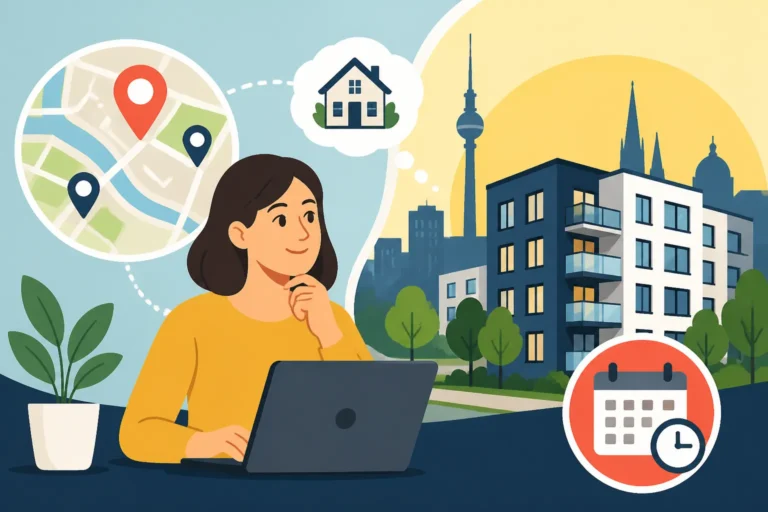
Using a service like Wunderflats allows you to move into a fully functioning home immediately. You get a desk to work from, a bed to sleep in, and most importantly, a kitchen where you can actually cook a meal. This "soft landing" is invaluable. It gives you the time to visit different neighborhoods, check out local furniture stores, and wait for the right "cold" apartment to become available without the pressure of being homeless.
For more information on these options, check out our guide on Short-Term and Furnished Rentals in Germany. It explains how the pricing works and what you should look for in a furnished contract to ensure you aren't being overcharged.
Essential Moving Day Checklist
When the day finally comes to move into your empty shell, you need a "Survival Kit." Do not pack these things deep in a box; keep them in a backpack that stays with you.
- A "Lüsterklemme" and a basic lamp: You will need a way to connect a simple lightbulb to the bare wires so you aren't working in the dark.
- Basic Tools: A screwdriver set, a hammer, and a tape measure.
- Connectivity: Your phone with an Airalo eSIM active so you don't lose GPS or the ability to call the landlord.
- Cleaning Supplies: You’ll want to scrub the floors before you put any furniture down.
- Important Documents: Your The German Health Insurance Card (Gesundheitskarte): Uses and How to Get One and your ID, as you might need them for various registrations.
Moving to Germany is a marathon, not a sprint. The "empty kitchen problem" is just the first big hill you have to climb. Take it one cabinet at a time, don't be afraid to ask your neighbors for help (it's a great way to introduce yourself!), and remember that once you’ve built your home here from scratch, you’ll feel like a true local. If you ever decide to move out, just remember to read our guide on How to Get Your Kaution Back at the End of a German Lease to make sure your hard work pays off.
Disclaimer
The information provided in this article is for general informational purposes only. While we strive to provide accurate and up-to-date advice based on personal experience and research, German laws and market conditions can change rapidly. This guide does not constitute legal, financial, or professional advice. Always verify specific requirements with your local authorities, landlord, or a certified professional.