Big City vs Small Town: Choosing the Right Environment in Germany
Arriving in Germany and realizing your chosen city dictates your entire quality of life is terrifying. I spent my first year isolated in a tiny village before fleeing to Berlin, only to find the urban housing crisis equally exhausting. This guide breaks down the brutal realities of big city versus small-town living to help you choose your ideal environment wisely.
Disclosure: This post may contain affiliate links. We may earn a commission at no extra cost to you if you make a purchase through these links. Read full disclosure.
The Illusion of Choice and German Geography
The Metropolises and Big City Chaos
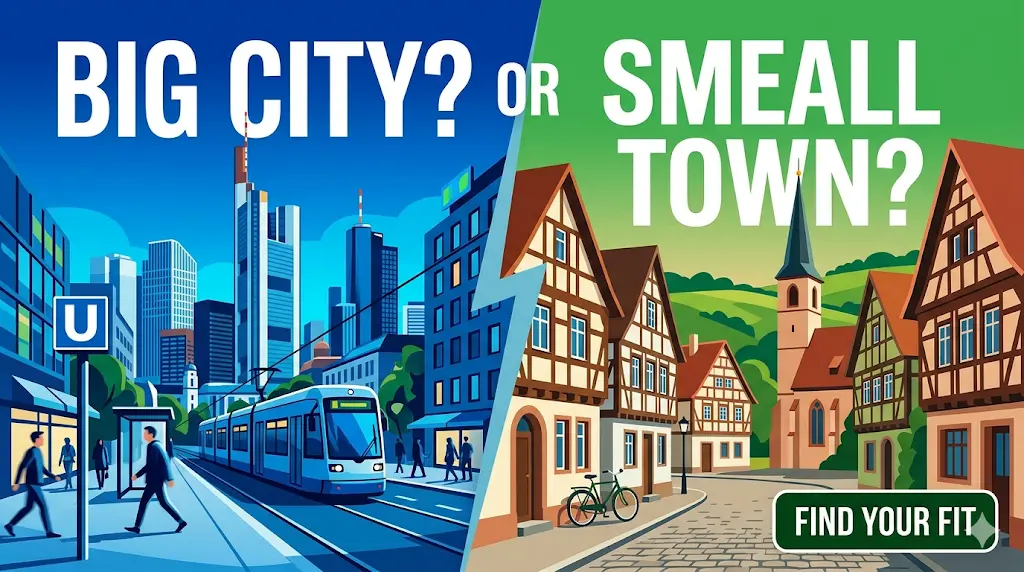
When most foreigners plan their relocation to Germany, their mental map rarely extends beyond the “Big Four” cities: Berlin, Munich, Frankfurt, and Hamburg. These sprawling urban centers are powerful magnets for international talent, offering massive multinational corporate headquarters, thriving start-up scenes, and highly visible expat communities. The appeal is incredibly obvious because these cities feel culturally familiar to any global nomad.
However, the reality of living in these metropolises is defined by relentless competition. You are competing with hundreds of thousands of other highly skilled migrants for everything from a doctor’s appointment to a seat on the morning U-Bahn. The chaos can be exhilarating, but it is also deeply exhausting. You are constantly fighting the sheer volume of people to carve out your localized existence, a struggle that mirrors the exact tensions detailed in Comparing Berlin vs Munich: Cost of Living and Lifestyle Differences.
Furthermore, these major cities are currently experiencing unprecedented infrastructure strain. While the cultural amenities—such as legendary techno clubs, world-class museums, and diverse culinary scenes—are unmatched, the daily friction of simply existing in these overcrowded hubs requires immense mental resilience. You must be prepared to hustle aggressively just to secure the basic foundations of your new life.
The Hidden Champions of the Mittelstand
The biggest shock for many newly minted expats is discovering that Germany’s economic backbone is not located in the glass skyscrapers of Frankfurt. The true wealth of the country lies in the “Mittelstand”—the highly specialized, medium-sized manufacturing and tech companies hidden away in obscure small towns and rural valleys.
You might receive a highly lucrative job offer in a village of twenty thousand people that you cannot even pronounce. These small towns, often nestled in regions like Baden-Württemberg or North Rhine-Westphalia, host global market leaders in niche industries. Relocating to a “Kleinstadt” (small town) means trading the electric chaos of the city for stability, safety, and a profoundly traditional German way of life.
The pace here is dramatically slower. Sundays are strictly silent, neighbors know your routine, and the local bakery becomes your primary social hub. The air is cleaner, access to nature is immediate, and the intense pressure of the big city entirely evaporates. However, this tranquility comes at the heavy cost of anonymity and international convenience.
The Speckguertel Commuter Compromise
For expats paralyzed by the choice between urban chaos and rural isolation, the ultimate German compromise is the “Speckgürtel” (literally the “bacon belt”). This term refers to the affluent, well-connected commuter suburbs immediately surrounding the major metropolitan areas.
Living in the Speckgürtel allows you to retreat to a quiet, family-friendly environment with a small-town feel, while still retaining a thirty-minute train commute into the urban core for work or weekend entertainment. Towns situated in the commuter belts of Munich or Hamburg offer excellent schools, larger living spaces, and beautiful parks. It is often the perfect geographical middle ground for those navigating the complex logistics of Bringing Your Family to Germany: The Family Reunification Visa.
The tradeoff, of course, is that the Speckgürtel is highly desirable for middle-class German families, making it surprisingly expensive. You are paying a premium for the geographical convenience. Additionally, you are tying your daily routine to the mercy of the regional train networks, which, despite their legendary reputation, are frequently subject to agonizing delays and strikes.
Housing Battles and Finding a Roof
The Blood Sport of Urban Real Estate
Securing a long-term apartment in a major German city is not a search; it is a blood sport. The housing crisis in Berlin, Munich, and Hamburg has reached catastrophic levels. When an affordable apartment is listed online, it is standard for hundreds of desperate applicants to attend a mass viewing, waiting in line down the block just to hand their paperwork to an indifferent broker.
As a foreigner without a local credit history, you are at the absolute bottom of the landlord’s priority list. They demand a flawless dossier, a permanent employment contract, and a pristine financial record. Competing in this environment is soul-crushing and frequently forces expats into overpriced, illegal sublets just to avoid homelessness. Understanding the brutal mechanics of this market is a massive hurdle when decoding German Bureaucracy 101: Understanding the Anmeldung, Schufa, and Tax ID.
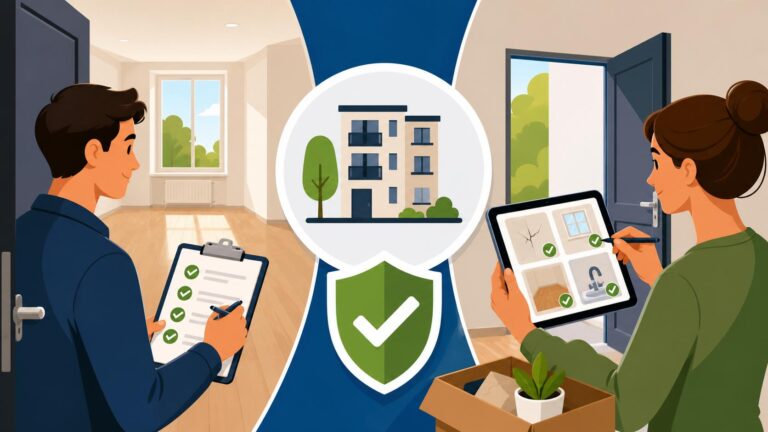
To survive this initial urban gauntlet, veteran expats universally rely on Wunderflats. By booking a temporary, fully furnished apartment through Wunderflats before you even cross the border, you buy yourself critical time. Wunderflats allows you to establish a legal address, get your paperwork in order, and tackle the long-term rental market without the terrifying pressure of sleeping in a hostel.
Navigating Small Town Rental Markets
In stark contrast to the urban chaos, the rental market in small German towns feels like stepping back in time. There are no mass viewings, and you are rarely competing against hundreds of other applicants. You can often secure a massive, beautifully renovated apartment with a private garden for the same price as a tiny, unrenovated studio in Berlin.
However, the small-town rental market has its own unique hurdles. Properties are frequently advertised offline in local newspaper classifieds rather than on massive digital portals. Furthermore, rural landlords are deeply conservative. They want to meet you in person, shake your hand, and ensure you fit the quiet dynamic of the building. The lack of digital accessibility means you must hustle physically, walking the neighborhoods and relying on word-of-mouth recommendations from your new local colleagues.
Even in smaller towns, the initial catch-22 of needing a registered address remains. If local vacation rentals refuse to provide the necessary registration paperwork, finding a temporary bridge is difficult. Utilizing Wunderflats is often just as critical in the provinces as it is in the cities, ensuring you have a compliant landing pad that allows you to legally register with the local town hall on day one.
Furnishing Your Empty German Apartment
Whether you land in a pulsing metropolis or a quiet village, you will confront the ultimate German housing shock: the unfurnished apartment. A standard German lease gives you a concrete box. There are no light fixtures, no closets, and absolutely no kitchen. You are entirely responsible for buying and installing your own sink, oven, and cabinets.
If you live in a big city without a car, getting heavy furniture back to your apartment is a logistical nightmare involving expensive van rentals and angry honking traffic. If you live in a small town, you might not even have a major furniture or electronics retailer within a fifty-kilometer radius. This logistical barrier is why expats everywhere heavily lean on Amazon Germany.
Ordering your essential appliances, mattresses, and flat-pack furniture via Amazon Germany solves the transport crisis immediately. Amazon Germany ensures that bulky, heavy items are delivered directly to your door, whether that door is on the fifth floor of a Berlin walk-up or at the end of a long dirt road in rural Bavaria. It allows you to build your home piece by piece without the physical exhaustion of wrestling an oven onto a regional train.
Language Barriers and Social Integration
The Big City English Bubble
One of the most validating realities for a stressed newcomer in a major city is the “English Bubble.” In places like Frankfurt or Berlin, you can comfortably survive for years without ever mastering German. The start-up scenes operate entirely in English, and you can easily find English-speaking doctors, yoga instructors, and therapists.
This bubble provides an incredible psychological safety net during your overwhelming first year. You can navigate your Cost of Living in Germany: Breakdown of Expenses (Rent, Food, Transport) without constantly consulting a translation app. However, this convenience is a massive double-edged sword. It severely stunts your integration.
By relying on the English bubble, you isolate yourself from the true cultural fabric of the country. You become trapped in a transient expat echo chamber, where your friend group rotates every two years as people move on to new countries. The lack of German proficiency eventually creates a hard ceiling on your social integration and your long-term career mobility outside of the tech sector.
Deep Dive Integration in the Provinces
If you move to a small German town, the English bubble does not exist. The local baker, the postman, and your elderly neighbors will not speak English, and they will not accommodate your lack of German. The language barrier here is a sheer cliff face that you must climb immediately.
This forced immersion is brutal and deeply exhausting in the short term. You will struggle through awkward conversations and misinterpret official mail. But the long-term payoff is profound. Expats in small towns learn German exponentially faster than their urban counterparts. This rapid language acquisition unlocks deep, meaningful integration into the local community.
Because the town is small, your effort to speak the language is highly visible and deeply respected by the locals. They will correct your grammar over the garden fence and invite you to neighborhood barbecues. You are no longer just a passing tourist; you become a recognized, integrated pillar of their localized society.
Finding Your Expat Tribe and Community
Building a social circle from scratch is the hardest part of any international relocation. Big cities offer an endless buffet of expat meetups, specialized hobby groups, and international sports leagues. If you feel lonely in Munich or Hamburg, you can simply open an app and find twenty other foreigners drinking beers at a local pub that same evening.
In a small town, you must completely pivot your social strategy. There is no ready-made expat tribe waiting for you. To make friends, you must embrace the German “Verein” (club) culture. Joining the local volunteer fire department, the football club, or the community choir is the absolute fastest way to bond with locals.
Shared activities bypass the initial awkwardness of small talk. While building this localized network takes immense bravery and patience, the friendships you forge in small-town clubs are famously loyal. Germans take a long time to warm up, but once you crack the shell, you have friends for life.
Cost of Living vs Earning Potential
The Urban Premium and Salary Realities
The financial mathematics of living in Germany shift drastically depending on your geographical coordinates. Big cities demand a massive urban premium. Your rent, dining out, and entertainment costs will consume a significantly larger portion of your net salary.
While urban corporate headquarters usually offer higher gross salaries to compensate for this environment, the difference is often entirely devoured by the local real estate market. You might earn twenty percent more in Frankfurt than in a rural town, but if your rent is literally double, your actual quality of life decreases. You must meticulously calculate your take-home pay and manage your recurring subscriptions diligently, a financial balancing act decoded in Mobile Banking Apps in Germany: N26, Revolut, and More.
Furthermore, the constant exposure to high-end restaurants, premium cocktail bars, and international events in the city creates chronic lifestyle inflation. It is incredibly easy to burn through your savings simply trying to keep up with the vibrant urban social calendar.
The Small Town Savings Advantage
Relocating to a small town is the ultimate financial hack for expats focused on wealth accumulation. The reduction in your baseline cost of living is staggering. You can rent a massive, multi-bedroom house for the price of a small studio in the city.
Beyond housing, the lack of expensive urban distractions naturally curbs your spending. Your weekends shift from pricey brunch spots to free hikes in the local forest. Local taverns are significantly cheaper than city center bars. This rural frugality allows you to aggressively save and invest your income.
However, you must be prepared to compromise on convenience. You won’t find specialty international grocery stores on your corner. When expats in small towns crave specific spices, international ingredients, or specialized hobby equipment, they rely heavily on Amazon Germany to fill the retail void. Leveraging Amazon Germany brings global convenience directly to your rural doorstep, ensuring you don’t feel entirely cut off from the modern consumer world.
Evaluating Purchasing Power Parity
When comparing a city job offer to a rural job offer, you must look beyond the gross salary and evaluate your actual purchasing power parity.
You need to factor in hidden costs that differ wildly by location. In a big city, you might not need a car, saving you hundreds of euros in insurance and fuel. In a small town, a vehicle is often absolutely mandatory to commute or buy groceries. Setting up auto-drafts for these specific regional expenses requires localized financial knowledge, detailed thoroughly in How to Pay Rent and Bills in Germany: Banking Tips for Expats.
Ultimately, if your priority is aggressively saving for a future down payment on a house, the small town almost always wins the mathematical battle. If your priority is networking, dining, and cultural exposure, you must be willing to pay the steep urban premium.
Navigating Bureaucracy and Infrastructure
The Auslaenderbehoerde Nightmare in Cities
Dealing with the Ausländerbehörde (Foreigners’ Authority) is universally cited as the worst part of living in Germany, but the urban offices are uniquely catastrophic.
In major cities, the immigration offices are buckling under the weight of hundreds of thousands of applicants. Securing an appointment to renew your visa can take six agonizing months. The online booking portals crash constantly, and you will spend hours hitting refresh at dawn just to grab a canceled slot. The sheer volume of people means you are treated as a nameless file number. The caseworkers are overworked, heavily stressed, and strictly by-the-book. Navigating this hostile administrative maze requires an intimate understanding of Understanding the Different Types of German Visas and Residence Permits.
Personalized Bureaucracy in Rural Towns
Bureaucracy in a small town is an entirely different universe. The local Ausländerbehörde might only process a dozen international applications a week.
You can often simply call the office, speak directly to the person handling your file, and get an appointment for the very next day. You become a known entity. The caseworker remembers your name, asks about your job, and might even offer pragmatic, personalized advice on how to secure your paperwork.
The major caveat is the language barrier. While urban caseworkers might begrudgingly switch to English when the system breaks down, rural clerks are legally and practically bound to German. You must bring a German-speaking colleague or friend to your appointments to translate, as misinterpreting an official health insurance requirement can derail your entire visa application, a risk explored in Public vs Private Health Insurance in Germany: Which is Right for You?.
Transit Networks vs Car Dependency
Finally, your physical mobility defines your daily happiness. Big German cities boast world-class, heavily integrated public transportation. The network of U-Bahns, trams, and buses means you can traverse the metropolis 24/7 without ever needing a driver’s license.
Small towns require a dramatic shift in mobility. While regional trains (Regionalbahn) connect villages to major hubs, they usually only run once an hour. If you miss the train, your entire day is ruined. Local bus networks often shut down completely on Sundays or after 8:00 PM.
If you live in the countryside, obtaining a German driver’s license and buying a car shifts from a luxury to an absolute survival necessity. You must weigh the financial burden of car ownership against the ultimate freedom of exploring the deep, untouched beauty of the German countryside on your own schedule.
| Feature Comparison | The Big City Metropolis | The Small Town (Kleinstadt) |
| Housing Availability | Catastrophic shortage; massive competition | High availability; larger spaces |
| Language Barrier | Easily survivable with only English | German proficiency is absolutely mandatory |
| Cost of Living | Premium rent and high entertainment costs | Very affordable rent; cheap local lifestyle |
| Immigration Bureaucracy | 6-month wait times; highly impersonal | Next-day appointments; personalized service |
| Daily Mobility | 24/7 public transit; no car needed | Infrequent trains; car ownership usually required |
References
Primary sources (official)
- Make it in Germany – Discover German States: The official federal portal breaking down the economic strengths, living conditions, and infrastructure differences across Germany’s urban centers and rural states. https://www.make-it-in-germany.com/en/living-in-germany/discover-germany/german-states
- Statistisches Bundesamt (Destatis) – Urban vs Rural Population: The German Federal Statistical Office provides granular, official data on population distribution, housing costs, and urbanization trends across the country. https://www.destatis.de/EN/Themes/Society-Environment/Population/Current-Population/Tables/population-by-laender-basis-2022.html
Other helpful sources
- World Bank Open Data – Urban Population in Germany: High-level macroeconomic data tracking the historical and current shifts of populations moving into German urban centers versus rural districts. https://data.worldbank.org/indicator/SP.URB.TOTL.IN.ZS?locations=DE
- I Am Expat – German Cities Guide: A highly practical, crowdsourced expat platform offering deep-dive reviews on the lifestyle, cost of living, and community feel of both major German cities and regional towns. https://www.iamexpat.de/expat-info/german-cities
Disclaimer
The information provided in this article is for general informational and educational purposes only and does not constitute professional legal, financial, real estate, or immigration advice. Housing markets, rental prices, and the cost of living in Germany vary drastically between metropolitan centers and rural municipalities. German bureaucracy, including mandatory address registration (Anmeldung) and interactions with the Ausländerbehörde, is governed by strict local and federal laws that must be adhered to regardless of your geographic location. Always conduct your own independent market research before signing a binding residential lease or employment contract.