Comparing Berlin vs Munich: Cost of Living and Lifestyle Differences
Choosing between Germany’s two largest expat hubs usually means staring blindly at rental portals and stressing over which culture won’t reject you. I lost sleep agonizing over this exact choice, ultimately splitting my expat years between both extremes. This guide breaks down the true cost of living and lifestyle differences between Berlin and Munich so you can choose confidently.
Disclosure: This post may contain affiliate links. We may earn a commission at no extra cost to you if you make a purchase through these links. Read full disclosure.
The Vibe and Cultural Reality of Both Cities
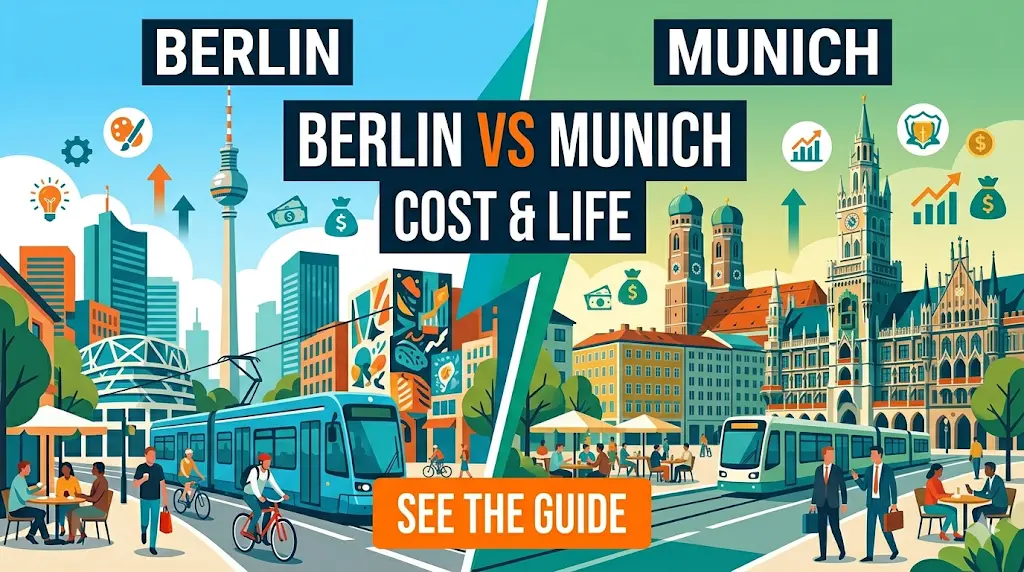
The starkest difference between these two German powerhouses is their overarching identity. Moving to Berlin feels like stepping into a gritty, constantly evolving global experiment, while moving to Munich feels like stepping into a wealthy, highly structured Bavarian postcard. Understanding which environment matches your mental health and social needs is the most crucial decision you will make.
Berlins Gritty Edge and Startup Energy
Berlin is infamous for its “poor but sexy” historical motto. While the city is no longer poor, it has desperately clung to its chaotic, rebellious edge. It is a sprawling, decentralized metropolis defined by its intense counterculture, legendary electronic music scene, and heavy street art. Every neighborhood, from Neukölln to Prenzlauer Berg, feels like a completely different town with its own distinct subculture.
As an expat, Berlin offers an incredibly forgiving social landing pad. You can dress however you want, live alternative lifestyles openly, and find your exact niche within weeks of arriving. The startup culture dominates the city, meaning the air is thick with international founders, digital nomads, and creatives hustling to make their mark. However, the frustration lies in the city’s notorious administrative dysfunction. The local government is famously slow, and the city often feels dirty and perpetually under construction. If you crave order and pristine streets, the constant grit of Berlin will quickly exhaust you.
Munichs Traditional Charm and Alpine Proximity
Munich is the absolute antithesis of Berlin. It is affectionately called a “Millionendorf” (a village of a million people). Munich is impeccably clean, remarkably safe, and deeply conservative. The streets are pristine, the historical architecture is meticulously maintained, and the local Bavarian culture is celebrated with intense pride—most visibly during Oktoberfest, but also in the everyday beer gardens dotting the city.
For an expat, Munich provides a high quality of life that borders on luxurious. If you love the outdoors, this is your paradise. The proximity to the Alps and crystal-clear Bavarian lakes means your weekends will be filled with hiking, skiing, and swimming. However, the social integration here is much harder. Munich locals are generally more reserved and traditional. The expectation to conform to established social norms is high. If you show up in sweatpants to a nice cafe, you will get stares. The city rewards those who appreciate stability, high-end living, and traditional German structure, but it can feel suffocating to those seeking raw, creative chaos.
The Language Barrier and English Accessibility
One of the most validating realities for a stressed newcomer is how easy it is to survive without speaking fluent German. Here, the two cities diverge massively. Berlin exists in an international bubble. You can easily spend five years in Berlin without ever speaking German beyond ordering a coffee. English is the default working language in the startup scene, and most cashiers, bartenders, and doctors in the central districts are entirely comfortable switching to English.
Munich, conversely, expects you to integrate. While multinational corporate offices operate in English, the daily life of the city is conducted firmly in German. From dealing with your landlord to interacting with local civil servants, a lack of German will create immediate friction. While people can speak English, the cultural expectation is that you must make an effort to learn the local language. Immersing yourself in the local tongue is practically a prerequisite for unlocking true social integration in Bavaria.
Navigating the Housing Markets and Rental Crisis
Securing a long-term apartment in either city is a brutal, demoralizing rite of passage that breaks many expats. The German real estate market is fiercely competitive, deeply bureaucratic, and entirely unforgiving to foreigners without local credit histories.
The Brutal Reality of the Berlin Housing Shortage
The myth of cheap Berlin housing died years ago. Today, the capital is experiencing a catastrophic housing shortage. When an affordable apartment is listed online, it is not uncommon for three hundred people to apply within the first hour. Landlords demand a perfect dossier: a permanent employment contract, your last three payslips, and a pristine local credit report. Trying to compete as a newly arrived foreigner with a probation period on your contract is incredibly depressing.
You will spend months refreshing property portals, attending mass viewings, and facing constant rejection. Many expats are forced into expensive, unofficial sublets just to have a roof over their heads, which creates massive legal headaches when trying to understand German Bureaucracy 101 Understanding the Anmeldung Schufa and Tax ID. You must approach the Berlin housing market as a second full-time job, requiring immense patience and the willingness to expand your search to the distant outer rings of the city.
Munichs Premium Property Prices and Landlord Expectations
Munich does not just have a housing shortage; it holds the title for the most expensive real estate in Germany. The competition is slightly less chaotic than Berlin’s wild west, but the financial gatekeeping is extreme. Landlords in Munich are deeply conservative and highly selective. They frequently expect your net income to be at least three times the warm rent (rent including heating and utilities).
If you are moving to Munich, you must accept that a significant portion of your salary will go directly to your landlord. Furthermore, landlords here often heavily favor married couples or single corporate professionals over flatshares. If you are relocating with dependents, the pressure intensifies, as you must secure enough square footage to satisfy the legal requirements for Bringing Your Family to Germany The Family Reunification Visa. The upfront costs in Munich are staggering, often requiring you to put down a security deposit equal to three months of “cold rent” before they even hand over the keys.
Surviving the Unfurnished Flat and Initial Setup
Whether you land in Berlin or Munich, you will face the ultimate German housing shock: the unfurnished apartment. When you sign a standard lease, you are usually renting a concrete box. There are no light fixtures, no closets, and absolutely no kitchen. You are entirely responsible for buying and installing your own cabinets, sink, oven, and appliances before you can even cook a meal.
Dealing with a completely empty apartment upon arrival is a logistical nightmare. Buying a kitchen locally requires waiting weeks for delivery and installation. This is why veteran expats universally recommend booking temporary, fully furnished housing for your first few months. By booking a temporary apartment through Wunderflats, you completely bypass the empty-apartment shock. You can walk in with just your suitcase, immediately have a working kitchen and Wi-Fi, and take your time hunting for a long-term lease without the crushing pressure of sleeping on the floor. Most importantly, Wunderflats guarantees that the properties listed provide the legally required landlord confirmation letter needed to register your address.
Once you do secure an empty long-term flat, you face the daunting task of buying appliances without owning a car. Instead of wrestling a microwave or a heavy flat-pack wardrobe onto a crowded tram, smart expats order their heavy electronics and essential home goods directly through Amazon Germany. Using Amazon Germany ensures that bulky items and essential kitchen hardware are delivered straight to your door. Relying on Amazon Germany saves you immense physical strain and lets you build your home piece by piece without having to rent an expensive local moving van to haul appliances across the city.
Cost of Living Breakdown and Daily Expenses
While housing takes the largest bite out of your paycheck, your daily expenses and lifestyle choices will dictate your overall financial comfort. The baseline cost of surviving differs significantly between the two cities.
Groceries Dining Out and Entertainment
In Berlin, you can still find pockets of incredible affordability if you know where to look. The city’s famous street food scene, including legendary Döner kebabs and Currywurst, allows you to grab a filling meal for under six euros. Neighborhoods in the east offer cheap, diverse dining options, and grabbing a beer from a Späti (late-night corner store) to drink in the park is a beloved, budget-friendly Berlin tradition. Groceries at discount supermarkets remain cheap, allowing you to easily manage your overall Cost of Living in Germany Breakdown of Expenses Rent Food Transport.
Munich, by contrast, operates on a premium tier. Dining out in Munich is noticeably more expensive, and the concept of cheap, late-night street food is far less prevalent. A standard dinner at a mid-range Bavarian restaurant will cost significantly more than a comparable meal in Berlin. Even socializing is pricier; a liter of beer at a traditional Munich beer garden is an investment. However, Munich residents often argue that you are paying for vastly superior quality, cleanliness, and service. To mitigate these higher daily costs, expats in Munich frequently bulk-order non-perishable household staples, cleaning supplies, and toiletries from Amazon Germany to avoid the premium markups at central city drugstores.
Transportation and Commuting Costs
Both cities boast phenomenal, world-class public transportation systems, meaning you absolutely do not need to own a car.
Berlin’s transit network (the BVG) is a sprawling web of U-Bahns, S-Bahns, trams, and buses that run 24/7 on the weekends. It is highly efficient, though occasionally grungy. Munich’s network (the MVV) is exceptionally clean, punctual, and safe, heavily relying on its U-Bahn and S-Bahn lines to connect the suburbs to the center.
With the introduction of the nationwide Deutschlandticket, commuting costs have largely equalized, allowing you unlimited regional travel for a flat monthly fee. However, managing the direct debits for these transit subscriptions requires you to rapidly integrate into the local banking system, a hurdle clearly explained in How to Pay Rent and Bills in Germany Banking Tips for Expats. Biking is also massive in both cities; Munich offers scenic, dedicated paths along the Isar river, while Berlin’s flat, wide streets are perfect for cycling, provided you are comfortable navigating aggressive city traffic.
Healthcare and Hidden Expat Fees
Regardless of which city you choose, your health insurance and hidden bureaucratic fees will be identical. The German state legally mandates that you have comprehensive health coverage. Whether you are a startup employee in Berlin or an automotive engineer in Munich, a significant percentage of your gross salary will automatically be deducted for the statutory health system. Deciding whether to opt out of the public system and go private is a major financial decision analyzed in Public vs Private Health Insurance in Germany Which is Right for You.
Furthermore, both cities will hit you with the mandatory Rundfunkbeitrag (broadcasting fee). It does not matter if you live in a cheap shared flat in Berlin or a luxury loft in Munich; every registered household must pay this quarterly tax. Navigating these hidden deductions from your paycheck is crucial to understanding your true localized budget, a reality that becomes glaringly obvious when you receive your Understanding Your Tax Assessment Steuerbescheid After You File in Germany.
| Expense Category | Berlin Average | Munich Average | The Reality Check |
| 1-Bedroom Rent (Warm) | €1,200 – €1,600 | €1,500 – €2,100 | Munich demands significantly higher deposits. |
| Döner Kebab / Cheap Meal | €5.00 – €7.00 | €7.00 – €10.00 | Berlin reigns supreme for budget street food. |
| Pint of Local Beer | €3.50 – €4.50 | €4.50 – €6.00 | Munich’s beer garden culture is premium priced. |
| Public Transit (Monthly) | €49.00 (Deutschlandticket) | €49.00 (Deutschlandticket) | Transit costs are now federally equalized. |
| Gym Membership | €25 – €50 | €40 – €80 | Munich leans heavily towards premium fitness clubs. |
Professional Landscapes and Job Opportunities
Your career trajectory is the final, defining factor in choosing between these two cities. The corporate ecosystems of Berlin and Munich cater to completely different industries, skill sets, and working mentalities.
The Silicon Allee vs Bavaria Tech
Berlin is the undisputed startup capital of mainland Europe. It is affectionately known as “Silicon Allee.” If you work in e-commerce, fintech, digital marketing, or creative media, Berlin is where you want to be. The city attracts massive amounts of venture capital, and companies like Delivery Hero, N26, and SoundCloud call it home. Because of this startup dominance, English is the absolute standard in the office, making it incredibly easy for expats to parachute into high-level roles without speaking German.
Munich, conversely, is the powerhouse of traditional German industry, engineering, and enterprise tech. It is the headquarters for global behemoths like BMW, Siemens, and Allianz, while also hosting massive European hubs for Microsoft, Google, and Apple. The job security and established corporate structures in Munich are unparalleled. However, breaking into these massive German corporations often requires a high level of German language proficiency and a more formal, structured approach to your career. Navigating which visa you need to enter these specific tech roles is deeply detailed in Understanding the Different Types of German Visas and Residence Permits.
Salaries and Purchasing Power Parity
The golden rule of the German job market is that southern Germany pays better. Salaries in Munich are generally significantly higher than in Berlin across almost all sectors. The corporate wealth concentrated in Bavaria means companies can afford to offer highly lucrative compensation packages.
However, you must look at your purchasing power parity. A €70,000 salary in Munich will feel significantly tighter than a €60,000 salary in Berlin, purely because Munich’s rent and daily expenses will devour the difference. You must meticulously calculate your net take-home pay to ensure the higher Munich salary actually results in a better quality of life. Understanding how the German state taxes your global assets when you move here is a vital pre-relocation step outlined in Moving Money to Germany Declaring Savings and Large Transfers.
Workplace Culture and Corporate Formality
Finally, the day-to-day reality of going to the office differs wildly. Berlin embraces an intensely casual, flexible working culture. Remote work, flexible hours, and flat hierarchies are standard. Wearing a suit and tie to a Berlin tech office will immediately mark you as an outsider; jeans, sneakers, and tattoos are the corporate uniform.
Munich maintains a much more traditional, hierarchical German business culture. Punctuality is strictly enforced, formal titles are respected, and the dress code is noticeably sharper. While the international tech giants in Munich have relaxed these rules, local Bavarian companies expect a high degree of professionalism and adherence to established protocols. If your spouse is joining you and seeking a part-time role to ease into this new culture, they must understand how these different environments impact their tax brackets, a hurdle decoded in Part Time Work and Taxes How Mini Jobs and Midijobs Affect Your Income.
Ultimately, choosing between Berlin and Munich is not just a financial calculation; it is a choice of identity. If you want endless creative freedom, international networking, and are willing to tolerate administrative chaos, Berlin will welcome you. If you value safety, pristine nature, high salaries, and are willing to adapt to traditional German norms, Munich will reward you handsomely.
References
Primary sources (official)
- Destatis (Federal Statistical Office of Germany): The official government portal providing comprehensive data on consumer price indices, inflation rates, and housing costs across all German federal states. https://www.destatis.de/EN/Themes/Economy/Prices/_node.html
- Make it in Germany – German Cities: The official federal portal for international qualified professionals, offering detailed economic profiles, industry breakdowns, and living condition summaries for major hubs like Berlin and Munich. https://www.make-it-in-germany.com/en/living-in-germany/discover-germany/cities
Other helpful sources
- Numbeo Cost of Living Comparison: A massive, crowdsourced database providing highly granular, up-to-date comparisons of rent, restaurant prices, and purchasing power between Munich and Berlin. https://www.numbeo.com/cost-of-living/compare_cities.jsp?country1=Germany&city1=Berlin&country2=Germany&city2=Munich
Disclaimer
The information provided in this article is for general informational and educational purposes only and does not constitute professional financial, tax, real estate, or immigration advice. Housing markets, rental prices, and the cost of living in Berlin and Munich are highly volatile and subject to rapid macroeconomic changes. German bureaucracy, including the mandatory address registration (Anmeldung) and the strict legal requirements for security deposits (Kaution), is governed by rigid federal laws that must be adhered to without exception. Always conduct your own independent market research before signing a binding residential lease or employment contract.