Moving to Germany from the UK: ToR Relief, Customs Declarations, and Costs
Most people moving from Britain to Germany expect a simple European removal and get a customs move instead. Your sofa now crosses a border into the EU, and without the right paperwork it can be held at a German Zollamt or hit with import charges. This guide explains Transfer of Residence relief, the declarations on both sides, and how to compare honest removal quotes.
Disclosure: This post may contain affiliate links. We may earn a commission at no extra cost to you if you make a purchase through these links. Read full disclosure.
Why a UK to Germany Move Is Now a Customs Move
I moved my own household across the Channel and assumed it would be like moving between two EU countries: book a van, load it, drive. It wasn’t. Britain is outside the EU customs union, so everything you own is treated as a shipment from a non-EU country. That change catches out more British movers than any other part of the process, partly because friends and colleagues who moved before Brexit still talk about how easy it used to be.
The Shift From EU Removal to Third-Country Import
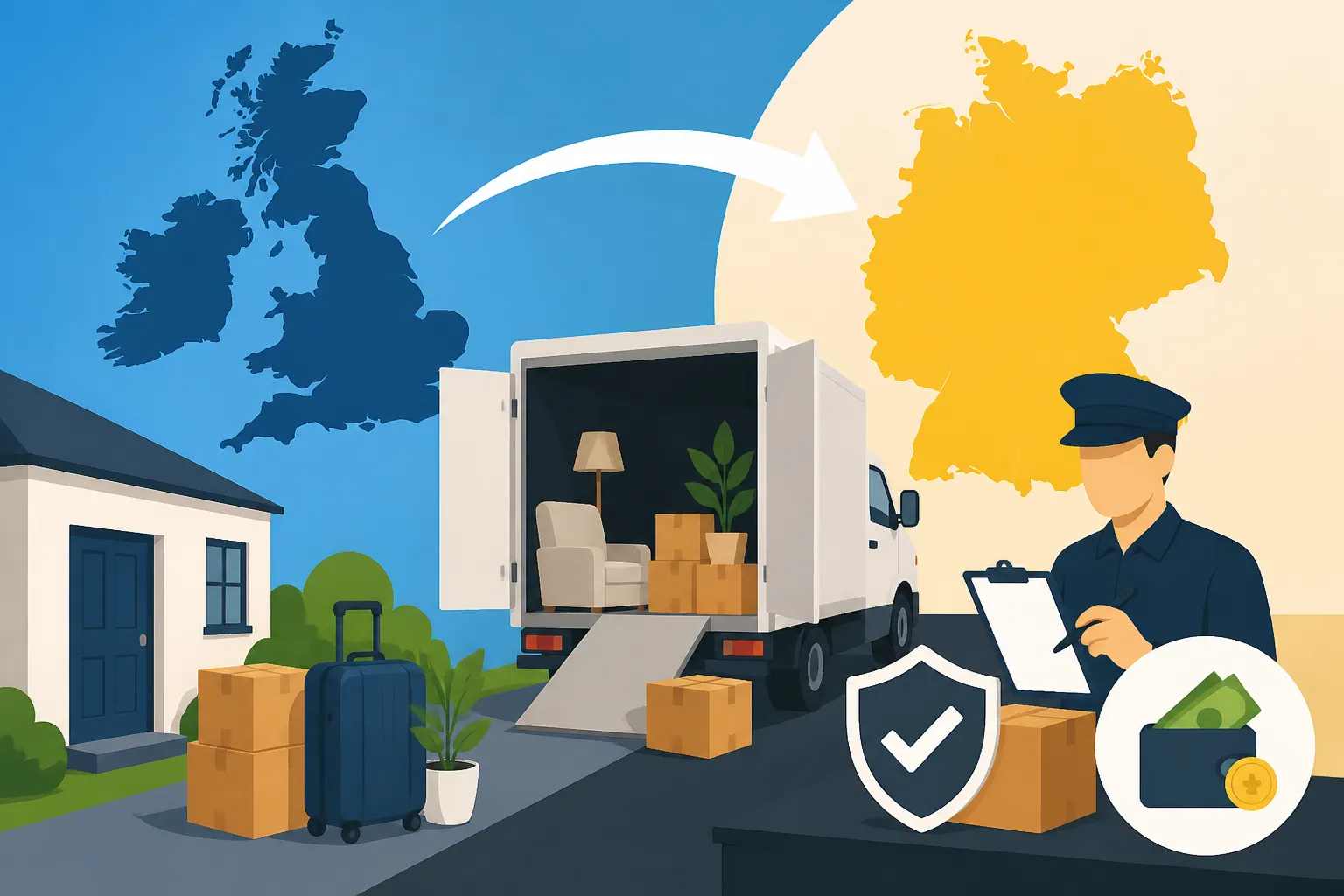
When the UK was in the EU, household goods moved freely across the internal market. There was no import declaration, no customs office, and no question of import VAT on your secondhand bookshelves. Now your belongings leave the UK customs territory, enter the EU at Calais, Zeebrugge, Rotterdam or the Hook of Holland, and arrive in Germany as goods that have to be accounted for.
In practice, a removal lorry that used to roll straight through Dover now needs an export declaration filed with HMRC, a way of moving through other EU countries without paying duty there, and a final clearance with German customs, the Zoll. If any step is missing, the lorry can be parked at a port or a customs warehouse while storage charges build up and you sit in an empty flat in Frankfurt or Hamburg, sleeping on an air mattress.
This is also why the gap between the cheapest and the most reliable removal quotes has widened. Customs paperwork takes skill, and a mover who has never done a post-Brexit UK to Germany job can make expensive mistakes. For a wider view of how the two regimes differ, see EU vs Non-EU Moves to Germany: Why Customs Treats Them Completely Differently.
What ToR Relief Means on the German Side
British movers usually say “ToR relief”, short for Transfer of Residence relief. That is the UK’s name for the scheme that lets people moving into Britain bring personal belongings in without duty. When you move to Germany, the relief that matters is German, and the Zoll calls it Übersiedlungsgut, which roughly means household effects being moved because of a change of residence.
If you qualify, your used personal belongings enter Germany without import duty and without Einfuhrumsatzsteuer, the import VAT that would otherwise apply. This is a relief you apply for. It isn’t automatic. You have to show German customs that you really are moving your normal residence, that the goods are yours, and that you have been using them. Get this right and the clearance is a formality. Get it wrong and customs can assess the goods like any other import.
For the full mechanics, including which items fall inside the relief and which fall outside it, read Ubersiedlungsgut: Germany’s Duty Exemption for Household Goods Explained. The short version is that the scheme is generous to real movers and strict about anything that looks like trade, stockpiling or new purchases dressed up as personal effects.
Who Qualifies and Who Gets Caught Out
The basic conditions are that you are giving up your normal residence outside the EU, in this case in the UK, and taking up normal residence in Germany. The goods must be for your personal or household use, and you must have owned and used them for a minimum period before the move. German customs generally looks for at least six months. You also need to have lived outside the EU for a qualifying period before moving, and the import has to happen within a set window around your change of residence. Check the current periods with the Zoll or your mover before you book dates.
The people who get caught out tend to fit a few profiles. One is the person who buys a new television, mattress and washing machine in the UK a few weeks before leaving because “prices are better back home”. Those items haven’t been used for the required time, so they may not qualify. Another is the person who keeps the shipment in UK storage for a long time after the move and then has it delivered much later. A third is the person running a small business who mixes stock or equipment in with household goods.
There is also the dual-household case, common with people on secondments: you keep your London flat and rent in Munich. Customs may ask hard questions about where your normal residence really is. If that’s you, gather evidence early and talk it through with the removal company before anything is packed. The six-month point is covered in more detail in The Six-Month Ownership Rule: Proving Your Goods Qualify for Exemption.
Customs Declarations Step by Step
The paperwork sits at three points: the UK side, the trip through the EU, and arrival in Germany. A good international mover handles most of the filing, but you still need to understand it, because the evidence comes from you and the liability for a wrong declaration does not simply disappear because someone else typed it.
The UK Export Side
Your belongings leave the UK under an export declaration lodged with HMRC through the Customs Declaration Service. Private individuals almost never file this themselves. The removal company or its customs agent does it, based on your inventory and details. The export record matters later because it helps show the goods actually left Britain as a single household consignment.
At this stage your mover will ask for your passport details, the collection address, the destination address in Germany, and a full inventory. Some will also ask for your National Insurance number or other identifiers for the declaration. If you are doing a DIY van move, you or a broker you hire will need to arrange the export declaration. This is where many DIY movers find that the money saved on labour goes on brokerage fees, waiting time at the port and stress.
A typical professional sequence looks like this:
- The mover surveys your home in person or by video and estimates the volume.
- You supply the inventory, identity documents and proof of your move.
- The mover’s customs team prepares the export declaration and the German import paperwork together.
- On collection day the crew packs, loads and records each item against the inventory.
- The export is lodged and the consignment is released to leave the UK.
Transit Through France, Belgium or the Netherlands
Most UK to Germany road removals cross by Dover to Calais, the Eurotunnel shuttle from Folkestone, or North Sea ferries such as Harwich to the Hook of Holland or Hull to Rotterdam. Whichever route you take, the lorry enters the EU in a country that isn’t Germany. Two broad approaches exist. Either the goods are cleared into the EU at the point of entry, or, more commonly with household removals, they travel under a transit procedure to a customs office in Germany near the destination.
Under transit, the consignment moves through EU territory with duty suspended, often with a customs seal on the trailer, until it is presented at the German office. For you, this means the lorry should not be opened or partly unloaded on the way, and the timing of the German clearance matters. If your mover suggests dropping half the load in Cologne and the rest in Düsseldorf, ask exactly how the customs side will work before you agree.
Groupage loads, where your belongings share a lorry with other households, add another layer, because several consignments with separate paperwork travel together. Experienced movers do this routinely. Inexperienced ones can let one family’s missing document hold up everyone. That is one reason why choosing between a shared and a dedicated vehicle is about more than price, as covered in Full Load vs Groupage to Germany: Cost Break-Even by Cubic Metre.
Clearing at a German Zollamt
The final step is the German import declaration claiming Übersiedlungsgut relief. It is usually made at the Zollamt responsible for your new address or at the office the mover’s customs agent works with. German customs has a specific application form for relief on household effects. Your mover will normally fill it in using the current version from the Zoll, and you sign it.
Sometimes customs clears the goods on paper alone. Sometimes they ask to see the lorry, inspect a sample of boxes, or want you or your representative to come to the office. In my case, the officer at the Zollamt asked two questions about a box of kitchen equipment that looked new. They were wedding presents I’d been using for over a year, and photos on my phone settled it. Keep that kind of evidence easy to reach.
Once customs releases the goods, the lorry goes to your address for delivery. If the clearance is delayed, the goods may wait in a bonded warehouse. Ask your mover how much warehouse time is included and what it costs after that, because these charges are an easy one to leave out of a quote.
Documents That Make or Break Your Relief Claim
Almost every customs problem I’ve heard of from other British movers came down to documents. Either something was missing, the documents contradicted each other, or the evidence didn’t match the dates. German officials work methodically. A tidy, consistent set of papers gets a calm response, and a messy one gets questions.
Proving You Lived in the UK
You need to show that the UK was your normal residence. Good evidence includes council tax bills, a tenancy agreement or mortgage statement, utility bills, payslips from a UK employer, and UK bank statements at your old address. Documents covering a span of time are stronger than a single recent bill.
The UK has no system for deregistering your address, so no British council issues a certificate to say you’ve left. To show your UK residence has ended, use things like the end date on your tenancy, a completion statement from a house sale, a council tax closing account letter, or a letter from your employer confirming the transfer.
If you’re keeping a UK property, for example renting it out, explain that clearly and add the letting agreement. A rented-out house is quite different from a home you plan to return to every other weekend. Customs is trying to work out where your life is actually based.
Proving You Now Live in Germany
On the German side, the strongest evidence is your Meldebescheinigung, the registration certificate you get after your Anmeldung at the Bürgeramt. Add your German rental contract, your Wohnungsgeberbestätigung from the landlord, an employment contract with a German employer, or a university enrolment letter.
Timing is the hard part. Many people can’t register until they have keys, and in cities like Berlin or Munich even getting a Bürgeramt appointment can take a while. Meanwhile the removal company wants to book a collection date. Talk to your mover about this early. Some clearances can go ahead using your rental contract and employment contract, with registration evidence supplied afterwards, but this depends on the office and the case. For the registration process itself, see Registering Your Address (Anmeldung): Step-by-Step Guide. For coordinating it with the customs side, Sequencing Anmeldung and Customs Clearance Before Your Container Lands goes into the timing in detail.
A realistic example: Sarah, a nurse moving from Leeds to Stuttgart, signed her flat lease in advance but couldn’t get a Bürgeramt slot until two weeks after arrival. Her mover kept the lorry booked for collection in Leeds, timed delivery for just after her appointment, and sent customs her lease and hospital contract in advance. Nothing sat in a warehouse, because the dates had been planned around the paperwork instead of the other way round.
The Inventory List
The inventory is the document customs reads most carefully. It should list your belongings by box or item, with a clear description and an estimated value. “Box 14: kitchen” isn’t enough. “Box 14: saucepans, plates, cutlery, used” is better. German officials appreciate a German translation or a bilingual list, and many movers provide a template.
List valuable items separately: bicycles, instruments, electronics, art, jewellery and anything that might look new. Note roughly when you bought them, and keep receipts or photos where you have them. If you’re shipping anything that falls outside the relief, such as alcohol, put it on the list honestly so it can be declared correctly instead of turning up during an inspection.
| Document | What It Proves | Who Usually Provides It | Common Problem |
|---|---|---|---|
| Passport | Your identity | You | Name doesn’t match lease or employment contract |
| Council tax bills or UK tenancy | Former normal residence in the UK | You | Only one recent bill, no span of time |
| Tenancy end notice or sale completion | UK residence has ended | Landlord, solicitor or you | Missing if you keep the UK home |
| German rental contract | New residence in Germany | Your German landlord | Start date after delivery date |
| Meldebescheinigung | Official registration in Germany | Bürgeramt | Appointment not available in time |
| German employment or enrolment letter | Reason and permanence of the move | Employer or university | Not translated, or unsigned |
| Detailed inventory with values | What is being imported | You, using the mover’s template | Vague box descriptions |
| Receipts or photos of key items | Ownership and use before the move | You | Nothing for new-looking electronics |
| Relief application form | The formal claim for Übersiedlungsgut | Mover prepares, you sign | Wrong or outdated version |
What Relief Will Not Cover
Übersiedlungsgut relief is generous, but it has firm limits. Most of the shocks at German customs come from people assuming everything in the lorry is automatically exempt. Know these boundaries before you pack, because removing an item in Britain is far easier than arguing about it at a Zollamt.
Alcohol, Tobacco, Food and Plants
Alcohol and tobacco are treated separately from ordinary household goods and are normally excluded from the relief or heavily restricted, because excise duty applies to them. If you have a wine collection or a few bottles of good whisky, tell your mover early. Some collections can be shipped with the correct declaration and payment, and sometimes the sensible answer is to drink, sell or give away most of it before you leave.
Food is its own problem. The EU strictly limits personal imports of meat, dairy and some other animal products from outside the EU, and the UK now counts as outside. That jar of something from the cupboard or the frozen goods you thought you’d bring along can be refused. Plants, soil, seeds and some wooden items may need plant health certificates, and many movers simply won’t carry houseplants on international jobs. The details are covered in Shipping Alcohol, Food, and Plants Into Germany: Duty and Phytosanitary Rules.
Beyond these, some items are restricted or prohibited outright, including certain weapons, some knives, fireworks, protected animal products such as ivory, and particular medicines in quantity. If you’re unsure, check before you pack. Prohibited and Restricted Items in a Move to Germany: What Gets Seized lists the main problem categories.
New Items, Business Goods and Vehicles
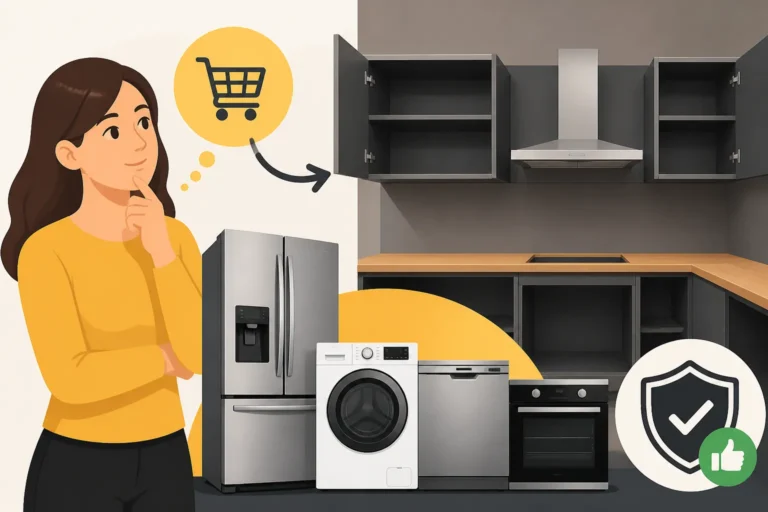
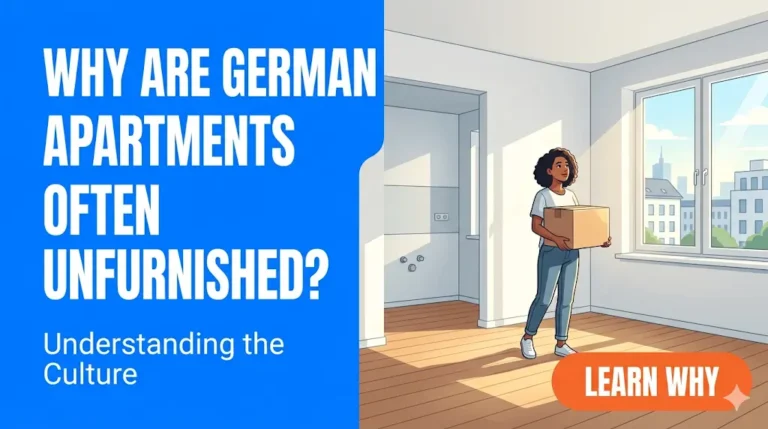
New goods bought just before the move are the classic grey area. The relief exists for belongings you have been living with, not for a pre-departure shopping trip. If you need a new fridge, buy it in Germany, especially since many German kitchens come empty and appliances are sized for local spaces anyway. Measuring your furniture against German flats before you ship is also worth doing, as explained in Will Your Furniture Fit a German Flat? Room Sizes, Doorways, and Ceiling Heights.
Business stock, professional equipment for commercial use and anything you plan to sell is not covered by household relief. A freelance photographer’s personal camera may be fine, but crates of stock for an online shop are not. Separate the two clearly on your inventory and ask your mover or a customs broker how to handle the business part.
Vehicles can qualify for relief if they meet the ownership and use conditions, but cars come with their own tasks: customs clearance, technical inspection, registration and insurance in Germany, and the UK-specific issue of a right-hand-drive car. Many British movers find it cheaper overall to sell the car in the UK. If you’re set on bringing it, read Shipping a Car to Germany: TUV, Registration, and Import Costs before you decide.
What a UK to Germany Removal Costs and Why
I can’t give you a reliable figure, and anyone who quotes one without seeing your home is guessing. Removal prices change with fuel, ferry costs, season and demand. What I can show you is how a quote is built, which tells you where the money goes and where it leaks.
Volume, Load Type and Route
The biggest factor is volume, usually measured in cubic metres. A studio flat with a bike and some books is very different from a three-bedroom semi in Surrey with a garage full of garden furniture. That’s why a proper survey, either a home visit or a video walkthrough, gives far more accurate quotes than an online form where you guess at “about twenty boxes”.
Load type is next. A dedicated lorry collects from your home and drives straight to your new address on your dates. It’s faster and more predictable, and usually costs more per cubic metre. Groupage shares space with other customers heading the same way. It’s often cheaper for small and medium moves, but it’s slower and the dates are less flexible. Route and distance matter too: Kent to Cologne is a much shorter trip than Aberdeen to Munich, and the crossing used affects cost and journey time.
Season counts more than people expect. Summer, the end of the school year and the end of each month are busy for removal companies, so prices tend to rise and availability drops. If your start date can move, ask movers whether shifting the collection by a week or two changes the price.
Hidden Line Items in German Moving Quotes
Two quotes that look similar can end up far apart once the extras are added. Watch for customs clearance charges on both sides, transit or bonded warehouse fees, ferry or tunnel surcharges, packing materials, and dismantling and reassembling furniture. On the German side, the costs that most often surprise people are building access charges.
Many German city streets don’t allow a lorry to park outside your door without a Halteverbotszone, a temporary no-parking zone that needs a permit from the local authority. If no permit is arranged, the crew may have to park far away and carry everything along the pavement, which takes longer and costs more. Old Altbau buildings often have no lift and narrow stairwells, and a fourth-floor flat in Leipzig without a lift is a very different job from a ground-floor flat in a new building. Some furniture may need to go up by external lift. The details are in Hidden Costs in German Moving Quotes: Halteverbotszone Permits and Access Fees and Delivery Day in a German Building: Stairs, Lifts, and Street Permits.
| Cost Driver | Effect on Your Quote | How to Keep It Down |
|---|---|---|
| Total volume in cubic metres | The largest single factor | Declutter and sell before the survey |
| Dedicated lorry or groupage | Dedicated costs more but is faster | Use groupage if your dates are flexible |
| Season and month-end dates | Busy periods push prices up | Ask for quotes on alternative dates |
| Customs handling on both sides | Fixed or per-consignment fees | Make sure it’s included, not added later |
| Bonded storage while waiting | Daily or weekly charges after a free period | Line up your documents before delivery |
| Halteverbotszone permit | Permit and setup cost, or long carries without one | Confirm who applies and who pays |
| Floors, stairs and lift access | More labour time | Give exact floor and lift details at survey |
| Packing service | Labour and materials | Pack non-fragile items yourself if allowed |
| Transit insurance | Usually based on declared value | Value items realistically, not too low |
To see how to read quotes line by line, see Comparing International Removal Quotes for Germany: Line Items That Hide Costs.
Insurance and Liability for Your Shipment
The removal company’s basic liability for loss or damage is usually limited and may not reflect what your belongings are worth. Most international movers offer extra transit insurance based on the value you declare, in pounds sterling or euros depending on the contract. Read what it covers: some policies don’t cover items you packed yourself, some exclude certain fragile goods, and almost all have strict rules on how quickly you must report damage after delivery.
Valuing your goods honestly protects you in two ways. Undervalue them and a claim will pay out little. Make sure the insurance valuation and the customs inventory don’t contradict each other, because a large gap between the two looks odd to everyone. For more on choosing cover and making a claim, read Moving Insurance for Shipments to Germany: Coverage, Valuation, and Claims.
Using Sirelo to Find a Mover Who Knows Post-Brexit Customs
Finding a removal company is the step that decides how the rest of the move goes. A good mover takes on customs, transit and timing. A poor one leaves them to you, often at the worst moment. This is where Sirelo has been really useful for many people I know who’ve made the UK to Germany move.
How Sirelo Works for a UK to Germany Move
Sirelo is a removal comparison platform. You fill in one request with your origin, destination, rough volume and dates, and it passes your details to several international removal companies that cover that route. Instead of spending evenings ringing firms in Manchester or Bristol, explaining your move over and over and finding that half of them don’t do cross-border work, you get offers from companies that have chosen to quote for exactly this job.
For a post-Brexit move, the main benefit is that you can compare movers who handle UK export declarations and German Übersiedlungsgut clearance as part of their service. You also get side-by-side quotes to compare, which makes it much easier to spot a figure that leaves out customs, storage or access charges. Sirelo also publishes reviews of removal companies and moving guides, so you can check a firm’s record before you let it near your furniture.
For how the request and quotes work and what is involved for you, check Sirelo’s own website, which explains the service directly. Use it the way an experienced mover would: send a detailed, honest request, then use the competing quotes to ask sharper questions. Don’t just pick the lowest number.
Questions to Ask Every Mover You Find Through Sirelo
Once offers come in through Sirelo, check each mover against the same set of questions. Ask the same ones every time so you can compare answers fairly.
- Do you prepare the UK export declaration and the German Übersiedlungsgut application yourselves, or do you use a third-party broker?
- Which German customs office will clear my goods, and will I or my representative need to attend?
- Is the quote for a dedicated lorry or groupage, and what are the realistic collection and delivery windows?
- What happens if my Meldebescheinigung is delayed, and how much warehouse time is included before charges start?
- Who applies for the Halteverbotszone at my German address, and is that cost in the quote?
- How do you handle stairs, missing lifts and furniture that won’t fit the stairwell?
- What does your basic liability cover, and what does your extra transit insurance cost and exclude?
- Which of my items, such as alcohol, food, plants or new electronics, will you refuse to carry or need to declare separately?
A mover who answers clearly and in detail is usually one who has done this many times. A mover who says “don’t worry, customs is easy” is a warning sign. In my experience the best companies are the ones who ask you more questions than you ask them.
Building Your Timeline Around the Quotes
Request quotes early. Surveys take time to arrange, customs documents take time to collect, and good movers book up in busy months. I’d send your Sirelo request as soon as you have a confirmed start date and an idea of where you’ll live, even before you have keys, so you can compare options without rushing.
A workable order of tasks:
- Confirm your German start date and target arrival week.
- Send a moving request through Sirelo and book surveys with the shortlisted movers.
- Declutter: sell, donate or recycle anything you won’t need or that won’t fit a German flat.
- Gather UK residence evidence and begin your inventory with values.
- Choose your mover and confirm dates, load type, insurance and customs handling in writing.
- Sign your German lease and book a Bürgeramt appointment for as soon as possible after arrival.
- Hand over all documents so the mover can prepare the export and relief paperwork.
- Pack, oversee collection and keep copies of everything signed.
- Register in Germany, send your Meldebescheinigung to the mover if requested, and confirm the delivery date.
- On delivery day, check items against the inventory and report any damage within the insurer’s deadline.
For a week-by-week version, An International Move to Germany: The 12-Week Planning Calendar lays the tasks out in detail.
The difference between a stressful and a smooth move from Britain to Germany is rarely luck. It comes from understanding the customs side, collecting your evidence early, and choosing a mover who treats post-Brexit paperwork as part of the job. If you’re starting now, send a request through Sirelo, compare what comes back against the checklist above, and choose the company that convinces you it knows the route.
Disclaimer
This article is for general informational purposes only and does not constitute professional advice. Laws, prices and regulations vary by location and change over time. Consult a qualified professional for guidance on your specific situation.