Moving to Germany from the US: Container Costs, Ports, and Timelines
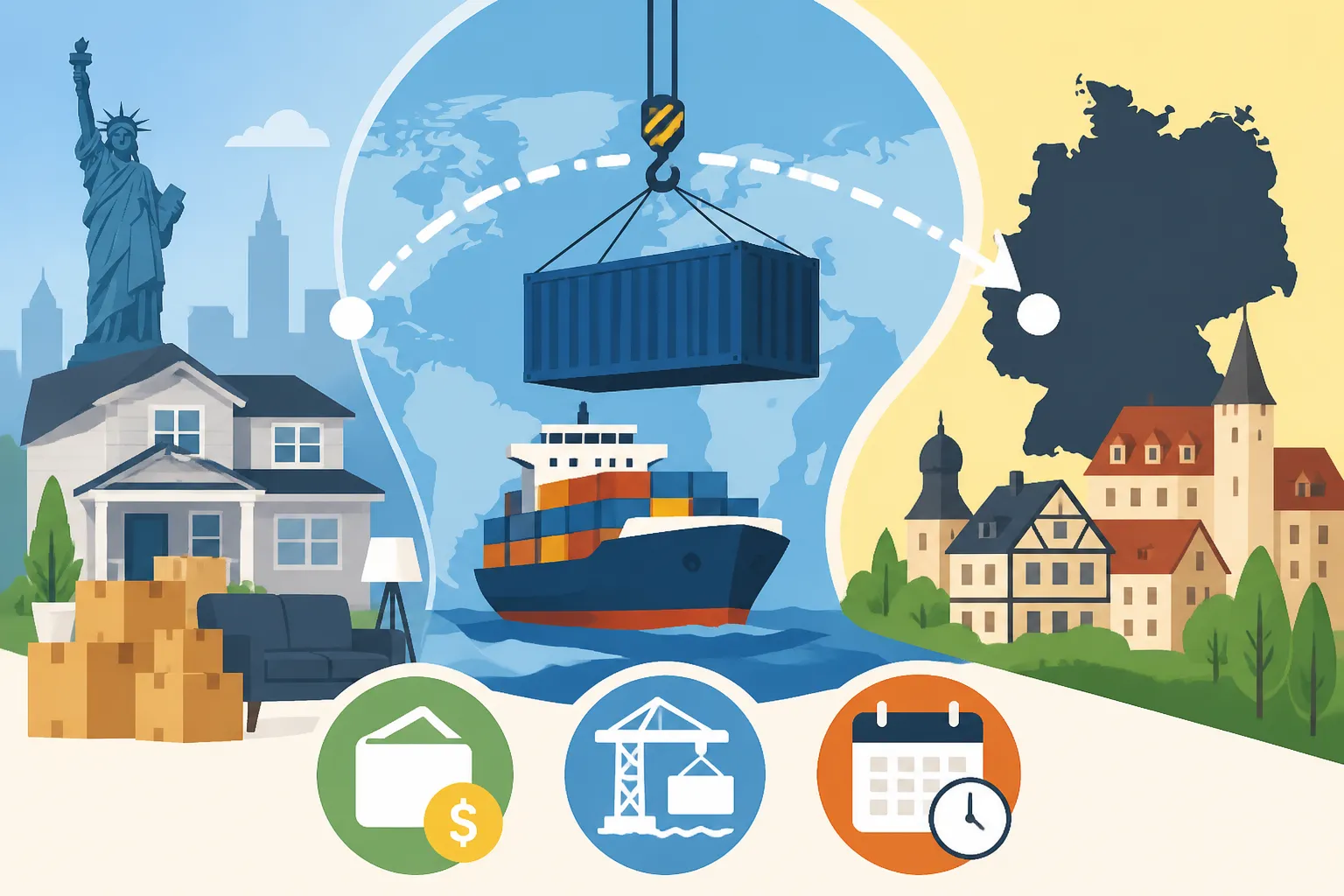
Oh, the thought of moving all your worldly possessions from the United States across the Atlantic to Germany! It's enough to make anyone's head spin. The sheer logistics, the hidden costs, the endless paperwork – it’s a colossal headache that many expats dread. But fear not, my friend, because this guide is here to untangle the complexities of container shipping, ports, and timelines, helping you make that monumental leap without losing your sanity (or your favorite armchair!).
Disclosure: This post may contain affiliate links. We may earn a commission at no extra cost to you if you make a purchase through these links. Read full disclosure.
The Initial Jolt: Why Moving from the US to Germany is More Than Just a Flight
When you decide to pack up your life in the US and set up shop in Germany, it's not just a matter of booking a flight and hoping for the best. This isn't a weekend trip to Cancun; it's a full-on international relocation that comes with its own unique set of challenges, both emotional and practical. Many folks underestimate just how much goes into this transition, and trust me, that's where the stress really begins to mount.
The Emotional Rollercoaster of International Relocation
Let's be real for a moment. Leaving your home country, even for an exciting new adventure in Germany, is an emotional marathon. You're saying goodbye to friends, family, familiar surroundings, and a way of life you've known for years, if not decades. It's perfectly normal to feel a whirlwind of emotions – excitement, anxiety, sadness, and even a touch of panic. I remember my own move, sitting in a half-empty apartment, surrounded by boxes, wondering if I was doing the right thing. It's a journey that tests your resilience, and having your possessions packed and ready to follow you brings a sense of comfort and continuity that a few suitcases simply can't provide. This is why getting your belongings over properly is so crucial; it's about more than just stuff, it's about bringing your personal anchors.
The emotional toll can manifest in many ways. You might find yourself snapping at loved ones, having trouble sleeping, or just feeling utterly overwhelmed by the sheer volume of tasks ahead. It's important to acknowledge these feelings and give yourself grace during this period. Remember that countless expats have gone through this very process, and you're not alone in feeling a bit unmoored. The anticipation of seeing your own bed or your favorite coffee mug again can be a powerful motivator through the bureaucratic maze.
Practical Hurdles: Beyond Packing a Suitcase
Beyond the emotional aspect, the practical hurdles are formidable. Unlike moving across state lines, an international move involves an entirely different level of logistical complexity. You're not just thinking about how to get your couch from point A to point B, but how to get it across an ocean, through customs, and then delivered to a country with different road systems, delivery protocols, and sometimes even apartment layouts. The planning alone can feel like a full-time job.
Consider the sheer volume of documentation required for international shipping: inventory lists, customs forms, insurance papers, visa documents. Each item needs to be meticulously accounted for, and any discrepancy can lead to significant delays or even extra costs at the German border. Then there's the question of what to even bring. Do you ship your entire household, or just the essentials? What about voltage differences for electronics? These are the kinds of questions that keep us expats up at night. This entire process truly highlights why a comprehensive approach, from understanding your visa requirements to finding an apartment, is paramount. If you haven't already, you should definitely check out a full Moving to Germany: Comprehensive Visa & Immigration Guide and also an Expat Health Checklist: Medical To-Dos When You Move to Germany to get all your bases covered before your container even leaves the port.
Understanding Your Shipping Options: From Boxes to Full Containers
When it comes to getting your belongings from the US to Germany, you've got a few main options, and choosing the right one really depends on how much stuff you have, how fast you need it, and what your budget looks like. It’s not a one-size-fits-all situation, and each method has its own quirks and considerations. You’re essentially weighing speed against cost and volume.
Less Than Container Load LCL: Sharing Space, Sharing Costs
If you're a single expat, a couple, or simply someone who lives a fairly minimalist lifestyle, Less Than Container Load (LCL) shipping might be your best friend. With LCL, your belongings don't get a whole container to themselves. Instead, your boxes and crated items share space with other people's shipments going to the same general region. Think of it like a carpool for your stuff. This is generally the most cost-effective option for smaller moves because you're only paying for the volume your items occupy within the container.
The downside? Because your goods are consolidated with others, the transit time can be a bit longer. The container needs to be filled before it can depart, and then, once it arrives in Germany, it needs to be deconsolidated at the port, which means unloading all the different shipments. This adds a few extra days or even a week to the overall timeline compared to having your own dedicated container. However, for many expats, the significant cost savings make the slightly longer wait entirely worth it. It’s a pragmatic choice for those who are fine with a bit more patience in exchange for a lighter financial load.
Full Container Load FCL: When You're Bringing Your Whole Life
Now, if you're moving a substantial household – say, a family with kids, or if you simply can't part with your antique dresser, your entire book collection, and your oversized sectional sofa – then a Full Container Load (FCL) is likely what you'll need. This means you get an exclusive container, typically a 20-foot or 40-foot unit, entirely dedicated to your belongings. No sharing, no waiting for others' shipments. It's all yours, from origin to destination.
The biggest advantage of FCL is speed and security. Since it's just your items, the container can be loaded and sealed at your US residence (or a local depot) and then sent directly to the port for shipment. Once it arrives in Germany, it's also processed more quickly because there's no need for deconsolidation. This often translates to faster transit times and a reduced risk of damage or loss, as your items aren't being moved around as much. The main drawback, as you might guess, is the cost. FCL is significantly more expensive than LCL because you're paying for the entire container, whether you fill it to the brim or not. But for those who value peace of mind and want their cherished possessions safely and swiftly delivered, FCL is often the preferred choice. For families, securing your own container and ensuring all your cherished items arrive together can be a huge relief, especially if you’re also navigating something like Children’s Healthcare: Pediatricians and Routine Check-ups (U-Untersuchungen).
Air Freight vs. Sea Freight: Speed vs. Savings
Beyond the container size, you also have a fundamental choice between air freight and sea freight. This is truly the "speed versus savings" dilemma of international moving.
Sea freight, which we've been discussing with LCL and FCL, is the most common method for household goods. It's incredibly cost-effective for large volumes because ships can carry an immense amount of cargo. However, it's also the slowest. Depending on the route and any potential delays, your sea shipment could take anywhere from 4 to 8 weeks, or even longer, to reach Germany. This means you'll need a solid plan for short-term accommodation when you first arrive, like finding Short-Term Accommodation in Germany: Options for Your First Weeks, and probably packing a few extra essentials in your checked luggage.
Air freight, on the other hand, is the sprinter in this race. If you absolutely need certain items quickly – perhaps essential work equipment, critical medication, or a few boxes of immediate necessities that you can't live without for weeks – air freight can get them to Germany in a matter of days or a couple of weeks. But be prepared for a substantial price tag. Air freight costs are significantly higher than sea freight, sometimes prohibitively so for anything more than a few essential boxes. Most expats opt for a combination: a small, urgent air freight shipment for immediate needs, and a larger, more economical sea freight shipment for the bulk of their belongings. It's all about balancing your impatience with your budget.
Decoding Container Shipping Costs from the US to Germany
Let's talk money, because for most of us, that's where the real anxiety sets in. Shipping your entire life across the ocean is not cheap, and understanding what goes into the final quote can feel like deciphering a secret code. You'll get various figures thrown at you – port fees, customs clearance, fuel surcharges – and it’s easy to feel lost. This is where a reliable platform like Sirelo really shines, helping you compare apples to apples when it comes to quotes from different moving companies.
Factors Influencing Your Moving Budget
Several key factors will directly impact how much you end up paying to move your container from the US to Germany:
- Volume and Weight: This is the most obvious one. The more stuff you have, the more space it takes up, and the heavier it is. Both LCL and FCL pricing are heavily dependent on these metrics. A 40-foot container will cost more than a 20-foot container, and a small LCL shipment will be cheaper than a large one. Decluttering ruthlessly before you even get a quote can save you a surprising amount of money. Do you really need that old college futon? Probably not.
- Distance and Route: The further your items need to travel, and the more complex the route, the higher the cost. Shipping from, say, New York to Hamburg might be more straightforward and thus cheaper than from a remote town in Oregon to a tiny village in Bavaria. Direct routes between major ports are generally more economical.
- Type of Service: Do you want a full-service, door-to-door move where the movers pack everything, load it, ship it, clear customs, and deliver it to your new home, even unpacking it for you? Or are you looking for a more budget-friendly port-to-port service where you handle the packing, delivery to the US port, and pickup from the German port? The level of service significantly impacts the price.
- Insurance: While it's an extra cost, shipping insurance is absolutely crucial for international moves. Imagine your precious belongings getting lost or damaged and having no recourse! The cost of insurance will vary based on the declared value of your goods. It’s a non-negotiable expense for peace of mind.
- Seasonality: Just like airline tickets, shipping prices can fluctuate with demand. Peak moving seasons (typically summer) might see higher rates. If you have flexibility, moving during off-peak times could offer some savings.
What's Included (and Excluded) in a Quote
When you receive a quote, it's imperative to understand exactly what it covers. A seemingly low quote might hide significant exclusions that will hit you with nasty surprises later. Here’s a breakdown of common inclusions and exclusions:
Common Inclusions:
- Packing and Wrapping: (If you choose a full-service option) Professional packing, using appropriate materials for international transit.
- Loading: Getting your packed items onto the truck and then into the container.
- Transportation to Port: Moving the container from your US residence or the depot to the departure port.
- Ocean Freight: The actual cost of shipping the container across the ocean.
- Port Handling Charges: Fees levied by the ports in both the US and Germany.
- Customs Clearance (Basic): The administrative work involved in getting your items through customs, usually excluding any duties or taxes.
- Transportation from Port to Destination: Moving the container from the German arrival port to your new address.
- Unloading: Getting your items off the truck at your destination.
Common Exclusions (and potential hidden costs):
- Customs Duties and Taxes: While personal effects can often be imported duty-free, certain new items or items not meeting specific criteria might incur charges. This is rarely included in the base quote.
- Storage Fees: If there are delays at either end, or if your new home isn't ready, storage fees can quickly add up.
- Special Handling Fees: For oversized, unusually heavy, or fragile items that require special crating or equipment.
- Shuttle Service: If a large container truck can't access your residence in either the US or Germany, a smaller shuttle truck might be needed, incurring extra cost.
- Dismantling/Reassembly: If you need furniture taken apart or put back together.
- Appliance Servicing: Special preparation for washing machines or refrigerators.
- Third-Party Services: Connecting/disconnecting utilities, cleaning services, etc.
- Quarantine/Inspection Fees: If customs decides your shipment needs an extra check (e.g., for pests).
- Marine Insurance: As mentioned, this is usually an add-on, but a vital one.
Always ask for a detailed breakdown and clarify any ambiguous terms. A good moving company, like those partnered with Sirelo, will be transparent about these potential additional costs. Remember, checking their policy on something like Moving Your Belongings to Germany: Tips for an Easy Move to Germany can clarify many of these points.
Making Sense of the Numbers: Sirelo's Role in Price Transparency
This is where a service like Sirelo becomes an absolute godsend. Instead of you having to contact dozens of individual moving companies, explain your specific needs repeatedly, and then try to compare vastly different quotes, Sirelo streamlines the process. They work with a network of vetted international movers who specialize in US-Germany routes.
Here's how Sirelo helps: You provide your moving details once, and Sirelo acts as a clearinghouse, fetching multiple, comparable quotes from reputable moving companies. This means you get to see a range of prices and services side-by-side, making it much easier to identify the best value and avoid those sneaky hidden fees. They emphasize transparency, which is exactly what you need when facing such a significant expense. By using Sirelo, you're not just getting quotes; you're gaining a partner in navigating the often-opaque world of international shipping, empowering you to make an informed decision that suits your budget and your peace of mind.
Key US and German Ports for International Moves
Your journey across the Atlantic will involve specific ports in both the United States and Germany. Knowing these hubs can give you a better understanding of the logistics, potential transit times, and even where your moving company might consolidate your LCL shipment. These are the arteries through which global trade, and your precious possessions, flow.
Major US Departure Ports
The US, with its vast coastline, has several major ports that handle international cargo destined for Europe. Your specific departure port will usually depend on your geographical location in the US and the logistics network of your chosen moving company.
- East Coast Ports: These are generally the busiest and most direct routes to Germany.
- New York/New Jersey (Port of New York and New Jersey): This is often the primary gateway for cargo from the Northeast and even parts of the Midwest. Its sheer volume means frequent sailings, which can sometimes translate to faster departures and competitive pricing.
- Baltimore (Port of Baltimore): A significant port for the Mid-Atlantic region, offering good connections.
- Savannah (Port of Savannah, Georgia): A major Southern port, serving the Southeast and offering efficient connections.
- West Coast Ports: For those moving from the Western US, shipments typically cross the country by rail or truck to an East Coast port before heading to Europe, or they might travel via the Panama Canal, which adds significant transit time.
- Los Angeles/Long Beach (Port of Los Angeles/Long Beach, California): The largest port complex in the US, primarily handling trans-Pacific trade, but with connections for European routes.
- Seattle/Tacoma (Northwest Seaport Alliance, Washington): Serves the Pacific Northwest, with similar considerations to LA/Long Beach for European shipments.
- Gulf Coast Ports:
- Houston (Port of Houston, Texas): A key port for the South Central US, particularly for cargo from Texas and surrounding states.
Your moving company, often found through services like Sirelo, will determine the most efficient departure port based on your US address and their established shipping routes.
Common German Arrival Ports and Inland Logistics
Germany also boasts highly efficient deep-water ports that are crucial for receiving international cargo. Once your container arrives, the inland logistics network takes over to get your belongings to your new German address.
- Hamburg (Port of Hamburg): Without a doubt, Hamburg is Germany's largest and busiest port, often referred to as "Germany's Gateway to the World." Most shipments from the US destined for Germany, and even much of Central and Eastern Europe, will arrive here. Its vast network of rail, road, and inland waterway connections ensures efficient onward transport to virtually any location in Germany.
- Bremerhaven (Ports of Bremen/Bremerhaven): Located slightly further north than Hamburg, Bremerhaven is another major hub for container traffic, particularly for vehicle imports. It also offers excellent rail and road links to the rest of Germany.
Once your container clears customs at one of these ports, it will be loaded onto a truck or train for its final leg of the journey. Germany's excellent infrastructure means that even if you're moving to a smaller town, the onward transport from the port is usually efficient. However, remember that navigating those narrower German streets or apartment block courtyards might require smaller shuttle vehicles for the final delivery, which is something to discuss with your moving company. Understanding the full scope of moving, even the little things like Understanding German Addresses: How to Read and Write Your Address Correctly, can save you a lot of hassle.
Navigating Customs at the Port of Entry
This is where things can get sticky if you're not prepared. German customs officials are thorough, and strict adherence to regulations is key. The good news is that for personal household goods, you can generally import them duty-free, provided you meet certain criteria.
The primary rule is that the goods must be for your personal use and must have been used by you for at least six months in your previous residence (the US, in this case). You must also intend to continue using them in Germany. New items, items bought for resale, or items clearly not for personal use might be subject to import duties and VAT (Value Added Tax). You will also need to be registered as a resident in Germany (Anmeldung) and have a valid residence permit when your goods arrive.
Key documents typically required by German customs include:
- Proof of residency: Your German residence permit (Aufenthaltstitel) and registration certificate (Anmeldebestätigung).
- Passport: A copy of your valid passport.
- Detailed Inventory List: A comprehensive, itemized list of everything in your shipment, ideally in English and German, with estimated values. This cannot be understated – be meticulous.
- Customs Declaration Form: Your moving company will help you with the specific forms, such as Form 0350 (Antrag auf Zollgutabfertigung).
- Proof of relocation: Your lease agreement in Germany, an employment contract, or university enrollment.
- Declaration of Value: For insurance purposes.
Any missing or incorrect documentation can lead to significant delays, storage fees, and potentially even confiscation of goods. This is precisely why using an experienced international moving company, ideally one you've found through Sirelo, is so valuable. They are experts in guiding you through the German customs labyrinth, ensuring all paperwork is correct and submitted on time.
The Timeline Tango: How Long Will Your Belongings Take?
One of the most frequently asked questions, and one that causes the most nail-biting, is "How long will it actually take for my stuff to arrive?" The answer, as with most things in international relocation, is "it depends." There are several variables at play, and it’s crucial to set realistic expectations to avoid unnecessary stress.
Estimating Sea Freight Durations
Sea freight is definitely the marathon, not the sprint. For a full container (FCL) or a less-than-container-load (LCL) shipment from the US to Germany, you're generally looking at a transit time of 4 to 8 weeks from the moment the container leaves the US port until it arrives at the German port. This is just the "port-to-port" time.
However, that's rarely the full picture. You need to factor in additional time for:
- Preparation and Loading: This could be a few days or a week, especially if you're opting for professional packing services.
- Consolidation (for LCL): If you're shipping LCL, your goods won't leave until the container is full, which can add anywhere from a few days to two weeks before the ship even departs.
- Customs Clearance in Germany: Once the ship arrives, your container needs to clear German customs, which can take several days to a week, assuming all paperwork is in order.
- Deconsolidation (for LCL): Again, for LCL, your goods need to be separated from other shipments, another few days.
- Final Delivery: The journey from the German port to your actual home can take a few more days, depending on distance and local logistics.
So, a realistic door-to-door estimate for sea freight is typically 6 to 12 weeks. While it might sound like a long time, it’s the most economical way to move your entire household. Plan accordingly by bringing essential items in your checked luggage or a small air freight shipment to tide you over. Think about how long you'll need to live without your Household Appliance Guide: Voltage, Adapters, and Buying Electronics in Germany or your beloved coffee maker!
Realistic Air Freight Schedules
If time is of the essence, air freight is your fastest option. For a small shipment of critical items, you can expect a transit time of 1 to 3 weeks from door-to-door. This typically includes:
- Packing and Preparation: Usually quite fast for smaller, urgent shipments.
- Air Cargo Transit: The actual flight time is often less than a day, but the cargo process at airports (loading, unloading) adds more.
- Customs Clearance: Generally quicker for air freight than sea freight due to different logistical processes, but still requires accurate documentation.
- Final Delivery: Once cleared, delivery to your door usually takes just a couple of days.
While much faster, remember the cost implications. Air freight is priced by weight and volume, and it adds up quickly. It's best reserved for crucial items that you absolutely cannot wait several weeks for. Many expats use it for a "first wave" of essentials, like important documents, work laptops, a few changes of clothes, and perhaps a small box of sentimental items.
Potential Delays and How to Prepare
It would be naïve to think that an international move always goes off without a hitch. Delays can and do happen. Here are some common culprits and how to mitigate them:
- Customs Issues: Incorrect or incomplete documentation, missing signatures, or undeclared items can cause significant holdups. Preparation: Work closely with your moving company (like those found via Sirelo) to ensure every piece of paperwork is perfect. Be honest and thorough with your inventory list.
- Weather Conditions: Severe storms at sea or adverse weather at ports can delay departures or arrivals. Preparation: There's little you can do about the weather, but understanding that it's a possibility can help manage expectations.
- Port Congestion: Busy shipping seasons, labor disputes, or unforeseen global events can lead to backlogs at ports. Preparation: Again, not much you can directly control, but a good moving company will keep you informed.
- Logistical Challenges: Issues with inland transport, truck availability, or even local regulations at your destination can cause minor delays. Preparation: Ensure your German address is fully accessible for delivery and communicate any potential access restrictions (e.g., narrow streets, no elevators) to your mover well in advance. Having a reliable point of contact in Germany, if possible, can also help.
The best way to prepare for potential delays is to:
- Pack a comprehensive "survival kit" in your checked luggage for the first few weeks.
- Have flexible accommodation plans upon arrival.
- Maintain open communication with your moving company.
- Get robust moving insurance.
Being prepared for the unexpected is part of the expat experience, and it's no different when it comes to your belongings.
Navigating German Customs and Import Regulations
Dealing with customs can feel like playing a high-stakes game of "Schnitzeljagd" (scavenger hunt) where the clues are in German and the consequences for getting it wrong are extra fees or endless delays. But it doesn't have to be a nightmare if you know the rules. German customs, while strict, are generally fair, especially when it comes to personal household goods.
Duty-Free Import for Personal Effects: The 12-Month Rule
The golden rule for importing your household goods from outside the EU into Germany without paying customs duties or VAT is the "Transfer of Residence" allowance. To qualify, you generally must meet these conditions:
- You must have resided outside the EU (e.g., in the US) for at least 12 consecutive months before moving your official residence to Germany.
- The goods must have been used by you in your previous residence for at least six months prior to the move. This means no brand-new items bought specifically for the move.
- You must intend to use the goods for the same purpose in your new home in Germany. They cannot be for resale or commercial purposes.
- You must import the goods within 12 months of establishing your ordinary residence in Germany (i.e., registering your address/Anmeldung). It's best to do it as soon as possible after arrival.
- You must officially transfer your normal place of residence to Germany.
This allowance covers most household furniture, clothing, personal belongings, and even vehicles (though special rules apply to cars, including separate registration processes). The idea is to allow you to bring your "life" with you without being taxed on items you already own. However, if you purchase new items just before your move, even if they're for personal use, they might be subject to duties and VAT. Make sure your moving company, like those partnered with Sirelo, helps you prepare all the necessary documentation to prove you meet these criteria. This will likely include your visa, rental contract, employment contract, and most importantly, your detailed inventory. For more on the specifics of avoiding taxes on your imported goods, look into Moving Your Belongings to Germany: Customs Duties and Tax-Free Imports for New Residents.
Prohibited and Restricted Items: What NOT to Pack
While most personal effects are fine, there are certain items that are either outright prohibited or heavily restricted when importing into Germany. Ignoring these rules can lead to confiscation, fines, or criminal charges.
Prohibited Items (Do NOT attempt to import):
- Illegal Drugs: Obvious, but worth stating.
- Firearms, Ammunition, Explosives: Unless you have very specific permits, these are a no-go. Even decorative weapons or replicas can cause issues.
- Pornographic or Extremist Material: Anything that violates German laws regarding hate speech or child exploitation.
- Counterfeit Goods: Knock-off designer items, pirated DVDs/software. German customs are very vigilant about intellectual property rights.
- Certain types of plants, seeds, and soil: To prevent the spread of diseases and pests.
Restricted Items (Require special permits, declarations, or have limits):
- Alcohol and Tobacco: While personal allowances exist for travelers, importing large quantities with your household goods is restricted and subject to duties.
- Pets: You can bring your furry friends, but they require a pet passport, vaccinations, microchip, and sometimes a health certificate. Make sure you fully understand Bringing Your Pet to Germany: Import Rules, Quarantine, and Vet Care.
- Vehicles (Cars, Motorcycles): While you can import them duty-free under the 12-month rule, they must meet German technical and safety standards (TÜV inspection) and will need to be registered in Germany, which is a separate, complex process.
- Medication: Prescription drugs for personal use are usually fine (bring a doctor's note), but large quantities or controlled substances will require special permits. Check with the German Federal Institute for Drugs and Medical Devices.
- Cultural Artifacts/Antiques: Items deemed to be cultural heritage may require export permits from the US and import permits for Germany.
- Certain types of food products: Meat, dairy, and some plant products from outside the EU are often restricted or prohibited. Stick to non-perishable, commercially packaged items if you must bring food.
When in doubt, always declare. It's far better to be transparent and ask for clarification than to face the consequences of undeclared or prohibited items. Your moving partner will be an invaluable resource in flagging potential issues during the packing process.
Required Documentation for a Smooth Customs Clearance
As discussed, paperwork is king. For a hassle-free customs clearance, ensure you have these documents meticulously prepared:
- Valid Passport and Visa/Residence Permit: Copies of all family members' passports and their German visa or residence permit (Aufenthaltstitel). This proves your legal right to reside in Germany.
- Anmeldebestätigung (Registration Certificate): This document, obtained when you register your address (Anmeldung) in Germany, is crucial proof that you have established residence. Without it, you cannot clear your goods as personal effects. Make sure this is high on your Germany Immigration Checklist: 10 Steps to Moving Legally.
- Rental Agreement (Mietvertrag) or Proof of Home Ownership in Germany: Demonstrates you have a place to live.
- Employment Contract or University Enrollment Certificate: Proves your reason for moving to Germany.
- Comprehensive Inventory List (Packliste): This needs to be detailed, ideally in both English and German, listing every box and major item. Include approximate values for insurance and customs purposes. Number your boxes and cross-reference them with your list.
- Declaration of Value for Insurance: Separate from the inventory, this is typically for your insurance provider.
- Customs Form 0350 (Antrag auf Zollgutabfertigung): Your moving company will provide this and help you fill it out. This is the formal application for duty-free import of personal effects.
- Power of Attorney (Vollmacht): If your moving company is handling the customs clearance on your behalf (which they almost certainly will and should).
Creating a separate binder or digital folder with all these critical documents, easily accessible, will save you immense stress. It’s not just about having them; it’s about having them organized and ready to present. A professional moving service found through Sirelo will guide you step-by-step through this process, ensuring you don't miss any critical piece of the puzzle.
Finding the Right Moving Partner: Why Sirelo is Your Best Bet
Choosing the right international moving company is arguably the most critical decision you'll make in this entire process. A great mover can make your transition feel seamless, handling all the complex logistics and paperwork with professional ease. A bad one, however, can turn your dream move into a living nightmare of lost items, hidden fees, and endless frustration. That's why I always recommend taking your time, doing your research, and leveraging tools that simplify this crucial choice.
The Value of Vetted Moving Companies
In the world of international relocation, reputation and experience are everything. You're entrusting your most cherished possessions – often your entire life's accumulation – to a company you might only interact with remotely at first. This is not the time to go with the cheapest, unknown bidder you found online. Vetted moving companies offer several key advantages:
- Expertise in International Regulations: They understand the intricacies of US export regulations and German import laws, including customs clearance, duty-free allowances, and prohibited items. This expertise is invaluable in avoiding delays and unexpected costs.
- Proper Packing and Handling: International moves require specialized packing techniques and materials to ensure items survive the long journey across the ocean, potential transhipments, and various climates. Vetted companies employ trained professionals who know how to protect your belongings.
- Reliable Logistics Networks: They have established relationships with shipping lines, port authorities, and local delivery agents in Germany, ensuring a smoother flow of your goods from door to door.
- Comprehensive Insurance Options: Reputable movers will offer robust insurance policies that protect your belongings against loss or damage during transit, giving you peace of mind.
- Customer Support and Communication: A good mover will keep you informed every step of the way, provide clear points of contact, and be responsive to your questions and concerns. This ongoing communication is crucial, especially when your life is literally on a boat somewhere in the Atlantic.
Ignoring these benefits in favor of a slightly lower price often backfires spectacularly. The stress and potential financial losses from a botched move far outweigh any initial savings.
Sirelo: Simplifying Your Search for Reliable Movers
This is where Sirelo truly shines as a hero for expats. They understand the headache of sifting through countless moving companies, trying to figure out which one is legitimate, reliable, and offers a fair price. Sirelo acts as a trusted intermediary, connecting you with pre-vetted, professional international moving companies that specialize in routes like US to Germany.
Here’s why using Sirelo is such a smart move:
- Access to Multiple Quotes: Instead of you spending hours contacting individual companies, Sirelo allows you to submit your moving details once and receive multiple, competitive quotes from different reputable movers. This saves an enormous amount of time and effort.
- Vetted and Reviewed Movers: Sirelo doesn't just list any company. They partner with movers who have a proven track record, positive customer reviews, and the necessary certifications for international shipping. This significantly reduces your risk of encountering a dodgy operator.
- Transparent Comparisons: They help you compare quotes side-by-side, often highlighting what's included and excluded, which brings much-needed clarity to pricing. This transparency empowers you to make an informed decision based on value, not just the lowest number.
- User Reviews and Ratings: Sirelo provides access to genuine customer reviews and ratings, giving you real-world insights into the experiences of others who have used these movers. It's like having a personal recommendation system for your international move.
By leveraging Sirelo, you gain peace of mind, knowing that you're choosing from a pool of qualified and trustworthy movers, and you're getting competitive pricing without the hidden hassles. It takes much of the guesswork and anxiety out of selecting a moving partner, letting you focus on other aspects of your big move, like getting your Health Insurance in Germany: Understanding Public vs Private Coverage sorted.
Beyond the Quote: Additional Support and Resources
A good moving company, especially those you'll find through Sirelo, offers more than just a shipping service. They become a vital resource throughout your relocation journey. Many will assign you a dedicated move coordinator who will be your point of contact, guiding you through each step of the process – from pre-move surveys and packing advice to customs documentation and delivery scheduling.
They can offer advice on specific challenges, such as how to deal with Unfurnished Apartments in Germany: Dealing with Kitchens and Light Fixtures if you're not bringing your own, or which items are simply not worth shipping due to voltage differences or high import duties. Some might even offer additional services like temporary storage in Germany if your new home isn't quite ready, or assistance with complex items like piano removals. Their extensive experience with countless expats means they've seen it all and can anticipate potential pitfalls before they become problems. This level of comprehensive support makes the often-daunting task of moving to Germany feel much more manageable.
Comparison of LCL vs FCL Shipping
To help you visualize the differences and decide which option might be best for your specific move, here’s a quick comparison of Less Than Container Load (LCL) and Full Container Load (FCL) shipping.
| Feature | Less Than Container Load (LCL) | Full Container Load (FCL) |
|---|---|---|
| Volume/Size | Smaller shipments, typically a few cubic meters of boxes and crated items. | Larger shipments, typically an entire household (20ft or 40ft container). |
| Cost | More cost-effective for smaller moves, as you only pay for the space you use. | More expensive overall, as you pay for the entire container, but potentially better value for very large moves. |
| Transit Time (Port-to-Port) | Typically 4-8 weeks. Can be longer due to consolidation/deconsolidation at ports. | Typically 3-6 weeks. Faster as there's no waiting for other shipments. |
| Door-to-Door Time | Approximately 6-12 weeks, including preparation, consolidation, customs, and final delivery. | Approximately 5-9 weeks, including preparation, customs, and final delivery. |
| Security/Handling | More handling involved as goods are consolidated and deconsolidated with other shipments. | Less handling, as the container is sealed with only your goods from origin to destination. Lower risk of damage/loss. |
| Flexibility | Good for those with fewer belongings, or a flexible timeline. | Ideal for larger households, or if you need your items quickly and securely. |
| Cost-Efficiency Point | Best for volumes under 15-20 cubic meters. | Best for volumes over 15-20 cubic meters, or if you prefer exclusive use. |
| Ideal For | Single expats, couples, small apartments, essential items. | Families, large homes, bringing a car, extensive furniture collections. |
Disclaimer
Please note that the information provided in this guide is for general informational purposes only and does not constitute legal, financial, or immigration advice. While every effort has been made to ensure accuracy, regulations and costs related to international shipping, customs, and residency in Germany can change frequently. It is always recommended to consult with professional moving companies (such as those vetted by Sirelo), customs brokers, and relevant German authorities (like the Ausländerbehörde or German Customs) for the most up-to-date and personalized advice regarding your specific situation. We are not responsible for any actions taken based on the information provided herein.