Unfurnished Apartments in Germany: Dealing with Kitchens and Light Fixtures
Walking into my first Berlin apartment to find naked wires dangling from the ceiling and a gaping hole where the oven should be nearly broke my spirit. As an expat, discovering that “unfurnished” in Germany literally means a bare concrete shell is a brutal culture shock. This guide explains how to conquer empty kitchens, safely install light fixtures, and survive the grueling move-in process.
Disclosure: This post may contain affiliate links. We may earn a commission at no extra cost to you if you make a purchase through these links. Read full disclosure.
The Shock of the German Unfurnished Apartment
When you finally conquer the brutal German housing market and sign a permanent lease, the victory is often short-lived. The moment the landlord hands you the keys and walks away, the reality of what you have just agreed to rent sets in. Unfurnished in Germany does not mean bringing your own couch; it means you are renting an empty architectural shell.
What Unfurnished Actually Means Here
In most countries, an unfurnished apartment still retains basic living infrastructure. You expect built-in closets in the bedroom, a mirrored cabinet in the bathroom, light fixtures on the ceilings, and a fully equipped kitchen. In Germany, an unfurnished flat without furnishings strips all of this away completely. You will walk into rooms that contain nothing but white walls and bare wooden or laminate floors.
There are absolutely no built-in closets. The bathroom might feature a toilet, a shower, and a sink, but the space beneath the sink will be empty, and there will be no mirror or light above it. Most terrifyingly, the ceiling of every room will feature a small hole with three bare electrical wires hanging from a plastic terminal. You are entirely responsible for turning this hollow echo chamber into a habitable home. This profound emptiness requires massive upfront capital and immense physical labor before you can even sleep your first night there.
Why the German Rental Market Works This Way
To an expat, stripping an apartment down to its bare wiring seems incredibly inefficient and hostile. However, this system makes perfect sense within the context of German rental culture. Germans do not treat renting as a temporary stepping stone to homeownership; renting is often a lifelong commitment. It is entirely normal for a German family to live in the exact same rented apartment for twenty or thirty years.
Because tenants stay for decades, they demand absolute control over their living environment. They do not want to be forced to use a landlord’s cheap, outdated oven, nor do they want to look at someone else’s choice of living room chandelier for the next twenty years. The empty shell model allows long-term tenants to invest in high-quality, customized interiors that perfectly match their tastes. Furthermore, under the German Civil Code, this system protects landlords from the relentless maintenance costs of repairing broken refrigerators or replacing worn-out cabinets.
The Temporary Housing Buffer
Attempting to navigate this brutal setup process during your first few months in the country is a strategic mistake. You are likely starting a new job, navigating a new language, and dealing with intense administrative onboarding. Trying to simultaneously coordinate kitchen deliveries and electrical wiring while sleeping on an air mattress will destroy your mental health.
Veteran expats universally recommend utilizing a temporary, furnished housing platform like Wunderflats for your first three to six months. Renting a Wunderflats apartment provides a vital soft landing. You walk into a fully functional home with a working kitchen, internet, and a bed. This buffer period allows you to comfortably pass your workplace probation period and take your time hunting for the perfect long-term unfurnished apartment. Crucially, a Wunderflats lease provides the legal paperwork you need to register your address immediately, unblocking your bank accounts and tax IDs.
Decoding the German Kitchen Dilemma
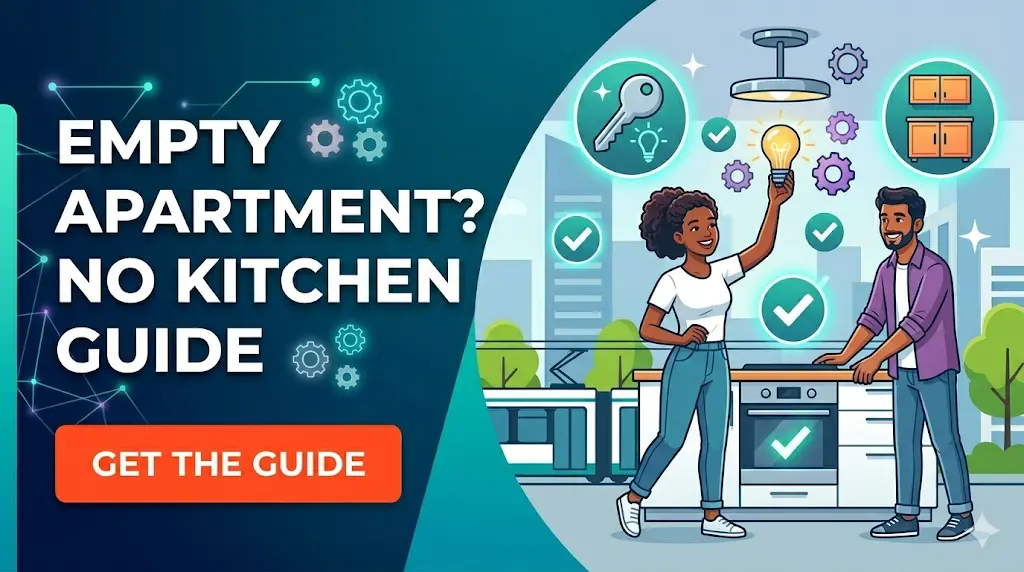
The single greatest logistical and financial hurdle of moving into a German apartment is the kitchen. The phrase fitted kitchen will dominate your apartment hunt. If a listing does not explicitly say that it comes with a fitted kitchen, you must prepare for a massive undertaking.
The Empty Room Reality
When you rent an apartment without a kitchen, the kitchen room is just another empty box. You will see bare water pipes jutting out of the wall, a massive heavy-duty electrical outlet for a stove, and standard electrical sockets. There is no sink, no countertop, no cabinets, no oven, and no refrigerator.
You are entirely responsible for buying these components, assembling the cabinets, cutting the heavy wooden countertops to fit the exact dimensions of the room, cutting a hole in that countertop for the sink, hooking up the plumbing, and wiring the high-voltage oven. If you measure the room incorrectly by a single centimeter, your expensive cabinets will not fit. This is not a casual weekend DIY project; it is serious carpentry and plumbing. If you make a mistake with the water pipes and cause a leak, you are financially liable for the water damage to the entire building. This is exactly why you must secure comprehensive liability coverage before you touch a wrench, a topic we cover deeply in Home Insurance in Germany: Do You Need Haftpflicht and Hausrat?.
Paying the Abschlag for an Existing Kitchen
Because building a kitchen from scratch is so agonizing, a unique sub-economy has evolved around the takeover fee. Often, the previous tenant who built the kitchen does not want to dismantle it and take it with them when they move out. Instead, they will offer to sell it to you, the incoming tenant.
This creates a high-stakes negotiation. If you are touring a highly desirable apartment in Berlin or Munich, the current tenant holds immense power. They will often tell the landlord they will only recommend the applicant who agrees to buy their kitchen. You might be asked to pay 3,000 euros for a five-year-old IKEA kitchen that is objectively worth 1,000 euros. While German tenant law dictates that takeover payments cannot legally exceed the current value of the items plus 50 percent, desperate expats frequently overpay just to secure the apartment and avoid the nightmare of building a kitchen themselves. Paying the fee is usually the smartest move, as it buys you instant peace of mind and allows you to cook dinner on day one.
Buying and Installing a New Kitchen
If the previous tenant took their kitchen, you must build a new one. You generally have two options: the budget route or a premium local kitchen studio.
If you go to a kitchen studio, they will send a professional to your apartment to laser-measure the room, design a custom layout, and have their team install it. However, this premium service often costs between 5,000 and 15,000 euros, and the lead time for delivery can be an astonishing 8 to 12 weeks. You will literally live without a kitchen for three months.
If you choose the budget route to save money, you use online planning tools, buy the flat-packed boxes, and assemble them yourself. While this cuts the cost in half, you still face massive hurdles. You must coordinate a heavy freight delivery, spend days assembling particle board, and hire an independent, certified electrician to connect the high-voltage stove, as doing this yourself is illegal and voids your home insurance. To budget for these massive upfront capital requirements, carefully review Cost of Living in Germany: Budgeting for Your First Year as an Expat.
Shedding Light on Bare Wires and Fixtures
Once you process the empty kitchen, you will look up and realize you are standing in total darkness. German apartments rarely provide ceiling light fixtures, leaving expats entirely responsible for illuminating their own homes.
The Hanging Wire Phenomenon
In the center of the ceiling in the bedroom, living room, and hallway, you will find a small plastic block hanging from a wire. This block is known as a luster terminal. It connects the live wires coming from the building’s electrical grid.
Landlords leave the apartment like this because, just like the kitchen, Germans prefer to choose their own light fixtures to match their specific interior design. When a tenant moves out, they unscrew their expensive chandelier, disconnect the wires, and leave the bare terminal for the next person. If you move in during the winter when the sun sets at 4:00 PM, you will literally be using your smartphone flashlight to unpack your boxes until you solve this problem.
How to Safely Install Light Fixtures
Installing a light fixture is a daunting task if you have no electrical experience. Before you touch anything, you must locate the breaker box, which is usually near the front door, and flip the switch corresponding to the specific room you are working in.
Never trust that the power is off simply by looking at the switch. You must use a cheap voltage tester screwdriver to touch the wires and verify the current is dead. You will typically deal with three wires: the brown or black wire (Phase/Live), the blue wire (Neutral), and the green/yellow striped wire (Earth/Ground). You must connect these to the corresponding slots on your new lamp’s terminal, screw the lamp bracket into the concrete ceiling using a power drill and dowels, and tuck the wires safely away. If this sounds terrifying, do not risk electrocution; hire a local handyman to do it for you.
Sourcing Lamps and Smart Lighting
Because you need light immediately, you cannot wait weeks for a boutique furniture store to deliver fixtures. Your first purchase on moving day should be cheap, temporary plastic lightbulb sockets that cost two euros each. You can wire these into the ceiling in five minutes just to get basic light bulbs working while you shop for permanent fixtures.
For your permanent lighting, bypassing the slow delivery times of local hardware stores is crucial. Utilizing Amazon Germany is the most efficient way to solve your lighting crisis. You can order sleek LED ceiling panels, modern pendant lights, or smart lighting systems on Amazon Germany and have them delivered directly to your empty apartment the very next day. Ordering your power drills, voltage testers, and stepladders via Amazon Germany simultaneously ensures you have all the necessary tools in hand before the weekend, allowing you to light up your home without agonizing delays.
Appliances and the Hidden Costs of Moving In
Beyond the kitchen cabinets and the ceiling lights, the functional heart of your apartment relies on heavy household appliances. Sourcing, moving, and connecting these machines is a logistical marathon.
Sourcing White Goods Fast
You will need a refrigerator, a washing machine, and potentially a standalone oven. In Germany, standard kitchen appliances are almost universally 60 centimeters wide, designed to fit perfectly under standard countertops.
If you buy a 70-kilogram washing machine in a physical electronics store, you face the immediate problem of getting it home. They offer delivery, but their schedules are often booked out for a week or two, and their delivery windows are notoriously vague.
Many expats prefer to streamline this process by purchasing their major appliances directly through Amazon Germany. The platform offers highly competitive pricing on major appliance brands. Crucially, heavy appliance delivery via Amazon Germany often includes the option to schedule a highly specific delivery time slot. You can even select an add-on service where the delivery team will carry the heavy washing machine up four flights of stairs and physically install it for you, sparing your back and preventing catastrophic damage to the stairwell walls.
The Washing Machine Hookup Nightmare
Washing machines in Germany are rarely placed in dedicated laundry rooms. Depending on the plumbing layout of your apartment, your washing machine will either go in the bathroom or be integrated under the counter in your newly built kitchen.
Hooking up a washing machine requires meticulous care. You must connect the fresh water intake hose to the wall valve and secure the grey corrugated drainage hose to the sink’s siphon. The absolute most critical component of this setup is the Aquastop hose. This is a specialized, double-walled safety hose with a mechanical shut-off valve. If the inner hose bursts, the Aquastop detects the leak and instantly cuts off the water supply at the tap.
If you use a cheap, standard rubber hose without an Aquastop and it bursts while you are at work, the water will run continuously for hours. It will flood your apartment, destroy the floors, and ruin the ceiling of the neighbor beneath you. If the insurance adjuster discovers you did not use an Aquastop hose, they can classify the flood as gross negligence and refuse to pay the claim, leaving you with a 20,000-euro repair bill. Never cut corners on plumbing safety.
Budgeting for the First Month
The hidden financial burden of moving into an unfurnished German apartment is staggering. You must have massive liquid cash reserves available the moment you sign the lease.
First, you must pay the security deposit, which is legally capped at three months of cold rent. Then, you must pay the first month’s rent upfront. If you add the cost of paying a kitchen takeover fee, buying ceiling lights, sourcing a washing machine, and buying tools, your initial move-in costs can easily spiral out of control.
| Move-In Expense Category | Estimated Cost Range | Description |
| Security Deposit | €2,000 – €4,500 | Three months cold rent (held in a protected account) |
| Kitchen Takeover | €800 – €3,000 | Paying the previous tenant for their installed kitchen |
| Basic Appliances | €600 – €1,200 | Fridge and washing machine (if not included in takeover) |
| Lighting and Installation | €200 – €400 | Ceiling fixtures, lightbulbs, power drill, step ladder |
| Total First Month Costs | €3,600 – €9,100 | Liquid cash needed before buying standard furniture |
This terrifying budget highlights exactly why transitioning through a furnished Wunderflats apartment is a powerful financial strategy. It allows you to build up your German savings account over a few months before executing the massive cash dump required for an unfurnished permanent lease.
Navigating Move Out Obligations
The cruelest irony of the German rental system is that the immense effort you exert to build your home must be completely undone when you decide to leave. The exit process is legally rigid and physically demanding.
Restoring the Apartment to Bare Walls
When your lease ends, you are legally bound by the cosmetic repairs clauses in your contract. German landlords expect you to hand back the apartment in the exact same pristine, empty condition you received it.
This means you must take down every single light fixture you installed and cap the wires safely with luster terminals. You must pull out every plastic dowel you drilled into the walls to hang your pictures and curtains. You must buy putty to fill every single hole, sand it flat, and then paint the walls. If you painted your bedroom a moody dark blue, you must paint it back to a neutral, landlord-approved white. If you fail to execute these repairs to a professional standard, the landlord will hire a painter and deduct the exorbitant labor costs directly from your hard-earned security deposit.
Selling Your Kitchen to the Next Tenant
The most stressful aspect of moving out is dealing with the fitted kitchen you spent so much money and effort installing. Unless you are moving to a similar apartment with the exact same dimensions (which is incredibly rare), you cannot take your custom-cut kitchen with you.
You must restart the takeover cycle, but this time, you are the seller. You will host viewings for prospective next tenants and attempt to negotiate a fair takeover price for the kitchen and any large appliances you do not want to move. If the landlord chooses an applicant who refuses to buy your kitchen, you are legally required to dismantle the entire kitchen, carry it down the stairs, and dispose of it at a local recycling center at your own expense.
Moving into an unfurnished German apartment is a grueling rite of passage that tests your patience, your budget, and your DIY skills. By leveraging temporary housing via Wunderflats to buy yourself time, utilizing Amazon Germany for rapid delivery of essential fixtures and appliances, and understanding the financial realities of the kitchen handover, you can transform an empty concrete shell into a comfortable, personalized European home.
References
Primary sources (official)
- Federal Ministry of Justice (Gesetze im Internet): The official English translation of the German Civil Code (BGB). Review Section 538 regarding wear and tear, and Section 548 regarding the limitation of compensation claims for alterations to the rental property.https://www.gesetze-im-internet.de/englisch_bgb/
- German Tenants’ Association (Deutscher Mieterbund – DMB): Official guidelines detailing the rights and obligations of tenants and landlords regarding the installation, maintenance, and takeover of fitted kitchens.https://www.mieterbund.de/mietrecht/mietrecht-a-z/einbaukueche.html
Other helpful sources
- Berlin Tenants’ Association (Berliner Mieterverein): Comprehensive legal breakdowns of what constitutes valid cosmetic repairs upon moving out, and how courts evaluate excessive distance payments for used furniture.https://www.berliner-mieterverein.de/magazin/online/mm1118/einbaukueche-welche-rechte-und-pflichten-haben-mieter-und-vermieter-111826.htm
Disclaimer
The information provided in this article is for general informational and educational purposes only and does not constitute professional legal, financial, or electrical advice. German tenancy laws, the strict legal interpretations of cosmetic repair clauses, and the regulations regarding handover limits are highly complex and subject to continuous updates by the Federal Court of Justice. While platforms can provide a furnished buffer, electrical work carries severe safety and liability risks. Always consult directly with your local Tenants’ Association, a certified electrician, or a legal professional regarding your specific lease agreements and property installations.