Home Insurance in Germany: Do You Need Haftpflicht and Hausrat?
Moving into your first German apartment and suddenly being told you are personally liable for dropping a rented sink or losing a building key is terrifying. I once panicked for a week after accidentally cracking my Munich landlord’s induction stove, convinced it would bankrupt me. This guide explains exactly what Haftpflicht and Hausrat insurance cover, which one is practically mandatory, and how to protect your finances.
Disclosure: This post may contain affiliate links. We may earn a commission at no extra cost to you if you make a purchase through these links. Read full disclosure.
The German Obsession with Insurance Explained
If you have spent more than a week in Germany, you have likely noticed that Germans insure absolutely everything. To an expat coming from a country where people only insure their cars and their lives, this cultural hyper-focus on liability can feel like an aggressive scam by the financial industry. However, once you understand the underlying legal framework of the country, this obsession makes complete and total sense.
Why Germany Runs on Liability
The root of this insurance culture lies deep within the German Civil Code, specifically Section 823 of the Bürgerliches Gesetzbuch (BGB). This law states that anyone who intentionally or negligently injures the life, body, health, freedom, property, or other rights of another person is obligated to compensate them for the resulting damage.
What makes this terrifying is that in Germany, your personal liability is theoretically unlimited. There is no maximum cap on what you can be sued for if you accidentally cause a catastrophic event. If you run a red light on your bicycle and cause a delivery truck to swerve and crash into a storefront, you are personally liable for the medical bills of the driver, the repair of the truck, the structural damage to the building, and the lost revenue of the store. Without insurance, the state can garnish your wages for the rest of your life to pay off this debt.
This legal reality breeds a culture of extreme risk aversion. Germans do not buy insurance because they expect bad things to happen; they buy it because the legal consequences of a simple accident are financially terminal. As an expat, adapting to this mindset is your first major step toward true cultural integration. You must stop viewing insurance as an optional luxury and start viewing it as a foundational requirement of your existence in Europe.
The Difference Between Haftpflicht and Hausrat
When expats start researching home insurance, they are immediately hit with two incredibly long, similar-sounding German words: Privathaftpflichtversicherung and Hausratversicherung. Mixing these up is the most common mistake newcomers make, and it can leave you dangerously exposed.
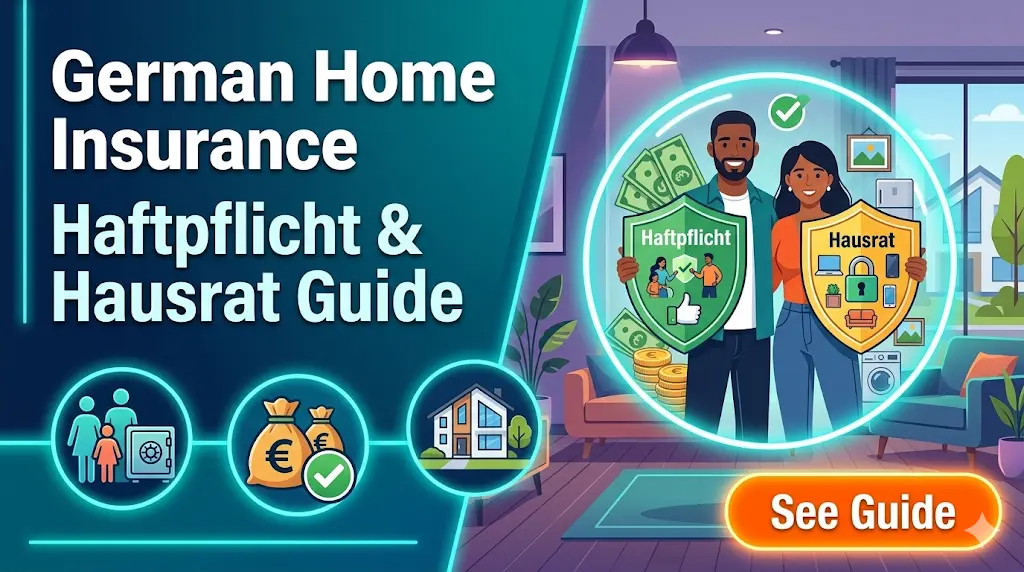
The easiest way to differentiate them is by asking whose property is being protected. Privathaftpflichtversicherung (Personal Liability Insurance) protects you when you damage other people’s property or cause bodily injury to someone else. Hausratversicherung (Home Contents Insurance) protects your own property inside your apartment from external threats like fire, storms, or burglars.
| Feature | Privathaftpflichtversicherung (Personal Liability) | Hausratversicherung (Home Contents) |
| Protects | Other people’s property and health | Your own personal belongings |
| Examples of Coverage | Spilling wine on a friend’s laptop, breaking a rented sink | Burglars steal your TV, a pipe bursts and ruins your sofa |
| Is it Mandatory? | Highly expected by landlords, de facto mandatory | Entirely optional, up to your discretion |
| Cost Estimate | €40 to €70 per year | €50 to €150 per year (based on apartment size) |
| Follows You | Yes, worldwide coverage usually included | Tied strictly to your registered German address |
If you accidentally flood your apartment by leaving the bathtub running, your Haftpflicht will pay to repair the landlord’s ruined hardwood floors and the ceiling of the neighbor living below you. However, it will not pay a single cent to replace your own ruined rugs or furniture. To replace your own things, you would need Hausrat. Understanding this vital split is the key to evaluating what coverage you actually need when budgeting your move, a topic we cover deeply in Cost of Living in Germany: Budgeting for Your First Year as an Expat.
Privathaftpflichtversicherung: The Absolute Must-Have
If you only take one piece of advice from this entire guide, let it be this: you must buy personal liability insurance immediately. It is the cheapest, most powerful financial shield you can own in Germany, and operating without it is an unnecessary gamble.
What Personal Liability Insurance Actually Covers
A standard Privathaftpflichtversicherung policy is incredibly broad. It covers three main pillars of damage: bodily injury (Personenschäden), property damage (Sachschäden), and resulting financial losses (Vermögensschäden). The coverage limits are typically massive, often starting at 10 million euros and going up to 50 million euros, giving you an idea of how expensive accidents here can be.
Property damage is the most common claim. If you are visiting a friend’s apartment and accidentally knock their expensive camera off the table, your liability insurance pays to replace it. If you are renting an apartment and you accidentally drop a heavy glass bottle in the bathroom, cracking the landlord’s ceramic sink, your insurance covers the repair.
Bodily injury coverage is where the insurance truly saves you from bankruptcy. If you are skiing in the Bavarian Alps and accidentally collide with another skier, causing them to break their leg, your policy covers their hospital bills, their rehabilitation, and their lost wages while they cannot work. This coverage applies to almost all casual daily activities, though it excludes damages caused while driving a car, which requires separate, mandatory vehicle insurance.
The Nightmare Scenarios You Are Protecting Against
For expats, the most terrifying—and common—liability claim involves the loss of keys (Schlüsselverlust). Most German apartment buildings use a highly complex, centralized master key system (Schließanlage). Your single apartment key likely opens your front door, the building’s main entrance, the basement, and the trash room.
If you lose this master key, the building management cannot simply cut a new one at the local hardware store. Because the building’s security is now compromised, the landlord has the legal right to replace the locks for the entire building and issue brand-new keys to every single tenant. The bill for replacing a centralized locking system in a 20-unit building can easily exceed 5,000 euros. If you do not have liability insurance that explicitly includes Schlüsselverlust, you are paying that bill out of your own pocket.
Another frequent expat nightmare is water damage. German washing machines are often hooked up in the kitchen or bathroom by the tenants themselves. If a hose slips while you are at work and floods your apartment, the water will inevitably leak through the floor and destroy the ceiling of the apartment below. The costs to strip the floors, run industrial dehumidifiers for weeks, and repaint the downstairs apartment are astronomical. Good liability insurance absorbs this entirely.
Why Landlords and Platforms Demand It
Technically, the German government does not legally mandate that you hold private liability insurance. However, the private rental market has made it a de facto requirement. You will find it nearly impossible to sign a standard lease without providing proof of coverage.
When you apply for an unfurnished apartment, the landlord will almost always ask for a copy of your liability insurance policy alongside your income proofs and credit report. Landlords know that accidents happen, and they want absolute assurance that if you accidentally burn down the kitchen or ruin the parquet flooring, a multi-billion-euro insurance company will be paying for the repairs, not an expat who might simply flee the country to avoid the debt.
This requirement applies even to temporary housing. If you are utilizing a platform like Wunderflats to secure a furnished apartment for your first few months, you are living surrounded by someone else’s expensive furniture and appliances. While Wunderflats makes securing a lease as an expat incredibly smooth, having your own liability insurance ensures that if you accidentally spill red wine on the owner’s designer sofa, you simply file a claim rather than losing your massive safety deposit.
Hausratversicherung: Protecting Your Personal Property
While liability insurance protects you from the outside world, Hausratversicherung looks inward. It is a protective bubble around your physical possessions, but whether it is worth the monthly premium depends entirely on your lifestyle and your net worth.
What Home Contents Insurance Covers
The easiest way to conceptualize Hausratversicherung is to imagine taking your apartment, turning it upside down, and shaking it. Everything that falls out—your clothes, your laptop, your television, your furniture, your rugs, and your jewelry—is considered “Hausrat” (home contents).
This insurance protects your belongings against a highly specific list of external threats. A standard policy covers damage caused by fire, lightning strikes, explosions, burglary, robbery, vandalism after a break-in, storm damage, hail, and tap water leaks (like a burst pipe in the wall). If a pipe bursts and ruins your expensive mattress, the insurance pays for a replacement. If a burglar kicks in your door and steals your laptop, the insurance compensates you.
It is crucial to understand what it does not cover. It does not cover you if you clumsily drop your own phone on the floor. It does not cover damage from natural disasters like floods, earthquakes, or heavy rain runoff unless you explicitly purchase an expensive add-on called Elementarschadenversicherung (natural hazards insurance). If you are looking to replace stolen or damaged electronics quickly after a claim is approved, utilizing Amazon Germany ensures you get next-day delivery on laptops, monitors, and appliances, allowing you to submit the digital invoices directly back to your claims adjuster.
Valuing Your Belongings Correctly
If you decide to purchase Hausratversicherung, the biggest trap is the concept of Unterversicherung (underinsurance). When you sign up, the insurance company will ask you to estimate the total replacement value of everything you own. Expats often lowball this number to get a cheaper monthly premium, thinking, “My stuff is only worth about 10,000 euros.”
If you insure your contents for 10,000 euros, but the insurance adjuster determines that the actual cost to replace everything in your apartment brand new is 20,000 euros, you are 50% underinsured. If a fire destroys half your apartment causing 10,000 euros in damage, the insurance company will apply that 50% penalty to your claim. They will only pay you 5,000 euros, leaving you to cover the rest.
To prevent this, German insurers use a standard calculation: they multiply your apartment’s square footage by a flat rate, usually 650 euros per square meter. If you live in a 60-square-meter apartment, they will automatically set your coverage limit to 39,000 euros. If you agree to this default calculation, the insurer usually waives the right to claim underinsurance, meaning they will pay out your claims fully without arguing about the total value of your home. It is also wise to keep a digital folder of receipts for all high-value purchases, like expensive coffee machines or televisions bought on Amazon Germany, as adjusters will ask for proof of ownership during a burglary claim.
Is Hausratversicherung Worth the Cost?
Unlike liability insurance, Hausratversicherung is truly optional. Determining if it is worth the cost requires an honest assessment of what you own and how easily you could replace it with your current savings.
If you are a student or a young professional living in a furnished apartment you found on Wunderflats, you probably do not need home contents insurance. The bed, the couch, and the wardrobe belong to the landlord (and if you break them, your Haftpflicht covers it). Your only personal contents are a suitcase full of clothes and a laptop. If your apartment was robbed, replacing those items out of pocket would be painful, but likely not bankrupting.
Conversely, if you just moved your entire family to Germany, signed an empty, unfurnished lease, and spent 20,000 euros buying a custom fitted kitchen, a massive smart TV, and designer furniture, Hausratversicherung is a very smart investment. For 50 to 100 euros a year, you guarantee that a devastating apartment fire will not wipe out your life savings. If you are trying to calculate the upfront costs of moving your family, be sure to review Moving to Germany Checklist: Step-by-Step Expat Guide.
Special Coverage Scenarios and Expat Pitfalls
German insurance policies are incredibly literal. They cover exactly what is written in the contract and absolutely nothing else. Expats frequently get their claims denied because they assume certain items or scenarios are included by default.
Glass Insurance (Glasversicherung)
One of the most surprising exclusions in a standard Hausratversicherung policy is glass. If a severe draft slams your living room door shut and shatters the massive glass pane, or if you accidentally drop a heavy pot and shatter your ceramic induction hob in the kitchen, your standard home contents insurance will usually reject the claim.
To cover these specific items, you must purchase a separate add-on module known as Glasversicherung (glass insurance). This add-on specifically covers the breakage of building glass (windows, glass doors, winter gardens) and furniture glass (mirrors, glass tables, ceramic hobs, and large aquariums).
Should you buy it? For most expats living in standard apartments, it is an unnecessary upsell. The cost of replacing a standard window pane is often lower than the cumulative cost of years of glass insurance premiums. However, if you rent an ultra-modern apartment with floor-to-ceiling panoramic windows, or if you own an expensive ceramic stove top that is prone to cracking, spending the extra 20 euros a year for the glass add-on provides significant peace of mind.
Bicycle Theft Coverage (Fahrradklausel)
Germany is a cycling nation, and as an expat, buying a bike is usually one of your first local investments. Unfortunately, bicycle theft is rampant in every major German city. Your standard Hausratversicherung does cover your bicycle against theft, but only under a very strict condition: the bike must be stolen from inside your locked apartment or your private locked basement cellar.
If you lock your bike to a street lamp outside a café or leave it in the building’s communal courtyard and it gets stolen, a standard policy will pay nothing. To protect your bike while you are actually using it, you must add a Fahrradklausel (bicycle clause) to your home contents policy.
This add-on extends your theft coverage to the streets, operating 24/7. However, the insurance company will require strict proof that you acted responsibly. You must lock the bike to an immovable object (like a specialized bike rack or a heavy fence) using a high-quality, approved lock. Buying a heavy-duty Abus or Kryptonite U-lock from Amazon Germany and saving the receipt is the best way to prove to the insurance adjuster that you took adequate security measures. If your bike is stolen and you only used a cheap wire lock, the claim will be denied for negligence.
Decoding the Fine Print and Deductibles
The most vital phrase you must look for when signing any German insurance contract is Grobe Fahrlässigkeit (gross negligence). You must ensure your policy explicitly states that it covers damages caused by gross negligence up to 100%.
Simple negligence is accidentally knocking over a candle. Gross negligence is lighting a candle, leaving the apartment to go to the supermarket, and coming back to a burning living room. Another classic example of gross negligence is turning on your washing machine and leaving the house for the afternoon, only for the hose to burst and flood the building. If your policy excludes gross negligence, the insurer will aggressively investigate your claim and refuse to pay if they determine you acted recklessly. Always pay the slightly higher premium to include this waiver.
Additionally, pay attention to the Selbstbeteiligung (deductible). This is the amount you agree to pay out of pocket before the insurance kicks in. Choosing a policy with a 150-euro deductible will significantly lower your monthly premium, but it means you cannot file claims for small, minor damages. For expats who want a “set it and forget it” safety net, a zero-deductible policy is usually the least stressful option.
How to Choose and Manage Your Policies
Navigating the German insurance market is daunting, especially when every contract is a 40-page document written in dense, legalistic German (Beamtendeutsch). Managing these policies correctly ensures they actually work when you need them.
Transitioning Policies When Moving
Your insurance policies are deeply tied to your residential address. If you move from a temporary furnished flat you found on Wunderflats into a permanent, unfurnished apartment across town, you cannot simply pack your bags and assume your insurance follows you automatically.
You must formally inform your insurance provider of your Ummeldung (change of address). For your personal liability insurance, the transition is seamless; the policy simply updates to your new address. However, for your home contents insurance, moving triggers a recalculation. If you move from a 40-square-meter studio to an 80-square-meter apartment, the value of your Hausrat has theoretically doubled. You must update the square footage with the insurer, which will increase your premium. If you fail to notify them of the move, your new apartment may be completely uninsured, or you may face massive underinsurance penalties if a claim occurs.
Leaving Germany and Sonderkündigungsrecht
German contracts are infamous for their brutal cancellation periods. Standard insurance contracts automatically renew every year, and you usually must submit a formal cancellation letter at least three months before the renewal date. If you miss this deadline by a single day, you are locked in for another full year.
However, expats have a powerful legal loophole. If you are permanently leaving Germany and moving back to your home country, you are granted a Sonderkündigungsrecht (special right of termination). You do not have to wait for the annual renewal date. The moment you officially deregister your address at the local citizens office (the Abmeldung), you can send that deregistration certificate to your insurance company. They are legally required to cancel your policy immediately and refund you any pre-paid premiums for the remainder of the year.
Bundling Insurances for Better Rates
When you are setting up your life in Germany, the easiest way to manage the chaos is to consolidate. Many major German insurance providers offer significant discounts if you bundle your Privathaftpflichtversicherung and your Hausratversicherung together.
While you can navigate standard comparison sites like Check24, these portals are entirely in German and often push policies with hidden deductibles. For expats who do not speak fluent German, prioritizing English-first, digital insurance providers is a massive advantage. Companies that cater to expats provide policy documents, apps, and customer support entirely in English, which is invaluable when you are panicking over a burst pipe at 2:00 AM. Investing time into setting up your financial and insurance foundations correctly allows you to stop worrying about liability and start actually enjoying your new life in Europe.
References
Primary sources (official)
- Federal Ministry of Justice (Gesetze im Internet): The official English translation of the German Civil Code (Bürgerliches Gesetzbuch). Review Section 823 detailing the legal mandate for liability for damages.https://www.gesetze-im-internet.de/englisch_bgb/
- Federal Financial Supervisory Authority (BaFin): The official regulatory body’s consumer guide explaining the scope, requirements, and cancellation periods of private liability insurance in Germany.https://www.bafin.de/DE/Verbraucher/Versicherung/Produkte/Haftpflicht/haftpflichtversicherung_node.html
Other helpful sources
- German Insurance Association (GDV): Official industry statistics and consumer guides defining exactly what perils are covered under standard German home contents insurance (Hausratversicherung).https://www.gdv.de/gdv/themen/wohnen/hausratversicherung
Disclaimer
The information provided in this article is for general informational and educational purposes only and does not constitute professional financial or legal advice. German insurance regulations, the exact definitions of gross negligence, and the statutory requirements of the BGB are highly complex and subject to strict legal interpretations by claims adjusters. While platforms like Wunderflats can streamline your housing search and Feather Insurance can facilitate replacing goods and securing your property, the core liability agreements require careful review. Always read the specific terms and conditions (Allgemeine Versicherungsbedingungen) of your policy and consult directly with a certified German insurance broker (Versicherungsmakler) to ensure your coverage matches your specific lifestyle and risks.