Short-Term Accommodation in Germany: Options for Your First Weeks
Arriving in Germany only to realize you cannot open a bank account or sign a mobile contract because you lack a registered address is a bureaucratic nightmare. I spent my first ten days in a cramped hostel bed because I vastly underestimated how competitive the “soft landing” market really is. This guide solves your immediate housing crisis by detailing the best short-term accommodation options that actually allow for legal registration.
Disclosure: This post may contain affiliate links. We may earn a commission at no extra cost to you if you make a purchase through these links. Read full disclosure.
The Administrative Trap: Why Short-Term Housing is Non-Negotiable
The Anmeldung Catch-22
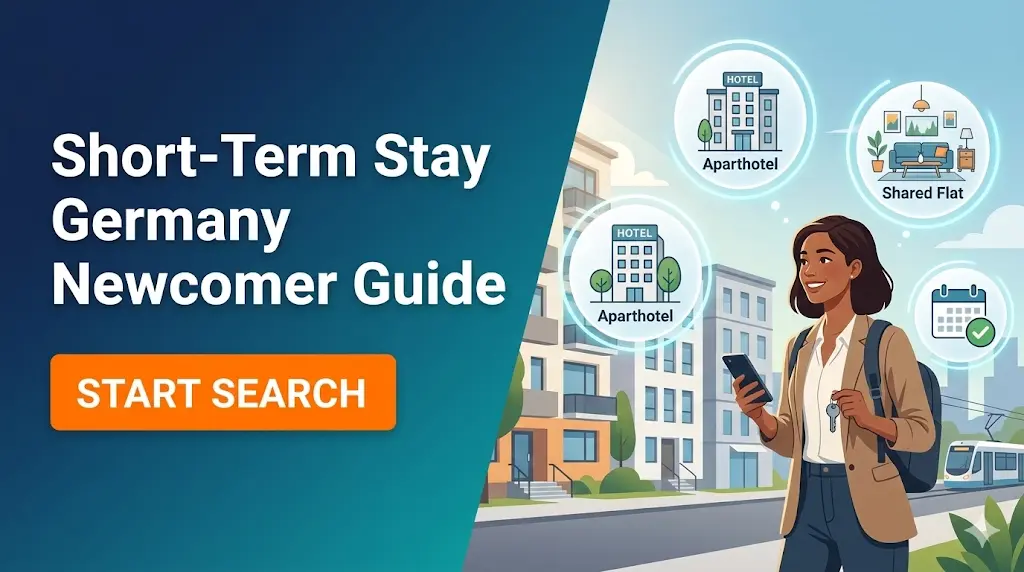
In Germany, everything orbits around the Anmeldung, or address registration. You are legally required to register your residence within two weeks of moving in, but you cannot register without a Wohnungsgeberbestätigung (landlord confirmation form). Most hotels and standard Airbnbs will not provide this document, leaving you in a legal limbo where you cannot receive a tax ID or even a SIM card. Finding short-term accommodation in Germany is essential when you first arrive. Common options include hotels, hostels, serviced apartments, and temporary rentals through platforms like Airbnb.
Studentenwohnheime may offer interim stays for students. Many newcomers also use furnished sublets or shared flats (WGs), which are often more affordable. Booking in advance is recommended, especially in major cities where demand is high. Ensure the place allows address registration (Anmeldung) if needed. Short-term stays typically range from a few days to several weeks, giving you time to search for permanent housing. Comparing prices, checking reviews, and confirming contract terms can help avoid unexpected issues. Always verify deposit requirements, cancellation policies, and included utilities before booking to prevent misunderstandings and additional unexpected costs later.
I remember the sheer panic of realizing that my “convenient” hotel stay was actually preventing me from starting my job because HR needed my tax ID, which only comes after registration. To avoid this, you must prioritize housing that explicitly offers registration rights. If you are confused about the specific terminology used by landlords, reviewing German Immigration Terms Explained: A Glossary for Newcomers will help you navigate the initial paperwork mountain.
The Soft Landing Strategy
A “soft landing” refers to a furnished, all-inclusive apartment that serves as a bridge between your home country and your permanent German residence. These spaces are designed for expats and professionals, often featuring English-speaking support and streamlined contracts. Using a provider like Wunderflats is often the smartest move for newcomers because they specialize in medium-term stays that include the legal registration documents you desperately need.
Remote apartment hunting from abroad is notoriously difficult and risky. Landlords for permanent, unfurnished flats almost never rent to someone they haven’t met in person, and they certainly won’t rent to someone without a German credit score (Schufa). A soft landing gives you the 1–3 months of breathing room required to attend viewings and build a local profile.
By securing a place through Wunderflats, you essentially buy yourself the time to find the neighborhood that fits your lifestyle. Instead of rushing into a bad long-term contract in a district you hate, you can explore the city properly. This strategic pause is a hallmark of any successful move, as detailed in our Where to Live in Germany: City and Region Guide for Foreigners.
Avoiding the Scams of Remote Hunting
The German housing market is a playground for scammers targeting desperate expats. If you see a beautiful, centrally located apartment for a suspiciously low price on social media, it is almost certainly a trap. Scammers often claim they are “out of the country” and ask for a deposit via Western Union before showing the flat.
I have seen countless newcomers lose thousands of Euros before they even landed. This is why using verified platforms like Wunderflats is crucial; they vet the listings and handle the payment securely, ensuring the apartment actually exists and matches the photos. Never send money to a private individual you found on a classifieds site until you have the keys in your hand and a signed contract.
Serviced Apartments and Furnished Rentals: The Expat Gold Standard
Why Furnished Apartments Beat Hotels
While a hotel offers comfort, a furnished apartment offers a life. Having a kitchen, a laundry machine, and a dedicated workspace is essential when you are spending eight hours a day scouring housing portals. Hotels also lack the “home” feel that keeps your mental health stable during the high-stress transition period.
In my experience, the ability to cook a simple meal after a long day of bureau visits is priceless. Furnished rentals also allow you to receive mail and packages reliably. If you find your temporary kitchen is missing a specific tool or you need a better desk lamp, you can easily order essentials from Amazon Germany to be delivered directly to your door within a day or two. This level of autonomy is something you simply won’t get in a guest house or pension.
Furthermore, furnished apartments are usually much more cost-effective for stays longer than two weeks. When you factor in the cost of eating out every meal and paying for hotel laundry services, the “expensive” furnished flat suddenly looks like a bargain. For a deeper look at the trade-offs, see our comparison of Furnished vs Unfurnished Apartments in Germany: Pros and Cons.
Navigating All-Inclusive Rents
In Germany, short-term furnished rentals usually come with a “warm” rent (Warmmiete), which means electricity, heating, water, and often high-speed internet are included in one flat monthly fee. This is a massive relief for newcomers who don’t yet have the language skills or the bank account required to set up individual utility contracts.
Standard long-term contracts can be incredibly complex regarding utility “pre-payments” and end-of-year reconciliations. By choosing a furnished stay through Wunderflats, you bypass this complexity.
Be sure to clarify if the Rundfunkbeitrag (TV/radio tax) is included in your short-term rent. Every household in Germany must pay this, and even temporary residents are liable. If your provider hasn’t covered it, you will eventually receive a letter from the “Beitragsservice.”
The Role of Professional Providers
Professional relocation housing providers are the “easy mode” of moving to Germany. They understand that you don’t yet have a Schufa record or three months of German payslips. They accept international employment contracts and credit cards, making the barrier to entry much lower than the traditional rental market.
I often recommend these services because they act as a bridge. They provide the necessary paperwork for your Anmeldung (Address Registration) vs Visa: Why Both Are Needed in Germany process, which then allows you to get the tax ID you need to receive your first salary. It is a virtuous cycle that starts with choosing the right housing partner.
If you are staying in a professional serviced apartment, you can also trust that the furniture and appliances will be in good working order. If something breaks, there is an English-speaking maintenance team to fix it. This eliminates the “nightmare landlord” scenario that can ruin your first month in the country. If you do find you need small additions to the flat, like a cozy throw blanket or a better coffee maker, Amazon Germany is the most efficient way to personalize your temporary sanctuary.
Shared Living and Student Options for Newcomers
The WG Experience (Wohngemeinschaft)
For younger expats and those on a budget, a Wohngemeinschaft (WG) is a very common way to live. This is a shared flat where you have your own bedroom but share the kitchen and bathroom with roommates. It is often the fastest way to build a social circle and learn the “unwritten rules” of the city from locals.
However, finding a WG from abroad is notoriously difficult. Roommates usually want to “cast” you in person to ensure the “vibe” is right. I once applied for twenty WGs in Berlin and only got one interview. WGs are also hit-or-miss regarding Anmeldung; if the main tenant doesn’t have permission to sublet, you might find yourself living there “off the record,” which is useless for your legal paperwork.
If you go the WG route, be prepared for German Culture & Etiquette: A Guide to Social Life and Customs. There are strict rules about cleaning schedules (Putzplan) and quiet hours. If you need to pick up shared household items like a new toaster or bulk cleaning supplies to stay on your roommates’ good side, Amazon Germany is your best friend for quick, discreet delivery.
Student Dorms and Private Halls
If you are coming to Germany to study, the Studierendenwerk (Student Union) dorms are the most affordable short-term and long-term option. However, the waiting lists can be years long in cities like Munich or Cologne. Many students end up in private student halls, which are essentially upmarket “dorm-style” serviced apartments.
These private halls often include gyms, study rooms, and social events, making them a great landing spot. They almost always provide the registration paperwork required for your student visa. While more expensive than the public dorms, they are much easier to book from abroad.
If you are a student, your first weeks will be a blur of university administration. Having a secure, private room in a managed hall allows you to retreat from the chaos. You can order all your university essentials, from notebooks to laptop stands, via Amazon Germany to be ready for your first day of lectures.
Hostels as a Last Resort
Hostels should only be used for the first 3–5 days while you “scout” the city. They are generally not suitable for Anmeldung, and the lack of privacy makes it nearly impossible to conduct a professional apartment search or focus on work. Living out of a locker is exhausting and can lead to early burnout.
I have seen people try to live in hostels for months, and it almost always ends in frustration. The noise, the lack of a kitchen, and the transient nature of the guests mean you never feel settled. If you find yourself stuck in a hostel, your priority should be finding a furnished flat on Wunderflats as quickly as possible to regain your sanity and legal status.
If you are currently in a hostel and need to move out, use that time to prepare your application folder. You can find high-quality folders and scanners on Amazon Germany to ensure your documents look professional for when you eventually meet a landlord.
Financial and Legal Logistics of Short-Term Stays
Security Deposits and Down Payments
Even for short-term stays, you will likely be asked for a security deposit (Kaution). For furnished rentals, this is often one to two months’ rent. This money must be returned to you at the end of your stay, provided you haven’t damaged the property.
I always tell newcomers to document the condition of the flat the second they walk in. Take a video of every room, every scratch on the floor, and every stain on the sofa. This is your insurance policy. If you find the apartment is missing basic safety items like a first aid kit or a fire blanket, Amazon Germany carries a wide range of safety gear that you can have delivered immediately for peace of mind.
Understanding the legal limits of these deposits is essential. If a landlord asks for more than three months’ rent as a deposit, they are breaking the law.
Understanding Short-Term Contracts
Short-term contracts are often called Zeitmietverträge. These are legally binding documents that specify a fixed start and end date. Unlike long-term contracts, which are very difficult for a landlord to terminate, a fixed-term contract ends automatically on the specified date.
Read the fine print regarding the “notice period.” Some short-term stays allow you to cancel with one month’s notice, while others lock you in for the full duration. If you find a permanent flat earlier than expected, you might still be liable for the rent on your temporary place. This is where the flexibility of professional providers like Wunderflats can be a huge advantage.
Make sure the contract explicitly mentions the Anmeldung confirmation. If it’s not in writing, don’t trust it.
Insurance and Liability
One thing many expats overlook is liability insurance (Haftpflichtversicherung). In Germany, if you accidentally damage the parquet floor or lose the keys to your temporary apartment, you are personally liable for the full cost. Replacing a central locking system in a German apartment block can cost thousands of Euros.
I never recommend living in Germany without this insurance. It is incredibly cheap (usually around €5 per month) and provides massive peace of mind. Many landlords will actually require proof of this insurance before they give you the keys. You should also consider household contents insurance if you are bringing expensive electronics.
Settling In: Making a Temporary Space Feel Like Home
Essential Household Kickstarters
Even the best furnished apartment might feel a bit clinical. The fastest way to settle in is to add a few personal touches. I always buy a good set of bed linens and a high-quality pillow the day I arrive, as rental linens can be hit-or-miss. You can find luxury bedding and ergonomic pillows on Amazon Germany that make a world of difference in your sleep quality.
Other essentials for your first week include a multi-plug adapter (German sockets are Type F), a basic first-aid kit, and perhaps a small French press for coffee. These small investments help you transition from “traveler” to “resident.” If your flat doesn’t have a reliable vacuum or iron, Amazon Germany is the quickest way to get these delivered without having to navigate a massive suburban electronics store.
Managing Daily Life in Transit
While you are in short-term housing, your main “job” is getting settled. This means spending a lot of time on your laptop. If your temporary apartment has an uncomfortable chair, your back will pay for it within a week. I’ve known many expats who order a basic office chair from Amazon Germany and then sell it or take it with them when they move to their permanent flat.
Keep all your physical documents in one dedicated folder. If you need a small fireproof safe or a high-quality document organizer, Amazon Germany has plenty of options to keep your vital papers safe during the move.
Summary Table of Short-Term Options
| Option | Best For | Registration (Anmeldung) | Price Level | Pro | Con |
| Serviced Apartment | Professionals/Expats | Almost Always | High | Turnkey, high-speed Wi-Fi | Expensive |
| Furnished Flat (Wunderflats) | Medium-term (1-6 months) | Yes (Verify) | Moderate | All-inclusive, reliable | Minimum stay often 1 month |
| WG (Shared Flat) | Students/Budget travelers | Sometimes | Low | Social life, cheaper | Hard to find from abroad |
| Hotel/Pension | First 3–5 days | Rarely | High | Convenient location | No kitchen, no registration |
| Hostel | Extreme budget/Emergency | No | Very Low | Central, social | Zero privacy, insecure |
References
Primary sources (official)
- BAMF (Federal Office for Migration and Refugees): https://www.bamf.de/EN/Themen/Integration/ZugewanderteTeilnehmende/OnlineWegweiser/Wohnen/wohnen-node.html
- Make it in Germany (Official Federal Portal): https://www.make-it-in-germany.com/en/living-in-germany/housing/finding-a-home
Other helpful sources
- Berlin.de – Official Registration Information: https://service.berlin.de/dienstleistung/120686/
Disclaimer
The information provided in this guide is for informational purposes only and reflects personal expat experiences and publicly available data. German housing regulations and city-specific rules regarding registration (Anmeldung) can change frequently. This guide does not constitute legal advice. Always verify with your accommodation provider and the local town hall (Bürgeramt) that your specific housing choice allows for legal registration and meets current legal standards for residency.