Where to Live in Germany: City and Region Guide for Foreigners
Staring at a map of Germany and realizing you have no idea where your career or family will actually thrive is a paralyzing moment for any newcomer. I spent months researching only to realize that the city I picked on paper felt totally wrong once I actually stepped off the train in Berlin. This guide breaks down the regions to help you find your perfect German home.
Disclosure: This post may contain affiliate links. We may earn a commission at no extra cost to you if you make a purchase through these links. Read full disclosure.
The Major Metropolises: Berlin vs. Munich
Berlin: The Creative Hub and Startup Capital
Berlin is unlike any other city in Germany; it is a sprawling, gritty, and incredibly vibrant landscape that feels more like a collection of villages than a single capital. For expats, the draw is usually the booming startup scene and the fact that you can survive quite well with English while you are still navigating the hurdles of learning the local language. I remember my first week in Neukölln, feeling like I had landed in an international experiment where every second person was an artist, an engineer, or a digital nomad. However, the legendary housing crisis here is no joke, and finding a long-term flat can feel like a full-time job in itself.
If you are moving here for work, you will likely find yourself in the “Silicon Allee” tech hubs around Mitte or Prenzlauer Berg. These areas are polished and expensive, but they offer the easiest transition for foreigners. The nightlife and cultural scene are unmatched globally, offering everything from world-class techno clubs to high-end opera. But be warned: the bureaucracy in Berlin is notoriously slower than in the rest of the country. You will definitely want to brush up on German Immigration Terms Explained: A Glossary for Newcomers before you even think about booking your first appointment at the local registration office.
Despite the chaos, Berlin offers a freedom that is hard to find in more traditional German cities. You can be whoever you want here, and the social pressure to conform is significantly lower than in the south. The city is also surprisingly green, with massive parks like Tempelhofer Feld—a former airport turned public park—providing much-needed breathing room. If you are moving with a remote job or a creative spirit, Berlin is the place to be, provided you have a thick skin and a lot of patience for the “Berliner Schnauze” (the city’s famously direct and sometimes grumpy attitude).
For those making the move to Berlin, setting up your new apartment is the first big hurdle. I recommend ordering your basic furniture and household essentials through Amazon Germany early on, as local delivery times for major stores can be surprisingly long. Having your kitchen basics and bedding arrive at your door can save you a week of sleeping on a cold floor while you wait for a permanent solution.
Munich: Wealth, Tradition, and High Life
Munich is often described as the “most expensive village in the world,” and after living there, I can confirm the nickname fits. It is the polar opposite of Berlin—clean, safe, wealthy, and deeply traditional. This is the heart of Bavaria, where you will see people wearing Lederhosen and Dirndls not just during Oktoberfest, but at Sunday brunch or local festivals. For expats working in high-tech industries, automotive engineering, or insurance, Munich is a goldmine. It hosts the headquarters of giants like BMW, Siemens, and Allianz, offering high salaries that help offset the staggering rent prices.
The quality of life in Munich is arguably the highest in Germany. You are an hour away from the Alps for skiing and hiking, and the city itself is filled with lush beer gardens and the sprawling English Garden, which is even larger than New York’s Central Park. However, Munich can feel a bit “closed” to outsiders. The local culture is deeply rooted in Catholicism and tradition, and if you don’t speak German, it might take longer to break into local social circles. Many expats here find it beneficial to look into Permanent Residence Permit (Niederlassungserlaubnis): How to Qualify in Germany early, as the stability of Munich often encourages people to stay for the long haul.
Housing in Munich is the most expensive in the country, often exceeding Berlin’s prices by 20-30%. If you are moving here, don’t expect to find a central apartment without a significant budget or a lot of luck. Many professionals choose to live in the outskirts or neighboring towns like Freising or Augsburg and commute into the city via the efficient S-Bahn network. If you are coming with a family, Munich’s safety and excellent public schools make it a top choice, despite the cost of living.
To manage the transition to such a high-pressure housing market, I suggest looking into temporary furnished apartments. Using a platform like Wunderflats can give you a month or two of breathing room to search for a permanent home while you are already on the ground. This allows you to visit viewings in person, which is almost mandatory in Munich to prove your “reliability” to potential landlords.
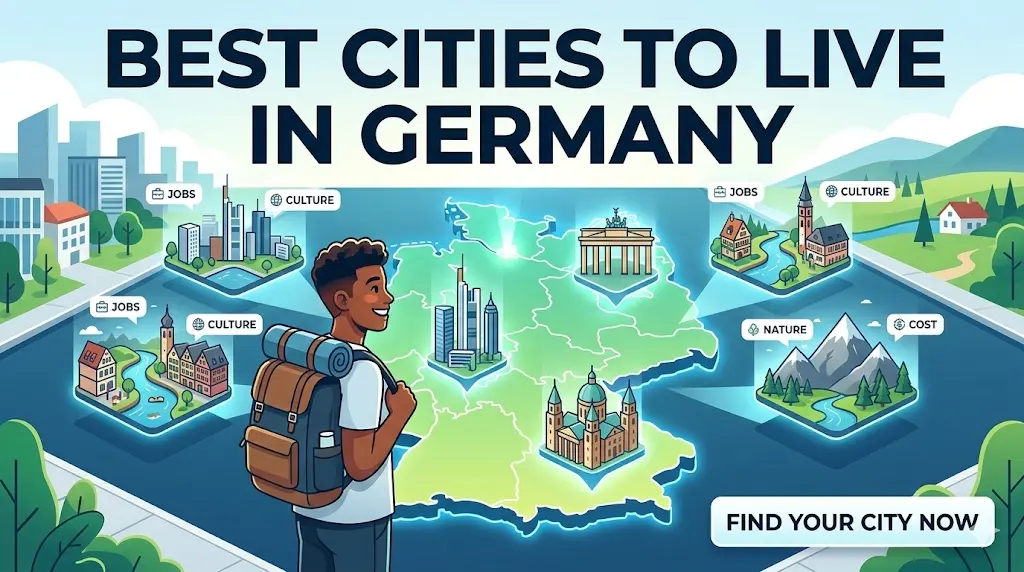
The Financial and Industrial Powerhouses: Frankfurt and Stuttgart
Frankfurt: More than Just Banking
Frankfurt am Main is often called “Mainhattan” due to its impressive skyscraper skyline, a rarity in Germany. It is the financial heart of Continental Europe, home to the European Central Bank and the German Stock Exchange. For expats in finance, logistics, or data centers, Frankfurt is the logical choice. The city is incredibly international; roughly one-third of its residents do not hold a German passport. This makes it one of the easiest cities to integrate into as an English speaker, as the professional world here is truly globalized.
Beyond the banks, Frankfurt has a charming side that many people overlook. The Sachsenhausen district is famous for its “Apfelwein” (apple wine) taverns, and the city has a world-class museum embankment (Museumsufer). Because it is a major transport hub with one of the world’s busiest airports, it is incredibly easy to travel across Europe from here. If you are a “global citizen” who values efficiency and international connections, Frankfurt will suit you well. It’s also worth reading about EU Blue Card Germany: Eligibility, Benefits, and Application Process if you are a high-earner in the financial sector, as Frankfurt is the primary destination for this visa type.
The cost of living is high but slightly more manageable than Munich. The city is compact, meaning you can get almost anywhere by bike or public transit in 20 minutes. However, some areas around the central station (Bahnhofsviertel) can be quite gritty, which might be a shock if you are coming from a very sanitized environment. Frankfurt is a city that gets straight to business, but if you look closer, the surrounding Taunus mountains and the Rheingau wine region offer beautiful escapes for your weekends.
When moving into a Frankfurt high-rise or a charming Altbau, you’ll need to organize your life quickly. I found that getting a Prime subscription on Amazon Germany was a lifesaver for getting my home office set up within 24 hours of landing. In a city where time is literally money, waiting around for a furniture delivery guy who might not show up is a stress you don’t need.
Stuttgart: The Heart of German Engineering
If you are a mechanical engineer, a software developer for the automotive industry, or just a car enthusiast, Stuttgart is your Mecca. Home to Mercedes-Benz and Porsche, the city is built on a foundation of precision and industrial success. It is nestled in a valley surrounded by vineyards, which gives it a unique, bowl-like geography. This means that while the views from the hills (Kessel) are stunning, the city can get quite hot and suffer from poor air quality in the summer.
Stuttgart is located in the Swabian region, which has a very distinct cultural identity. Swabians are known for being hardworking, thrifty, and incredibly proud of their local dialect. As an expat, you might find the “Kehrwoche” (a rotating duty to sweep the common areas of your apartment building) a bit intense, but it reflects the local commitment to cleanliness and order.
The job market here is incredibly robust, but the lifestyle is more “suburban” and family-oriented than Berlin or Frankfurt. People in Stuttgart value their weekends in the Black Forest or at Lake Constance. If you enjoy a balanced life where career success is matched by outdoor adventure and quiet evenings, Stuttgart is a fantastic option. However, be prepared for a difficult housing search; the geography of the valley limits the amount of new construction, keeping demand and prices high.
Starting your search in Stuttgart can be daunting because the best neighborhoods are often the hardest to access. I highly recommend using Wunderflats to secure a place in areas like Degerloch or Stuttgart-West before you arrive. These are the more desirable parts of the city where landlords are extremely picky; having a “proven” residence on your record can make you a much more attractive candidate for long-term leases later.
The Northern and Western Gateways: Hamburg and Cologne
Hamburg: The Elegant Port City
Hamburg is often cited by Germans as the most beautiful city in the country, and it’s hard to disagree when you’re standing on the banks of the Alster Lake or walking through the historic Speicherstadt warehouse district. As a major port city, Hamburg has a maritime heritage that gives it an open, liberal, and slightly posh atmosphere. It is a hub for media, logistics, and renewable energy. For expats, it offers a high standard of living with a bit more “cool” than Munich but more elegance than Berlin.
The weather in Hamburg is famously unpredictable—expect a lot of “Schietwetter” (grey, drizzly rain). But the locals take it in stride, and the city is built to handle it, with cozy cafes and indoor shopping arcades. The Reeperbahn in St. Pauli is world-famous for its nightlife and history (it’s where the Beatles got their start), providing a gritty counterpoint to the wealthy villas of Harvestehude or Blankenese. Hamburg is a city of contrasts, and finding your place here requires exploring the different “Quartiers.”
Integration in Hamburg is generally smooth for foreigners, though the “Northern coldness” is a real stereotype. People aren’t unfriendly; they are just reserved and value their privacy. Once you break the ice, however, a “Hamburger” is a friend for life. For those relocating here for the maritime or tech industry, you should definitely look into Health Insurance in Germany: Understanding Public vs Private Coverage early, as your salary bracket in Hamburg might give you more options than you expect.
Since you’ll likely be dealing with a lot of rain during your first few weeks, don’t waste time running between physical stores to furnish your flat. Ordering high-quality rain gear and home essentials from Amazon Germany is the standard move. I remember being so grateful for my doorstep delivery when the North Sea wind started howling outside my new apartment near the harbor.
Cologne: The Warmest Heart in the Rhineland
If Hamburg is reserved, Cologne is the exact opposite. The people of Cologne (Kölsch) are famous for their “Rheinische Frohnatur”—a cheerful, open, and welcoming nature. This is a city where people will actually talk to you at the bar or in the grocery store line. For expats who fear the legendary German frostiness, Cologne is the ultimate antidote. It is home to a massive media industry, numerous universities, and a vibrant LGBTQ+ scene, making it one of the most socially liberal cities in Germany.
The city is dominated by the Kölner Dom, a massive Gothic cathedral that is the most visited landmark in Germany. Life here revolves around the Rhine river and the local brewery culture (Brauhaus). During Carnival season in February, the entire city shuts down for a week of costumes and parades. If you are someone who values social connection and a “work hard, play hard” attitude, Cologne is a fantastic fit. The job market is diverse, though salaries might be slightly lower than in Munich or Frankfurt.
Housing in Cologne is competitive but feels a bit more “human” than in the big financial hubs. Neighborhoods like Ehrenfeld are perfect for younger expats and creatives, while Lindenthal offers a quieter, more green lifestyle for families. Cologne is also perfectly positioned for travel; you can be in Brussels or Paris via high-speed train in just a few hours.
To get started in Cologne, especially if you arrive during the busy Carnival or trade fair seasons, hotel prices will kill your budget. Using Wunderflats to find a “home base” for your first three months is a much smarter move. It gives you a chance to see if you prefer the Belgian Quarter’s buzz or the cozy vibes of Südstadt before committing to a multi-year rental contract.
The Hidden Gems of the East and South: Leipzig and Nuremberg
Leipzig: The New Berlin of the East
For years, Leipzig has been whispered about as “Hypezig,” the affordable, cool alternative to Berlin. Located in the east, it has seen a massive resurgence over the last decade. It is a city of canals, parks, and industrial buildings converted into art galleries. For young expats, artists, and those in the e-commerce or logistics sectors (DHL and Amazon have major hubs here), Leipzig offers a lifestyle that is incredibly hard to beat for the price.
The cost of living here is significantly lower than in western German cities, though it is rising quickly. You can still find spacious apartments with high ceilings (Altbau) for a fraction of what you would pay in Munich. The vibe is laid-back and academic, thanks to one of Germany’s oldest universities. However, the international community is smaller than in Berlin, so you will likely need to learn German faster here to truly feel at home. It’s a great place to settle if you’re looking to save money while still enjoying a rich cultural life.
One thing to keep in mind is that the job market in the east is still catching up to the west in terms of salary levels. While your rent will be cheaper, your take-home pay might be lower. This is why many expats in Leipzig work remotely for companies based in Berlin or Munich.
Even with lower rents, furnishing a large Altbau flat from scratch is expensive. I’ve found that Leipzig expats are masters of mixing vintage finds with new essentials. For the stuff you can’t find at the flea market—like kitchen appliances or electronics—Amazon Germany is your best friend. The shipping is fast, and the prices are often better than the few big-box stores on the city’s outskirts.
Nuremberg: History, Tech, and Quality of Life
Nuremberg is the “other” big city in Bavaria, but it has a very different feel than Munich. It is more industrial, slightly more affordable, and deeply historic. For expats in the IT, Siemens-related engineering, or market research sectors, Nuremberg (and its neighbor Fürth) offers a fantastic quality of life. The city was beautifully rebuilt after the war, and its medieval castle and old town provide a stunning backdrop for daily life.
What I love about Nuremberg is the balance. It has the efficiency of a major city but the cozy feel of a smaller town. The Franconian culture is distinct from the Bavarian one—people here are a bit more direct and take great pride in their local beer and sausages. It is a very safe city and very family-friendly, with world-class toy museums and parks. If you are looking for a place where you can build a long-term career without the frantic energy of Berlin, Nuremberg is a top-tier choice.
The international scene here is growing, largely thanks to the presence of companies like Adidas and Puma in nearby Herzogenaurach. This means you’ll meet plenty of expats in the local sports bars and cafes. People here generally take the time to help you if you show a genuine interest in the local culture.
If you are moving to Nuremberg, particularly if you are working for one of the big international firms nearby, you might find that the best apartments get snapped up by internal company transfers. To compete, you need a local address as soon as possible. I recommend booking a furnished apartment through Wunderflats for your first few months. This “instant home” approach allows you to focus on your new job without worrying about where you’ll sleep or how to set up internet and electricity from day one.
Factors Influencing Your Choice: Cost of Living and Job Market
Analyzing Regional Wage Gaps and Housing Costs
When choosing where to live, you have to look at the “real” cost of living, which is your salary minus your fixed expenses like rent and taxes. Germany has a significant wage gap between the West and the East, and a massive housing cost gap between major cities and rural areas. For example, a software engineer in Munich might earn €85,000 but spend 40% of their take-home pay on a small flat. In Leipzig, that same engineer might earn €65,000 but only spend 20% on a much larger apartment.
The “big seven” cities (Berlin, Hamburg, Munich, Cologne, Frankfurt, Stuttgart, and Düsseldorf) are all facing housing shortages. This means that even if you have a high salary, you might struggle to find a landlord who will pick your application over fifty others. It is often worth looking at “B-cities” like Bremen, Essen, or Dresden, where the job market is still strong but the competition for housing is much more reasonable. Use the table below to compare the top expat destinations.
| City | Primary Industry | Rent Level | Expat Friendliness | Lifestyle Vibe |
| Berlin | Tech / Creative | High (but chaotic) | Very High | Gritty & Vibrant |
| Munich | Auto / Tech / Insurance | Extremely High | Moderate | Traditional & Wealthy |
| Frankfurt | Finance / Logistics | High | High | Professional & Global |
| Hamburg | Media / Maritime | High | Moderate | Elegant & Maritime |
| Cologne | Media / Culture | Moderate / High | Very High | Warm & Liberal |
| Leipzig | Logistics / Tech | Low / Moderate | Moderate | Laid-back & Artsy |
| Stuttgart | Engineering / Auto | High | Moderate | Industrial & Suburban |
Don’t forget that your healthcare costs are a significant part of your budget. Whether you choose public or private will depend on your salary and family situation.
Language Requirements and English-Friendly Hubs
If your German is still at the “A1” level, your choice of city will be limited if you want to integrate quickly. Berlin, Frankfurt, and Munich are the only cities where you can realistically navigate a large portion of daily life in English. In cities like Cologne or Hamburg, English is widely spoken in professional settings, but your social life and interactions with the local “Bürgeramt” will be much smoother if you have some German skills.
In smaller cities or in the East, the language barrier is a real thing. You will find that older generations, particularly in the former GDR (East Germany), might speak Russian rather than English as their second language. If you are moving to a place like Dresden or a rural town in Lower Saxony, you should prioritize intensive language courses before you arrive.
If you are moving for a specialized job where the “working language” is English, you can survive for a few years, but you will always feel like you are on the outside looking in. Germany is a country that rewards those who try to speak the language. Even a “Guten Tag” and a polite attempt at German can open doors that remain closed to those who only use English. I found that using language learning tools and books ordered from Amazon Germany helped me bridge that gap in my first six months.
Navigating the Housing Market as a Newcomer
Temporary Housing Solutions for a Smooth Arrival
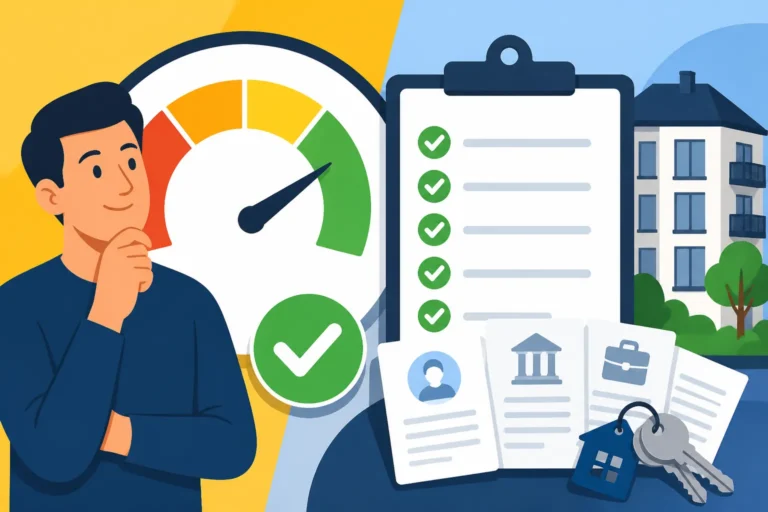
The biggest mistake I see newcomers make is trying to find a long-term, unfurnished apartment from abroad. It is almost impossible. German landlords typically want to meet you in person, see your “Schufa” (credit score), and verify your employment contract. If you aren’t in the country, you aren’t a serious candidate. This is why you need a bridge.
A temporary furnished apartment is the best investment you can make in your relocation. Platforms like Wunderflats cater specifically to professionals and expats who need a high-quality, fully equipped home for 1 to 6 months. These apartments include everything—utilities, internet, furniture, and kitchenware—meaning you can walk in with just your suitcase and start your life. Most importantly, these providers give you a “Wohnungsgeberbestätigung” (landlord confirmation), which is the document you need to complete your “Anmeldung” (address registration). Without this, you cannot get a tax ID or open a bank account.
Using Wunderflats also gives you the luxury of time. You can explore different neighborhoods, check the commute to your office, and attend mass viewings without the pressure of being homeless next week. It is a bit more expensive than a long-term lease, but it saves you thousands in hotel bills and the massive stress of rushed decision-making.
Long-Term Rental Strategies and Requirements
Once you are settled in your temporary place, the real hunt begins. Long-term apartments in Germany are usually rented “cold” (Kaltmiete), meaning utilities are extra, and “empty,” which often means they don’t even have a kitchen sink or light bulbs. You will need to buy a kitchen and install it yourself, which is a massive shock for many expats. This is where Amazon Germany becomes essential again—you can order everything from dishwashers to ceiling lights with relatively fast delivery.
To win a long-term flat, you need a “Bewerbungsmappe” (application folder). This should include your last three payslips, a copy of your work contract, a copy of your passport and visa, your Schufa report, and a “Mietschuldenfreiheitsbescheinigung” (a document from your previous landlord stating you don’t owe any rent). If you are coming from abroad, your Wunderflats host can often provide this document for you.
Be prepared for the “Schlichter” (the middleman) or the “Mass-viewing.” You might find yourself in a stairwell with 40 other people all looking at the same two-bedroom flat. To stand out, be polite, be on time, and have all your documents neatly organized in a physical folder. It also helps to have a short introductory letter in German explaining who you are and why you want to live in that specific neighborhood. It sounds like a lot of work, but in a market like Munich or Berlin, it’s the only way to succeed.
Regional Differences in Culture and Lifestyle
North vs. South: Navigating the Cultural Divide
The “Weisswurst-Equator” is a real cultural divide in Germany. North of this line (roughly the Main river), life is a bit more industrial, Protestant, and reserved. South of the line, particularly in Bavaria and Baden-Württemberg, life is more Catholic, traditional, and cozy. The North values maritime elegance and direct communication, while the South values “Gemütlichkeit” (a sense of warmth and belonging) and tradition.
For an expat, this means the social rules change. In the South, you might find yourself invited to more local festivals and beer gardens, but the pressure to conform to local “rules” is higher. In the North, people will leave you alone more, which can be great if you value privacy but lonely if you are trying to make friends.
Even the food changes. In the North, you’ll find more fish and hearty stews. In the South, it’s all about Spätzle, Schnitzel, and heavy sauces. My advice? Try to visit both regions before you decide where to settle. A weekend in Hamburg feels very different from a weekend in Munich, and your personality might mesh better with one than the other.
Urban vs. Rural Living: Finding Your Speed
Most expats naturally gravitate toward the big cities because that’s where the English-speaking jobs are. However, Germany has a massive “Mittelstand” (small and medium-sized enterprises) located in rural areas or small towns. Companies like Bosch, Zeiss, or Miele are often headquartered in places you’ve never heard of. Living in a small town can offer a much more “authentic” German experience, much lower living costs, and a tighter community.
The downside of rural life is the isolation. You will absolutely need a car, and your German language skills must be very high to navigate social life. Public transport in rural Germany is “good” compared to the US, but it’s not the 5-minute-interval service you get in Berlin. If you have a family and want a big house with a garden, the countryside is your only affordable option.
If you choose the rural route, make sure you have your Amazon Germany account set up. Local shops in small villages close early (sometimes at noon on Saturdays!) and have limited stock. Having the ability to order specialty international foods or specific hobby supplies online will make your life in the country much more comfortable.
References
Primary sources (official)
- Statistisches Bundesamt (Destatis) – Cost of Living Data: https://www.destatis.de/EN/Themes/Economy/Prices/Consumer-Price-Index/_node.html
- Make it in Germany – Official Government Portal for International Professionals: https://www.make-it-in-germany.com/en/living-in-germany/housing/where-to-live
Other helpful sources
- IamExpat Germany – City Guides: https://www.iamexpat.de/lifestyle/germany-city-guides
Disclaimer
The information provided in this guide is for informational purposes only and is based on personal experiences and data available at the time of writing. The German housing market and job landscapes are subject to rapid change. Rent prices and availability vary significantly by neighborhood and individual circumstances. This guide does not constitute legal or financial advice regarding housing contracts or immigration status. Always consult official government sources and professional relocation services for the most current regulations and market conditions.