SCHUFA and Documents Landlords Want in Germany
Finding yourself standing in a stairwell with forty other hopeful applicants, all clutching folders of paperwork, is the standard "welcome to Germany" moment for most expats. I remember my first apartment hunt in Berlin; I was naive enough to think that just having the money for rent was enough, but I quickly learned that German landlords want your entire life story documented in a specific, bureaucratic order. This guide will walk you through the labyrinth of the SCHUFA and the essential dossier you need to actually land a lease in this competitive market.
Disclosure: This post may contain affiliate links. We may earn a commission at no extra cost to you if you make a purchase through these links. Read full disclosure.
Decoding the SCHUFA: The Gatekeeper of German Living
The word "SCHUFA" often strikes fear into the hearts of newcomers, primarily because it represents a paradox: you need a good credit history to get an apartment, but you can’t build a credit history without a bank account and a home address. SCHUFA stands for Schutzgemeinschaft für allgemeine Kreditsicherung, and it is essentially Germany’s largest credit bureau. It tracks your financial reliability, from whether you pay your phone bill on time to how many bank accounts you’ve opened. For a landlord, this is the ultimate "trust" document.
Understanding the SCHUFA Score
Your SCHUFA score is a percentage that tells a lender or landlord how likely you are to fulfill your financial obligations. A score above 95% is generally considered good for the rental market. The system works by collecting data from banks, utility companies, and telecommunications providers. Every time you sign a contract for a German SIM card or open a checking account, a record is created. Over time, as you pay your bills, your score matures.
For many expats, the "SCHUFA-Auskunft" (the report) is the first major hurdle. When you first arrive, your record will likely be empty. This doesn't necessarily mean your score is bad, but it means you are an unknown quantity. I’ve seen many friends get rejected simply because they couldn't provide this piece of paper. To understand how this fits into your broader financial picture, you might want to look into Money Matters in Germany: Complete Financial Guide for Expats to see how credit affects your life here.
Getting Your Free SCHUFA Report
There is a legal requirement under the GDPR (DSGVO in German) that allows you to request a free copy of your data once a year. This is known as the "Datenkopie nach Art. 15 DS-GVO." However, landlords usually expect the "BonitätsCheck," which is a paid, one-page document that omits your private financial details and simply states that you have a "positive" record. It is worth the ~30 Euro investment if you are serious about your search.
You can order this online through the SCHUFA website or even at some local bank branches. If you are struggling with the digital aspect of this, you might find that How to Get a SCHUFA Certificate for Renting in Germany provides the exact step-by-step technical guidance you need. Once you have this document, keep it at the very front of your application folder. It is often the first thing a property manager looks for when they open an envelope or email.
Troubleshooting a Non-Existent Record
If you have just stepped off a plane, the SCHUFA bureau literally won't know you exist. If you try to pull a report, you might get a letter stating they have no data. Do not panic—this is a common scenario. In this case, you should include a polite letter in your application explaining that you are a recent arrival. Pair this with bank statements from your home country or a copy of your new German employment contract.
In the interim, while you wait for your score to build, it is vital to keep your other documents impeccable. Landlords are often willing to overlook a lack of SCHUFA if your income is high and your references are solid. You can learn more about how to manage these early administrative hurdles in our guide on Settling in Quickly: A Newcomer’s Checklist for Your First Weeks in Germany. Showing that you understand the system, even if you aren't fully integrated yet, goes a long way with skeptical landlords.
The Essential Application Dossier: The Bewerbungsmappe
In Germany, you don't just "apply" for an apartment; you present a "Bewerbungsmappe," which is essentially a professional portfolio for your life as a tenant. Landlords are often overwhelmed with hundreds of inquiries for a single flat, especially in cities like Munich, Berlin, or Hamburg. If your paperwork is incomplete, your email goes straight to the digital trash bin. I have seen landlords stop a viewing after five minutes because they already found five people who handed them a perfect, stapled folder on the spot.
The Selbstauskunft: Your Personal Disclosure
The "Mieterselbstauskunft" is a form provided by the landlord or the real estate agent (Makler) that asks for your basic details. This includes your name, profession, employer, income, and whether you have pets or play loud musical instruments. Be honest, but also be strategic. If you are a professional cello player, you might want to mention that you only practice during non-quiet hours.
This form is your chance to make a good first impression. Use clear, legible handwriting or, better yet, type it out. You can often find templates online, but most agents will hand you their specific version at the viewing. If you're nervous about the legal implications of what you're signing, checking out Understanding German Rental Contracts: Key Terms and Conditions will help you distinguish between a standard disclosure and an overreach of privacy.
Proof of Income: The Lohnabrechnungen
Usually, landlords require your last three months of payslips (Lohnabrechnungen). This is the "gold standard" of proof. If you are a new employee, your work contract (Arbeitsvertrag) stating your gross salary and the fact that you have passed your probation period (Probezeit) is often sufficient. If you are still in your probation period, it can be slightly harder, as the landlord knows you could theoretically be let go with two weeks' notice.
For those who are self-employed, the process is significantly more taxing. You will likely need to provide a tax assessment (Steuerbescheid) from the previous year or a "BWA" (Betriebswirtschaftliche Auswertung) prepared by a tax advisor. This can be a major headache for freelancers. If this sounds like your situation, you should definitely read Health Insurance for Freelancers and the Self-Employed: Navigating the System to see how your professional status affects other mandatory parts of German life.
The Mietschuldenfreiheitsbescheinigung: The Longest Word in Renting
This document is a certificate from your previous landlord stating that you owe no rent and that you were a reliable tenant. It is a massive mouthful to say, but it is a critical piece of the puzzle. If you are moving within Germany, your current landlord is usually happy to provide this. If you are coming from abroad, a letter from your previous landlord in your home country—ideally translated into German—can work as a substitute.
If you cannot get this for some reason (perhaps you lived in student housing or owned your own home), you can provide bank statements showing regular rent transfers for the last six months. The goal is to prove that "paying rent" is a habitual, non-negotiable part of your monthly routine. For more tips on making your application stand out, How to Write a German Rental Application That Stands Out is an excellent resource for crafting that perfect cover letter to accompany your documents.
Identification and Residency Requirements
Beyond your finances, the landlord needs to know that you are legally allowed to be in the country for the duration of the lease. This is where your passport and residence permit (Aufenthaltstitel) come into play. German bureaucracy is famously circular: you need a house to get a permit, but you need a permit to get a house. Navigating this requires a bit of finesse and a lot of patience.
Passport and Visa Documentation
A high-quality color copy of your passport's photo page is mandatory. If you are a non-EU citizen, you must also provide a copy of your visa or residence permit. Landlords are generally wary of leases that extend past the expiration date of your visa. If your current permit is only valid for another six months, be prepared to explain the renewal process or show that you have an appointment with the Ausländerbehörde.
If you are currently waiting for your physical ID card and only have a temporary document, known as a Fiktionsbescheinigung, make sure to include a copy of that as well. It explains your legal status in the interim. For a deeper dive into the different types of permits and how they impact your longevity in Germany, see Residence Permits in Germany: Types Overview.
The Role of the Anmeldung
The "Anmeldung" (address registration) is the holy grail of German paperwork. Once you move into a place, the landlord must provide you with a "Wohnungsgeberbestätigung" (landlord confirmation) so you can register at the city office. However, some landlords—particularly those offering sub-leases—might be hesitant to allow registration. Avoid these at all costs. Without an Anmeldung, you cannot get a tax ID, open a proper bank account, or build a SCHUFA score.
If you find yourself in a "no-Anmeldung" situation, you are effectively a ghost in the system. It is much better to stay in a temporary, furnished apartment where registration is guaranteed. Services like Wunderflats are excellent for this; they specialize in mid-term furnished rentals that are expat-friendly and provide the necessary paperwork for registration. This gives you a legal base of operations while you hunt for a long-term, unfurnished "forever home."
Digital Connectivity for the Search
While you are running between viewings and scanning documents, you need to be reachable. German real estate moves at lightning speed. If an agent calls you and you don't answer, they move to the next person on the list. Many expats arrive and realize their home SIM cards are either too expensive or don't work reliably for local calls. Using an eSIM from a provider like Airalo can give you immediate, affordable local data so you can keep refreshing those "ImmobilienScout24" alerts while sitting in a cafe between appointments.
| Required Document | Purpose | Newcomer Alternative |
|---|---|---|
| SCHUFA Report | Proves creditworthiness | Bank statements from home country |
| Proof of Income | Proves you can afford rent | Employment contract / Savings |
| Rent Debt Certificate | Proves you pay on time | Bank transfers showing rent history |
| Passport / Visa | Proves identity and residency | Fiktionsbescheinigung (if applicable) |
| Selbstauskunft | Provides personal background | Detailed cover letter |
Strategies for Newcomers Without a Paper Trail
If you've just arrived and the thought of competing with "perfect" German applicants is daunting, you need a different strategy. You are essentially trying to prove your reliability without the standard local tools. This requires being over-prepared and potentially offering more security than a local might have to.
The Bürgschaft: The Rental Guarantee
A "Mietbürgschaft" is a document where a third party (usually a parent or a bank) agrees to pay your rent if you default. For young expats or students, this is often the only way to secure a flat. If your parents are in Germany, they can sign a simple letter. If your "guarantor" is abroad, most landlords won't accept it because it is too hard to enforce legally.
In this case, you can look into a bank-guaranteed Bürgschaft. You pay a small annual fee, and the insurance company or bank acts as your guarantor. This gives the landlord peace of mind.
Offering an Increased Deposit or Rent Upfront
While German law strictly limits the security deposit (Kaution) to three months of "cold" rent (Kaltmiete), some desperate expats offer to pay several months of rent in advance to show their liquidity. Be careful with this; it’s technically a grey area and won't always be accepted by large property management companies (Hausverwaltungen). However, for private landlords, seeing six months of rent in an escrow account can be a powerful motivator to pick you over a local with a standard profile.
If you go this route, ensure everything is documented with precision—meaning, get a receipt for every cent. Once you do get that apartment, you'll likely find it's completely empty—no lights, no kitchen, nothing. You'll be spending a lot of time on Amazon Germany ordering everything from ceiling lamps to the proverbial kitchen sink.
The Importance of the Cover Letter
Never underestimate the power of a "Personal Statement." In a sea of cold, hard data, a nice photo of you (and your family/partner) and a story about why you love the neighborhood can make you human. Mention your stable job, your quiet hobbies, and your desire to stay in the apartment for a long time. Landlords hate "tenant turnover"—it’s expensive and annoying for them. If you can convince them you are a "boring," stable tenant who will stay for five years, you have a massive advantage.
Cultural Nuances and Final Tips for the Hunt
The German rental market isn't just about the papers; it's about the "Vibe." Germans value "Pünktlichkeit" (punctuality) and "Seriosität" (seriousness). If a viewing is at 5:00 PM, show up at 4:55 PM. Dress like you're going to a business-casual office. It sounds old-fashioned, but you are asking a stranger to hand over a multi-hundred-thousand-Euro asset to you. They want to know you will treat it with respect.
Understanding the "Warm" vs. "Cold" Rent
When you are looking at listings, you will see "Kaltmiete" and "Warmmiete." The cold rent is just for the space. The "warm" rent includes "Nebenkosten" (utilities like water, heating, and trash collection). Electricity and internet are almost always extra. This is a common point of confusion that can blow a budget. For a detailed breakdown of these costs, see What Is the Difference Between Kaltmiete and Warmmiete?.
Standing Out in the Digital Queue
Most people use apps like ImmobilienScout24 or WG-Gesucht. To stand out, you need a "Premium" account on these platforms. It allows your message to appear at the top of the landlord's inbox and lets you upload your documents so they are ready the second a listing goes live. If you wait until you get home to scan your ID, the apartment is already gone. For more on the digital tools of the trade, Finding an Apartment in Germany: Portals and Process is a must-read.
The "Empty Kitchen" Reality Check
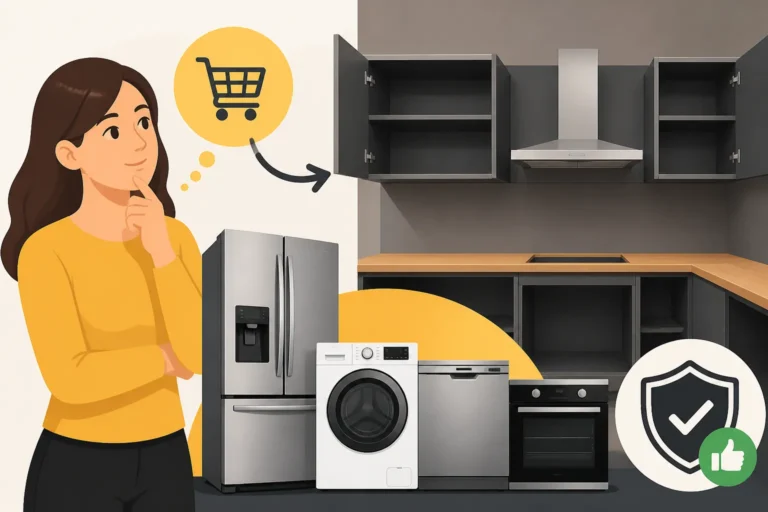
Finally, be prepared for the fact that most German apartments come without a kitchen. No cabinets, no stove, no fridge. It is just a room with pipes sticking out of the wall. You will either have to buy the kitchen from the previous tenant (the "Abstand") or install your own. This is where your Amazon Germany prime membership will truly earn its keep, as you'll be ordering tools and fixtures for weeks. To prepare for this shock, read up on Furnishing a German Apartment and the Empty-Kitchen Problem.
Disclaimer
The information provided in this guide is for informational purposes only and does not constitute legal or professional financial advice. Rental laws and SCHUFA regulations in Germany can change, and individual circumstances may vary. Always consult with a legal professional or a certified relocation expert before signing binding contracts.