How to Buy Appliances When German Kitchens Come Empty
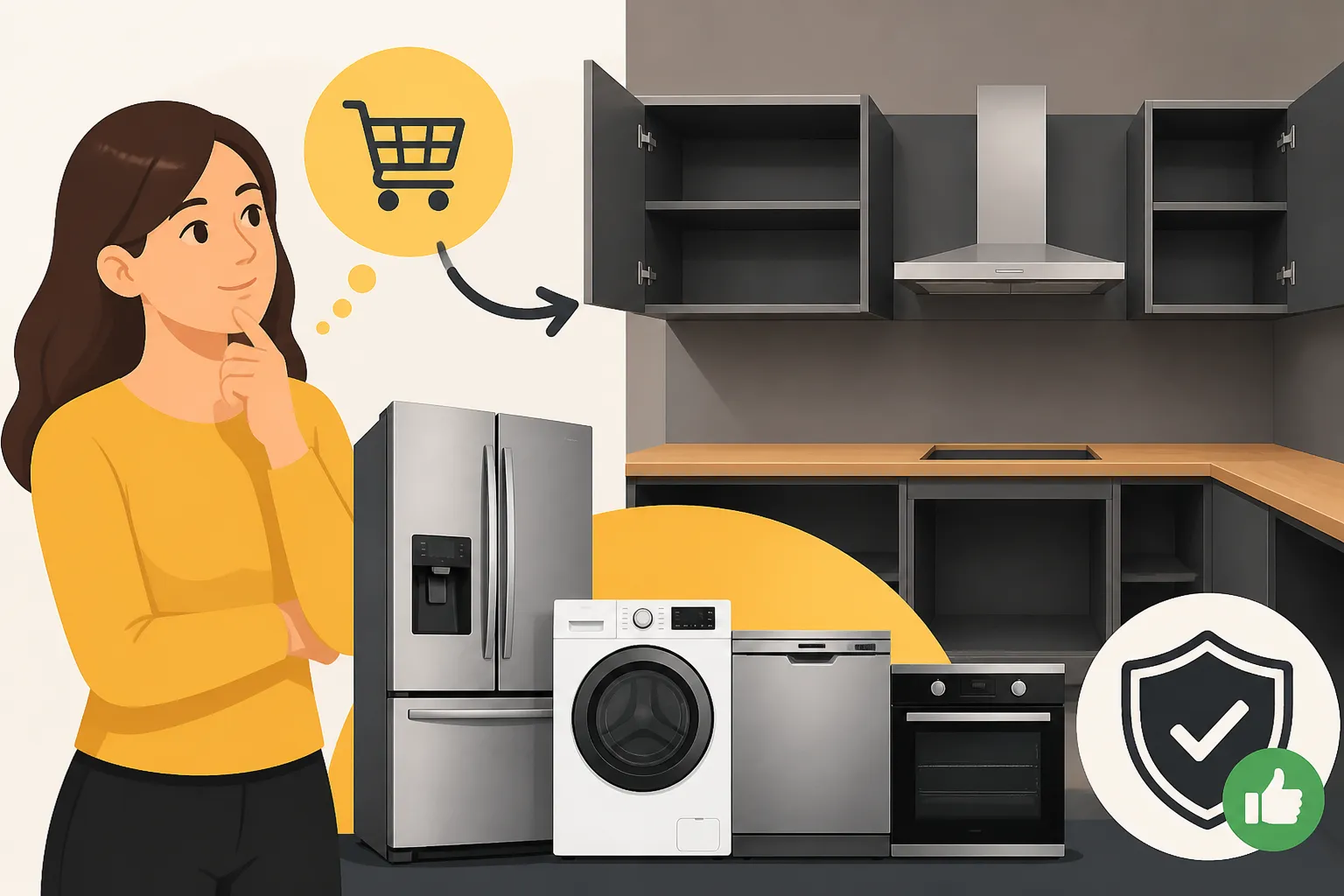
You walk into your new German apartment, turn the key, and expect to see a place to brew your first coffee, but instead, you find a bare room with capped pipes and wires sticking out of the wall. I still remember the sinking feeling in my stomach when I unlocked my first flat in Neukölln only to find the kitchen was a literal empty concrete box. This guide solves the mystery of the missing German kitchen and provides a survival roadmap for buying appliances in a country where "unfurnished" means exactly that.
Disclosure: This post may contain affiliate links. We may earn a commission at no extra cost to you if you make a purchase through these links. Read full disclosure.
The Cultural Shock of the Empty German Kitchen
In many countries, a kitchen is considered a permanent fixture of the property, much like a bathtub or a front door. In Germany, however, the kitchen is often considered furniture. When a tenant moves out, they frequently dismantle their entire kitchen—cabinets, sink, oven, and fridge—and take it with them to their next home. This is why you will see so many listings that do not include an EBK (Einbauküche). If you are coming from a place where kitchens are standard, this feels like a bureaucratic prank, but for Germans, it is an opportunity to customize their most-used room.
Decoding the Listing Before You Sign
Before you even step foot in an apartment, you need to be eagle-eyed about the description. If the ad says "mit EBK," you are in luck; the kitchen is included in the rent or can be bought from the previous tenant. If it says "leer" or simply doesn't mention a kitchen, you are looking at a DIY project. Understanding this distinction is vital when Understanding Apartment Listings: Decoding Abbreviations (2-Zi, EBK, etc.). Choosing an apartment without a kitchen can significantly lower your monthly "Kaltmiete," but the upfront costs of appliances can be staggering.
If the prospect of building a kitchen from scratch feels overwhelming, many expats choose to start their journey with Furnished vs Unfurnished Apartments in Germany: Pros and Cons. Services like Wunderflats offer fully equipped apartments that allow you to bypass the appliance-hunting phase entirely during your first few months. This gives you time to settle in and research your long-term options without having to live off takeout for three weeks while waiting for a fridge delivery.
The Financial Reality of the "Küchenablose"
Sometimes, the departing tenant will offer to sell you their existing kitchen. This is called an "Ablöse." While it saves you the hassle of measuring and installing, be careful. I’ve seen tenants try to charge €3,000 for a kitchen that was clearly bought from IKEA five years ago for half that price. You have the right to ask for original receipts. If you decide to go this route, ensure the price is fair and that the appliances are in good working order. If you choose to buy new instead, you are taking on the responsibility of Unfurnished Apartments in Germany: Dealing with Kitchens and Light Fixtures, which involves more than just plugging things into a wall.
Where to Buy Appliances: Navigating the German Market
Once you realize you need to buy, the question is where to go. Germany has a very structured retail landscape for electronics and white goods. You have the giant "big box" stores like MediaMarkt and Saturn, which you will find in almost every major city center or shopping mall. These are great for seeing the appliances in person, testing how loud a dishwasher is, or feeling the build quality of a washing machine.
Online Retailers and the Convenience Factor
For those who prefer to avoid the Saturday afternoon crowds at the mall, online shopping is the dominant force. Amazon Germany is often the first stop for expats because the interface is familiar and the delivery options are robust. You can find everything from high-end Miele washing machines to basic Bosch ovens. Using Amazon Germany also allows you to read thousands of reviews in multiple languages, which is incredibly helpful when you are trying to figure out if a specific fridge model can handle a humid German summer.
While you are sitting in your empty apartment tethered to your laptop, make sure your connectivity is sorted. I always recommend using Airalo to grab a local eSIM the moment you land. Having a reliable data connection is essential when you are comparing prices between different retailers or trying to translate the technical specifications of a "Induktionskochfeld" while standing in the middle of a store.
The Second-Hand Market: eBay Kleinanzeigen
If you are on a budget, the second-hand market in Germany is legendary. Most people use "Kleinanzeigen" (formerly eBay Kleinanzeigen). You can find incredible deals on high-quality German brands like Siemens or Liebherr for a fraction of the retail price. However, the caveat is "Selbstabholung"—you usually have to go pick it up yourself. If you don't own a van, this becomes a logistical nightmare. For more tips on navigating this, check out Second-Hand Shopping in Germany: How to Save Money with Used Goods (Flohmarkt, eBay Kleinanzeigen).
Technical Essentials: What You Need to Know Before Buying
Buying appliances in Germany is not just about the price; it is about the technical compatibility with German homes. Standardized sizes (Norms) are very common here, but there are still traps for the unwary. For instance, most German kitchens are designed for 60cm wide appliances. If you buy a "Side-by-Side" American-style fridge, it likely won't fit through your narrow hallway or into the designated kitchen nook of an Altbau apartment.
Understanding Energy Labels and Operating Costs
Electricity in Germany is among the most expensive in Europe. When you are looking at appliances, pay close attention to the energy efficiency label. The scale was recently updated and now runs from A to G (with A being the most efficient). A "cheap" fridge that is rated 'E' or 'F' will end up costing you hundreds of euros more over its lifespan. This is a crucial factor when considering the Cost of Utilities in Germany: Average Prices for Electricity, Gas, Water.
| Appliance Type | Standard Size | Connection Type | Efficiency Goal |
|---|---|---|---|
| Oven / Stove | 60cm wide | Starkstrom (High Voltage) | C or higher |
| Dishwasher | 45cm or 60cm | Cold water / Drain | B or C |
| Washing Machine | 60cm wide | Cold water / Drain | A |
| Refrigerator | Varies | Standard Plug | D or higher |
The Mystery of the Washing Machine Location
In many countries, the washing machine lives in a basement, a laundry room, or the bathroom. In Germany, don't be surprised if the only water connection for a washing machine is in the kitchen. When buying your machine, ensure it is a "front-loader" if you plan to install it under a kitchen counter. Also, check for the "Aquastop" feature. This is a safety valve that prevents flooding if a hose bursts. Many German rental contracts actually require your machines to have Aquastop, and your Home and Liability Insurance in Germany (Haftpflicht and Hausrat) might not cover water damage if you use a machine without it.
For a deeper dive into the technical side of things, read our Household Appliance Guide: Voltage, Adapters, and Buying Electronics in Germany.
Delivery, Installation, and the "Schleppen" Problem
This is where most expats get caught out. In Germany, there is a massive difference between "Lieferung" (delivery) and "Montage" (installation). If you order a heavy fridge from a budget website, they might only offer "Lieferung frei Bordsteinkante." This means they will drop your 80kg appliance on the sidewalk in front of your building and drive away. If you live on the 4th floor of a building with no elevator, you are in serious trouble.
Why You Should Always Pay for Professional Installation
I cannot stress this enough: pay for the "Altgeräte-Mitnahme" (removal of old appliances) and "Anschluss-Service" (installation). Connecting a dishwasher or a washing machine is one thing, but connecting a stove is an entirely different beast. In Germany, stoves use "Starkstrom" (three-phase electric power). It is actually illegal—and incredibly dangerous—to connect a stove yourself. If you do it wrong and cause a fire, your insurance will not pay a cent. You need a certified electrician.
If the retailer doesn't offer installation, you will need to learn How to Find Reliable Tradespeople (Handwerker) in Germany. Finding a "Hauselektriker" can take time, so try to book them at least two weeks before your appliances are scheduled to arrive. This logistical dance is part of the Moving Furniture and Belongings: Tips for an Easy Move to Germany process that every expat eventually masters.
Preparing Your Apartment for the Big Day
Before the delivery truck arrives, measure every door and hallway. German staircases in older buildings can be incredibly narrow and winding. I once watched a delivery crew spend two hours trying to hoist a refrigerator through a window because it wouldn't fit around a corner in the stairwell. Also, ensure you have already completed your Registering Your Address (Anmeldung): Step-by-Step Guide so that your name is clearly on the doorbell and the mailbox. If the delivery driver can't find your name, they will often leave and charge you for a second delivery attempt.
Getting your kitchen sorted is one of the biggest hurdles of moving, but once that first meal is cooked on your own stove, you’ll truly start to feel at home. It’s a rite of passage in the German expat experience. For a full list of what to do during your first month, refer to our Settling in Quickly: A Newcomer’s Checklist for Your First Weeks in Germany.
Disclaimer
The information provided in this guide is for general informational purposes only and does not constitute legal, financial, or professional technical advice. While we strive to keep the information up to date and correct, regulations regarding electrical installations and rental laws in Germany can change. Always consult with a certified professional or your local "Mieterverein" (tenants' association) before undertaking major appliance installations or signing rental agreements.